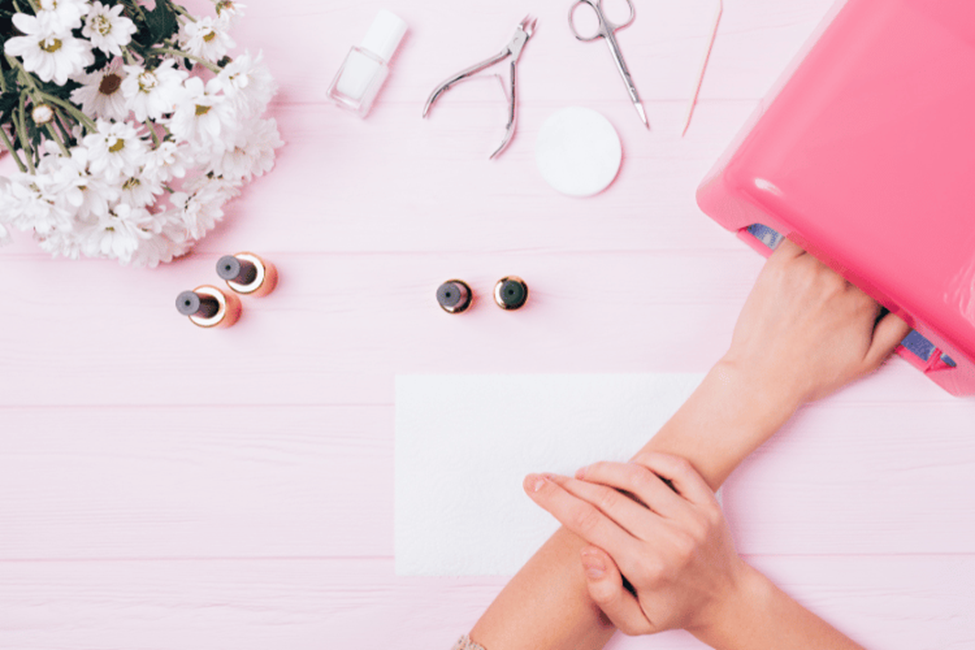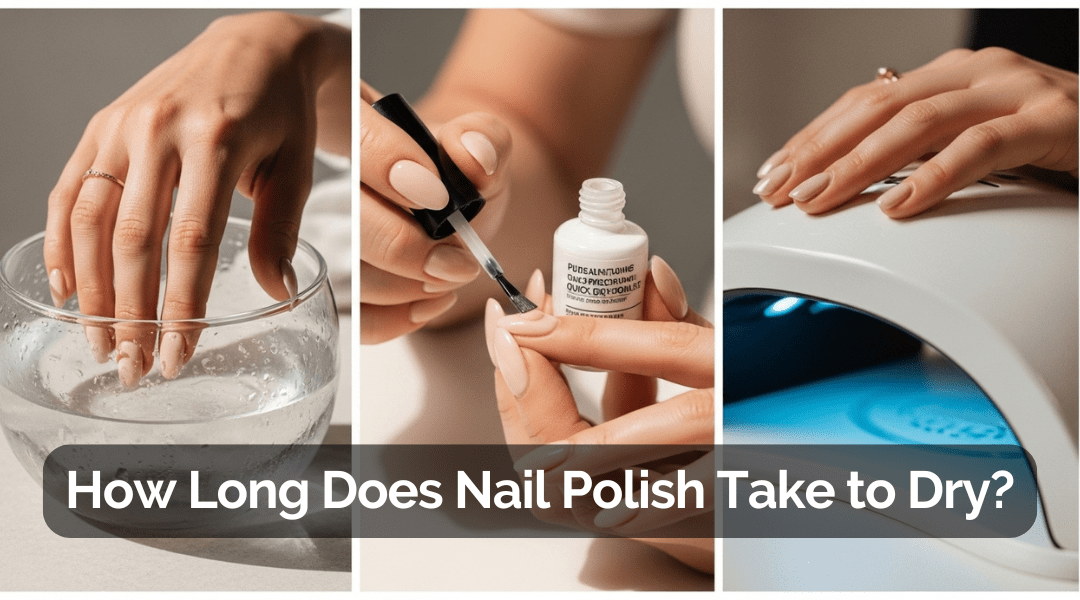
Regular nail polish takes 20 to 30 minutes to touch-dry and up to two hours to fully cure. Gel polish cures in under 60 seconds under an LED lamp. Quick-dry formulas land somewhere in the middle at 5 to 10 minutes.
Those windows matter because polish that feels dry on the surface can still dent underneath, sometimes for hours. At Salon 1150 in Austin, we’ve timed hundreds of manicures across every polish type and tested every shortcut in the book. This guide covers exact drying times by formula, the ten methods that actually work, and what to do when your polish stays tacky or soft long after it should have hardened.
The Science Behind Nail Polish Drying
Evaporation vs. Oxidation: How Polish Actually Dries
Traditional nail polish dries through a two-stage process:
- Evaporation: The solvents (like ethyl acetate and butyl acetate) evaporate into the air
- Oxidation: The remaining polymers harden through exposure to oxygen
Interesting fact: The “tacky” layer you sometimes feel is the polish’s top layer drying faster than the underlying layers – a phenomenon we call differential drying.
Why Some Polishes Dry Faster Than Others
At Salon 1150, we’ve tested hundreds of formulas and found three key factors:
- Chemical Composition:
- Quick-dry formulas contain extra solvents (like isopropyl alcohol)
- Thicker formulas (metallics, glitters) dry slower
- Gel hybrids use a combination of evaporation and light curing
- Polish Type:
- Regular polish: 10-30 minutes to touch dry
- Gel polish: Cures in 30-60 seconds under UV/LED light
- Quick-dry: Special formulas dry in 5-10 minutes
- Environmental Factors:
- Humidity above 60% can double drying time
- Ideal temperature range: 70-75°F
Nail Polish Dry Time by Polish Type: Salon Findings
After timing hundreds of manicures in our Austin salon, here’s what we’ve observed:
| Polish Type | Touch-Dry Time | Fully Cured Time | Notes |
|---|---|---|---|
| Regular Nail Polish | 10-30 minutes | 1-2 hours | Thin coats dry fastest |
| Gel Polish | 30-60 seconds | Immediately | Requires UV/LED lamp |
| Quick-Dry Formula | 5-10 minutes | 30 minutes | Our choice for busy clients |
| Dip Powder | 1-2 minutes | 5 minutes | Requires activator |
| Hybrid Polish | 3-5 minutes | 15-20 minutes | Combines gel and regular |
Pro Tip: The “fully cured” time is crucial – polish may feel dry but can still dent or smudge until completely hardened.
10 Ways to Make Nail Polish Dry Faster
After testing dozens of methods in our salon, these are the most effective:
1. Quick-Dry Top Coat (Our #1 Recommendation)
Seche Vite and Essie Speed Setter are salon favorites that dramatically cut drying time while adding shine.
- How it works: Forms a protective seal that hardens quickly
- Salon Favorite: Seche Vite (dries in 5 minutes)
- Application tip: Apply while the polish is still slightly wet
2. The Ice Water Method
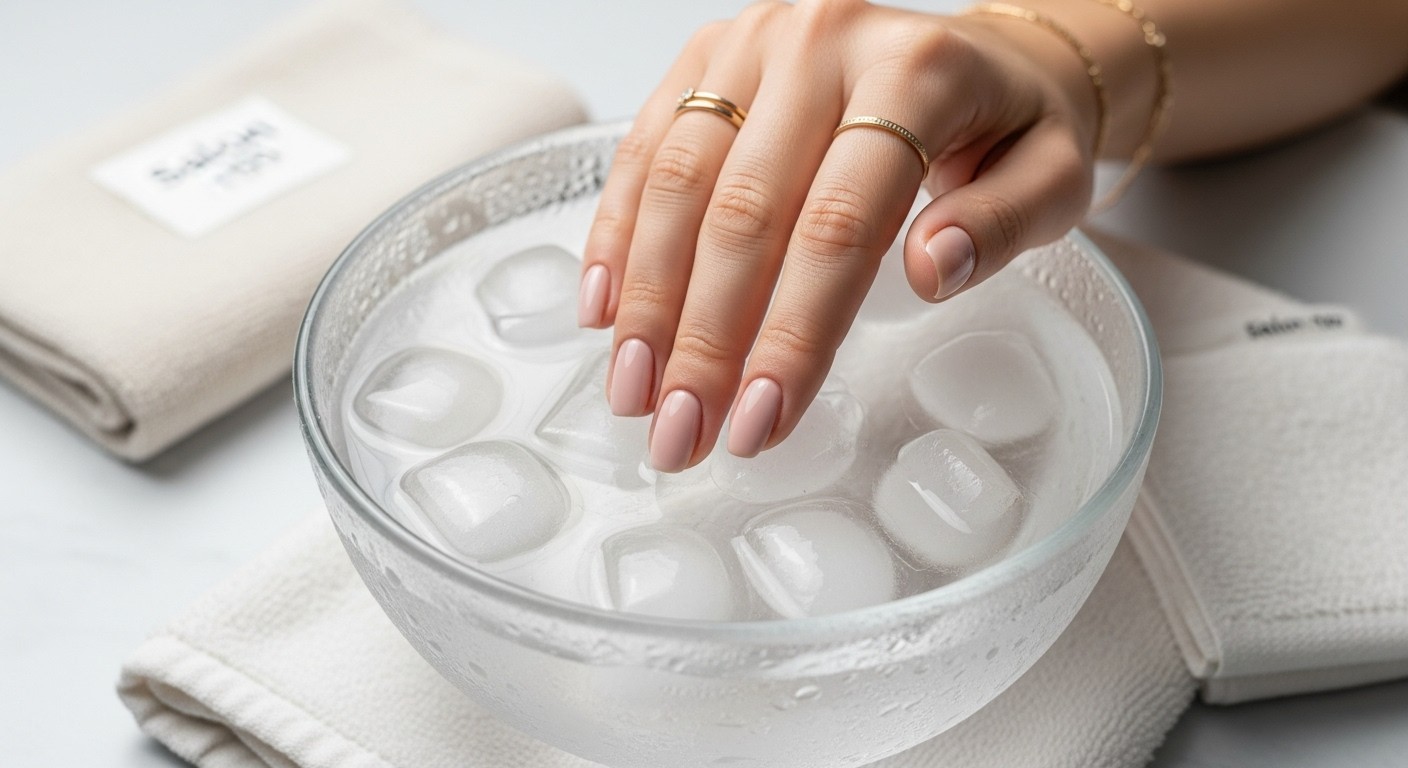
- Wait 3 minutes after final coat
- Fill bowl with ice water
- Submerge nails for 3 minutes
- Pat dry gently with lint-free cloth
Why it works: Cold contracts the polish molecules, speeding hardening
3. Quick-Dry Drops
OPI Drip Dry and Sally Hansen Insta-Dri are perfect for a quick finish when you’re in a rush.
- Best for: Spot treatment on smudges
4. Hairdryer on Cool Setting
Blowing hot air on your nails might seem like a good idea, but it can actually soften the polish and cause smudging. Instead, use a hairdryer on the cool or cold setting. The gentle airflow speeds up evaporation without risking dents.
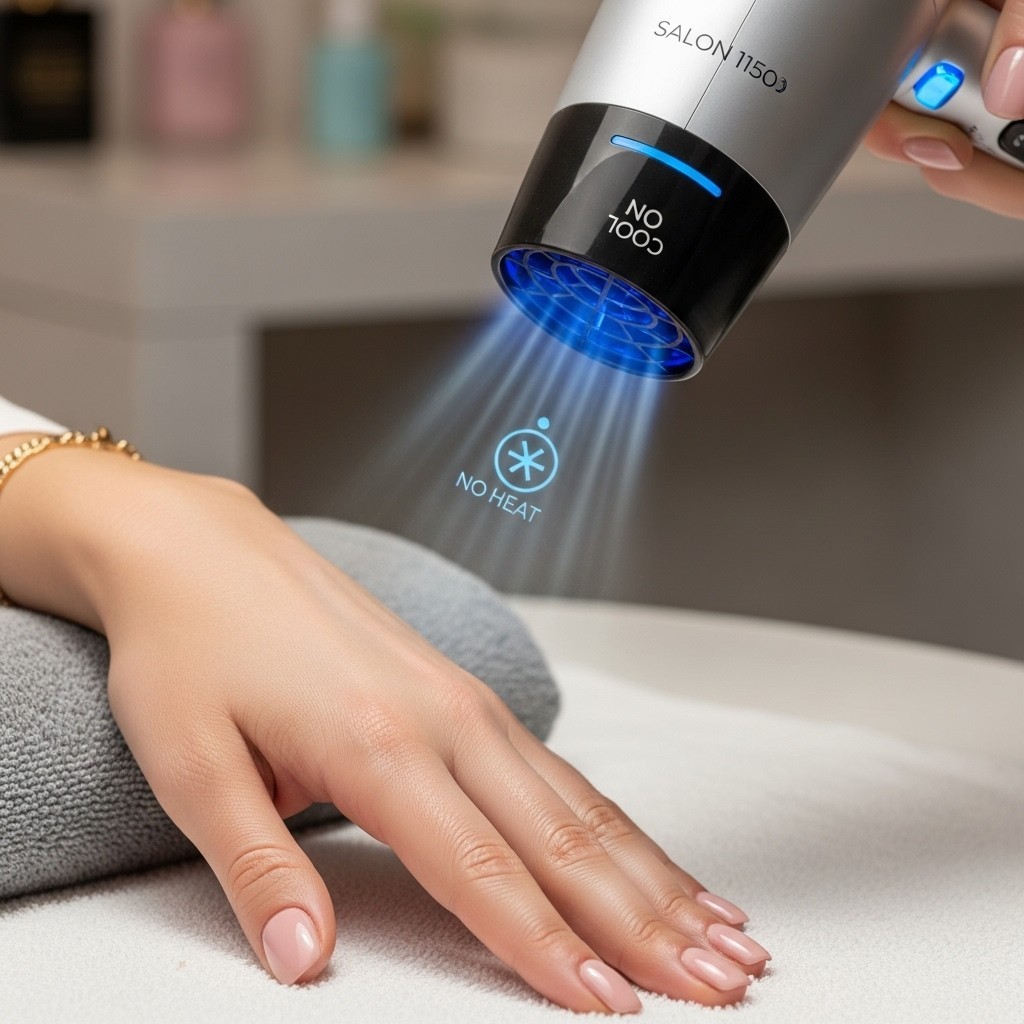
- Hold 12+ inches away
- Use no-heat setting only
- Move constantly to prevent bubbling
5. Thin Layer Technique
Apply 2-3 thin coats rather than one thick coat for faster drying and better results.
6. Quick-Dry Spray
- Mist from 8+ inches away
- Contains evaporating agents
- Caution: Can cause slight dulling
7. Cuticle Oil Application
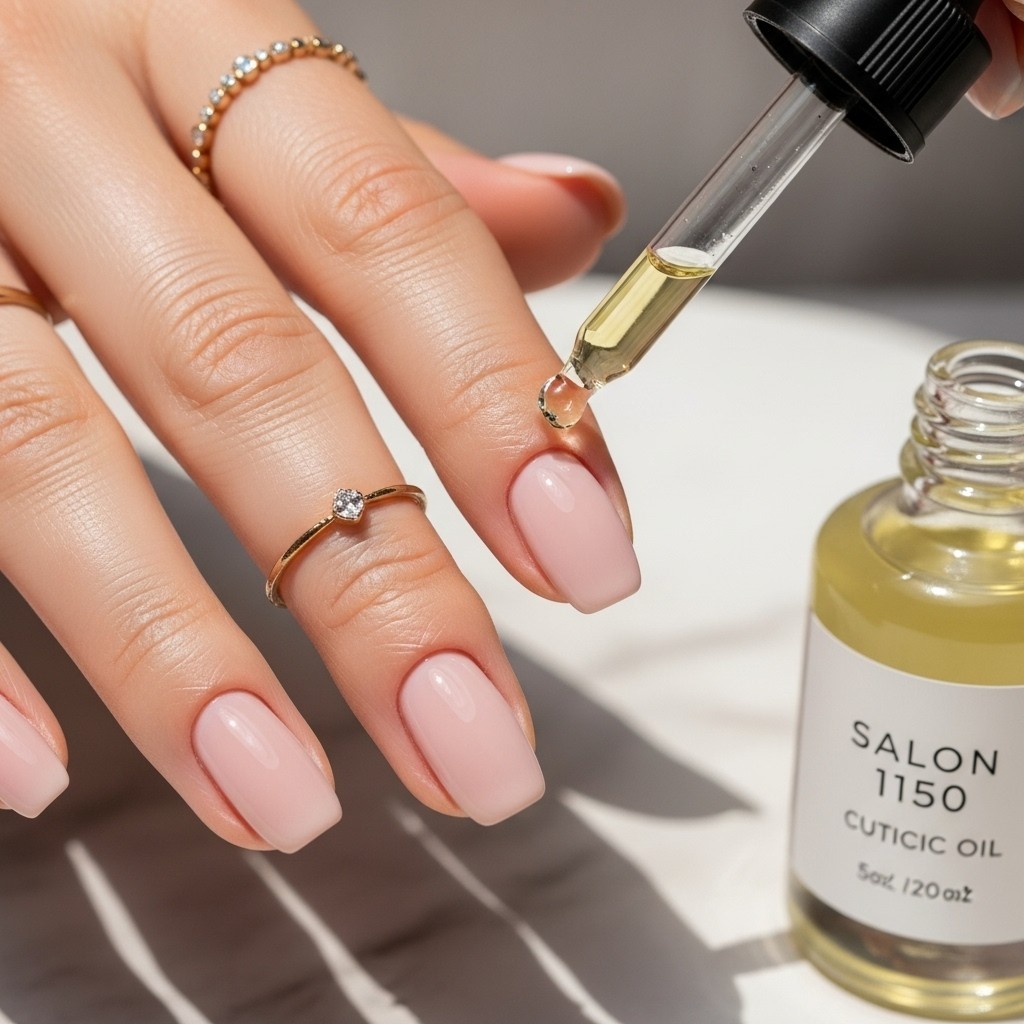
After about 10 minutes of drying, apply cuticle oil around (not directly on) your nails. This helps prevent smudging by protecting the polish while it finishes curing. Plus, it keeps your cuticles hydrated and your manicure looking fresh longer.
8. Rubbing Alcohol Spritz
Does rubbing alcohol make nail polish dry faster? Yes, a light mist of diluted rubbing alcohol (70% alcohol, 3:1 with water) speeds evaporation of the solvents in the top layer.
- Mix 70% alcohol with water (3:1 ratio)
- Lightly mist nails
- Evaporates excess solvents
9. Proper Positioning
- Hands palm down after painting
- Gravity helps polish set evenly
- Avoid resting on surfaces
10. Choose Gel When You Need Instant Results
For clients who can’t wait, our gel manicures provide:
- Instant curing
- 14+ day wear
- Smudge-proof finish
7 Factors That Affect Drying Time
| Factor | Effect on Drying Time | Salon 1150 Pro Tip |
|---|---|---|
| Application Thickness | Thick coats trap solvents (2x longer drying) | Apply 3 thin layers (credit-card thickness) with 2 minutes between coats |
| Humidity & Temperature | High humidity slows evaporation (Austin adds 15+ mins) | Use our climate-controlled drying stations or a small fan on low |
| Base/Top Coat Selection | Quality top coats can cut drying by 50% | We use Seche Vite (dries in 5 mins) – available in our retail section |
| Nail Preparation | Oily nail beds increase dry time by 30% | Pre-treatment with 99% isopropyl alcohol ensures proper adhesion |
| Polish Quality | Salon-grade dries 25% faster than drugstore | Our OPI/ESSIE selections are formulated for professional results |
| Airflow | Proper airflow reduces dry time by 20-40% | Palm-down positioning under our adjustable airflow dryers |
| Light Exposure | Only affects gel polish (cures in 30-60 sec) | Our LED curing stations guarantee instant gel drying |
Thick Coats vs. Thin Layers
Thick coats trap solvents, slowing drying. Thin, even layers dry faster and look smoother.
Humidity & Temperature
Ideal drying happens in moderate temperatures with low humidity. Austin’s humid climate can slow drying, a fan or air conditioning helps.
Base & Top Coat Usage
A good base coat protects nails and can speed drying. Top coats seal color and often include quick-dry formulas.
Nail Prep
Oily nails repel polish and extend drying time. Proper cleansing and dehydrating before application are key.
Polish Brand & Formula
Salon-quality polishes tend to dry faster and last longer than drugstore options.
Airflow & Environment
Fans or open windows increase airflow, helping polish dry faster.
Light Exposure
UV and LED lamps cure gel polishes instantly, while natural sunlight has limited effect on regular polish.
Does Nail Polish Dry Faster in Heat or Cold?
Cold air speeds up drying. Hot air slows it down and causes bubbles.
Here’s what’s happening chemically: nail polish dries when its solvents evaporate. Cold air contracts the polish film and accelerates that process. Heat keeps solvents in a liquid state longer, softening the top layer instead of hardening it.
What this means in practice:
- Cool fan or hairdryer on cold setting: Fastest option for regular polish
- Ice water method: Works for the same reason, cold contracts the polish molecules
- Hot bathroom, steamy kitchen: Worst environment; humidity and heat together can double drying time
- Direct sunlight: Warms the surface and slows evaporation; only UV exposure helps gel polish cure
- Air conditioning: Ideal – cool, dry air is the best passive drying environment
Best Fast-Drying Products We Use & Recommend
For At-Home Use:
| Lightweight and fast-drying, it seals manicure perfectly | Product Name | Key Benefits | Why We Recommend It |
|---|---|---|---|
| Quick-Dry Polish | OPI Rapidry | Dries quickly, rich color, smooth coverage | Trusted by pros for fast, salon-quality results |
| Top Coat | Essie Speed Setter | Speeds drying, adds glossy, durable finish | Lightweight and fast-drying, seals manicure perfectly |
| Drying Drops/Sprays | Sally Hansen Insta-Dri | Accelerates drying, prevents smudges, adds shine | Easy to use, perfect for quick touch-ups and travel |
Salon-Grade Solutions:
| Product | Key Features & Benefits | Why We Recommend It |
|---|---|---|
| CND Shellac (Gel Polish) | Original gel polish with UV3 technology; cures in under a minute; chip-resistant, high-shine finish lasting 14+ days | Industry-leading gel polish known for durability, fast curing, and protecting natural nails |
| SunUV 48W (LED Lamp) | Ergonomic, energy-efficient LED lamp calibrated for perfect curing of gel polish | Speeds up curing time, ensures flawless, scratch-resistant finish |
| Kupa ManiPro (Professional Dryer) | Powerful, salon-grade drying system designed for quick, even drying of polish and gel | Provides consistent airflow and drying power for professional-quality results |
How to Tell If Nail Polish Is Dry
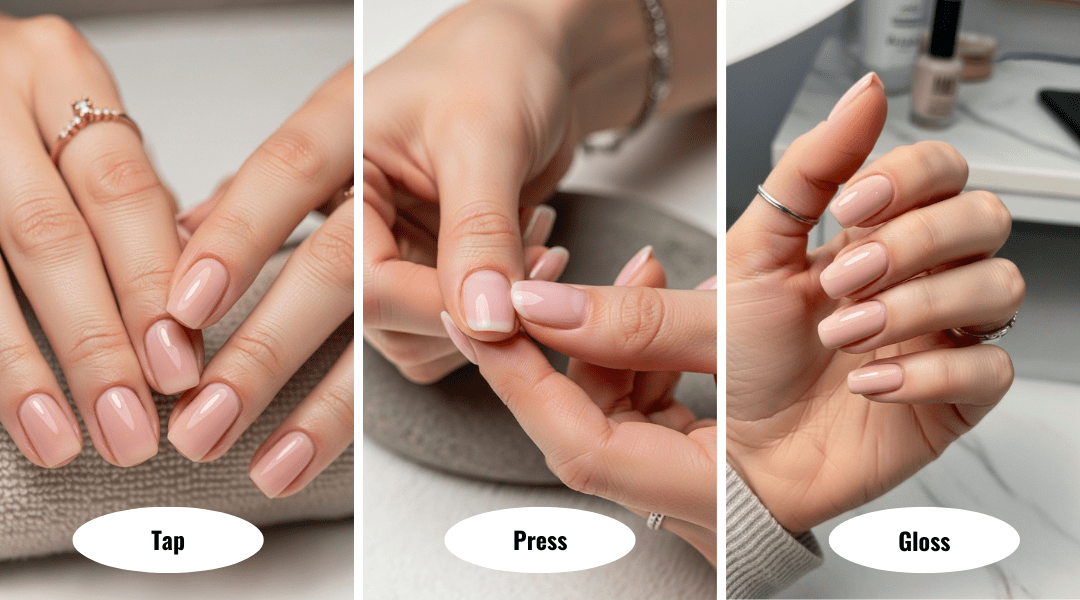
Many clients make the mistake of thinking their polish is dry when it’s not. Here’s how we test at Salon 1150:
How to Tell If Nail Polish Is Dry Without Touching It
- The Tap Test: Gently tap two nails together – no tacky feeling?
- The Press Test: Lightly press a fingernail – no fingerprint left behind?
- The Gloss Test: Shine under light appears even (no ripples)?
Warning: Even when dry to the touch, polish can remain soft underneath for up to 2 hours.
Why Is My Nail Polish Dry But Still Soft?
This is called differential drying, the surface layer hardens before the layers underneath have fully cured. You’ll feel it as a dry-but-dentable texture that can still take a fingerprint hours after painting.
Common causes:
- Thick coats trap solvents underneath the hardened top layer, extending inner curing by 30–60 minutes
- Skipping the base coat means more polish contact with the nail plate, which slows adhesion and full cure
- High humidity (above 60%) slows solvent evaporation at every layer
- Expired or thick formula, polish that has thickened in the bottle takes significantly longer to cure through
Common Drying Problems & Fixes
| Details | Solution / Prevention / Fix | |
|---|---|---|
| Smudges After Drying | Nail polish smudges even after drying | – Apply quick-dry top coat immediately – Use clean-up brush dipped in acetone – For severe smudges, reapply one thin coat |
| Bubbles in Polish | Bubbles form on the nail surface | – Don’t shake polish; roll bottle gently instead – Ensure nails are clean and dry – Apply polish in thin, even strokes |
| Polish Won’t Dry | Polish remains tacky or wet for long | Causes include humid environment, too-thick application, or expired polish Apply thin coats, dry in low humidity, use fresh polish |
| Peeling After Drying | Polish peels or chips shortly after drying | Salon fix: lightly buff nail surface, apply bonding primer, use thinner coats to improve adhesion and durability |
Frequently Asked Questions
How long does nail polish take to dry naturally?
Nail polish typically takes about 20 minutes to become touch-dry, meaning it feels dry to the touch, but it can take up to 1 to 2 hours to fully dry and harden depending on the formula, number of coats, and environmental factors. Thinner layers and lighter colors dry faster, while thick coats and dark pigments extend drying time. Quick-dry products can speed this up significantly. (Sources: Maniology, Daring Lily)
Why does my nail polish stay sticky?
Sticky nail polish usually happens because the polish hasn’t fully dried or cured. Common causes include applying thick coats, not allowing enough drying time between layers, or using old or expired polish. High humidity and improper storage can also keep polish tacky. For gel polish, incomplete curing under the correct UV/LED lamp often leaves a sticky residue.
How can I dry nail polish in 5 minutes?
Apply a quick-dry top coat like Essie Speed Setter or Seche Vite while the last coat is still slightly wet. Then dip your nails in ice-cold water for 2–3 minutes to contract the polish film and speed up hardening.
Other methods that work:
Quick-dry top coat: apply before the last coat fully sets
Ice water dip: wait 2 min after painting, submerge for 3 min
Quick-dry drops or spray: use immediately after final coat
Cool hairdryer: hold 12 inches away, no-heat setting only
Thin coats: 2 to 3 light layers dry faster than one thick one
Is gel polish faster than regular polish?
Gel polish dries much faster than regular polish because it cures instantly under a UV or LED lamp, typically within 30–60 seconds per coat. In contrast, regular polish air-dries and can take 20–30 minutes or more to become touch-dry and up to 1–2 hours to fully harden. This curing process makes gel polish less prone to smudging and chipping immediately after application.
Conclusion
While no method makes regular polish dry instantly, combining these professional techniques can cut drying time by 75%. For clients who value both time and quality, we always recommend:
- Quick-dry top coats as your best investment
- Thin, even coats for fastest drying
- Gel manicures when you need instant results