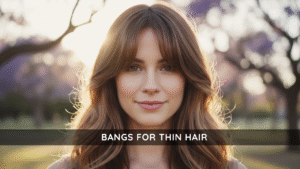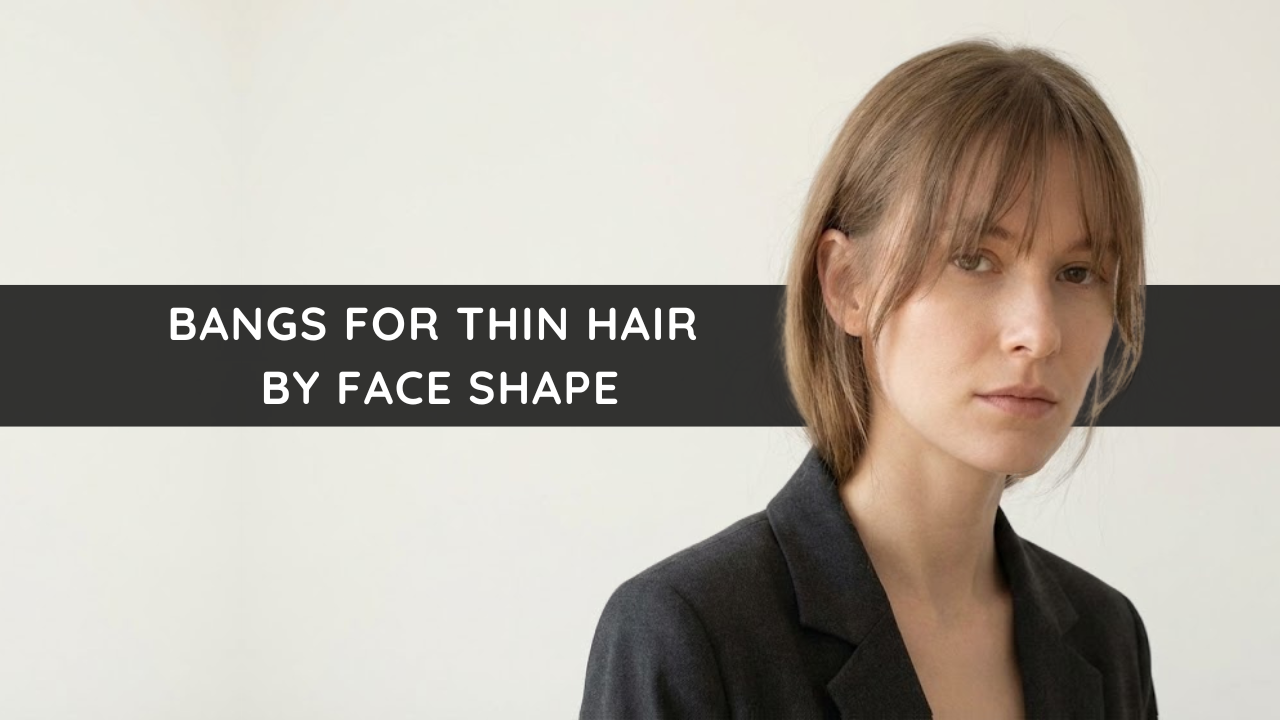
Short answer: Yes, you can wear bangs with thin hair, but the shape matters. Look for diagonal, vertical, tapered, or broken lines that preserve air at the roots and work with your face shape. Heavy, straight-across bangs can reveal gaps, emphasize sparse areas, and make some faces appear wider.
How face shape changes the way thin bangs read visually
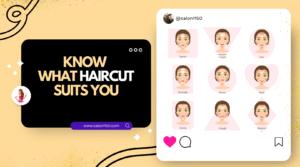
On thin hair, density is the limiting factor. Face shape determines how the bang geometry reads. Horizontal lines can emphasize width, while diagonal lines lengthen the visual direction and broken or tapered edges reduce the appearance of gaps. The goal is to match the bang shape to both your density and your face shape.
Round face + thin hair
The goal is to reduce facial width and avoid strong horizontal lines. Round faces pull the eye outward, and thin hair cannot hold solid, straight edges. When bangs rely on horizontal density, gaps show and the face appears wider.
Side-Swept Curtain Bangs
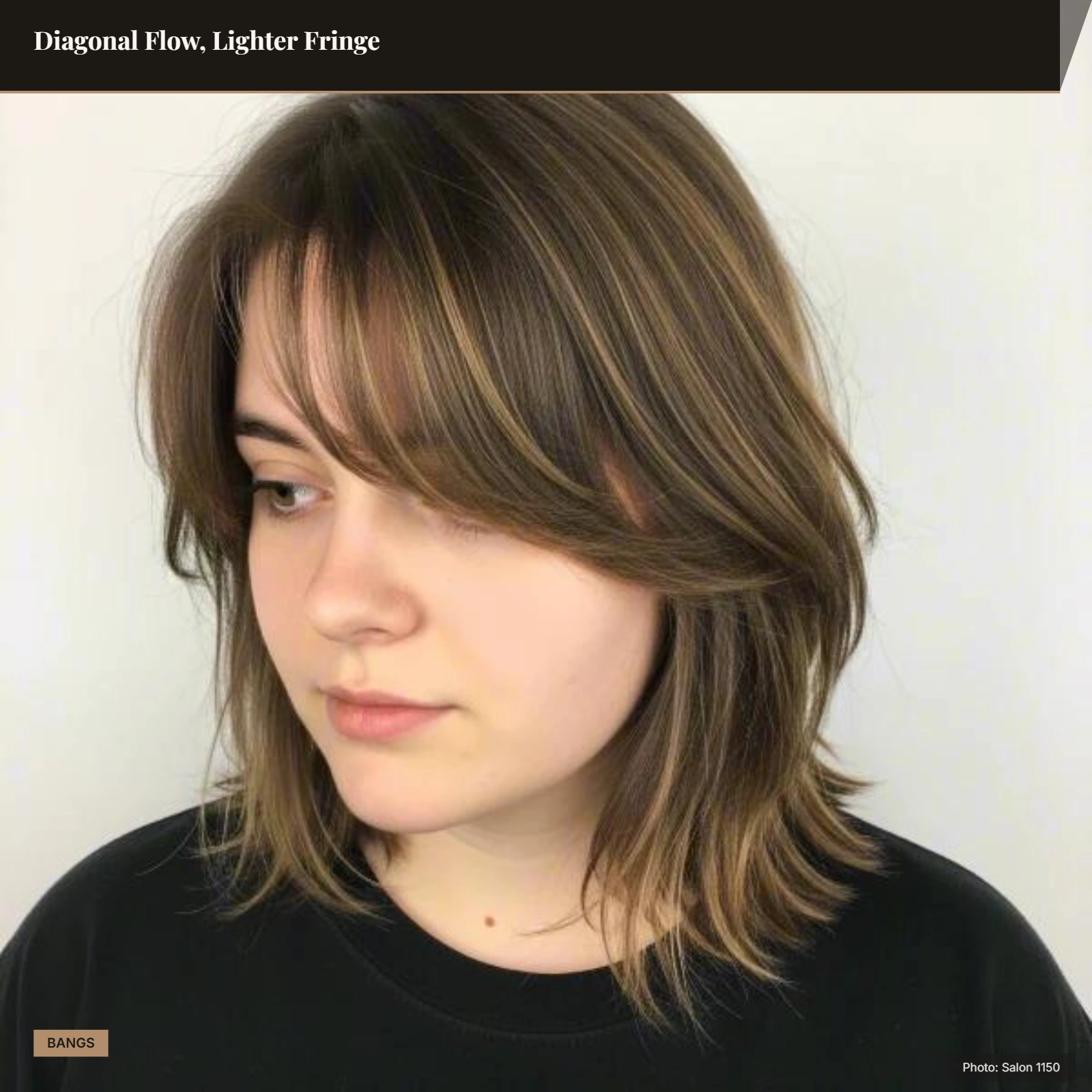
Diagonal flow shifts the eye vertically instead of sideways. The tapered shape spreads thin density over more area, helping reduce visible scalp. This style works because it does not require bulk to look intentional.
Long Feathered Fringe
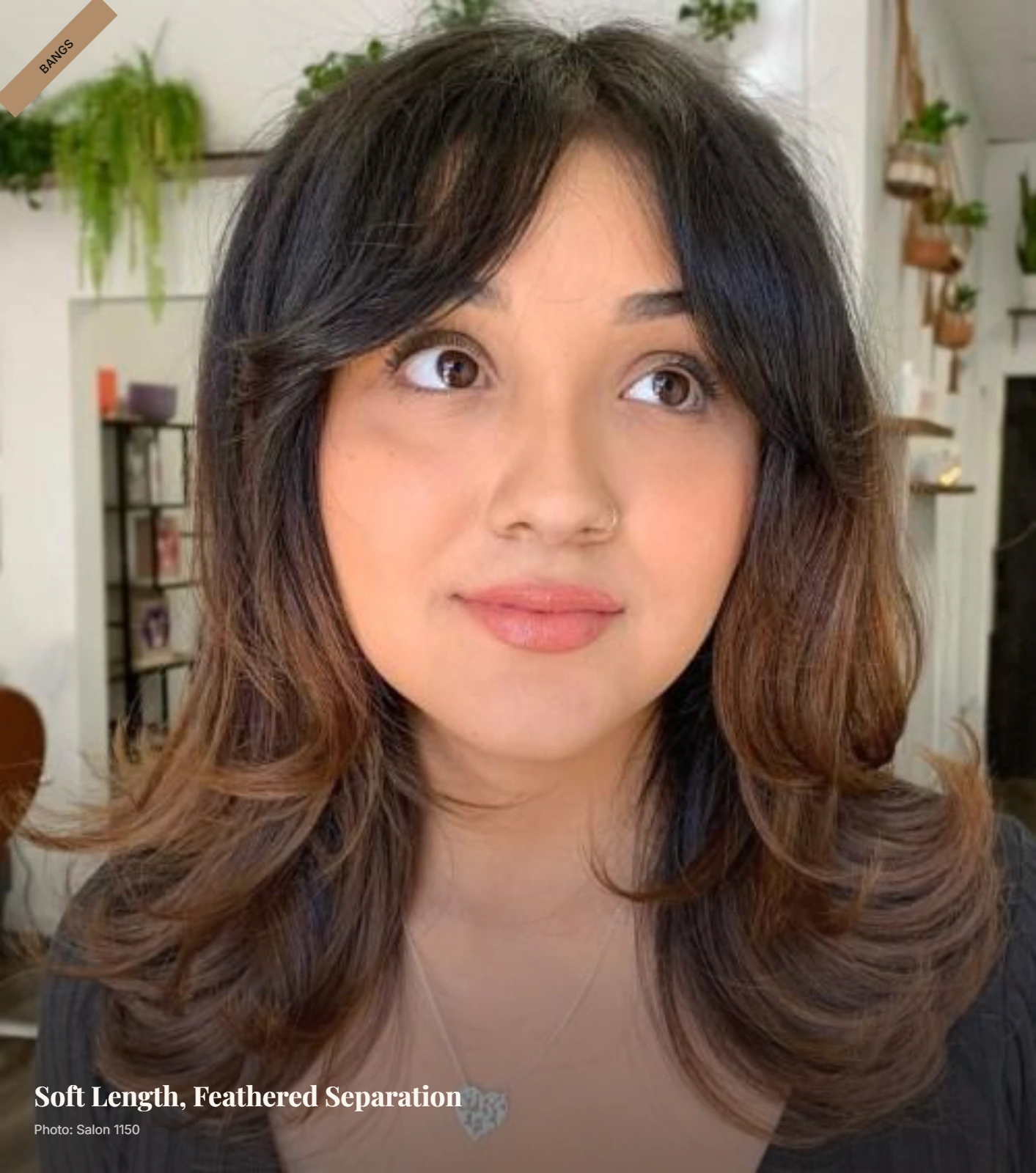
Length interrupts round symmetry, while feathering softens thin zones. Separation reads as lightness rather than patchiness, lowering the risk of a flat band across the forehead.
Bottleneck Bangs
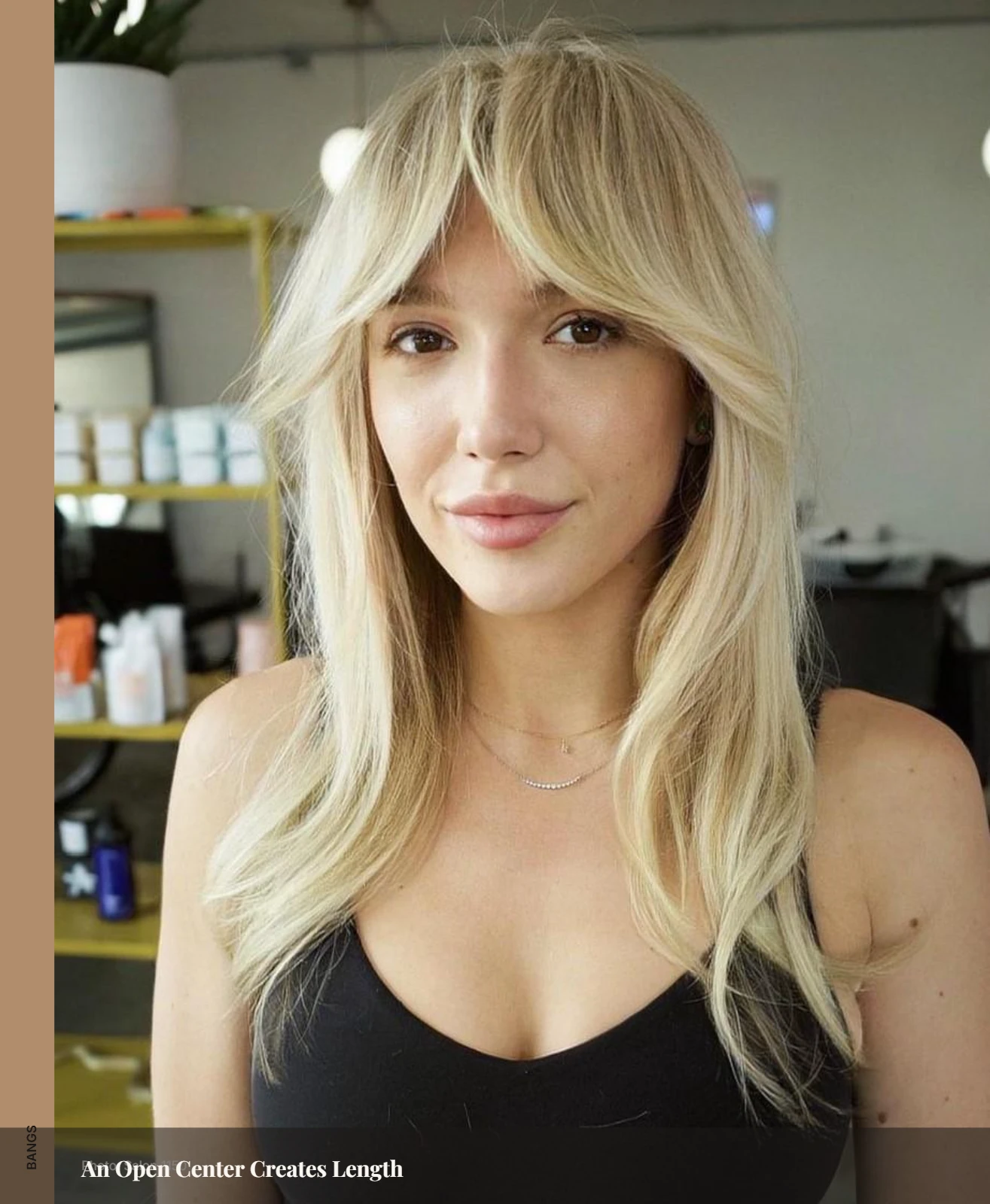
An open center visually lengthens the face. Soft tapering near the part diffuses scalp visibility instead of highlighting it. Effective because uniform density is not required.
Asymmetrical Bangs
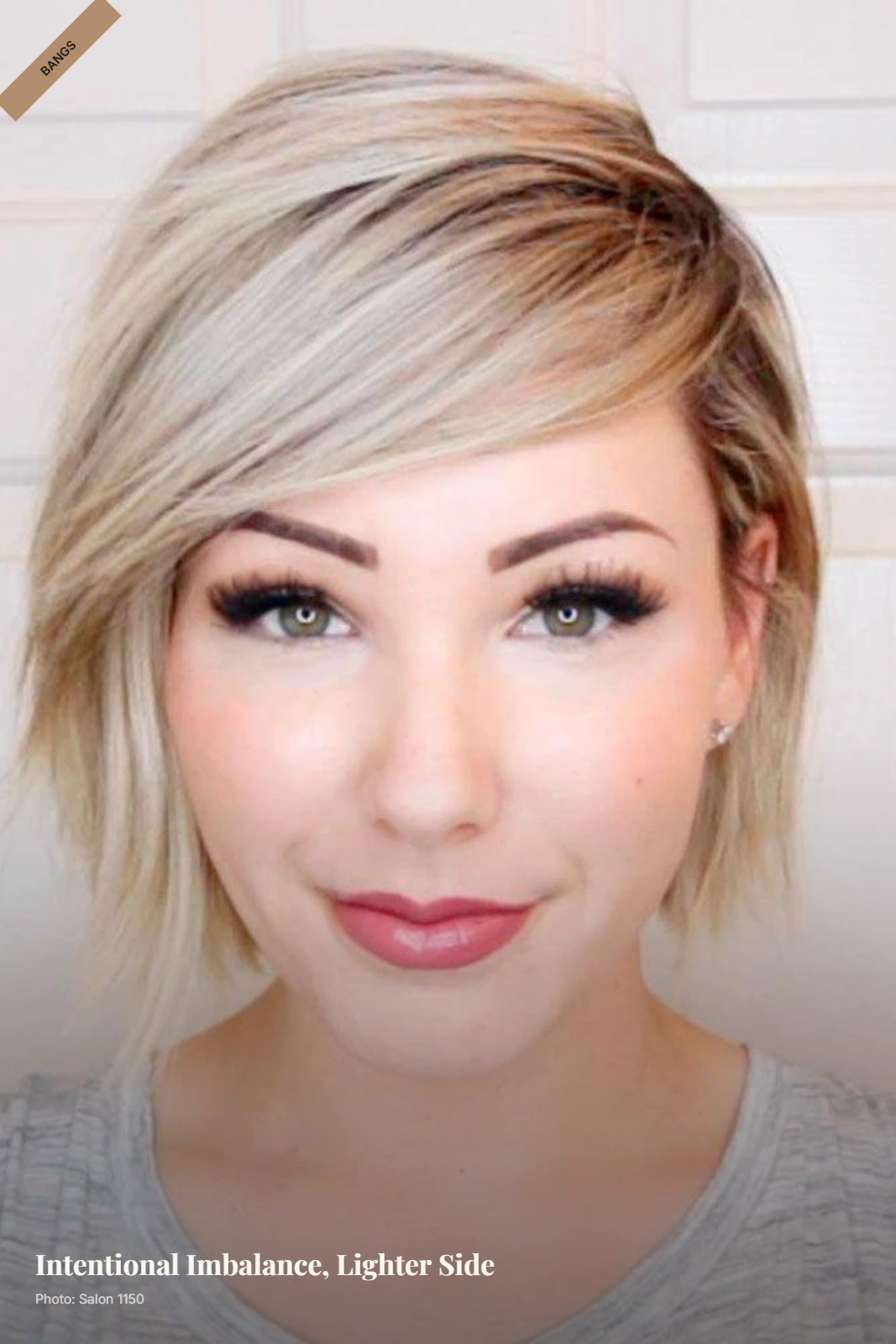
Imbalance can reduce width, but only when one side naturally has more density. On evenly thin hair, the result often looks unplanned rather than designed.
Blunt Micro Fringe
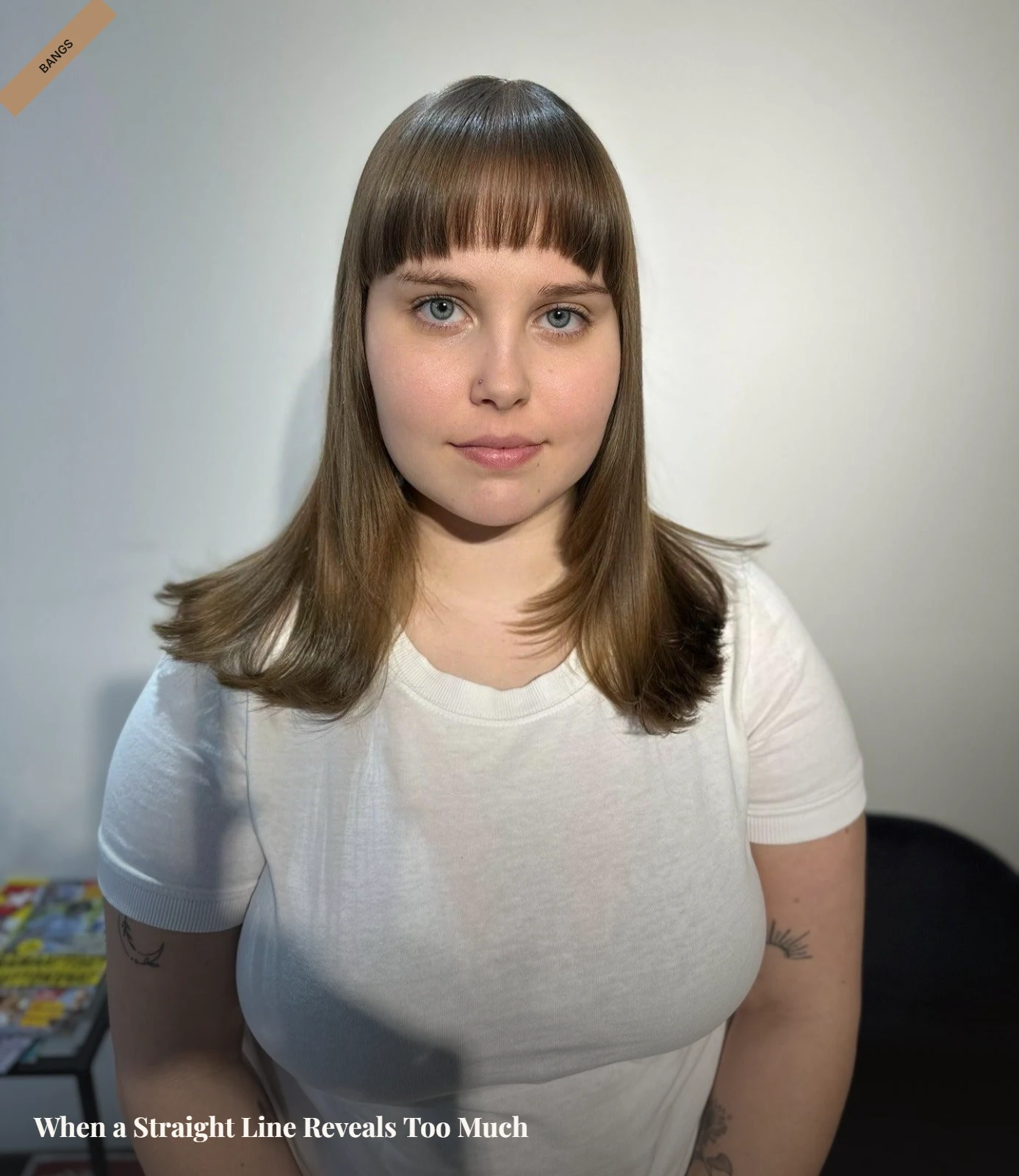
Short, straight lines widen the face and expose the forehead. Thin hair breaks the line quickly, creating visible gaps. This is a high-regret choice for round faces with thin hair.
Round Face Bang Styles Decision Snapshot
| Bang Style | Suitability | Why It Works or Fails |
|---|---|---|
|
Style
Side-Swept Curtain Bangs
|
Suitability
Generally favorable
|
Reasoning
Diagonal flow pulls the eye vertically instead of sideways. Tapered distribution lets thin hair cover more area, reducing visible scalp at the center.
|
|
Style
Long Feathered Fringe
|
Suitability
Generally favorable
|
Reasoning
Longer vertical drop interrupts circular symmetry. Feathering breaks up thin zones so separation reads as softness, not patchiness.
|
|
Style
Bottleneck Bangs
|
Suitability
Generally favorable
|
Reasoning
Open center lengthens the face visually. Soft tapering diffuses scalp visibility instead of highlighting it.
|
|
Style
Asymmetrical Bangs
|
Suitability
Conditional
|
Reasoning
Imbalance reduces width bias but requires naturally uneven density. On evenly thin hair, it can look accidental.
|
|
Style
Blunt Micro Fringe
|
Suitability
Often problematic
|
Reasoning
Short straight lines widen the face and expose the forehead. Thin hair shows gaps immediately.
|
Oval face + thin hair
The goal is to preserve facial balance without overcommitting limited density. Oval faces are neutral, but thin hair is not. The belief that “anything works” often leads to regret when bangs demand more density than the hair can provide.
Soft Curtain Bangs
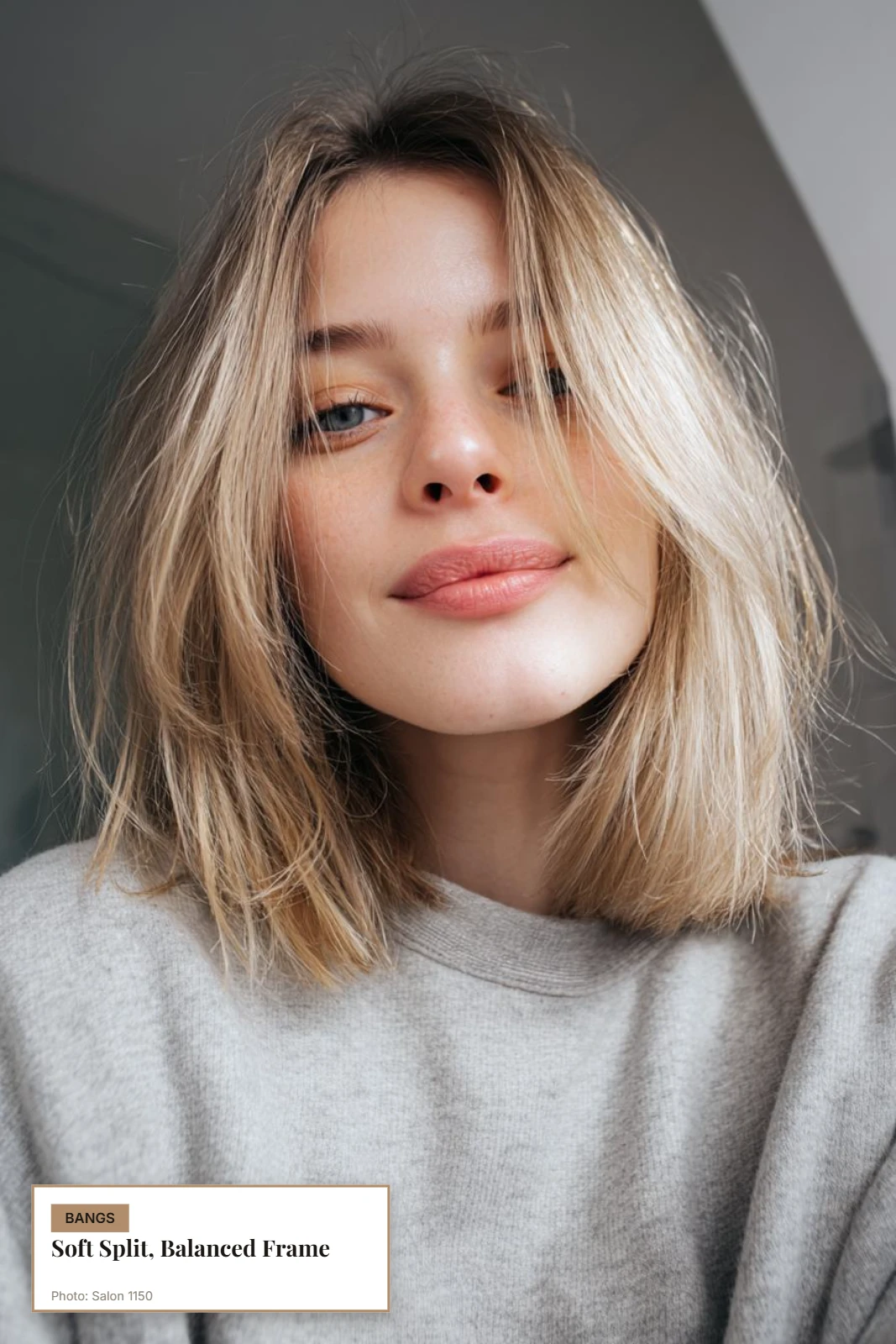
A soft split maintains natural balance without pulling too much hair forward. The face stays framed without shortening proportions or draining density from the rest of the haircut.
 See alsoEdgy Haircuts That Actually Work in Real Life: A Stylist’s Honest Guide
Long Tapered Fringe
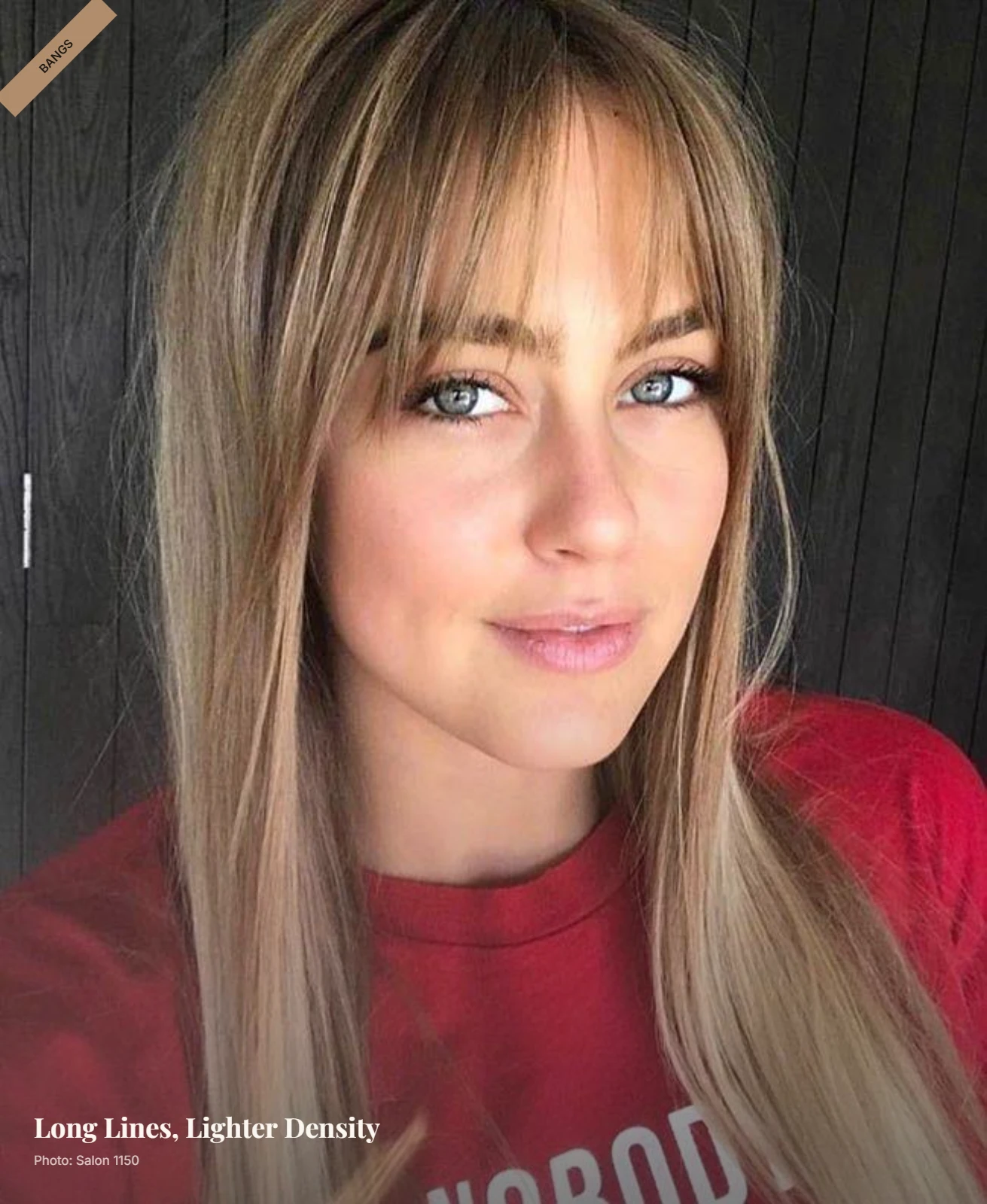
Adds structure while keeping airflow between strands. Tapering increases perceived fullness without requiring thickness, making this a dependable option for thin hair.
Piecey Bangs
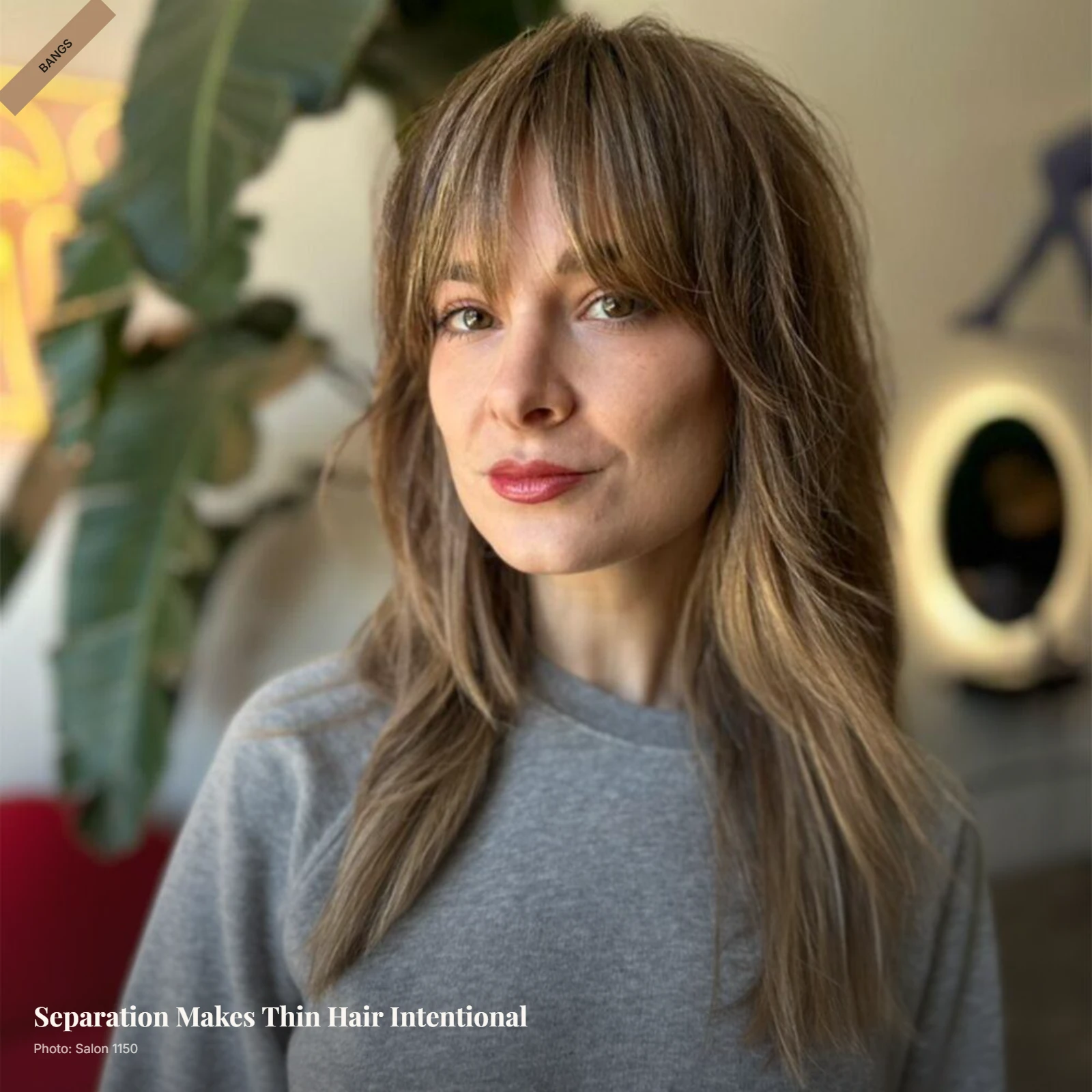
Intentional separation avoids flat, uniform lines that reveal transparency. Limited strands are used efficiently, so thin density reads as design rather than shortage.
Light Blunt Fringe
Can visually shorten the forehead, which may suit some oval faces. However, this requires strict density control. On thin hair, even slight overuse quickly exposes see-through zones, so this works only in tightly controlled cases.
Straight Blunt Bangs
Creates a heavy horizontal line that thin hair cannot support. Transparency appears quickly, especially in natural light. This is where the “oval face means anything works” assumption fails.
Oval Face + Thin Hair Bang Styles Decision Snapshot
Decision goal: Preserve balance without overcommitting limited density.
| Bang Style | Suitability | Why It Works or Fails |
|---|---|---|
|
Style
Soft Curtain Bangs
|
Suitability
Generally favorable
|
Reasoning
Split design maintains natural balance without pulling too much hair forward. Frames the face without draining density from the rest of the cut.
|
|
Style
Long Tapered Fringe
|
Suitability
Generally favorable
|
Reasoning
Adds structure while keeping airflow between strands. Tapering maximizes perceived fullness without demanding thickness.
|
|
Style
Piecey Bangs
|
Suitability
Generally favorable
|
Reasoning
Avoids flat, uniform lines that expose transparency. Uses limited strands efficiently through intentional separation.
|
|
Style
Light Blunt Fringe
|
Suitability
Conditional
|
Reasoning
Can shorten the forehead visually. Requires precise density control. Even slight over-commitment reveals see-through zones.
|
|
Style
Straight Blunt Bangs
|
Suitability
Often problematic
|
Reasoning
Heavy horizontal line demands density thin hair cannot support. Transparency shows quickly, especially in natural light.
|
Square face + thin hair
The goal is to soften rigidity and avoid echoing strong jaw geometry. Square faces already carry pronounced horizontal and vertical structure, and thin hair amplifies any rigid shape placed on top.
Soft Wispy Bangs
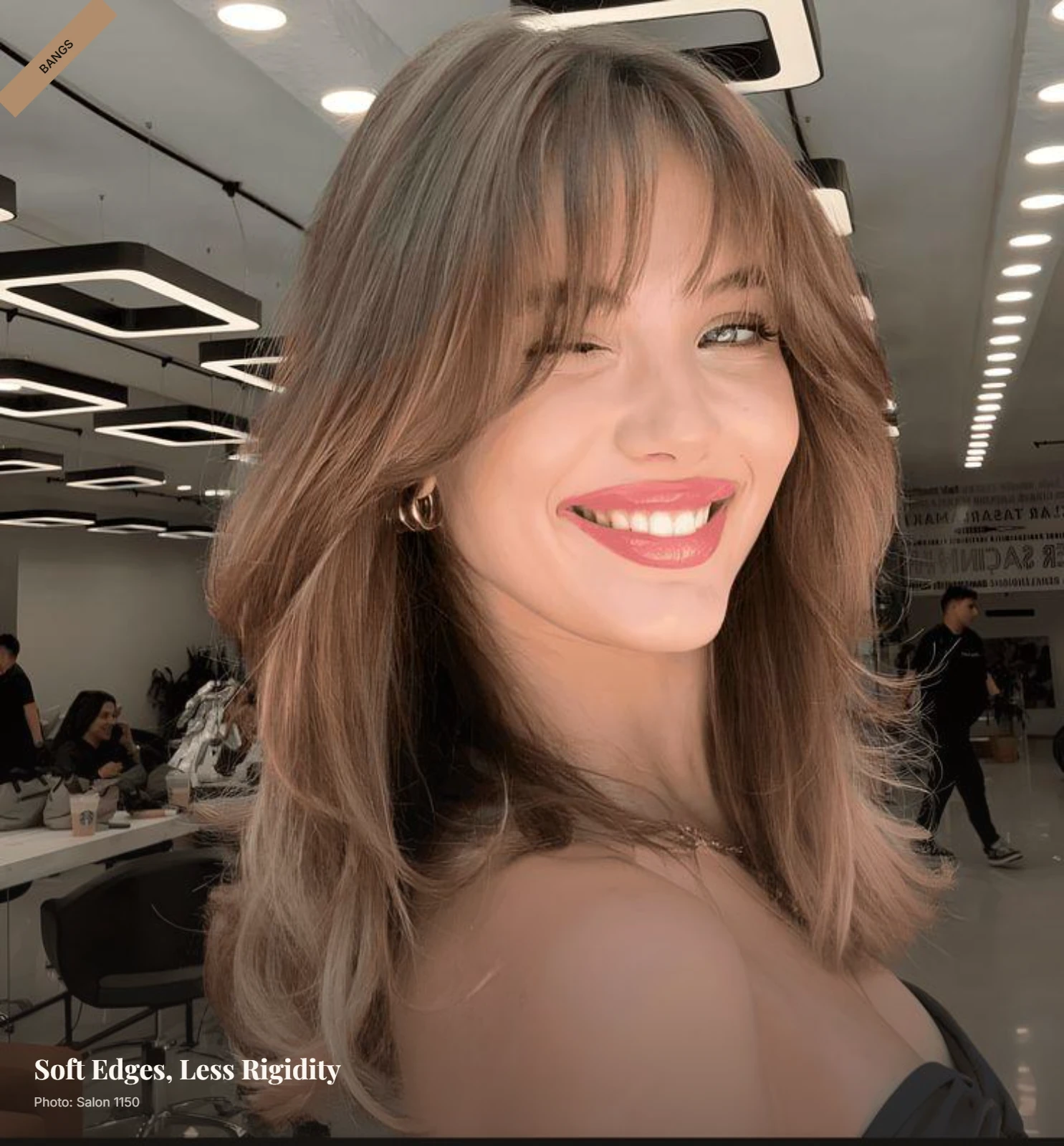
Airy, irregular edges break rigid symmetry. Light movement distracts from jaw dominance without demanding density, making this a low-risk option for thin hair.
Curtain Bangs With Tapered Ends
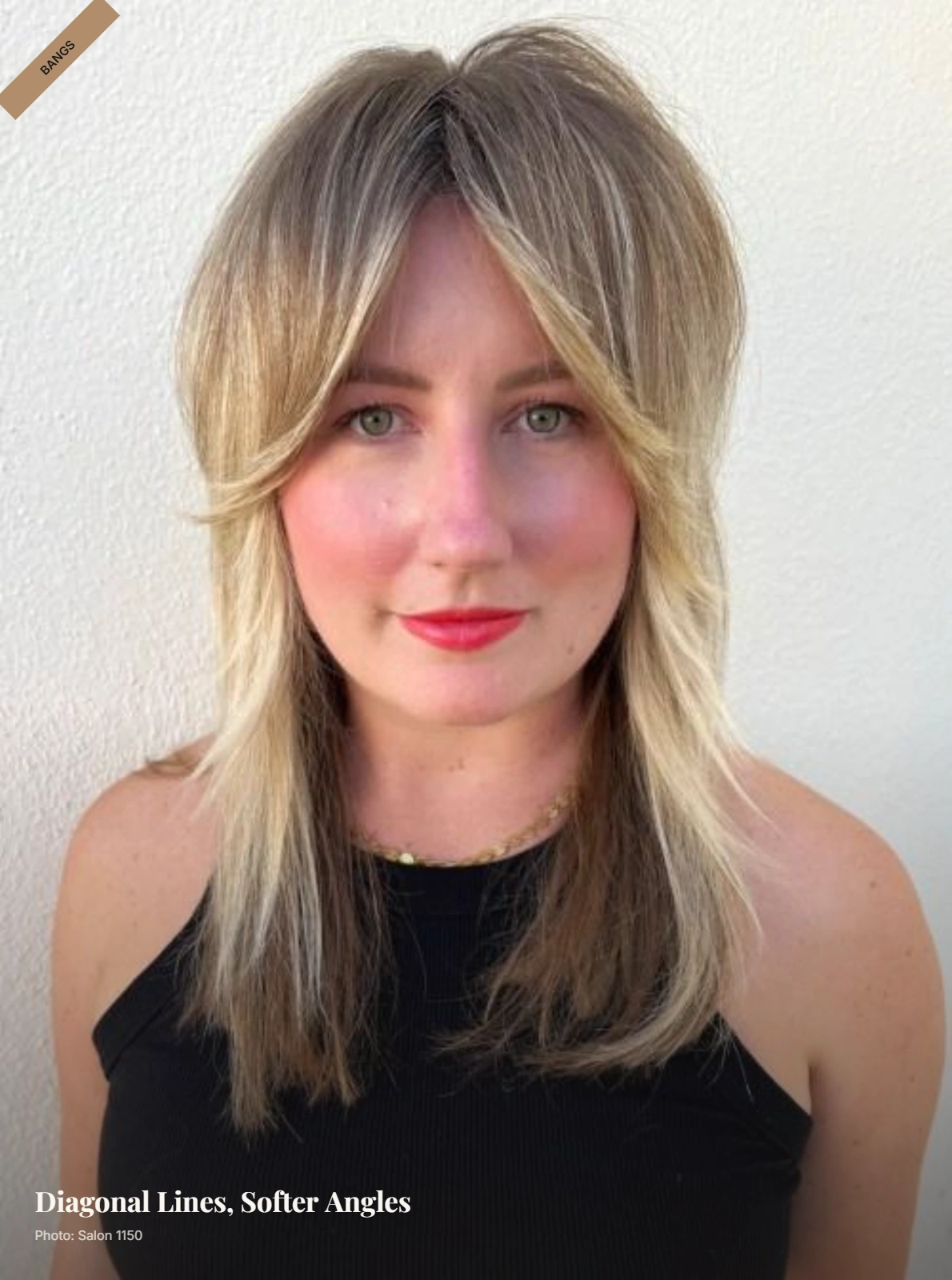
Diagonal framing softens sharp angles through the cheek and temple area. Tapered ends prevent abrupt density breaks, which thin hair cannot hide.
Long Side-Swept Fringe
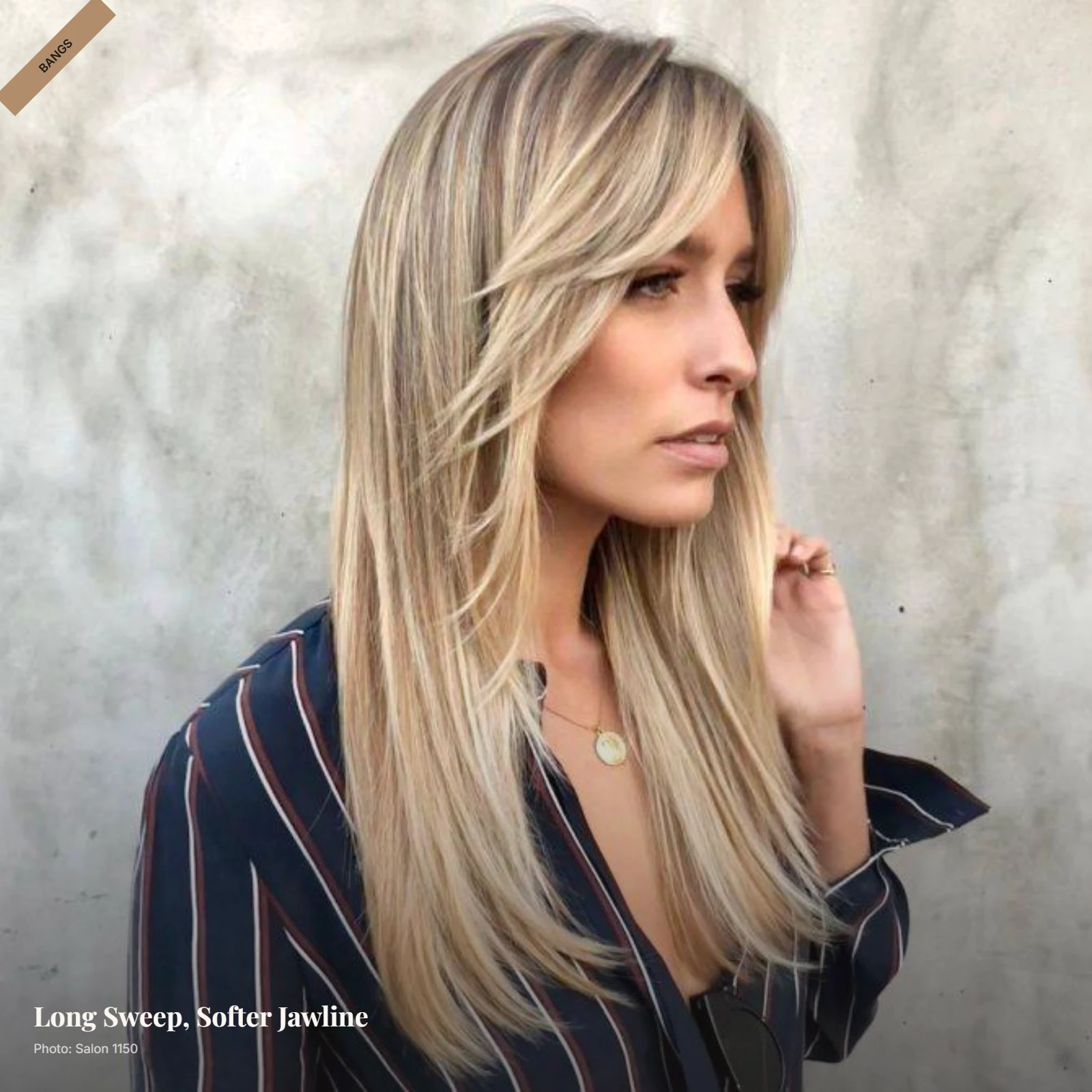
Moves visual weight away from the jawline and toward the upper face. Minimal bulk pairs well with fine strands while maintaining flow.
Square Face + Thin Hair Bang Styles Decision Snapshot
Decision goal: Soften rigidity and avoid echoing strong jaw geometry. Thin hair exaggerates any rigid shape placed on top.
| Bang Style | Risk Level | Visual Effect |
|---|---|---|
|
Style
Soft Wispy Bangs
|
Risk
Low risk
|
Effect
Airy, irregular edges break rigid symmetry and reduce jaw dominance without demanding density.
|
|
Style
Curtain Bangs With Tapered Ends
|
Risk
Low risk
|
Effect
Diagonal framing softens sharp angles while tapered ends prevent density cliffs thin hair exposes.
|
|
Style
Long Side-Swept Fringe
|
Risk
Low risk
|
Effect
Pulls visual weight upward and away from the jawline while maintaining flow with minimal bulk.
|
|
Style
Bottleneck Fringe
|
Risk
Situational
|
Effect
Open center reduces horizontal emphasis, but sparse temples can limit success.
|
|
Style
Rounded Full Fringe
|
Risk
High regret
|
Effect
Reinforces squareness and exposes gaps. Thin hair cannot support the curved structure.
|
Special modifiers that override face-shape advice
These factors can change the decision instantly. Treat them as deal-breakers if present.
Glasses and mid-face visual weight

Thick or angular frames add a horizontal anchor. If you wear these frames, prefer open, arched, or split bangs so lines do not stack.
 See alsoFace Shape vs Haircut: face shape haircut rules exceptions That Matter
Cowlicks and growth-pattern conflicts
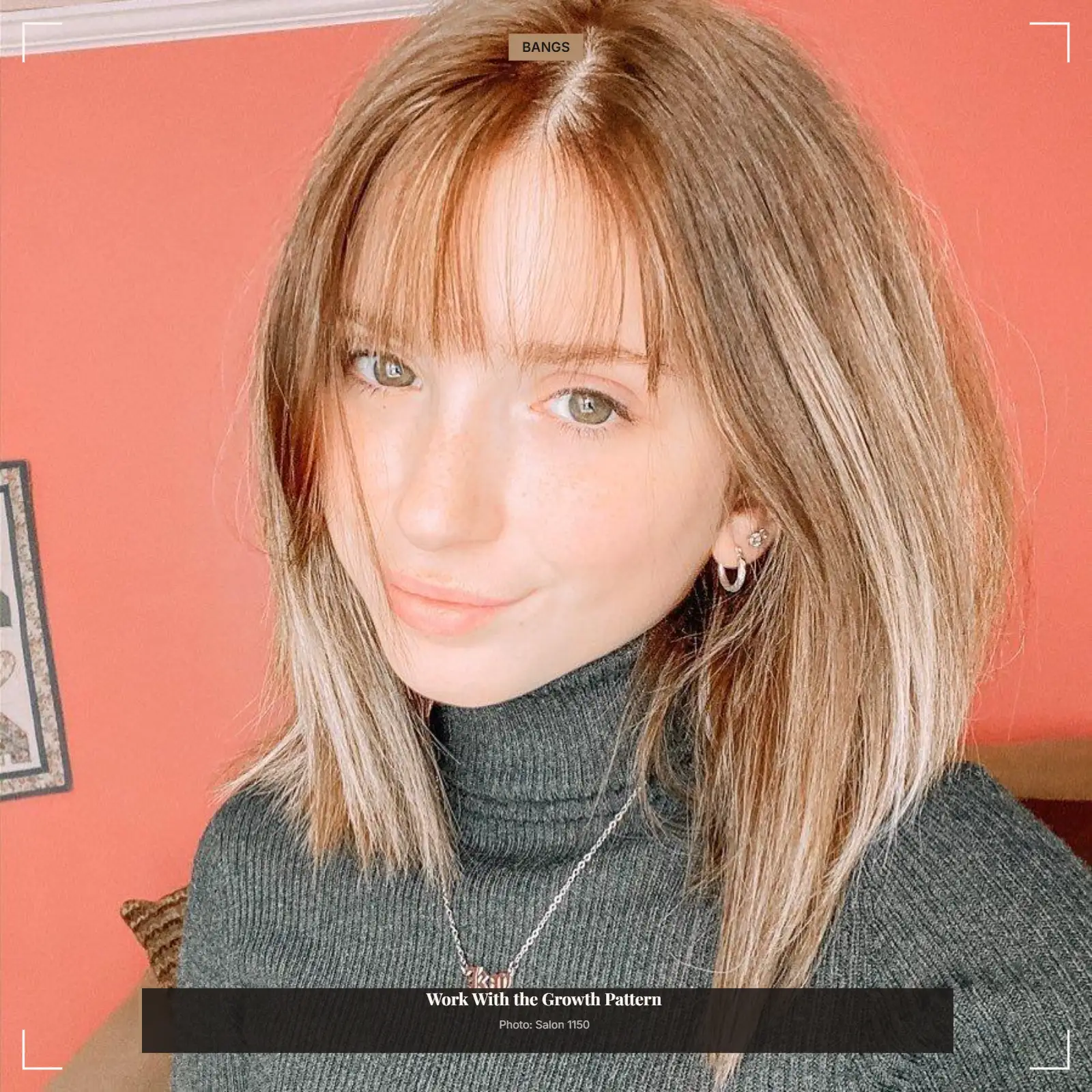
A front cowlick creates a forced separation line. If your natural part fights closure, pick intentional partial splits rather than trying to compress the hair into a perfect bar.
Mature or receding hairlines
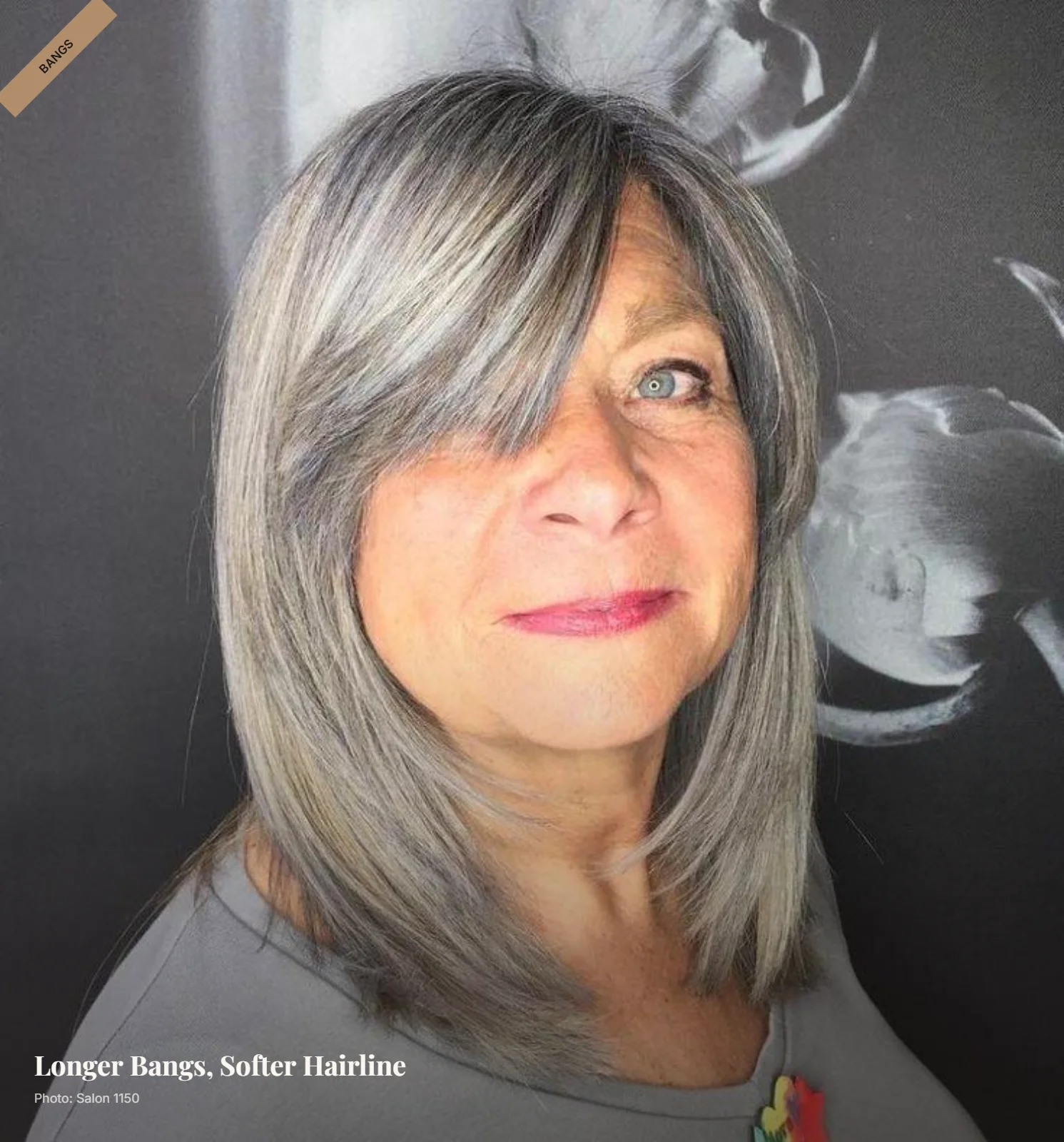
Recession and temple thinning change starting density. Very short bangs increase contrast with sparse temples. Longer, broken edges reduce that contrast and feel less exposing.
Common face-shape myths that fail on thin hair
- Myth: “Oval faces can wear anything.” Reality: Only if density supports the shape.
- Myth: “Blunt bangs always add perceived fullness.” Reality: On thin hair, blunt bangs often reveal gaps and highlight scalp shine.
- Myth: “Shorter equals thicker.” Reality: Shortcuts can expose recession and make gaps more visible.
Quick decision check – If two or more apply, avoid blunt or heavy bars
- You wear thick or angular glasses
- You have a visible front cowlick
- Your temples show clear thinning or recession
- Your forehead skin reacts badly to hair contact
What to tell your stylist
Bring this page. Ask for a geometry-first consult. Say if any modifier above applies. If you want permission to skip, say “I prefer a soft, risible option rather than a strong horizontal line” and watch how the stylist responds. Good stylists will say when a shape is not a fit.
FAQs
Will bangs make my thin hair look worse?
Not necessarily. The right geometry can camouflage thin zones and make limited density look intentional. The wrong shape, especially heavy blunt bangs, can make gaps and scalp visibility more noticeable.
What are the best bangs for thin hair?
The best bangs depend on both hair density and face shape. Light curtain bangs, tapered fringe, piecey bangs, wispy bangs, and some side-swept styles can work well because they avoid demanding uniform density. Very blunt or heavy styles are more difficult to support on thin hair.
Is my face shape the problem or my hair density?
Density is the primary limiter. Face shape helps determine which bang geometry will work best. Consider both before choosing a fringe.
Can you have bangs with thin hair?
Yes. Thin hair does not automatically rule out bangs. The key is choosing a shape that works with the amount of hair available and avoids creating a dense, straight-across line.
What bangs are best for a round face with thin hair?
Diagonal, tapered, and open bang shapes generally work better because they reduce strong horizontal emphasis. Side-swept curtain bangs, long feathered fringe, and bottleneck bangs are among the options discussed in this guide.
Can I safely say no to bangs?
Yes. Choosing not to take a risk is a valid decision. Thin hair may benefit more from framing layers than from a committing fringe, particularly when density, growth patterns, or the hairline make bangs difficult to support.
Conclusion
The best bangs for thin hair are the ones that work with your density, face shape, and natural growth pattern rather than fighting them. Light, tapered, piecey, wispy, and diagonal shapes can make limited density look intentional, while heavy horizontal lines can expose gaps or emphasize width.
If you are unsure which direction fits your hair, bring this guide to your consultation. At Salon 1150 in downtown Austin, a personalized assessment can help determine whether bangs, framing layers, or another shape makes the most sense for your hair and face.