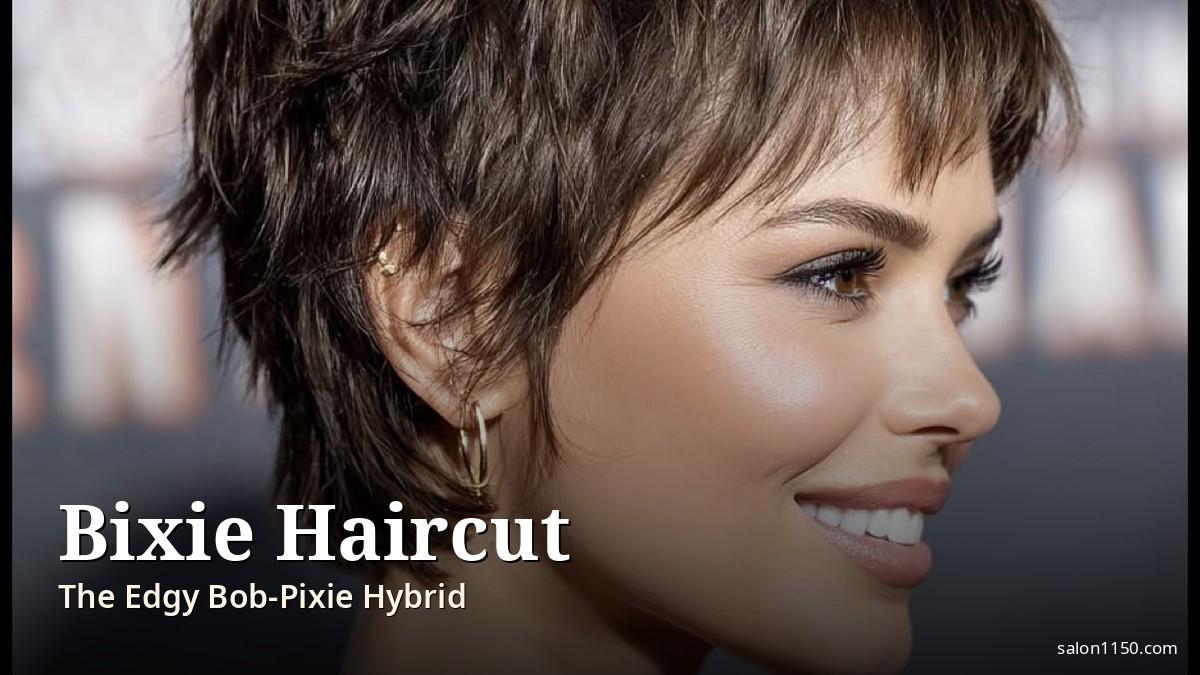
There’s a particular kind of frustration that comes with wanting short hair but not that short. You love the idea of a pixie — the lightness, the boldness, the way it reframes your entire face — but the thought of going that close to the scalp makes you hesitate. Or maybe you’ve had a bob for years and it’s starting to feel predictable. Not bad, just… familiar.
The bixie sits in exactly that gap. And that’s what makes it useful — not the trend cycle, not the celebrity endorsements, not the hashtag. The simple fact that it answers a question a lot of people have been quietly asking: What if I could go shorter without going all the way?
But here’s the thing. “Bixie” has become a catch-all term for about fifteen different haircuts, and the version you save on Pinterest might not be the version that works for your hair, your face, or your Tuesday mornings. This guide is about figuring out which one does.
What Is a Bixie Haircut?
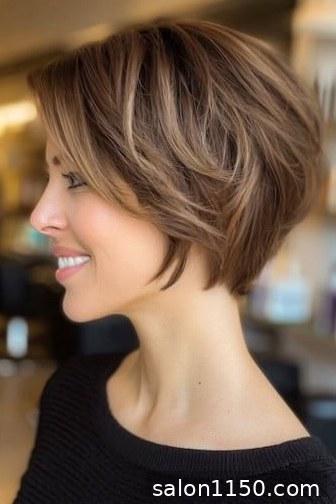
A bixie is a hybrid haircut that blends the structure of a pixie with the length and framing of a short bob. The back and sides are cropped shorter — closer to pixie territory — while the top and front layers are left longer, offering the face-framing softness and styling flexibility of a bob.
The name is a portmanteau: bob + pixie = bixie. Simple enough. But the execution is more nuanced than the name suggests, because where exactly the cut falls on the pixie-to-bob spectrum changes everything about how it looks, how it behaves, and how much work it takes.
How It Compares to a Pixie and a Bob
A pixie is cropped close to the head — minimal length, maximum exposure. It’s bold, it’s editorial, and it leaves almost nothing to hide behind. Styling options are limited by design, and it grows out into an awkward in-between phase relatively quickly.
A bob sits at or near chin length with a more uniform shape. It’s classic, polished, and offers more styling versatility — but it doesn’t have the textured, lived-in energy that shorter cuts create.
The bixie takes the cropped nape and layered crown of a pixie and combines it with the longer face-framing pieces of a bob. The result is a cut with more shape and movement than either parent style. It reads as modern without being extreme, and it carries the practical advantage of growing out into a soft layered bob rather than the difficult grow-out path of a true pixie.
That grow-out advantage is quietly one of the best reasons to choose a bixie over a pixie — but more on that later. The bixie sits between a bob and a pixie — closest in spirit to the french bob, but shorter at the back.
Where the Trend Came From
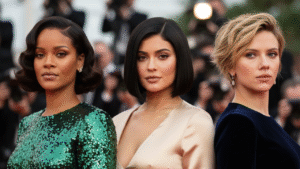
The bixie isn’t new. Halle Berry, Winona Ryder, and Meg Ryan all wore versions of it in the 1990s — they just didn’t have a portmanteau for it. The name “bixie” gained traction in the early 2020s as TikTok rediscovered short hair as a form of self-expression rather than a practical concession. Zendaya’s bixie at the 2026 Oscars reignited mainstream interest, and salon search volume has climbed steadily since.
But the trend’s longevity isn’t really about celebrity influence. It’s about function. The bixie fills a gap in the short-hair landscape that other cuts don’t, and that practical usefulness tends to outlast any trend cycle.
Who Does the Bixie Haircut Suit?
Better question: which version of the bixie suits whom? Because the answer isn’t universal — and the articles that claim “it works for everyone” are skipping the part that actually matters.
Face Shapes
Oval faces have the easiest time with bixies. The balanced proportions mean almost any version — short, long, textured, sleek — works without much adjustment. If you have an oval face, your main decision is about style preference, not structural correction.
Heart and diamond shapes benefit from the way a bixie creates volume around the crown and temples while keeping the jawline area lighter. The longer front pieces soften a narrower chin. This is one of the face shapes where the bixie genuinely improves on both the bob (which can look heavy at the jaw on a heart-shaped face) and the pixie (which can overexpose a narrow chin).
Round faces need a bixie with more height at the crown and layers that fall below the widest point of the cheeks — not at it. A bixie that ends right at cheekbone level can actually widen a round face. The fix: go for a slightly longer version with textured layers and some lift at the roots. Side-swept bangs help; blunt bangs across the forehead can make a round face read wider. For more on this, our guide to the best haircuts for round faces breaks down the structural reasoning.
Square faces do well with bixies that have softer, wipier layers rather than blunt or geometric edges. The texture and movement of a shaggy or tousled bixie counterbalances angular jawlines. Avoid anything too sleek and structured on a square face — it can look rigid.
If you’re not sure which shape you’re working with, our face shape haircut guide and the rules and exceptions breakdown can help you figure it out before you book.
Hair Textures
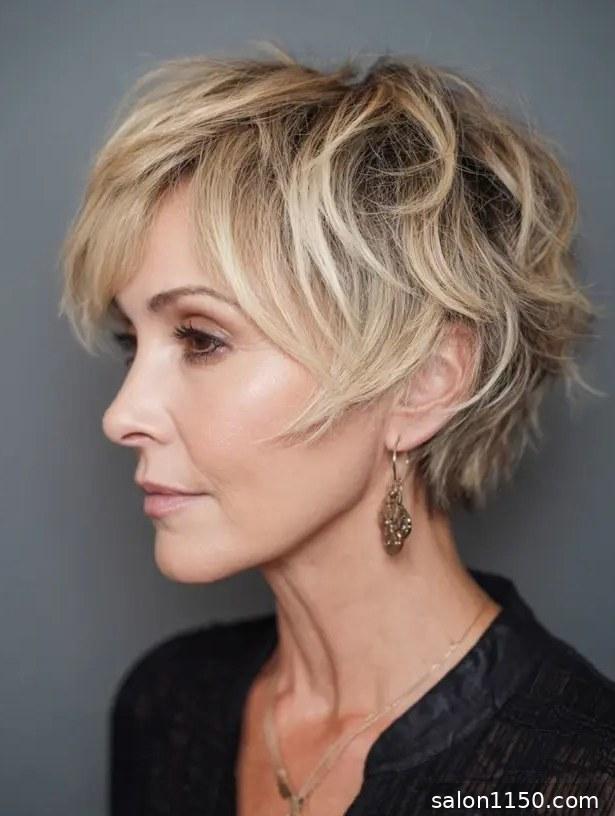
Fine hair is where the bixie legitimately earns its reputation. The layered structure creates the illusion of density and movement that fine hair struggles to achieve at longer lengths. The short back lifts weight off the nape, and the textured top gives fine hair something it rarely gets naturally: body. But not every bixie works. Avoid versions with too much thinning or razor-cutting — on already-fine hair, that can make the ends look transparent rather than textured. Ask for blunt layers at the tips and soft graduation through the interior.
Thick hair benefits from the opposite approach. A bixie on thick hair needs internal thinning and point-cutting to remove bulk, especially at the crown. Without that, the top layer puffs outward instead of laying with movement. The result can look mushroom-shaped rather than styled. A good stylist will thin strategically — removing weight where it builds up, not uniformly throughout.
Wavy hair and the bixie are a natural match. Waves give the cut texture and movement without any heat styling, and the shorter length keeps waves from drooping or stretching out under their own weight (a common frustration at bob length). A bixie on wavy hair often looks best on day two — slightly lived-in, with soft natural bends.
 See alsoWhat Hairstyle Suits Me? AI Tool + Face Shape Guide
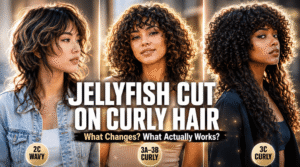
Curly hair can absolutely wear a bixie, despite what some guides claim. The key difference: curly hair creates more volume in the crown area, so the top layer should be left slightly longer than you’d go on straight hair to account for curl shrinkage. The stylist needs to cut it dry, and the layering should follow the curl pattern rather than fight it. It won’t look like the pin-straight bixies you see on TikTok — it’ll look like a textured, bouncy, curly bixie, and that’s a different cut with its own appeal.
Straight hair gives a bixie its cleanest lines. The layers read as graphic and intentional. The tradeoff: straight fine hair can look flat on day two without product, so you’ll likely reach for texturizing spray more often than someone with natural wave.
The Mature Bixie: Why It Works Over 50 and 60
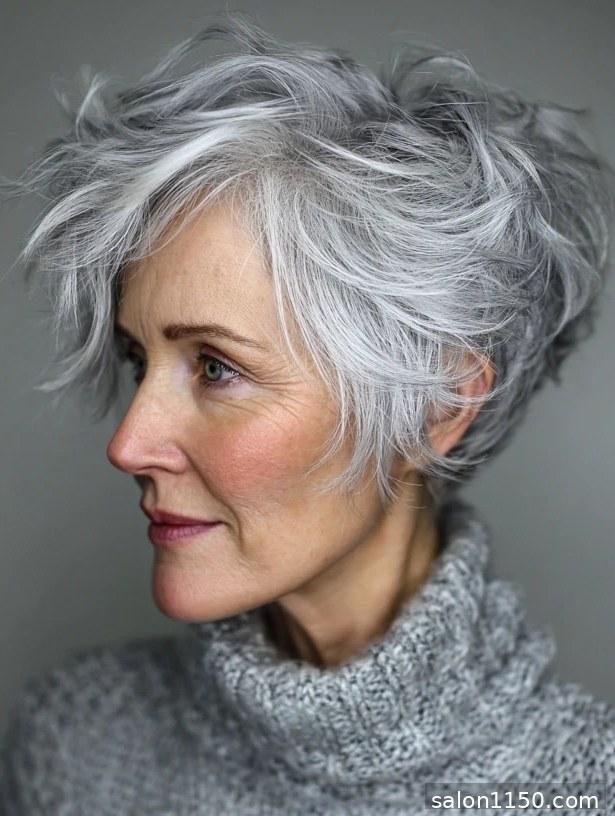
The bixie is quietly one of the best haircuts for women navigating hormonal hair changes — thinning density, texture shifts, loss of natural volume. The layered structure adds body where it’s needed most (the crown), while the shorter length eliminates the weight that pulls fine or thinning hair flat.
For women over 50 and 60, a softer bixie with face-framing pieces and gentle layers reads as polished without being “trying too hard.” It also pairs well with hair colors that make you look younger — the shorter length lets strategic color placement (around the face, through the crown) do more visual work than it can on longer hair.
Bixie Haircut Variations
The term “bixie” covers more ground than most people realize. The version you choose should depend less on what’s trending and more on your hair’s natural behavior and how much time you’re willing to spend with a round brush.
Classic Bixie
The foundational version: short graduated back, longer layers through the crown and top, face-framing pieces at the front. It’s the safest entry point — recognizable as “short but not too short,” polished without being fussy. This version works across most hair types and face shapes, and it grows out the most gracefully.
Long Bixie Haircut
Pushes the length closer to bob territory — the front pieces might reach the chin, and the back sits lower on the nape. This version is for people who want the bixie silhouette without committing to visible scalp at the nape. It reads as a very short, heavily layered bob with pixie-influenced texture. It’s the most forgiving for people who aren’t sure about short hair yet.
Short Bixie Haircut
Pulls the cut closer to pixie territory — the nape is cropped close, the crown layers are shorter, and the overall impression is more daring. This version works best on people with strong bone structure and medium-to-thick density. Fine hair can struggle here because the shorter length leaves less room for the layering illusion that gives fine hair body in a classic bixie.
Bixie with Bangs
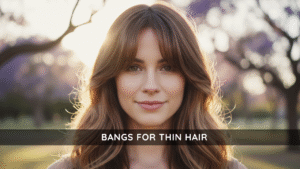
Bangs change the entire mood of a bixie. Curtain bangs soften it and make it more approachable — they’re the safest pairing. Side-swept bangs add asymmetry and work well for round and square faces. Micro bangs push the cut toward editorial territory. For more fringe guidance, our bangs for thin hair guide and our best bangs by face shape breakdown cover the practical details.
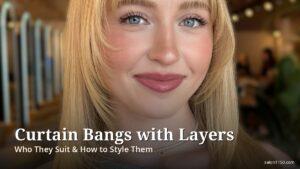
A common mistake: going too heavy with the bangs on a bixie. The cut already has a lot of visual activity in the layering. A thick, blunt fringe on top of that can overwhelm a smaller face. Pair it with face-framing fringe — see our guide to curtain bangs with layers.
Textured / Shaggy Bixie
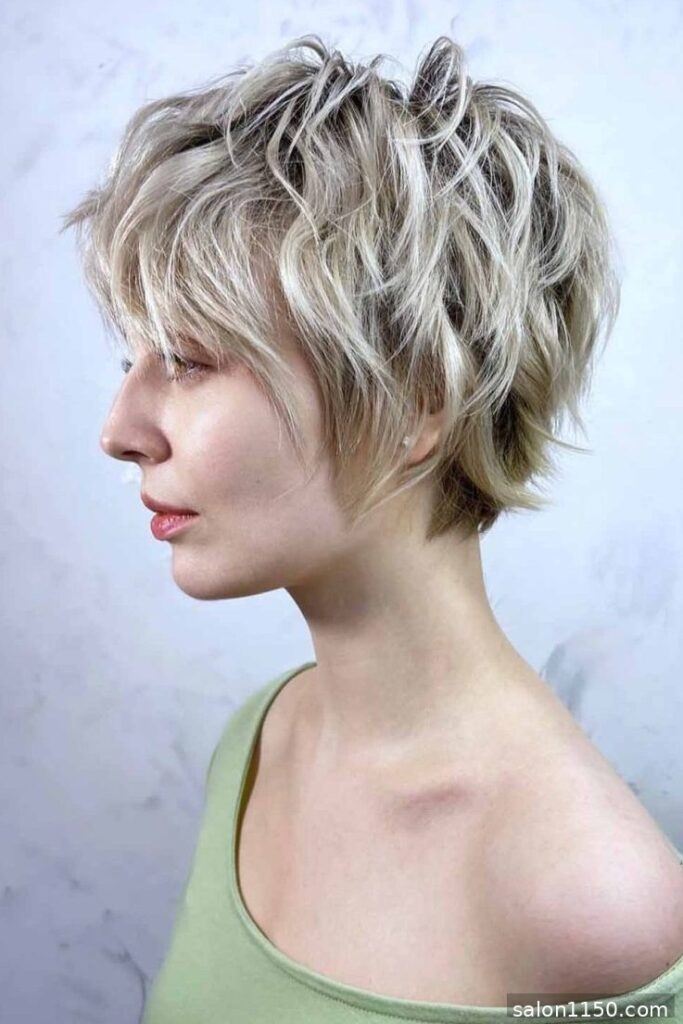
The 90s version. More layering, more texture, more “I woke up like this” energy. This is the version that looks most effortless — but ironically, it requires the most product to maintain that undone quality. Without texturizing spray and a bit of root lift, a shaggy bixie can look limp and messy rather than deliberately textured. For a longer, wilder take on the same idea, see the wolf cut.
Bixie for Curly Hair
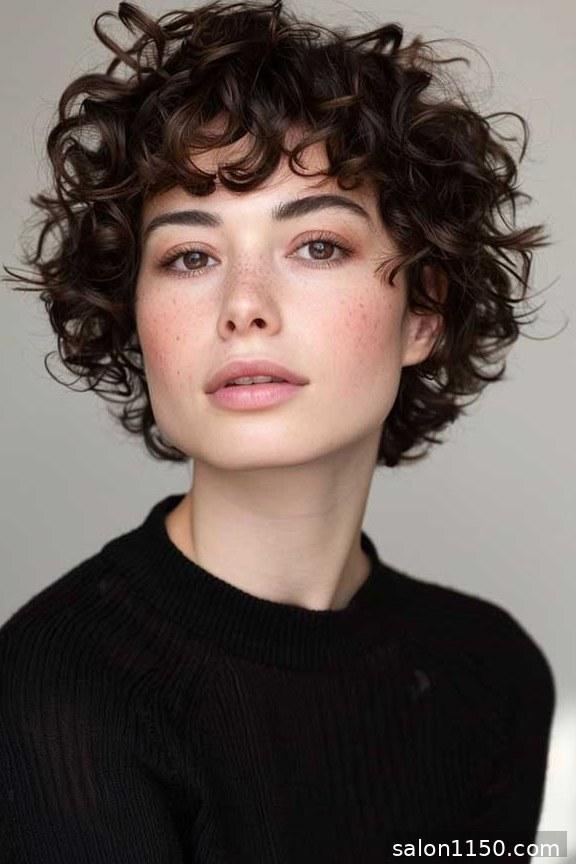
Not a separate species — just a bixie with different proportions. The crown layers should be longer to account for shrinkage. The graduation at the back should be softer. And the cut needs to be done dry, by someone who understands how curl weight and bounce interact with layering. When done well, a curly bixie has a rounded, bouncy quality that straight-hair versions can’t replicate. The bixie joins a long line of celebrity short haircuts that made short hair red-carpet ready.
Is the Bixie Really Low Maintenance?
This is the question that every trend article answers with a confident “yes!” — and it’s the answer most likely to set you up for disappointment if nobody qualifies it.
The honest answer: it depends on the version.
A classic bixie on wavy hair? Genuinely low maintenance. You can towel-dry, add a pump of texturizing cream, scrunch, and leave. Day-two hair often looks better than day one. That’s legitimately easy.
A sleek bixie on straight fine hair? More work than you’d expect. The layers need to be shaped with a round brush during blow-drying, and without product, day-two hair tends to go flat at the crown and stick out at the sides. That’s not a crisis — it’s a five-to-ten-minute fix — but it’s not “wash and walk out the door.”
A textured shaggy bixie? Needs texturizing spray every day. Without it, the cut looks like it’s growing out rather than like it’s supposed to look undone. The intentional messiness takes intention to create. That’s a styling paradox nobody warns you about.
Trim Schedule
Most bixies need shaping every four to six weeks. The nape grows fast, and as it lengthens, the cropped-to-long ratio that gives the bixie its structure starts to blur. If you push past six weeks, you’ll notice the back starting to look shaggy (not in a good way) and the overall shape getting soft.
Compare that to a bob (every six to eight weeks) or a pixie (every three to four weeks), and the bixie sits in a reasonable middle ground.
Grow-Out: The Bixie’s Hidden Advantage
Here’s something most guides overlook: the bixie grows out better than almost any other short cut.
As the back lengthens and the crown layers relax, a bixie naturally transitions into a soft layered bob. You don’t hit the severe awkward phase that pixie grow-outs produce — that stage where your hair is too long to be short and too short to tuck behind your ears. The bixie’s built-in length at the front means your face-framing pieces stay functional throughout the grow-out, and a stylist can reshape the layers during interim trims to keep the transition smooth.
If you’re someone who tends to commit to a cut for a few months and then wants to change direction, the bixie’s grow-out path is one of its strongest practical arguments. For more on the science of hair growth during transitions, our post on whether cutting hair makes it grow faster might be worth a read.
What the Bixie Looks Like Off-Camera
You’ve seen the salon-fresh version. The one with the perfect blow-dry and the golden-hour lighting and the model who definitely doesn’t have humidity in her city. That’s the version that gets saved to mood boards. It’s real — but it’s not the whole story.
Day one after the salon: The cut looks its best. The layers are defined, the shape is crisp, the graduation is visible. This is the reference photo you’ll be chasing for the next four weeks.
 See alsoBest Haircuts for Round Faces: Short, Long & More
Day two or three without restyling: The crown flattens slightly. The nape area starts to lose its clean cropped look. On straight fine hair, the top layers may separate in ways that feel less “textured” and more “unstyled.” On wavy hair, day two usually looks great — the natural movement fills in where precision fades.
In humidity (especially Austin summers): Short layered cuts absorb moisture at the crown before anywhere else. The result is frizz and puffiness where you want sleekness and shape. An anti-humidity product or light hold spray applied at the roots before stepping outside makes a meaningful difference. Skip it, and the crown area will expand noticeably by noon.
Without any product at all: This is the test most trend articles don’t show you. A bixie without product looks different depending on texture — wavy and curly hair can pull it off; fine straight hair usually can’t. Knowing this before you commit helps you set realistic expectations.
The bixie is a cut that rewards small, consistent effort. Not a lot of effort — but not zero. It is an edgy cut at heart — see our edgy haircuts guide for the full lineup.
How to Ask Your Stylist for a Bixie Haircut

“I want a bixie” covers about as much ground as “I want short hair.” The more specific you are, the closer you’ll get to the cut you actually want.
Bring at least three reference photos. Show front, side, and back angles. One photo isn’t enough — stylists need to see the full shape, not just the Instagram angle.
Specify your nape length. Do you want the back cropped close? Tapered? Left slightly longer for a softer transition? This is the single biggest variable in how “pixie” versus how “bob” your bixie reads.
Talk about your crown. How much volume do you want at the top? More layers = more volume = more movement but also more styling required. If you want a flat, sleek top, say so — otherwise most stylists will default to building body there.
Discuss fringe honestly. Bangs on a bixie are a separate commitment. They grow faster than the rest of the cut and need trimming every two to three weeks. If you’re not sure, start without and add them later — it’s easier to add bangs to a bixie than to grow them out.
Be honest about your morning routine. If you spend two minutes on your hair, say so. A stylist can build a bixie that works with minimal effort — but only if they know that’s the goal. If you tell them you’ll blow-dry and round-brush daily and then you don’t, the cut will stop looking like what you asked for within a week.
Styling Tips That Actually Work
Skip the 12-step tutorials. A bixie needs three things: root volume, texture through the mid-lengths, and a light finishing hold. That’s it.
Root volume: After washing, flip your head forward and blow-dry the roots with a round brush, lifting at the crown. This takes about three minutes and creates the lift that keeps a bixie looking shaped rather than flat. It’s the single most impactful styling step.
Texture through the mid-lengths: A texturizing spray or lightweight cream worked through the layers with your fingers creates the separation that makes a bixie look intentional. Too much product makes it look crunchy; too little lets the layers clump. Start with less than you think you need.
Light finishing hold: A flexible-hold spray — not a stiff hairspray — keeps the shape without making it feel rigid. You should be able to run your fingers through it after spraying. If you can’t, you’ve used too much.
The day-two refresh: Dry shampoo at the roots, a quick scrunch with texturizing spray, and three minutes with a blow dryer on medium heat. Most bixies look perfectly good on day two with this routine. By day three, you’re either washing or committing to a hat.
One thing to avoid: Over-curling or over-waving. A bixie has built-in texture from its layering. Adding tight curls on top of that creates visual chaos. If you want wave, use a large-barrel iron and only hit a few pieces — the face-framing layers and a couple of top sections. Leave the rest alone.
FAQ
What is a bixie haircut?
A bixie is a hybrid haircut that combines the cropped nape and layered crown of a pixie cut with the longer face-framing pieces and styling flexibility of a short bob. The back is cut shorter, the top has textured layers, and the front pieces are left longer to frame the face. The name is a blend of “bob” and “pixie.”
Is a bixie haircut good for fine hair?
Yes — it’s one of the best short cuts for fine hair. The layered structure creates volume and the illusion of density, especially at the crown. The key is choosing the right version: a classic or long bixie works best. Avoid heavy thinning or razor-cutting on fine hair, as that can make the ends look sparse.
Does a bixie haircut work on curly hair?
It can — but the approach is different. The top layers should be left slightly longer to account for curl shrinkage, and the cut should be done dry by a stylist who understands textured hair. The result is a rounder, more voluminous version of the bixie that celebrates natural curl rather than fighting it.
How do you ask for a bixie haircut at the salon?
Bring at least three reference photos showing front, side, and back views. Specify your preferred nape length, how much crown volume you want, and whether you want bangs. Be honest about your daily styling commitment — it affects which version your stylist should build for you.
Is a bixie haircut high maintenance?
It depends on the version. A classic bixie on wavy hair is genuinely low maintenance — minimal styling, easy grow-out. A sleek bixie on fine straight hair needs daily round-brushing and product. All bixies need trims every four to six weeks to keep the shape crisp. Compared to a pixie (more frequent trims, harder grow-out) or a bob (less styling but less interesting texture), the bixie sits in a practical middle ground.
There’s a reason the bixie keeps coming back. It’s not the trend cycle — trends recycle every cut eventually. It’s that the bixie answers a real question that real people have: how do you get the energy of short hair without the commitment of truly short hair? How do you add movement and shape without losing the ability to tuck your hair behind your ears?
The cut works because it’s functional. The best version of it for you isn’t the one with the most saves on Pinterest — it’s the one that accounts for your face shape, your hair’s natural texture, your willingness to pick up a round brush, and your stylist’s ability to read all three.
If you’re considering making the cut, the most valuable thing you can do is talk it through with someone who’s done it a hundred times. A consultation takes ten minutes and saves you from the version of the bixie that looks great on someone else but doesn’t quite work for you.