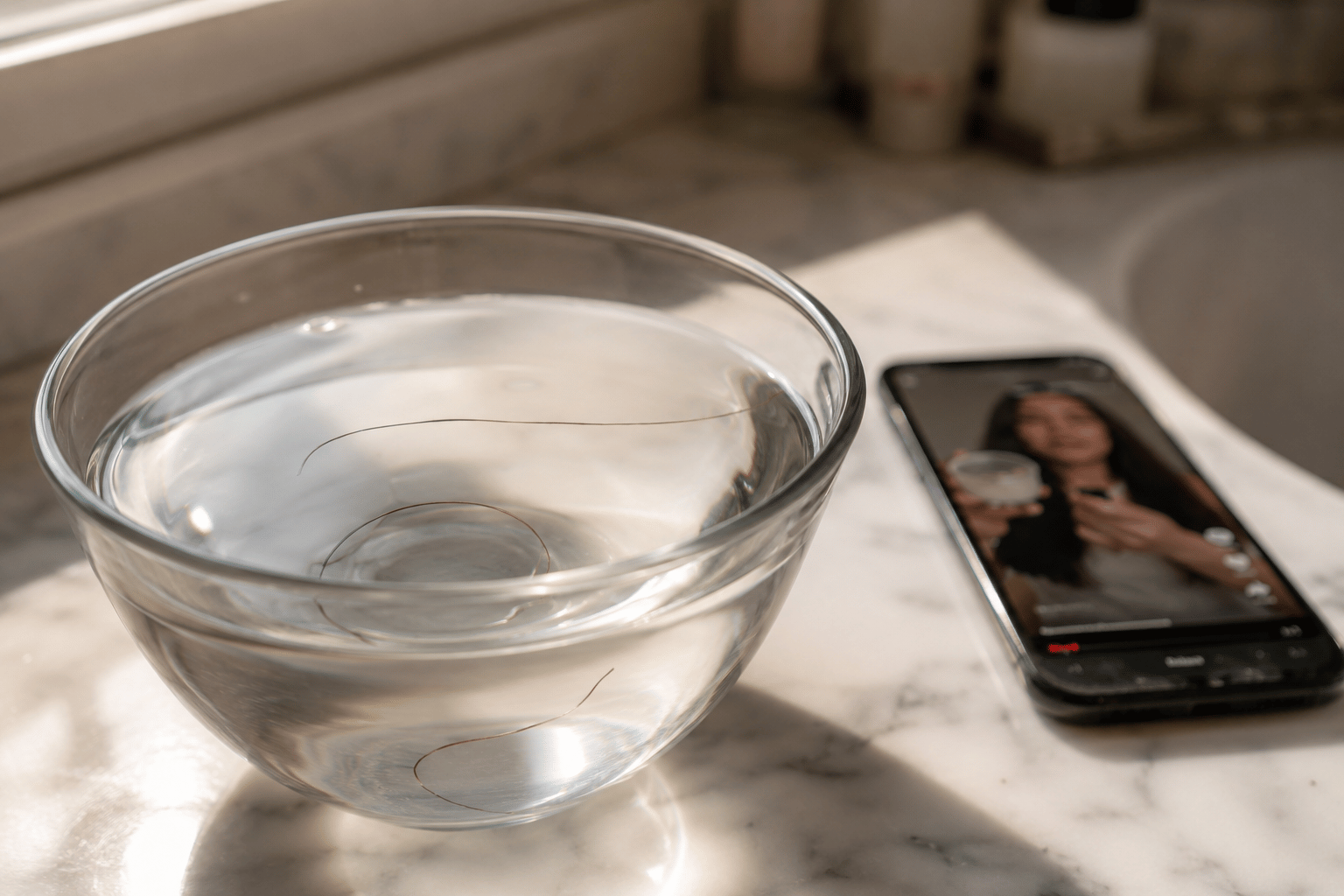
You’ve probably seen the video. Someone drops a single strand of hair into a glass of water, waits a few seconds, and declares their porosity like it’s a blood type. Low. Medium. High. Done.
Except you tried it three times and got three different answers. Or your hair floated for a while, then slowly sank, and now you’re not sure if that means medium or low or something in between. Or half your strands floated and the other half sank immediately, and you closed the browser tab feeling more confused than when you started.
That confusion is the float test working exactly as designed — which is to say, not very well. A single strand in a glass of water was never a diagnostic tool. It’s a rough signal at best, and at worst it sends you down a product rabbit hole built on a shaky result.
Find Your Hair Porosity in 2 Minutes
Not sure where to start? Answer 7 quick questions about how your hair actually behaves — including your hair history and heat habits — and get a personalized result. Then keep reading to understand exactly what it means.
Find Your Hair Porosity
7 behavior-based questions — more accurate than the float test. Accounts for your hair history and gives you a personalized routine.
Your result is based on 7 behavioral signals, not just a single float test. Scroll down to read the full breakdown of your porosity type.
What Hair Porosity Actually Means (and Why You Should Care)
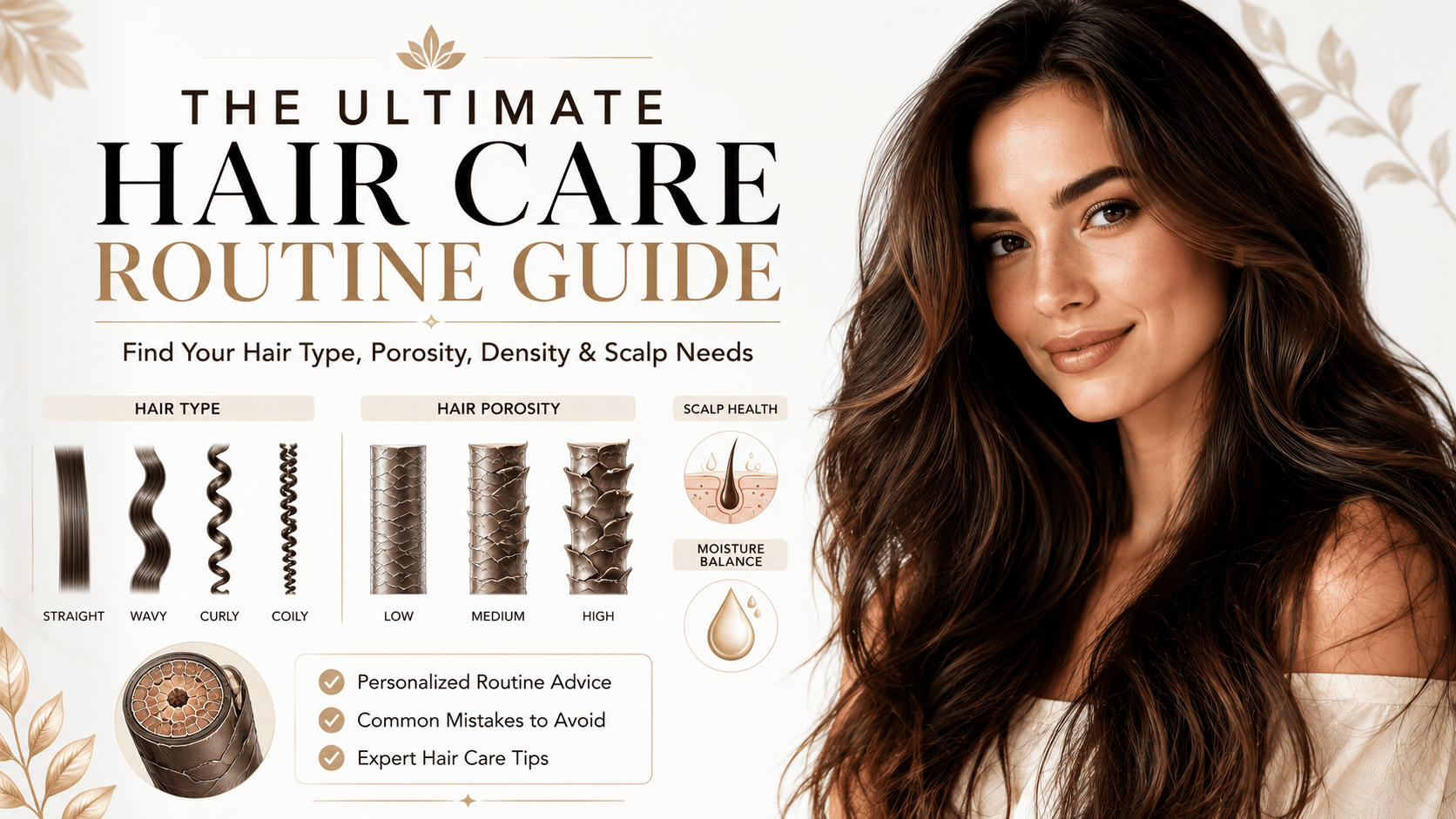
Think of each strand of your hair as having an outer layer made of tiny overlapping scales, similar to shingles on a roof. When those scales lie flat and tight, moisture has a hard time getting in but stays locked in once it does. When they’re lifted, chipped, or spaced apart, water rushes in quickly but escapes just as fast.
That’s porosity in one sentence: how easily your hair absorbs and holds onto moisture.
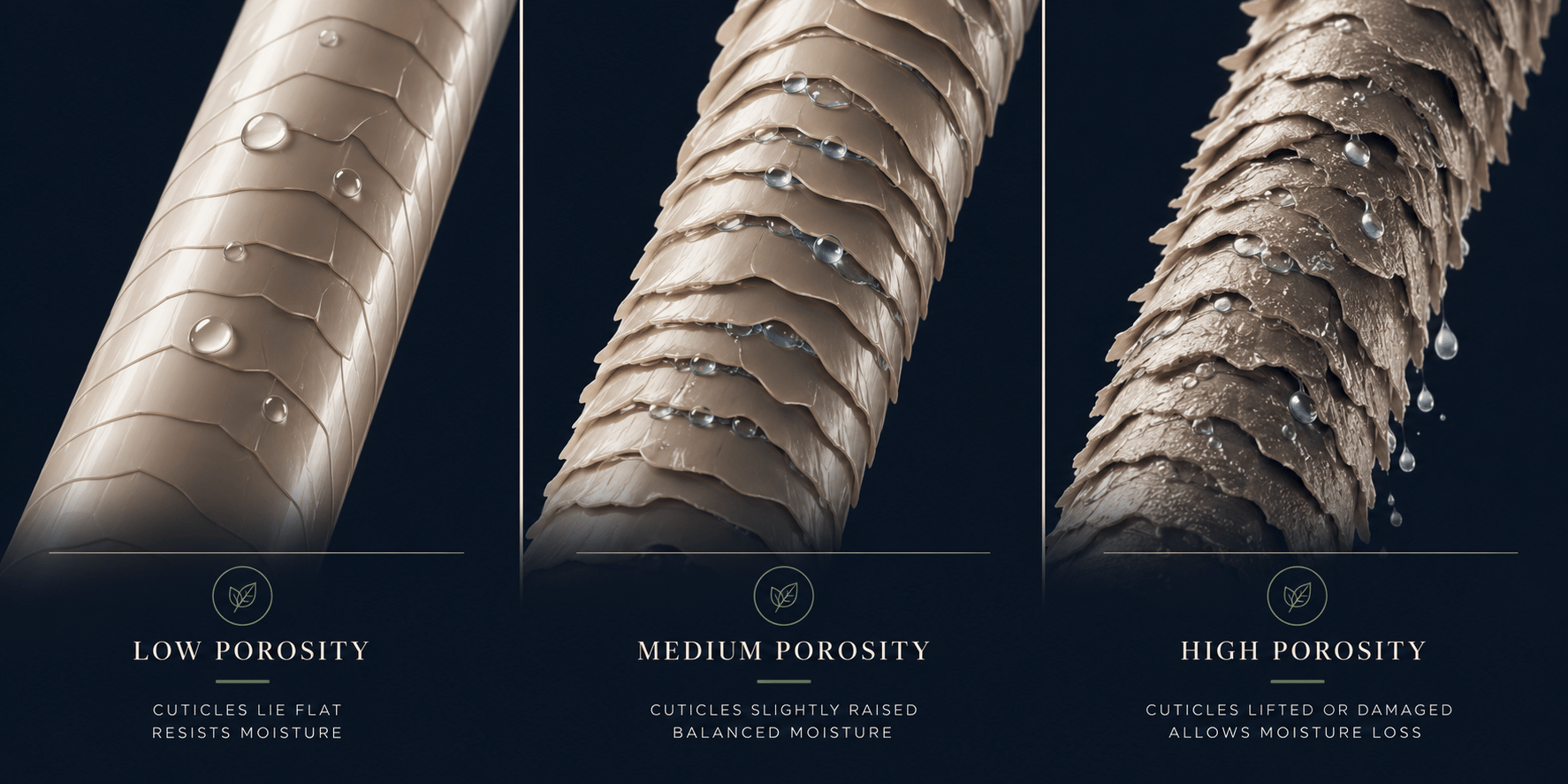
It falls on a spectrum across three general zones. Low porosity hair has tightly sealed cuticles. High porosity hair has open or damaged ones. Medium porosity sits in the balanced middle, where moisture moves in and out at a manageable rate.
Why does this matter more than your curl pattern or hair type number? Because porosity determines which products actually work for you, how your hair responds to color and chemical services, why deep conditioning either transforms your hair or sits on top of it doing nothing, and whether your frizz problem is a moisture issue or a sealing issue. Two people with identical curl patterns can have wildly different porosity levels and require completely different routines.
Porosity isn’t a personality trait or a permanent diagnosis. It’s a behavioral pattern. And once you understand it, a lot of your hair frustrations start making sense.
Why the Float Test Isn’t the Gold Standard Everyone Thinks It Is
The float test, where you drop a clean strand into room-temperature water and see whether it floats or sinks, became popular because it’s simple and visual. There’s something satisfying about a test with a clear answer. But simplicity is exactly what makes it unreliable.
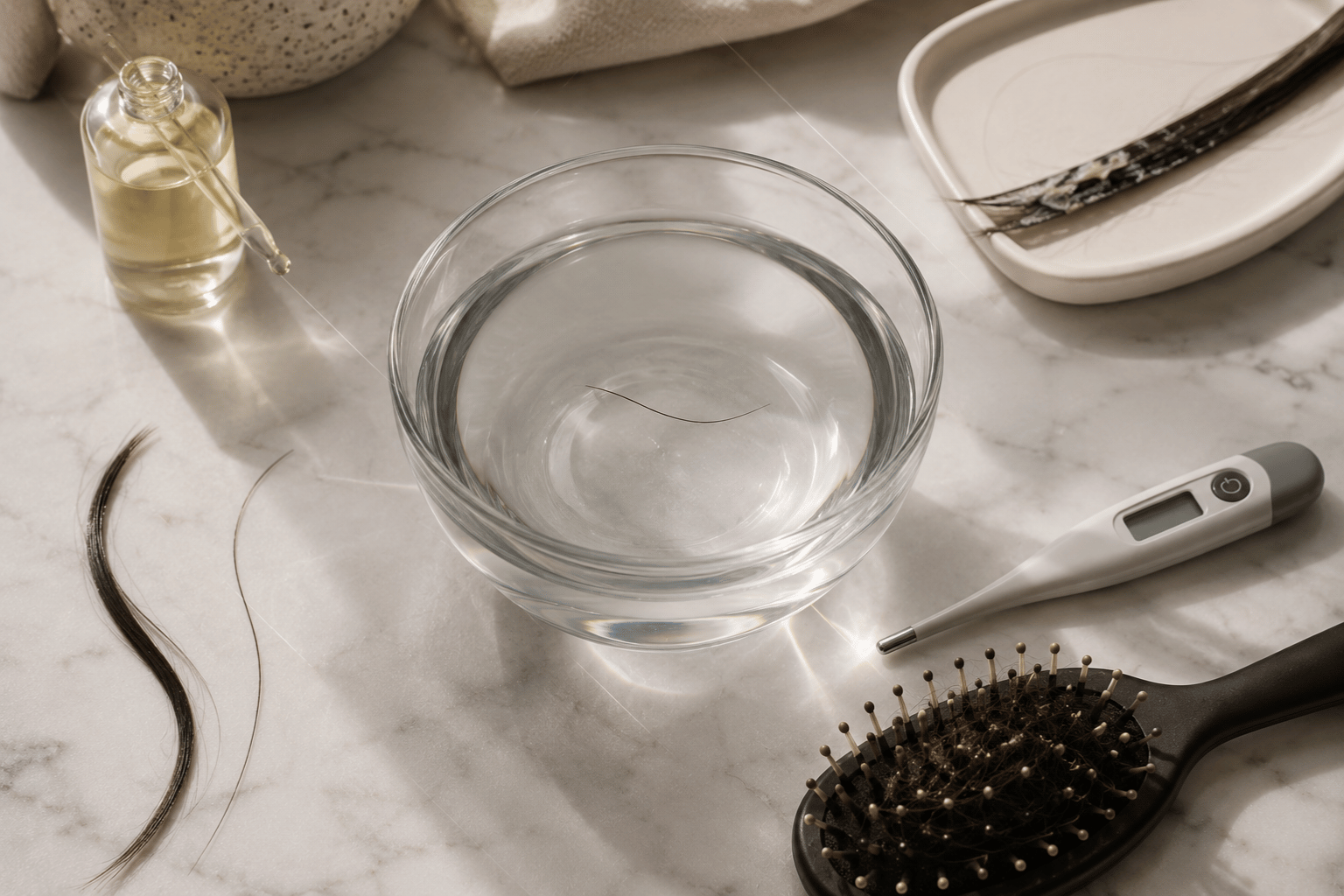
The problems stack up fast. Any residual product, oil, or even hard-water mineral buildup on the strand creates a coating that changes how it interacts with water. Surface tension, the force that lets insects walk on water, can keep lightweight strands afloat regardless of porosity. Coarse or thick hair can sink from sheer weight, not because it’s high porosity. Water temperature matters. Whether you gently placed the strand or accidentally pushed it under matters. Whether you pulled it from your brush (older, more damaged hair) or plucked it from your crown (newer growth) matters.
And then there’s the issue nobody talks about in those videos: most people don’t have uniform porosity across their entire head. Your roots, which are the newest growth, are almost always lower porosity than your ends, which have been through years of washing, heat, UV exposure, and possibly chemical processing. One strand from your nape and one from your crown might give you opposite results, and both could be accurate for that specific section of hair.
The float test isn’t useless. It’s just wildly insufficient as a standalone method. Treating it as the definitive answer is like checking the weather by sticking your hand out the window. You’ll get a general impression, but you wouldn’t plan a week around it.
The Tests That Actually Tell You Something
The most reliable way to determine your porosity doesn’t involve a glass of water at all. It involves paying attention to what your hair is already telling you every wash day, every time you style it, and every time you step outside in humid weather. A stylist assessing your porosity during a consultation would look at these same signals.
The Shower Test (How Your Hair Absorbs Water)
The shower test is one of the most reliable ways to check hair porosity at home. Start with clean hair free of product buildup, oils, or leave-in conditioners.
Pay attention to how quickly your hair absorbs water under running water:
- Low porosity: Water beads on the surface and takes time to fully saturate the hair.
- Medium porosity: Hair absorbs water at a steady, moderate rate.
- High porosity: Hair becomes soaked almost immediately with little resistance.
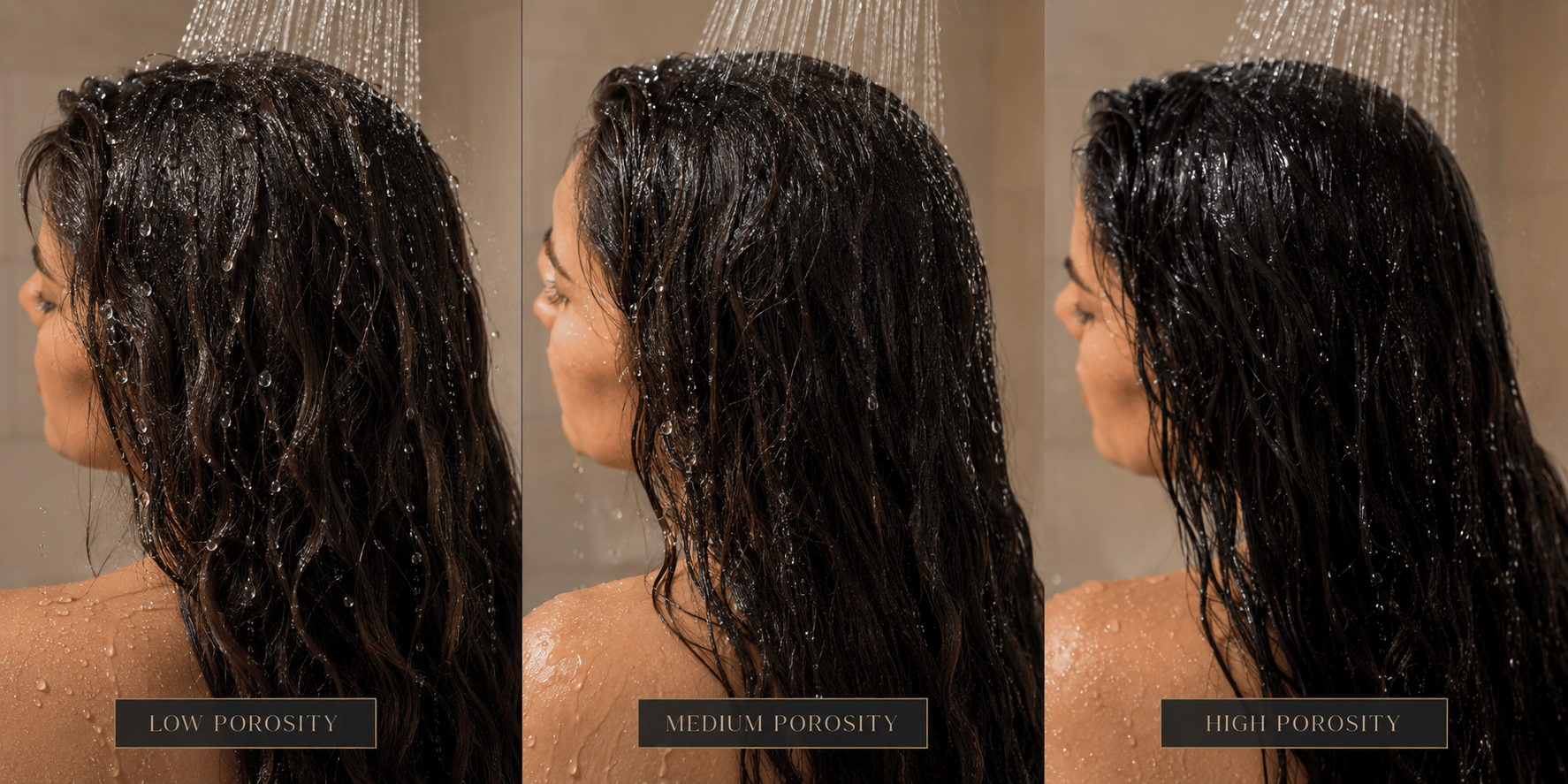
Unlike the float test, the shower test lets you observe your entire head of hair in real-world conditions rather than relying on a single strand. If different sections behave differently, you may have mixed porosity, which is common.
The Dry-Time Test
Another simple way to test hair porosity is to observe how long your hair takes to air-dry after washing. Start with clean hair and avoid leave-in products, oils, or styling creams.
- Low porosity: Hair stays damp for a long time because moisture enters and leaves the hair slowly.
- Medium porosity: Hair dries at a moderate rate and usually feels soft afterward.
- High porosity: Hair dries quickly because moisture escapes easily, often leaving hair feeling rough, dry, or frizzy.
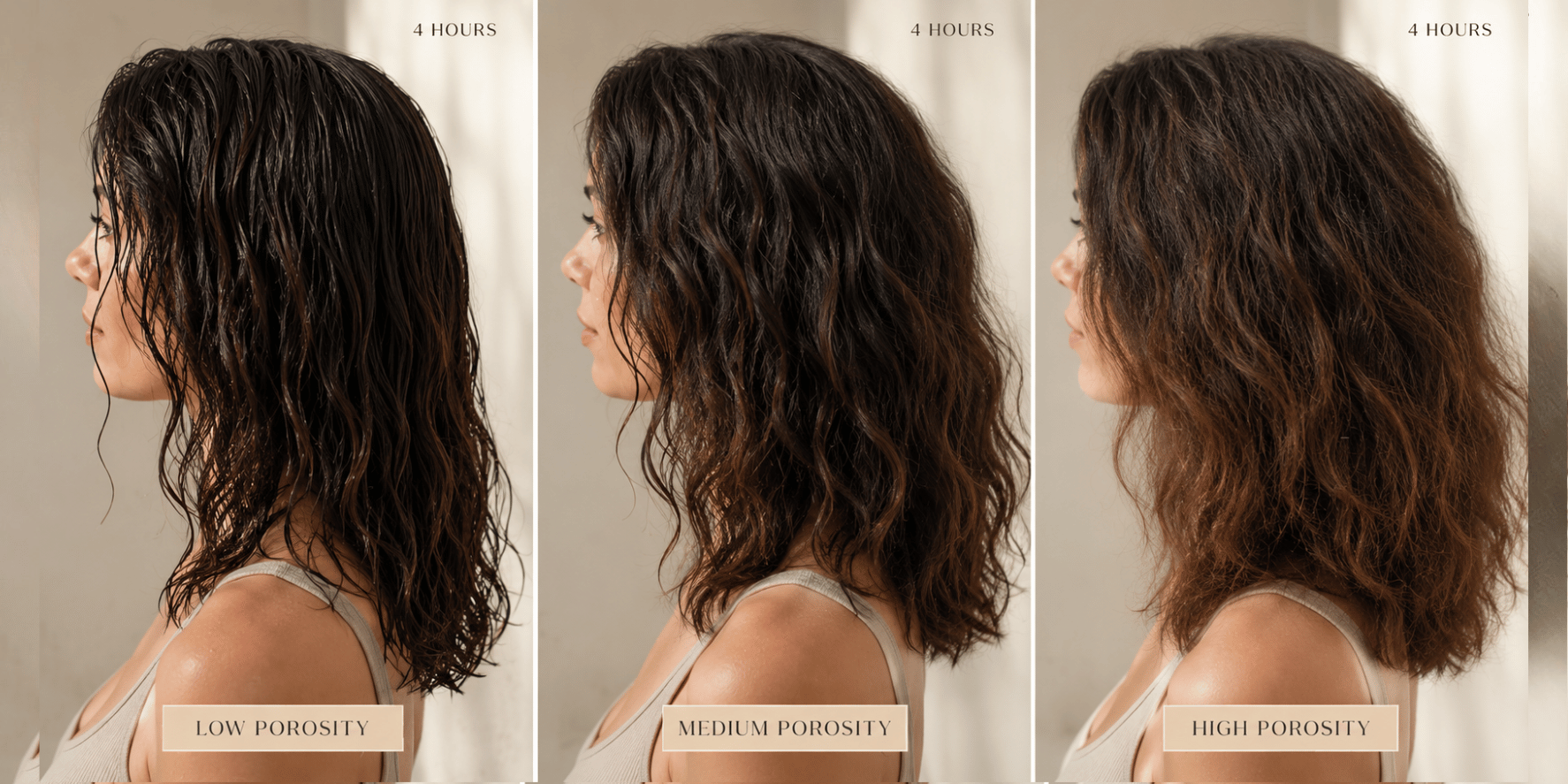
Keep in mind that hair length and density also affect drying time. Focus on how your hair behaves compared to its usual drying pattern rather than comparing it to someone else’s.
The Product Absorption Test
Your everyday products can reveal a lot about your hair porosity.
Apply a small amount of conditioner or leave-in conditioner to clean, damp hair and notice how your hair responds over the next hour.
Low Porosity Hair
- Products sit on the surface instead of absorbing.
- Hair feels coated, heavy, or greasy.
- Moisture doesn’t seem to penetrate the hair shaft.
Medium Porosity Hair
- Products absorb evenly without buildup.
- Hair stays moisturized for a reasonable amount of time.
- Most conditioners and leave-ins perform as expected.
High Porosity Hair
- Products absorb almost immediately.
- Hair feels dry again shortly afterward.
- You constantly feel the need to reapply moisture.
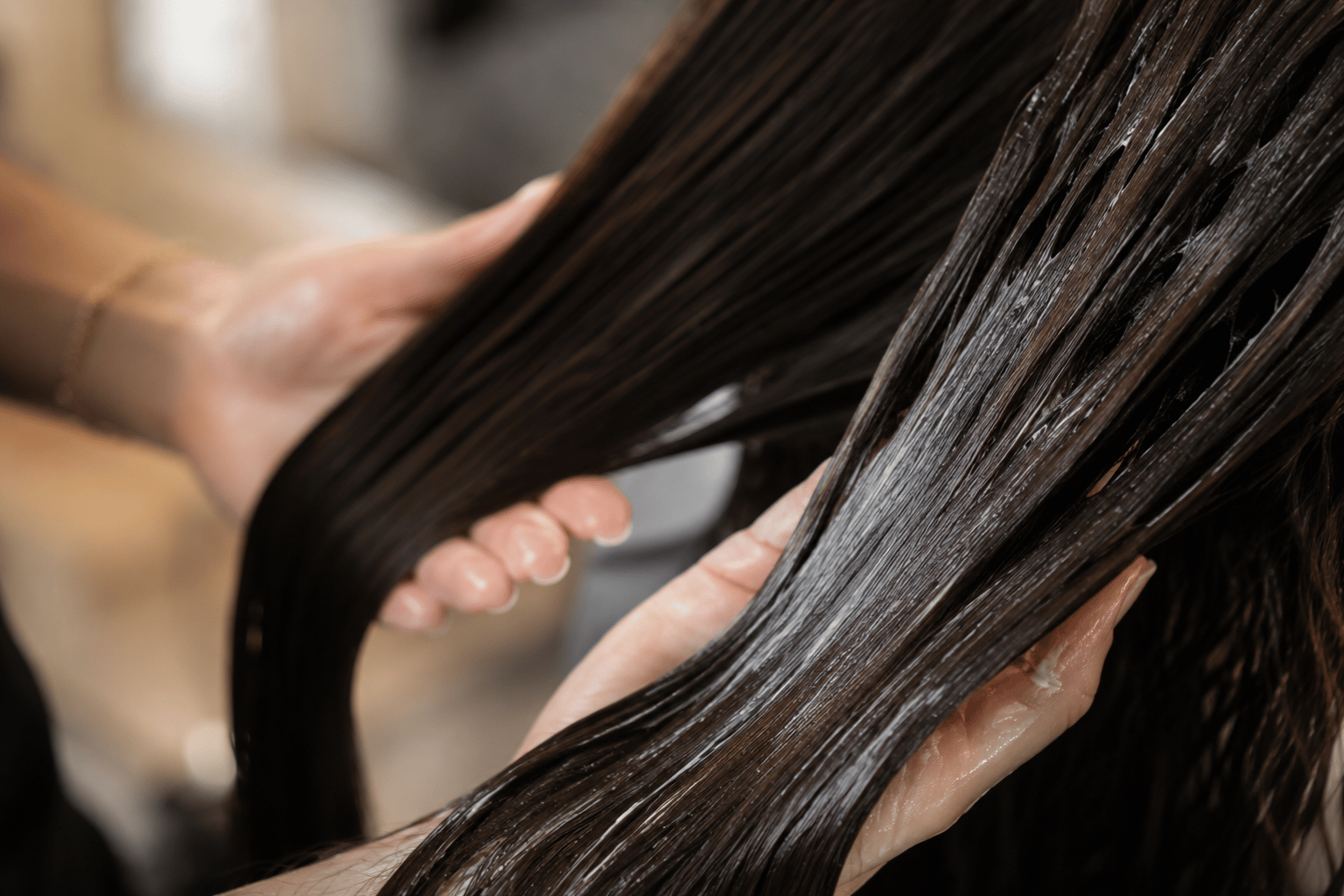
This test can also help you evaluate your current products. If everything sits on top of your hair, you may need lighter formulas or a clarifying wash. If moisture disappears quickly, richer products or additional sealing may help.
The Strand Feel Test (Slide Test)
Take a single strand between your fingers and slide them upward from the tip toward the root.
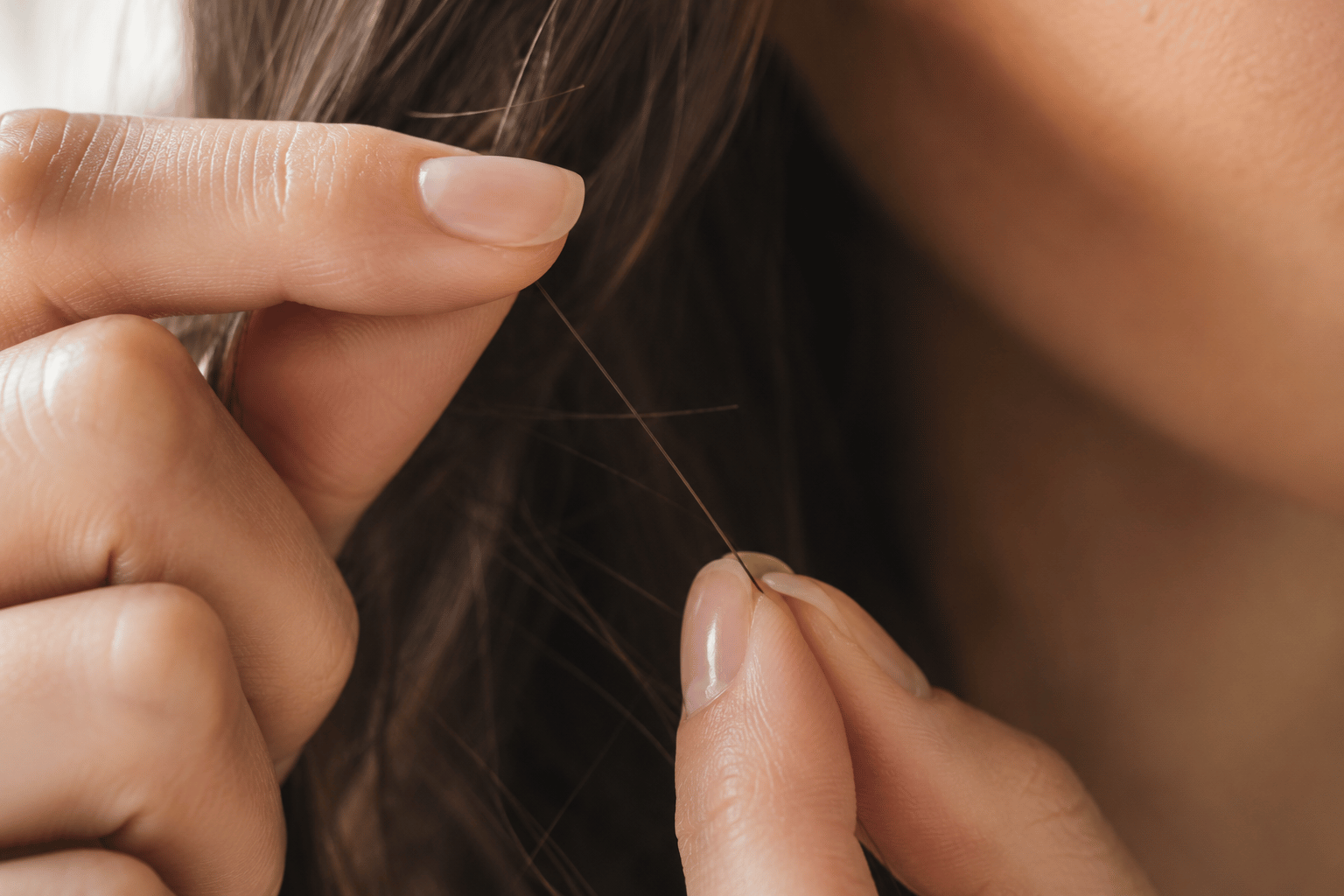
If it feels smooth and almost glassy, that’s consistent with low porosity — the cuticle scales are lying flat. If you feel bumps, ridges, or roughness, the cuticle is lifted, which is associated with higher porosity.
This is a useful supplementary check, but don’t rely on it alone. Texture (fine vs coarse) and damage level can both influence what you feel, independent of porosity. It’s best used to confirm what the other tests are already suggesting.
When to Use a Quiz or Online Tool
Porosity quizzes can be a reasonable starting point if you’re completely new to the concept and want some initial direction. They walk you through questions about your hair’s behavior and spit out a category.
The limitation is that they can’t observe your hair. They’re working from your self-reported answers, and most people searching for “hair porosity test” don’t yet have the observational vocabulary to answer accurately. “Does your hair absorb water quickly?” Compared to what?
Use a quiz to form a hypothesis. Then use the observation methods above to confirm or challenge it. If you’re still unsure, especially if you’re planning a color service or making a significant change to your routine, a stylist consultation offers something no quiz or glass of water can: someone who’s looked at thousands of heads of hair and can assess yours in minutes.
Low, Medium, and High Porosity – What Each One Actually Feels Like
Hair porosity is often explained as how “open” or “closed” your hair cuticles are, but that definition doesn’t help much when you’re standing in the shower wondering why your hair takes forever to dry, feels dry an hour after conditioning, or reacts differently to products than everyone else’s.
In real life, porosity affects how quickly your hair absorbs water, how long moisture stays inside, how color processes, and how your hair behaves day to day. The guide below shows what low, medium, and high porosity typically look and feel like beyond the textbook definitions.
Low, Medium & High Porosity
What each porosity level actually feels like in everyday life.
Tightly Sealed
Moisture struggles to enter the hair shaft but tends to stay once it finally gets in.
Balanced
Moisture enters and exits at a manageable rate — hair is generally cooperative and easy to maintain.
Open Cuticles
Hair absorbs moisture instantly but struggles to hold onto it — dryness and frizz follow quickly.
| Trait | Low | Medium | High |
|---|---|---|---|
| Moisture retention | Stays once absorbed | Balanced — comes and goes | Escapes quickly |
| Frizz risk | Low | Moderate | High — reacts to humidity |
| Color retention | Holds longer | Holds well | Fades faster |
| Product build-up | Very common | Occasional | Rare |
| Best product weight | Light, water-based | Balanced formulas | Rich creams, heavy oils |
| Deep conditioning | Needs heat to penetrate | Works as expected | Absorbs fast, needs sealing |
What it actually feels like day to day
Low porosity hair has tightly packed cuticles that resist moisture absorption. Water often beads on the surface before soaking in, and hair may take a long time to become fully saturated during washing. Because products tend to sit on the outside of the hair shaft, buildup is common — especially when using heavy oils or rich conditioners.
Although low porosity hair usually looks shiny and smooth, that appearance can be misleading. Many people assume their hair is well moisturized when it is actually struggling to absorb hydration. Lightweight products and gentle heat during deep conditioning often produce noticeably better results.
What it actually feels like day to day
Medium porosity hair is generally the easiest porosity level to maintain. Moisture enters and exits the hair shaft at a balanced rate, allowing products, conditioners, and treatments to perform as expected. Hair color typically processes evenly and retains its vibrancy longer than highly porous hair.
Because medium porosity hair is relatively cooperative, many people never think about porosity at all. The main thing to watch for is cumulative damage from heat styling, bleaching, or chemical services — which can gradually increase porosity over time without obvious warning signs.
What it actually feels like day to day
High porosity hair absorbs water and products quickly because the cuticle layer is more open. The downside is that moisture escapes just as easily, which often leads to dryness, roughness, and frizz. Hair may feel hydrated immediately after conditioning but become dry again much sooner than expected.
High porosity can develop from bleaching, heat damage, coloring, or chemical processing — though some people naturally have higher porosity hair. While it requires more maintenance, high porosity hair can still look healthy when moisture-retaining products and protective routines are used consistently.
Mixed Porosity Is More Common Than You Think
If your roots seem low porosity but your ends behave like high porosity hair, you probably have mixed porosity. This is very common.
Newer growth near the roots is usually less damaged and closer to your hair’s natural porosity. The ends are older and have experienced more washing, heat styling, sun exposure, and chemical services, which can increase porosity over time.
Mixed porosity is especially common in long hair and color-treated hair.
The solution isn’t a completely different routine. It’s adjusting where you apply your products:
- Use lightweight products closer to the roots.
- Focus leave-ins, oils, and richer conditioners on the mid-lengths and ends.
- Clarify the roots when buildup occurs and concentrate deep conditioning treatments on drier ends.
If your hair shows different porosity levels from root to tip, that’s normal. It simply means different sections of your hair have different needs.
How Your Porosity Changes and When to Retest
Hair porosity can change over time. Chemical services, heat styling, and everyday wear gradually affect how your hair absorbs and retains moisture.
The biggest changes usually come from bleaching, coloring, relaxers, perms, and frequent heat styling. Sun exposure and general weathering can also increase porosity, especially on older ends.
Because porosity isn’t permanent, it’s a good idea to reassess your hair every 3–6 months or after a major chemical service. If your hair suddenly dries faster, feels rougher, or responds differently to products, your porosity may have changed.
Bond-building treatments such as K18 and Olaplex can help improve the appearance and behavior of damaged hair, but they don’t completely reverse existing damage. Think of them as tools that help strengthen and maintain hair rather than restore it to its original condition.
What Social Media Gets Wrong About Porosity
The porosity conversation on TikTok and YouTube has done something genuinely useful: it got millions of people thinking about their hair in terms of behavior instead of just curl pattern. That’s a net positive.
But the oversimplifications that come with 60-second content have created a whole layer of confusion that this article exists partly to undo.
The Bottom Line
Hair porosity is a useful guide, not a permanent label. Pay attention to how your hair reacts to water, products, humidity, and styling over time. Real-world behavior is usually more valuable than any single test or rule of thumb.
Building a Routine Around Your Porosity
Once you have a reasonable idea of your porosity, you don’t need to replace your entire routine. Small adjustments — in which products you use, how much you apply, and where you put them — usually make a bigger difference than buying a shelf full of new products.
Getting moisture in
Your main challenge: The cuticle is sealed tight. Heavy products coat the surface instead of absorbing, and buildup accumulates faster than you’d expect.
Focus on
- Lightweight, water-based products and liquid leave-ins
- Lighter oils — argan, grapeseed, or jojoba
- Clarifying shampoo every 2–4 weeks to clear buildup
- Gentle heat during deep conditioning (warm towel, hooded dryer, or shower cap)
Avoid
- Heavy butters like shea or castor oil that sit on the surface
- Excessive protein — low porosity hair is often protein-sensitive
- Layering multiple thick products
Keeping moisture in
Your main challenge: Moisture enters easily through the open cuticle — but escapes just as fast. The goal is sealing, not just hydrating.
Focus on
- The LOC or LCO method — layering liquid, oil, then cream to seal progressively
- Heavier butters and oils that create a barrier on ends
- Bond-repair treatments (K18, Olaplex) when damage is the cause
- Cool-water rinses after conditioning to help close the cuticle
- Regular trims — damaged ends split and break faster
Avoid
- Protein-heavy routines without enough moisture to balance
- Skipping sealing products after conditioning
- Holding onto split or damaged ends longer than needed
Maintaining balance
Your main challenge: Hair generally cooperates — but cumulative damage from heat and color services can quietly push porosity higher over time.
Focus on
- A consistent shampoo and conditioner routine
- Occasional deep conditioning to maintain hydration
- Heat protection before every styling session
- Checking in with your hair every few months for changes
Watch for signs of increasing porosity
- Hair drying noticeably faster than before
- Color fading sooner between appointments
- Products that used to last all day fading by midday
- Increased roughness or frizz you haven’t had before
Zone-based care
Your main challenge: Different sections of your hair have different needs. Roots are newer and tighter; ends are older, more processed, and more open.
At the roots
- Use lightweight products sparingly
- Apply oils very lightly
- Clarify more frequently
At the mid-lengths & ends
- Use richer conditioners and leave-ins
- Concentrate oils and creams here
- Focus repair treatments on damaged areas
Porosity and Color Services — What Your Stylist Should Know
High Porosity Hair & Color
- Absorbs color quickly.
- Color often fades faster.
- Results can appear uneven when different sections have different porosity levels.
- Previously bleached or heavily processed hair is commonly more porous.
- May require more frequent toning and maintenance appointments.
Low Porosity Hair & Color
- Color can take longer to penetrate the hair shaft.
- Processing times may need to be extended.
- Some color services require additional patience to achieve the desired result.
- Hair often resists chemical treatments more than highly porous hair.
- Color retention is often stronger once processing is complete.
Why Stylists Check Porosity Before Coloring
Professional colorists consider porosity before services like balayage, highlights, glosses, and all-over color. Understanding how your hair absorbs and retains color helps them choose the right technique, predict longevity, and minimize unnecessary damage. If you’re planning a major color change, especially a lightening service, knowing your porosity can lead to more predictable and longer-lasting results.
Frequently Asked Questions
What is the most accurate hair porosity test at home?
The shower test, observing how your hair absorbs water when clean and product-free, is the most reliable single test you can do at home. Combine it with a dry-time observation and a product absorption check for the fullest picture. No single test gives a complete answer on its own.
Is the hair porosity float test reliable?
It provides a rough directional signal, but it’s easily skewed by product residue, surface tension, water temperature, strand thickness, and the specific section of hair you’re testing. Many stylists and trichologists consider it the least reliable at-home method when used alone.
How can I tell if I have low, medium, or high porosity hair without a test kit?
Pay attention to three behaviors:
- How quickly your hair gets wet in the shower (low porosity resists, high porosity absorbs instantly)
- How long it takes to air-dry (low porosity dries slowly, high porosity dries quickly)
- Whether products absorb or sit on the surface (low porosity often experiences product buildup, while high porosity absorbs products rapidly)
These observations together provide a more accurate assessment than any single test.
Can my hair porosity change over time?
Yes. Chemical services such as bleaching, permanent color, and relaxers increase porosity by lifting or damaging the cuticle. Heat styling, UV exposure, and general weathering can also gradually raise porosity. Bond-repair treatments may help the cuticle function better, but they do not fully reverse structural damage. Reassess your hair porosity every three to six months.
What products work best for low vs high porosity hair?
Low porosity hair responds best to:
- Lightweight, water-based products
- Liquid leave-in conditioners
- Lighter oils such as argan oil or grapeseed oil
Avoid heavy butters that can lead to buildup.
High porosity hair benefits from:
- Leave-in conditioners
- Rich creams and moisturizers
- Heavier oils to help seal the cuticle
- Bond-repair treatments when damage is the cause of increased porosity
Medium porosity hair generally performs well with balanced formulations and occasional deep conditioning treatments.
Finding Your Own Answer
Hair porosity isn’t a label you print out and stick on your mirror. It’s a working understanding of how your hair behaves, and that understanding should shift as your hair changes through color services, heat styling, seasonal conditions, and the natural effects of time.
If you’ve gotten this far and you’re thinking, “I’m pretty sure I’m low porosity at my roots and higher toward my ends, but I’m not totally certain,” that’s a perfectly reasonable place to land. Mixed results aren’t a failure of the test. They’re an accurate reflection of how real hair works.
Start with what you’ve observed. Make one or two small adjustments, such as using a lighter product near the roots, a richer one on the ends, or adding gentle heat to your deep conditioning routine. Then see how your hair responds over two or three wash cycles. That’s more useful data than any glass of water will ever give you.
And if you want a definitive answer, or you’re about to make a major color decision and want to base it on real information, a stylist can assess your porosity, elasticity, and overall hair health in a single consultation. It’s the kind of five-minute assessment that can shape your next six months of haircare.