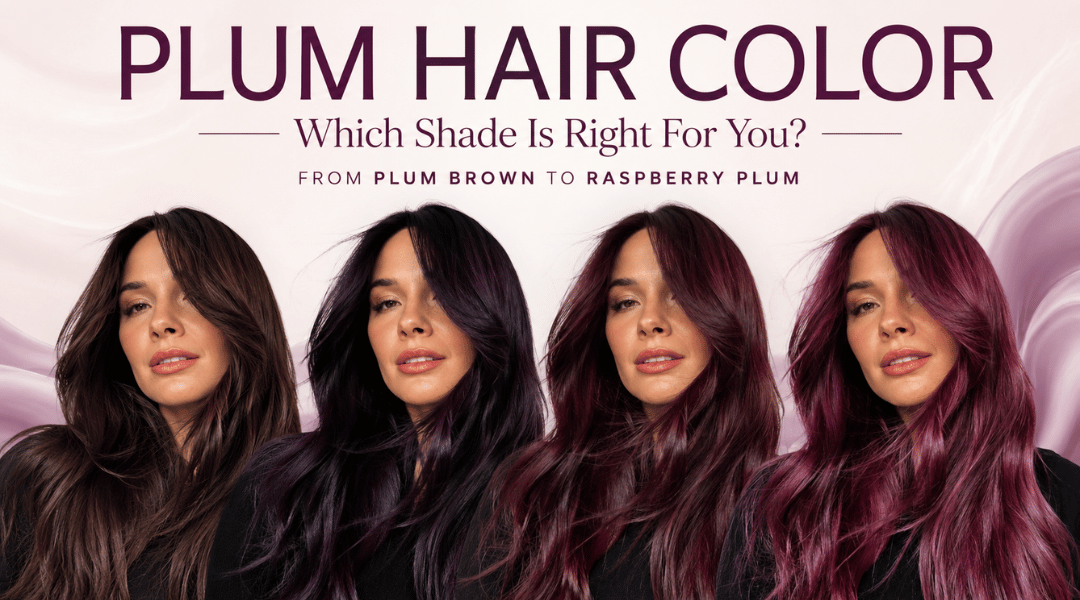
Plum gets talked about like it’s one color. It’s not. It’s an entire family — and the shade your coworker wears to brunch, the one that catches light like velvet, might look completely different on your hair. That’s not a flaw in the color; it’s the nature of how plum interacts with base color, undertone, and texture.
This isn’t a gallery with forty identical photos and a caption that says “gorgeous.” This is the part where you figure out which plum is actually yours — and what it’s going to take to keep it that way.
Try before you dye
Plum is a whole family — burgundy, black cherry, vivid raspberry. Try plum shades on your own photo and find which one loves your skin tone.
If you’re exploring color options that add richness without going extreme, plum sits in the same conversation as hair colors that make you look younger. But plum plays bolder. And it demands more honesty about what you’re signing up for.
Updated October 2026: shade guidance, fade timelines, and maintenance advice reviewed and expanded with reader FAQs.
What Plum Hair Color Actually Is (And Why It’s Not Just One Shade)
Plum hair color sits at the intersection of red and purple, inspired by the fruit itself. It ranges from deep, nearly-black cherry tones to bright raspberry-violet, and can read warm or cool depending on the specific mix of pigments. Unlike burgundy (which leans red-brown) or violet (which leans blue-purple), plum lives in the middle — and that’s what makes it so versatile and so easy to get wrong.
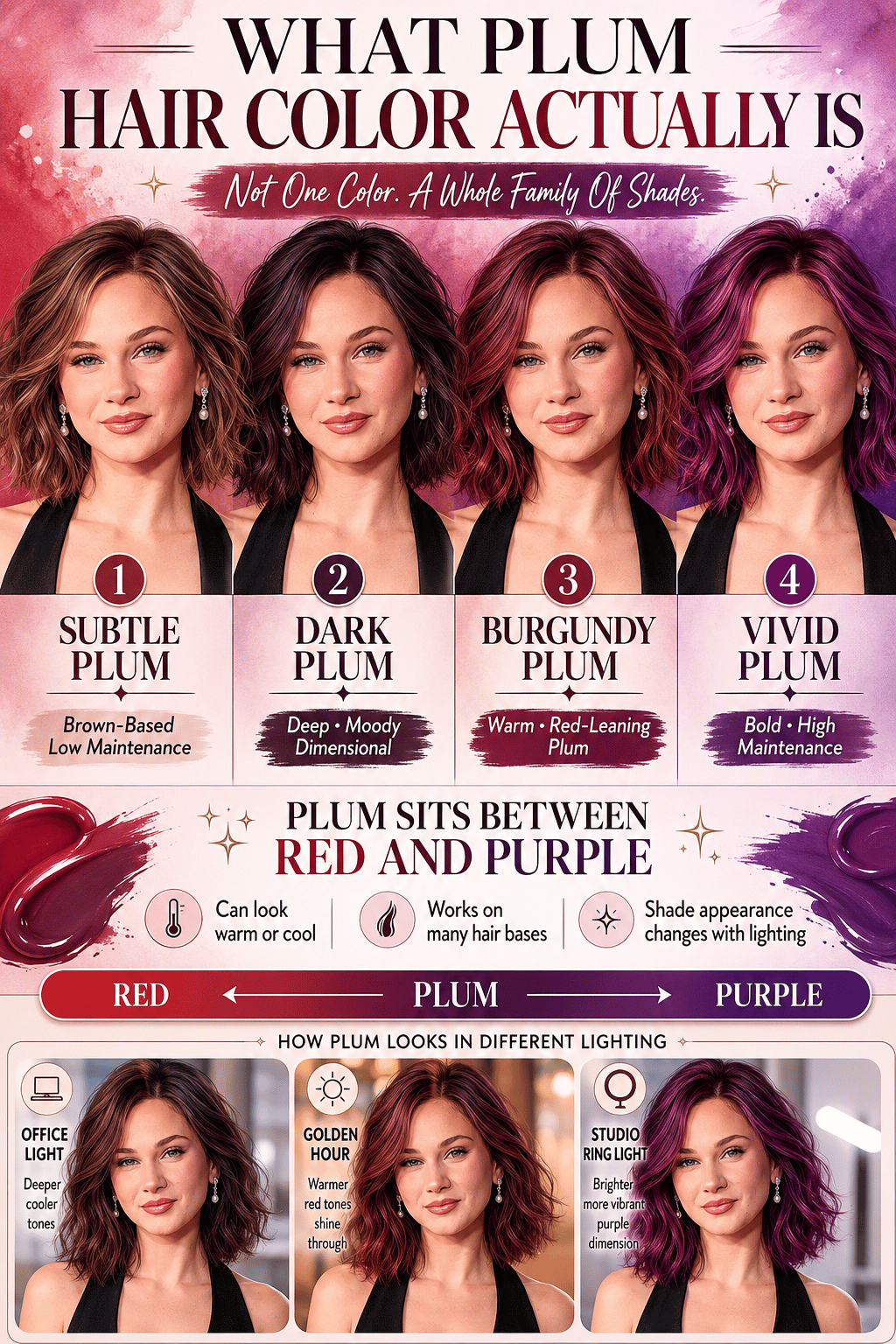
Here’s the practical breakdown:
Subtle plum — a brown-based wash best for brunettes who want dimension without drama. Dark or deep plum — rich and moody, works on dark hair without heavy lightening. Vivid plum — bright, violet-forward tones that typically need pre-lightening on most bases. Burgundy plum — warm, red-leaning plum that bridges the gap between traditional red and true purple.
The shade you see on screen almost never accounts for lighting. Plum reads completely different under fluorescent office lights versus golden-hour sunlight versus the ring light in someone’s bathroom mirror. If you’ve fallen for a specific plum shade online, assume the real-life version reads noticeably less saturated than the photo — screens and ring lights flatter color.
Plum Hair Color Shades: Finding the One That Fits
Plum Brown Hair Color
This is the entry point. Plum brown keeps most of your natural brunette depth intact while layering in a wine-toned warmth that shows up in movement and light. It’s the shade people notice and can’t quite name — they know something changed, but it doesn’t scream “I dyed my hair.” Chocolate plum falls here too, adding a cocoa richness that reads sophisticated on medium-to-dark brown bases.
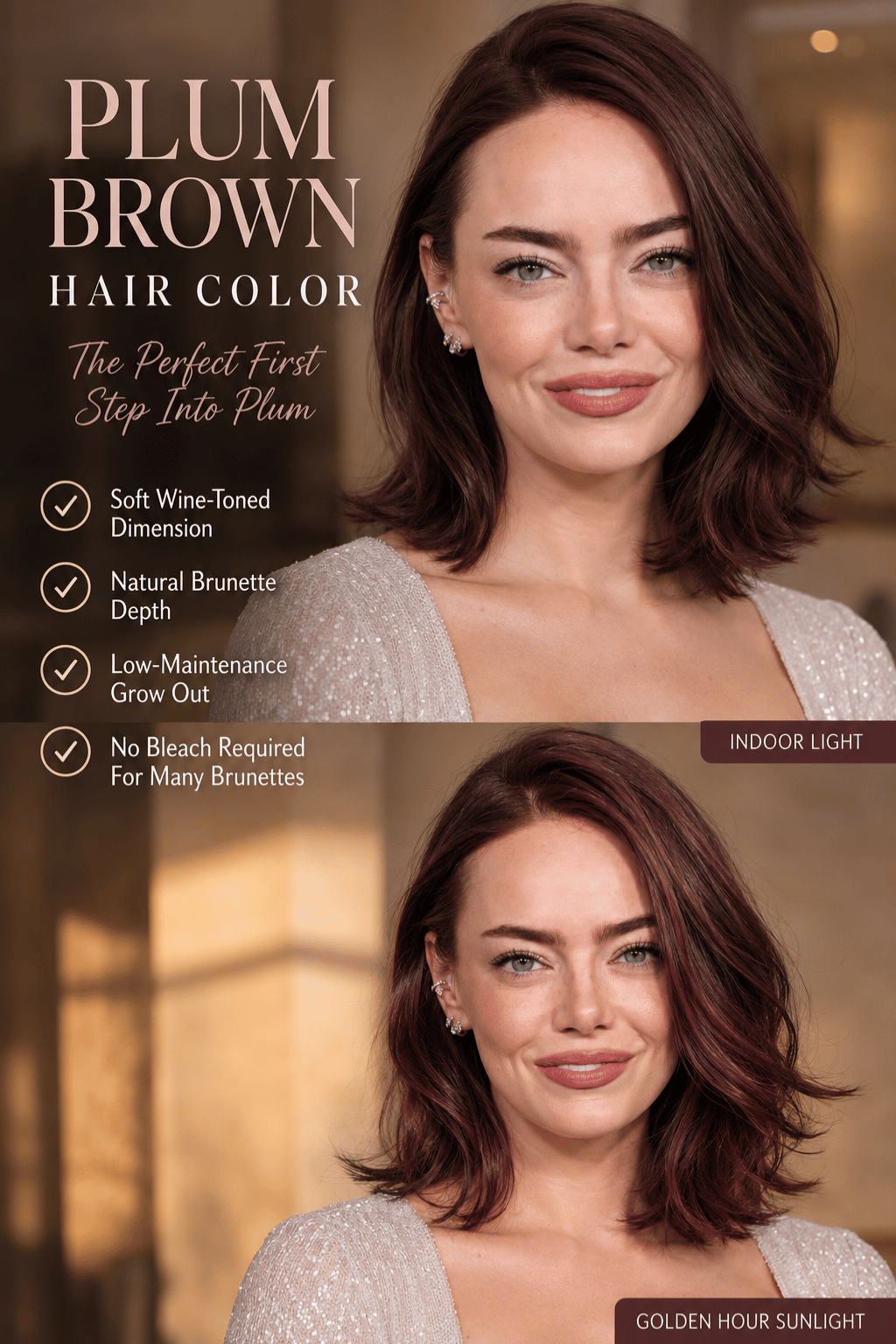
If you’ve never tried a fashion-adjacent color before, this is where to start. Maintenance is gentler than anything further down the spectrum, and the grow-out blends more naturally with brown roots.
Dark Plum and Black Cherry
Deep plum and black cherry plum hair color live in moody territory — the shades that look almost black indoors but catch burgundy-violet light when you step outside. These work beautifully on naturally dark hair because they don’t fight the base; they enhance it. You’re adding tonal depth, not trying to overpower what’s already there. For the full burgundy spectrum these shades borrow from, see our burgundy hair color ideas.
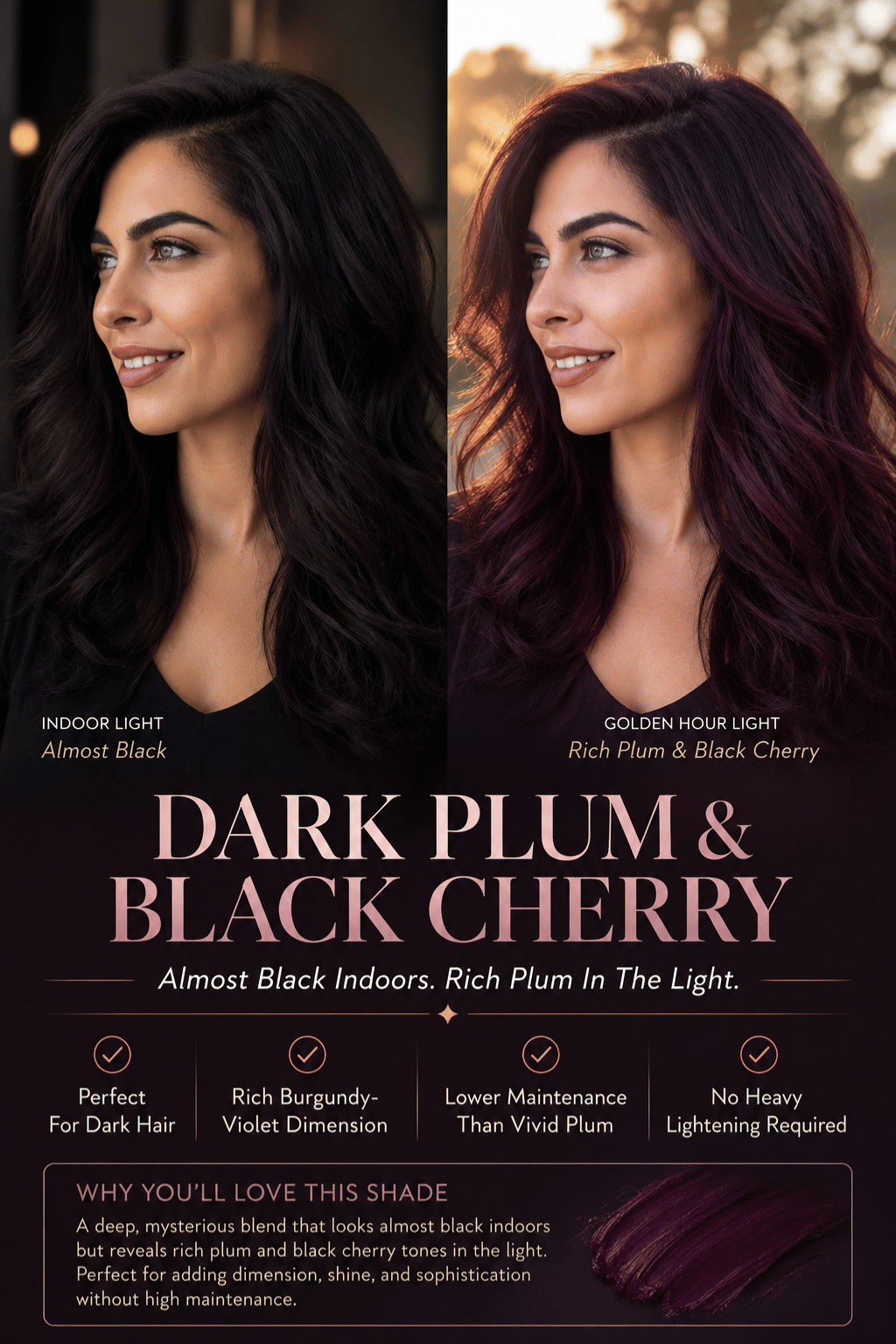
Black cherry specifically has become one of the more requested shades for clients with dark brown or black natural hair who want color without the commitment of heavy lifting. The richness lasts longer than brighter plum tones because the pigment sits deeper and doesn’t have as far to fade.
Burgundy Plum and Wine Plum
Here’s where plum starts leaning red. Burgundy plum and plum wine shades carry more warmth — the kind that flatters golden and olive skin tones particularly well. If you’ve ever looked at burgundy hair and thought “almost, but I want more purple,” this is your shade.
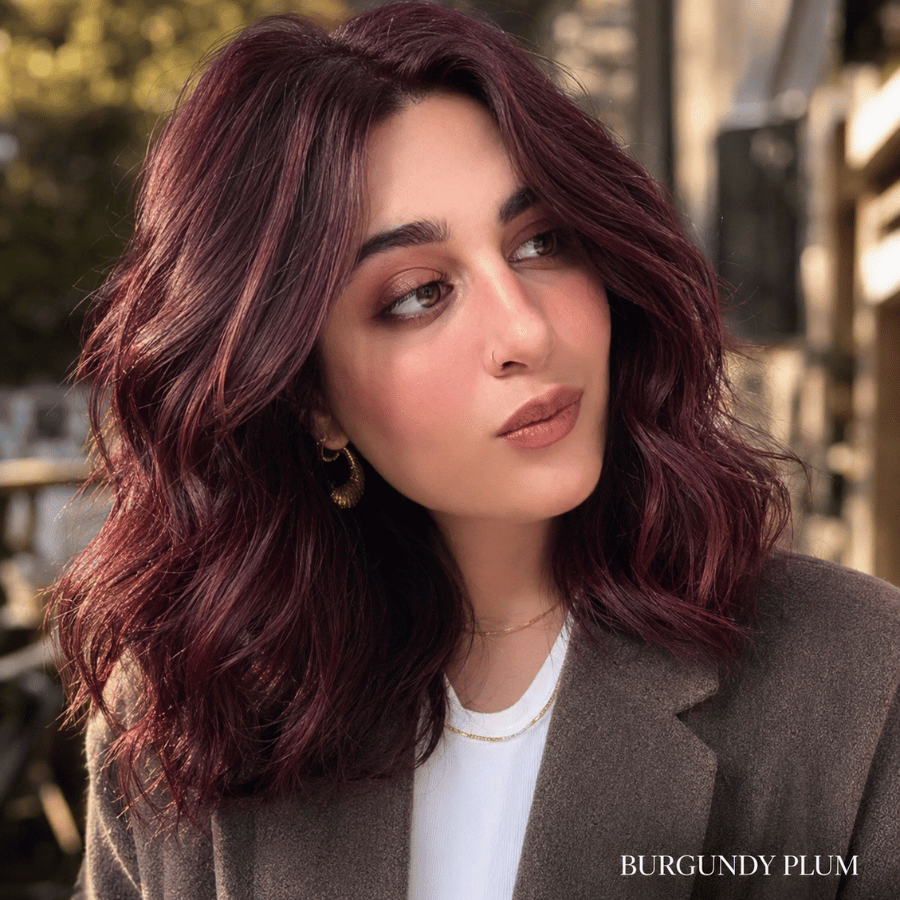
The tradeoff: red-dominant plum fades differently than violet-dominant plum. Burgundy plum tends to shift toward a coppery warmth as it washes out, which can look muddy on cool-toned skin if you’re not staying on top of toner refreshes. Plan for that.
Vivid and Raspberry Plum
This is the Pinterest shade. Raspberry plum, purple plum, violet plum — whatever the name, these are bright, saturated, and unapologetically bold. They’re also the highest-maintenance option in the plum family by a significant margin.
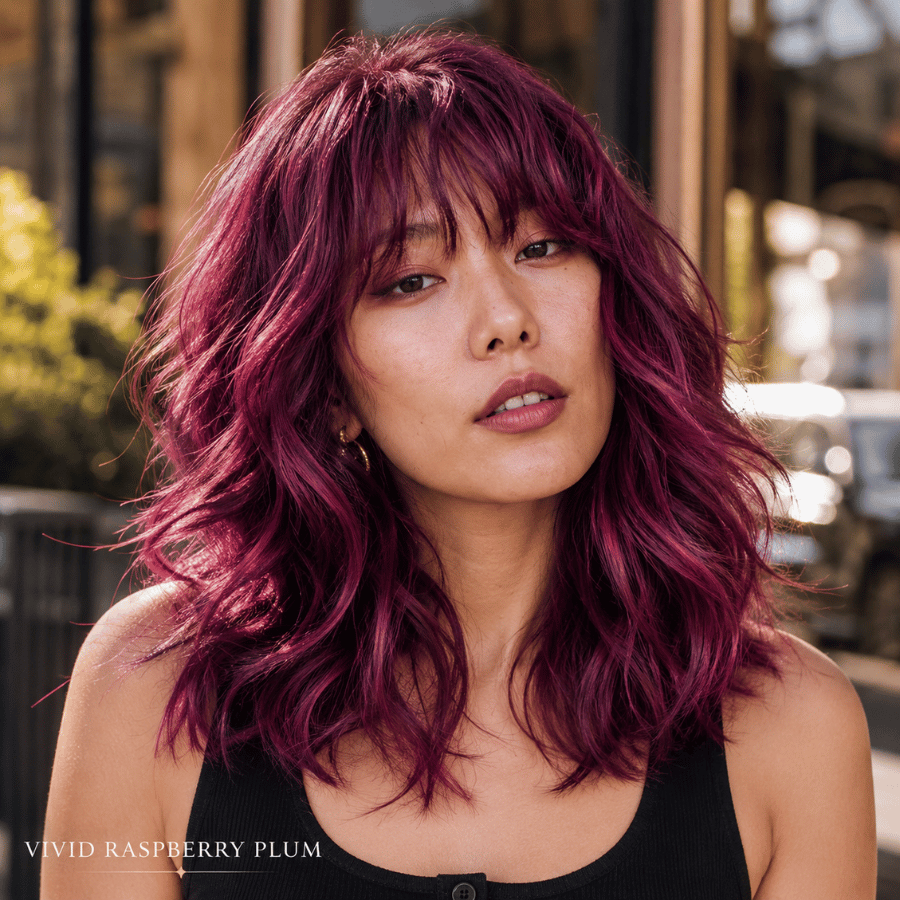
On dark hair, vivid plum requires pre-lightening. Period. No semi-permanent dye deposited over a level 3 base is going to give you the vibrant raspberry you saw on Instagram. The model in that photo either started blonde or sat through a lifting session first. And once you achieve the vibrancy, it begins fading within the first few washes. Vivid plum at week one and vivid plum at week four are two entirely different colors.
That’s not a reason to avoid it — it’s a reason to go in with open eyes and a clear plan with your colorist.
Do You Need Bleach for Plum Hair Color?
This depends entirely on two things: how vivid you want the result, and how dark your starting base is.
 See alsoCaramel vs Honey Hair Color: What’s the Difference?
No bleach needed: Plum brown on medium-to-dark brown hair. Dark plum or black cherry on any brunette base. These shades deposit over natural depth without requiring lift. A permanent color or demi-permanent formula handles the job, and many colorists use a gloss for even subtler plum brown results.
Bleach likely needed: Vivid raspberry plum on anything darker than a level 6. Any bright violet-plum on black hair. If you want the plum to actually read as purple — not just a dark tint visible only in direct sunlight — your hair needs to be lightened first so the pigment has something to grab onto.
The in-between: Burgundy plum on dark brown hair can sometimes be achieved with a high-lift permanent color and the right developer volume, skipping a separate bleach step. But this is precision work — it’s a salon decision, not a box-dye gamble.
The single most common mistake clients make with plum: bringing in a vivid purple reference photo, having a level 2–3 natural base, and expecting the result without any lightening. A good colorist will walk you through what’s realistic at your starting point. If someone promises vivid plum on unlifted black hair, that’s a red flag.
What’s the Difference Between Plum, Burgundy, and Violet?
These three get used interchangeably online, and they shouldn’t be. They’re distinct color families with different undertones, different maintenance profiles, and different visual effects.
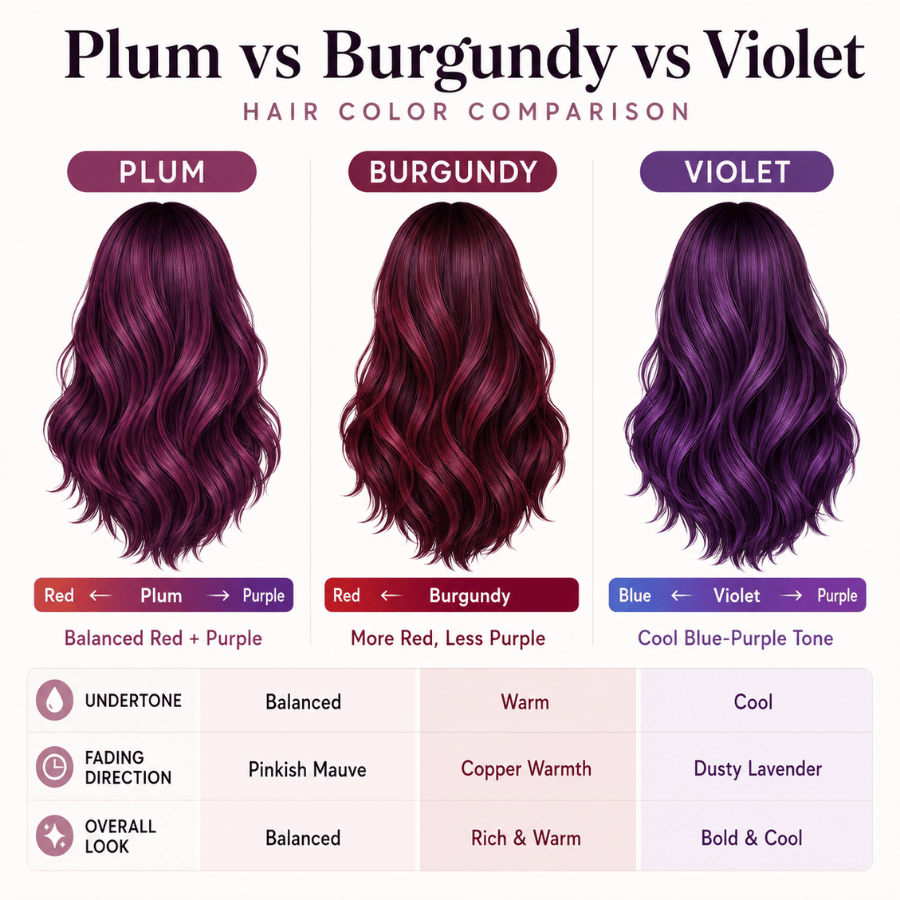
Plum blends red and purple roughly equally. It’s fruit-inspired — think of slicing open an actual plum and seeing the range from skin to flesh. It can lean warm or cool depending on the formula.
Burgundy is red-dominant with brown warmth. Less purple, more wine. It reads warmer and earthier than plum and tends to fade toward copper rather than mauve.
We break down every shade in our burgundy hair color guide.
Violet is blue-dominant purple. Cooler, less red, more jewel-toned. It fades toward a dusty lavender-gray rather than the pinkish-mauve trajectory of plum.
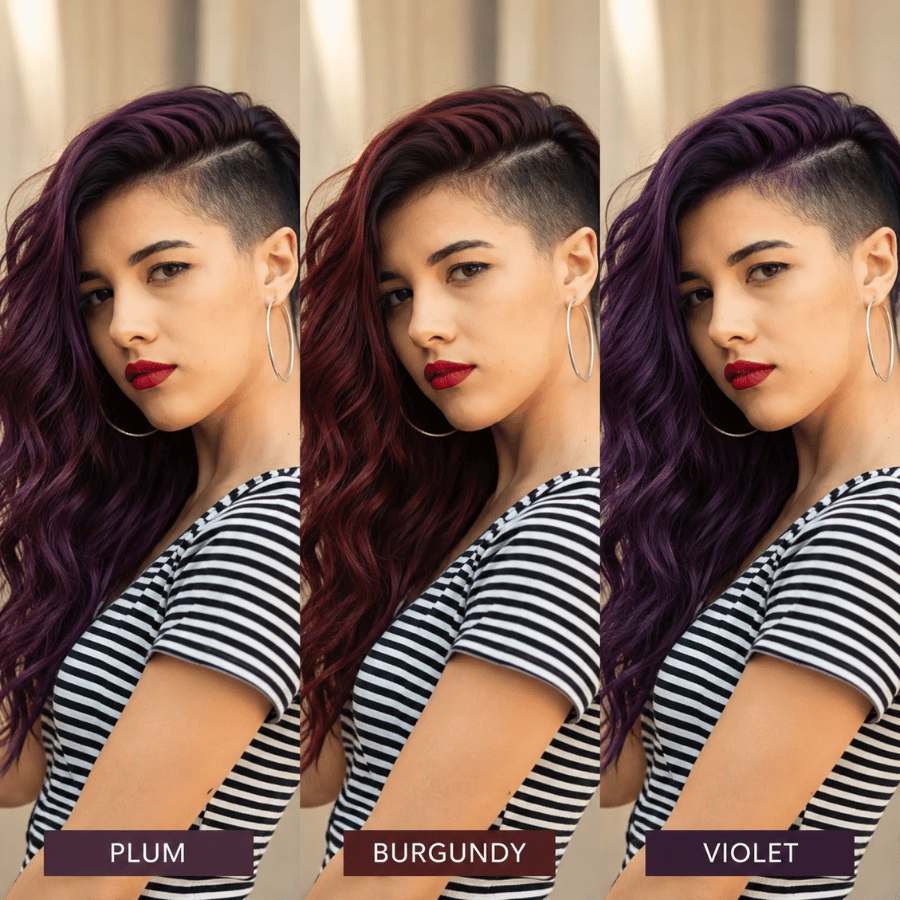
Why this matters: the name on a dye box or a Pinterest caption doesn’t always match the actual undertone. A client who says “I want plum” might actually want burgundy, or vice versa. This is exactly why a hair color consultation saves time, money, and disappointment — your colorist can translate the reference photo into the right formula for your specific hair.
How Long Does Plum Hair Color Last?
The honest range is 3–6 weeks before you notice meaningful fading, but that number swings hard based on shade, formula, and how you care for it.
Red and violet pigments are less stable than the neutral tones in browns and blacks — they rinse out faster with washing and break down more easily under UV and heat. That means they wash out faster — it’s chemistry, not a quality issue with the dye. Every plum shade fades; the question is how gracefully.
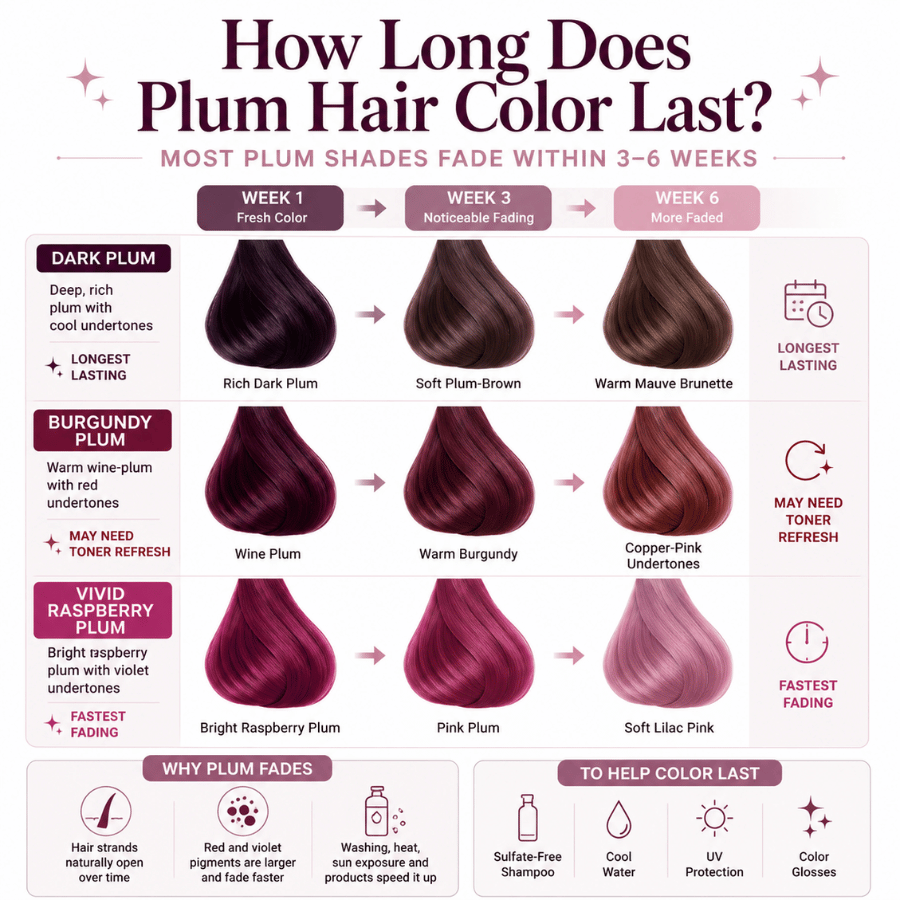
Deep and dark plum fades the slowest and the most naturally. It settles into a warm brownish-mauve that still looks intentional at week four or five. Many clients find the faded version just as appealing as the fresh application.
Burgundy plum shifts toward a coppery-pink midtone as the red pigments lose intensity. If your skin has cool undertones, this can start looking off before you’re ready for a touch-up. A toner refresh around week three keeps it in the right zone.
Vivid and raspberry plum fades fastest and least gracefully. Bright violet-forward shades wash out to a pinkish-lilac that may or may not be what you wanted. If you love that evolution, great. If you’re expecting the original vibrancy to hold, plan for touch-ups every three to four weeks — or a color-depositing conditioner between appointments.
One more thing that never makes it into the inspiration posts: if your plum was done with a direct (semi-permanent) dye, don’t layer permanent or box color over it until the purple has fully washed out. Oxidative dye applied over residual direct purple can pull green — and correcting that is a color-correction appointment, not a quick toner. When in doubt, let it fade completely first, or let your colorist manage the transition.
Keeping Plum Hair Color Rich
Color-safe, sulfate-free shampoo is non-negotiable. Every wash pulls pigment, and sulfates accelerate that process dramatically. Wash two to three times per week at most, and finish with a cool-water rinse to help seal the cuticle.
Heat protection before every hot tool — straighteners and curling irons open the cuticle and let color escape. UV exposure also fades plum aggressively, especially the violet tones. A UV-protective spray or simply wearing a hat on high-sun days makes a measurable difference over the life of the color.
Chlorine deserves its own warning: pool water strips fashion color aggressively. If you swim regularly, wet your hair and work conditioner through it before getting in, rinse immediately after, and consider a swim cap on long swim days.
Between full-color appointments, a gloss or toner refresh extends the vibrancy without re-processing your entire head. This is especially valuable for burgundy and vivid plum shades that start shifting tone around week three. Skip clarifying shampoos entirely — they’re designed to strip buildup, and they’ll strip your plum right along with it.
If you’re coloring for the first time, reading up on what to know before you color your hair gives you a better foundation for the conversation with your colorist.
The maintenance commitment scales directly with vibrancy. Plum brown is genuinely low-effort. Vivid raspberry is a lifestyle choice. Be honest with yourself about which level of upkeep fits your actual routine, not the routine you imagine having.
Salon Plum vs. At-Home Plum
A salon colorist custom-mixes formulas based on your specific base color, hair condition, porosity, and target shade. They control developer volume, processing time, and apply toner or gloss adjustments after the color lifts. The result is even saturation, tonal accuracy, and a professional aftercare plan tailored to your shade.
 See alsoCelebrity Short Haircuts 2026: Best Pixies, Bobs and Lobs
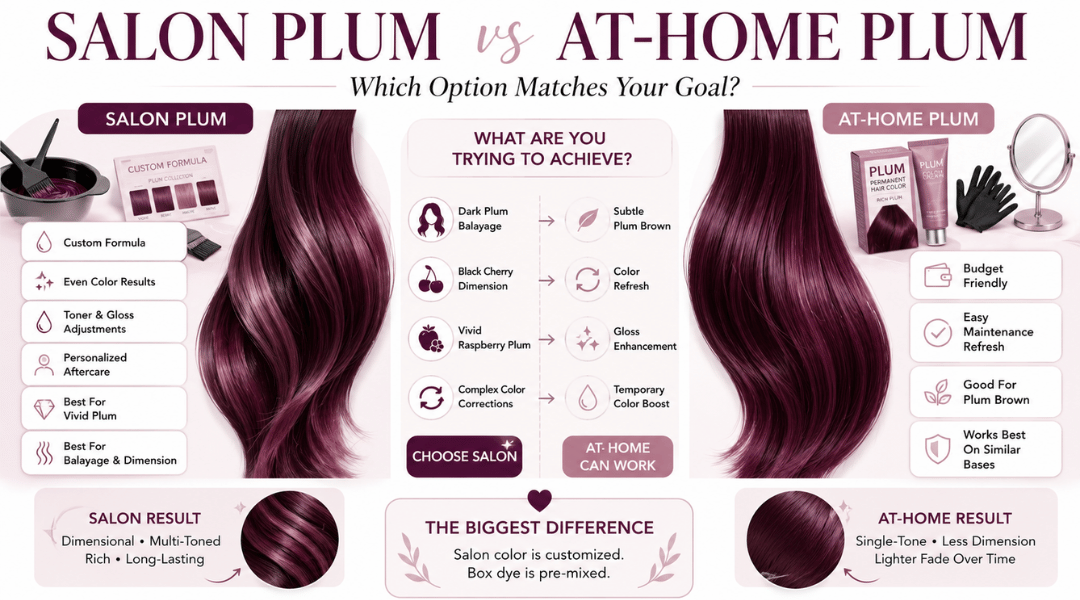
At-home box dye deposits one pre-mixed shade with no customization. Results vary widely by starting base — two people using the same box on different hair will get two very different results. For subtle plum brown on medium-brown hair, box dye can deliver a reasonable outcome. For anything involving lightening, or for vivid shades on dark hair, the gap between salon and DIY is stark.
This isn’t an anti-DIY stance. It’s an honest one. If your goal is a hint of plum warmth through your brunette hair, an at-home demi-permanent or color-depositing mask can work well. If your goal is black cherry balayage with dimensional placement, or vivid raspberry on a dark base, that’s salon territory. The consultation step alone — where a colorist evaluates your hair’s condition, your lifestyle, and your reference images — is what separates a result you love from one you’re scrambling to fix.
The Instagram Problem with Plum Hair Color
Most plum hair reference images are photographed within hours of application, under ring lighting, often with a color-depositing conditioner applied right before the shoot. Some have been filtered. Almost none show the color after a single wash, let alone after two weeks.
Plum in natural daylight reads differently than plum under studio conditions. The richness softens. The vibrancy drops. The dimension between highlighted and base sections becomes more subtle. None of that is a failure — it’s just reality that doesn’t get posted because a slightly faded plum at day ten doesn’t generate the same engagement as a freshly-applied, studio-lit version at hour one.
Faded plum is never shown. Grow-out is never shown. The three-week mark where burgundy plum starts pulling warm and your roots start peeking through — that photo doesn’t exist in anyone’s feed.
What helps: bring multiple reference images to your consultation, not one. Ask your colorist how each shade translates on your specific hair in your daily lighting. The answer might be different from the photo, and that’s the conversation that sets realistic expectations before you sit in the chair.
Plum Hair Color Ideas and Inspiration
The shades below represent the practical range of plum — from barely-there dimension to full-impact statement color. Each works differently depending on texture, length, and skin tone, and your colorist can adjust the formula to land in the right place for you.
Plum brown on straight, shoulder-length hair
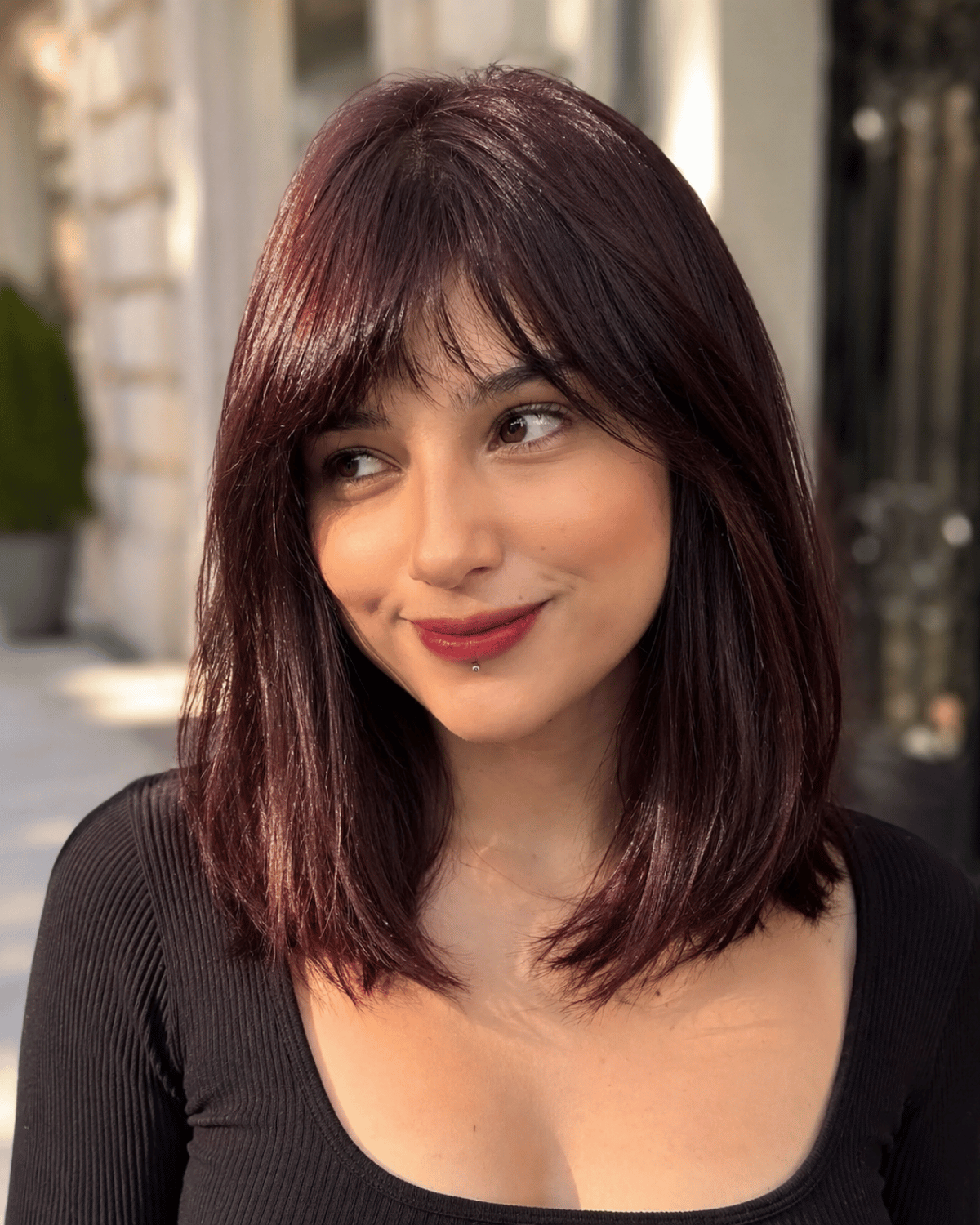
The shade that reads “expensive brunette” without announcing itself. Warm under sunlight, nearly neutral indoors. Zero bleach required on a natural brown base.
Dark plum balayage on wavy texture
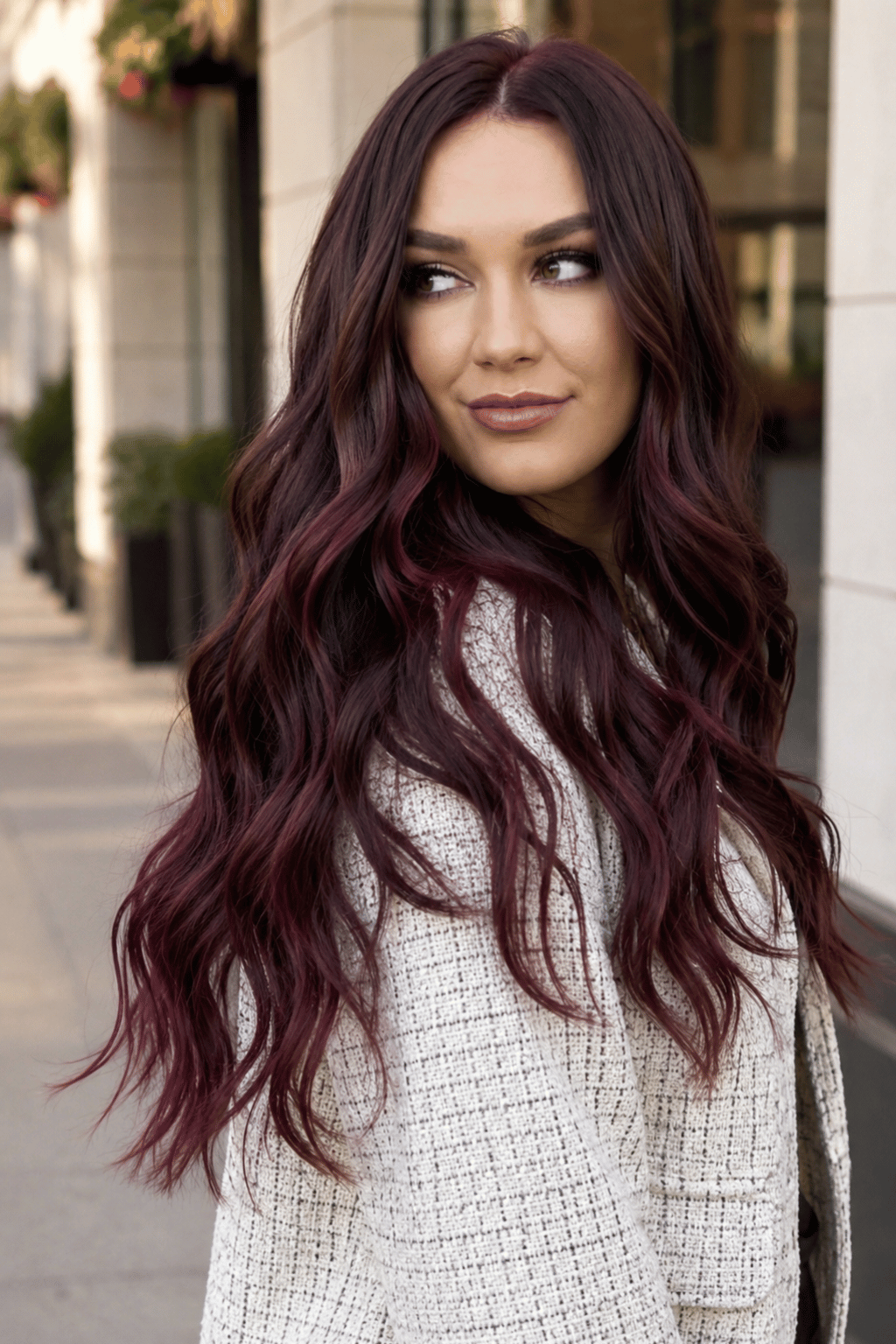
Depth at the root, plum richness through the midlengths and ends. The wave pattern catches light differently across the transition, which gives this shade its dimensional quality. Works on a range of skin tones including deeper complexions.
Black cherry plum on curly natural hair
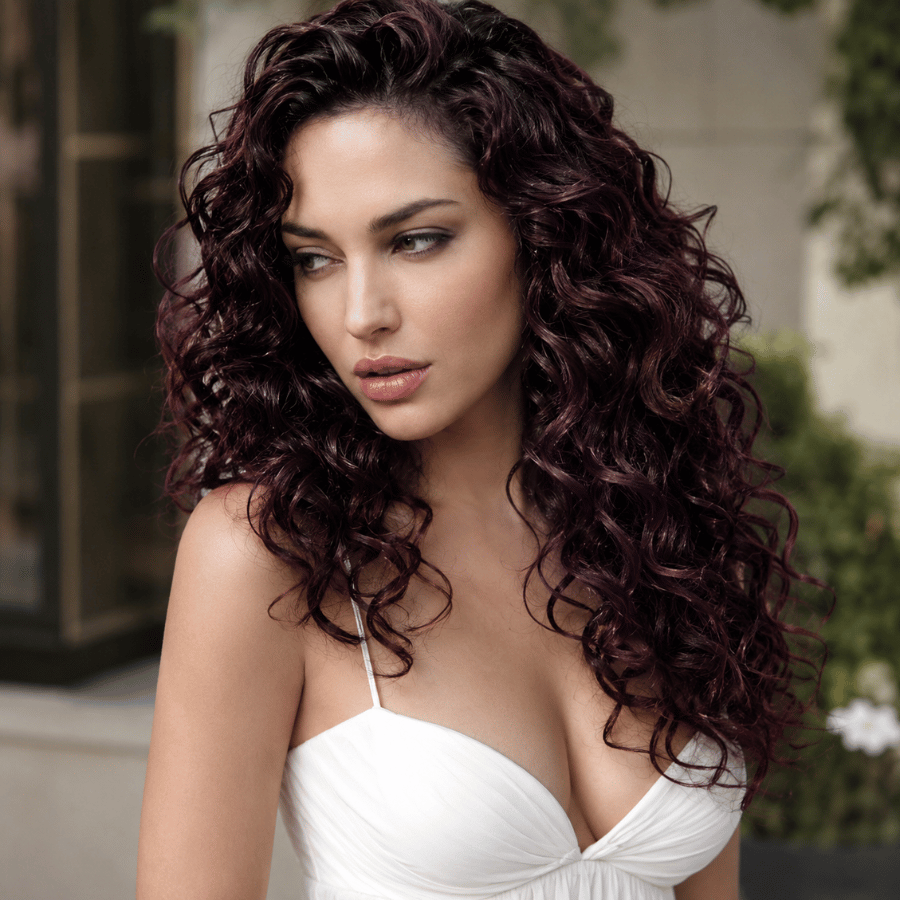
One of the best pairings in the plum family. Curly texture refracts light across hundreds of surfaces, and black cherry plum uses that to its full advantage. The color shifts visually with every movement.
Burgundy plum on warm-toned skin
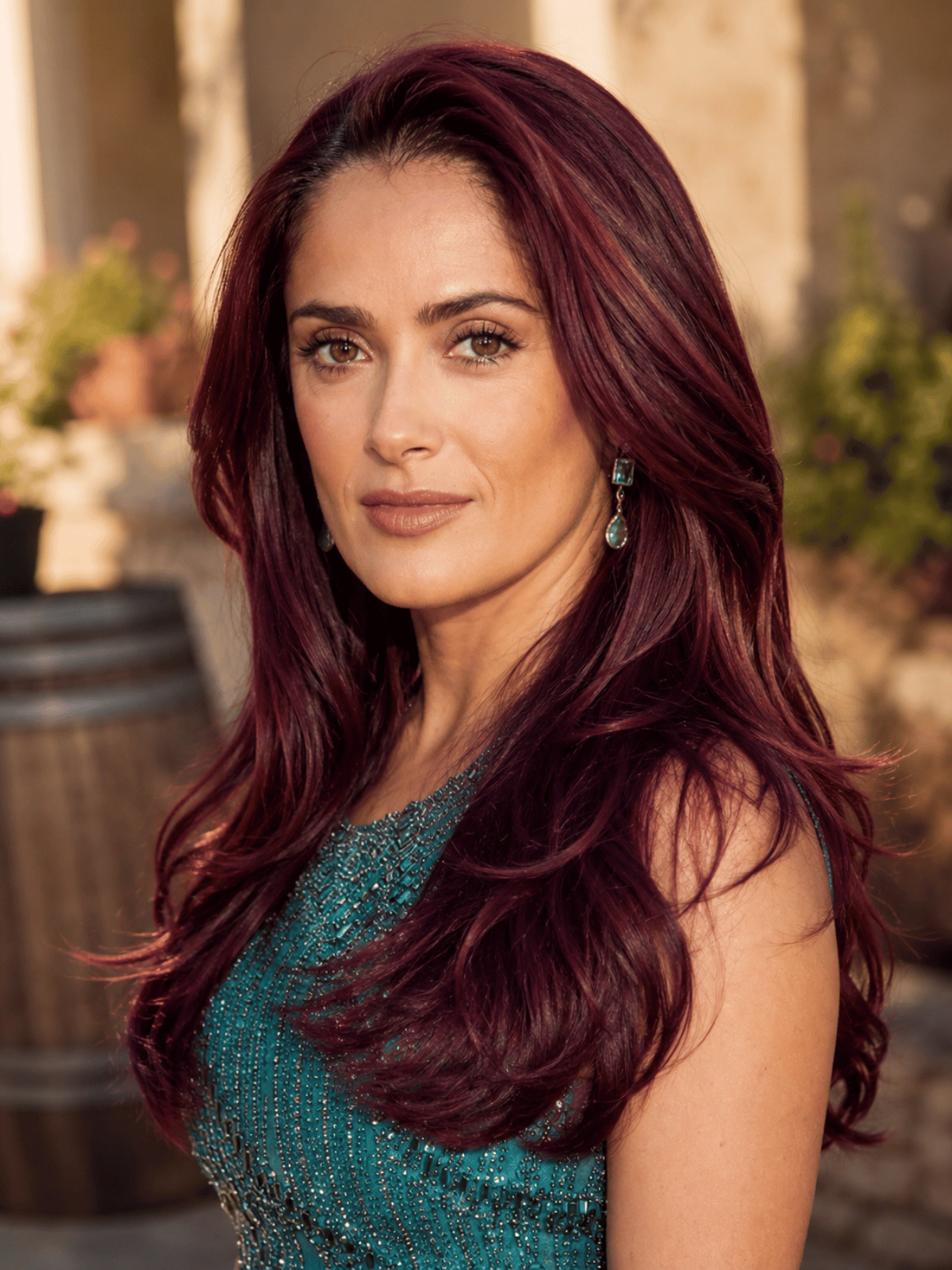
Red-forward warmth that complements golden and olive complexions. Works well at any length but looks particularly strong on long, layered cuts where the color has room to transition.
Chocolate plum highlights on long brunette hair
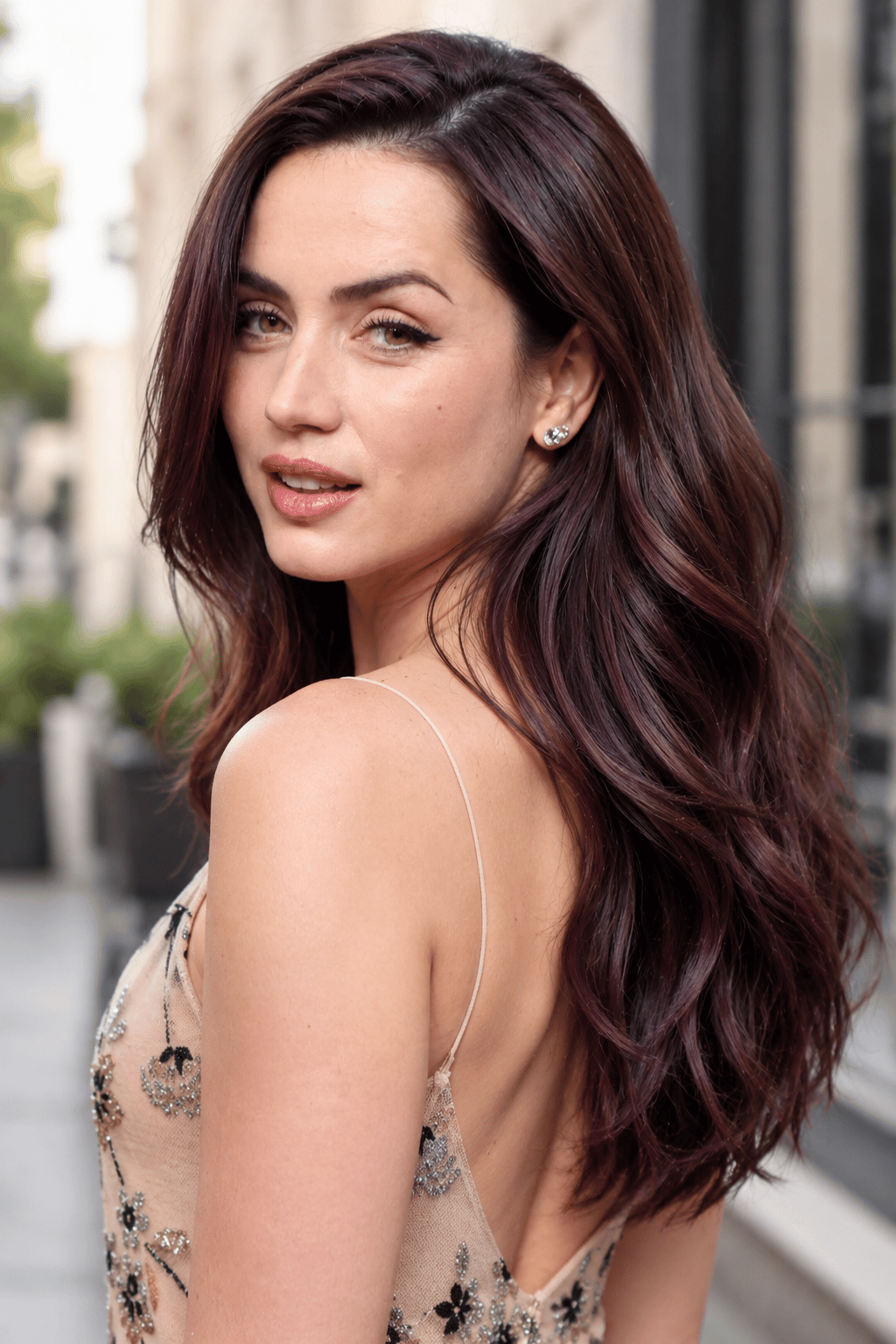
Subtle, dimensional, and extremely forgiving on grow-out. The highlights blend with the natural base as they grow, which means you’re not locked into a strict touch-up schedule.
Vivid raspberry plum on a bob
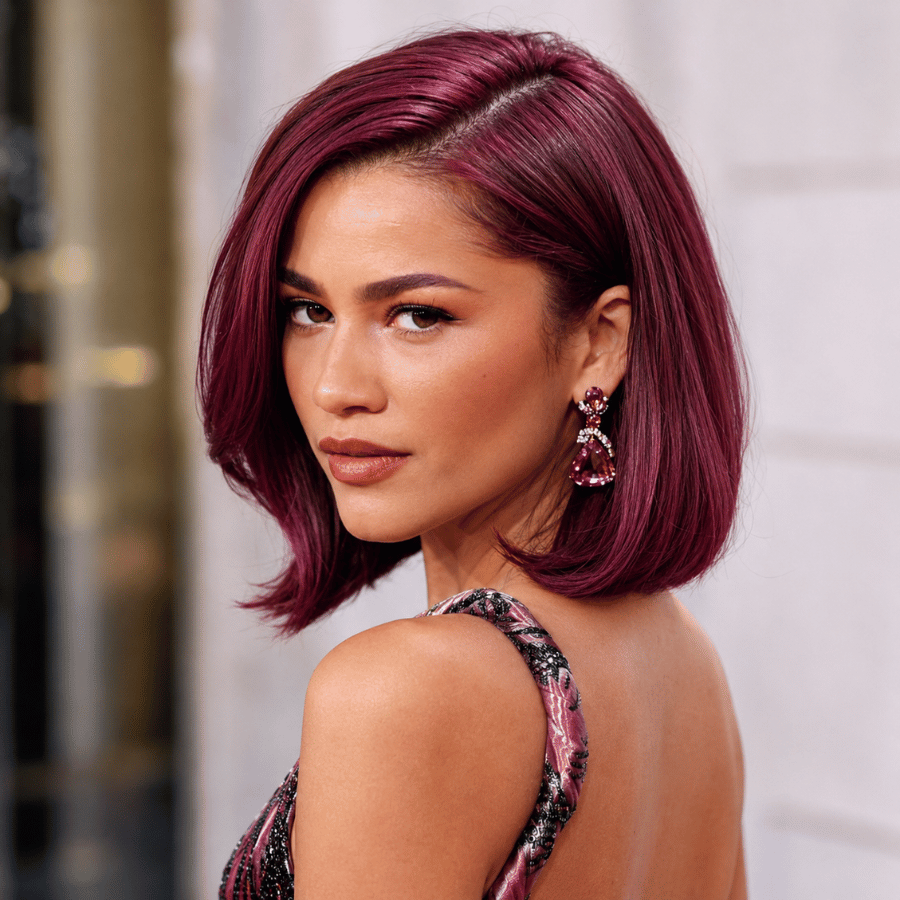
High impact, high commitment. This shade commands a room but demands a maintenance plan. Pre-lightening is required, and the color begins evolving after the first wash. Beautiful when fresh; plan accordingly for what comes next.
If you’re ready to explore plum or any shade in the color spectrum, book a color consultation and bring your reference images. The best results start with a conversation about your hair, your routine, and what you actually want to live with — not just what you want to post.
FAQ
What is plum hair color?
Plum hair color is a rich shade that blends red and purple undertones, ranging from deep black-cherry tones to bright raspberry-violet. It can read warm or cool depending on the pigment balance and works across a wide variety of base colors and skin tones. Plum is best understood as a family of shades rather than a single color.
Does plum hair color work on dark hair?
Yes — and some of the best plum results happen on dark bases. Dark plum, black cherry, and plum brown shades deposit beautifully over naturally dark hair without requiring bleach. Vivid or bright plum shades on dark hair will need some level of pre-lightening to achieve visible vibrancy.
Do you need bleach for plum hair color?
It depends on the shade. Subtle plum brown and deep plum tones can be achieved without bleach on most brunette bases using permanent or demi-permanent color. Vivid raspberry or bright violet-plum shades on dark hair require lightening first. Your colorist can determine the best approach based on your starting level and target shade.
How long does plum hair color last?
Most plum shades last 3–6 weeks before noticeable fading, though deeper tones hold longer than vivid ones. Red and violet pigments are larger molecules that wash out faster than neutral browns, so color-safe products and limited washing are essential. Touch-up cadence ranges from every 3–4 weeks for vivid shades to 6–8 weeks for deeper, more subtle plum.
What is the difference between plum, burgundy, and violet hair color?
Plum blends red and purple roughly equally and sits in the middle of the spectrum. Burgundy is red-dominant with brown warmth — less purple, more wine-toned. Violet is blue-dominant purple — cooler, less red, more jewel-toned. Each fades differently and suits different undertones, which is why precise shade selection during a consultation matters.
Can plum hair color turn green?
Yes — but only in one specific scenario. If you apply permanent or box dye over plum that was done with a direct (semi-permanent) dye before the purple has fully faded, the result can shift green. Always let direct purple wash out completely before switching to oxidative color, or have your colorist manage the transition.
How do I get plum hair color out if I don’t like it?
Plum is one of the more forgiving fashion colors to grow out — deep shades settle into a warm brownish-mauve that looks intentional, and vivid shades soften within weeks once you stop refreshing them. Don’t bleach aggressively over faded plum to remove it; see a colorist for a controlled color correction.
Does chlorine ruin plum hair color?
Chlorine accelerates fading significantly and can shift the tone. Wet your hair and apply conditioner before swimming, rinse immediately after, and wear a swim cap for regular swim sessions.