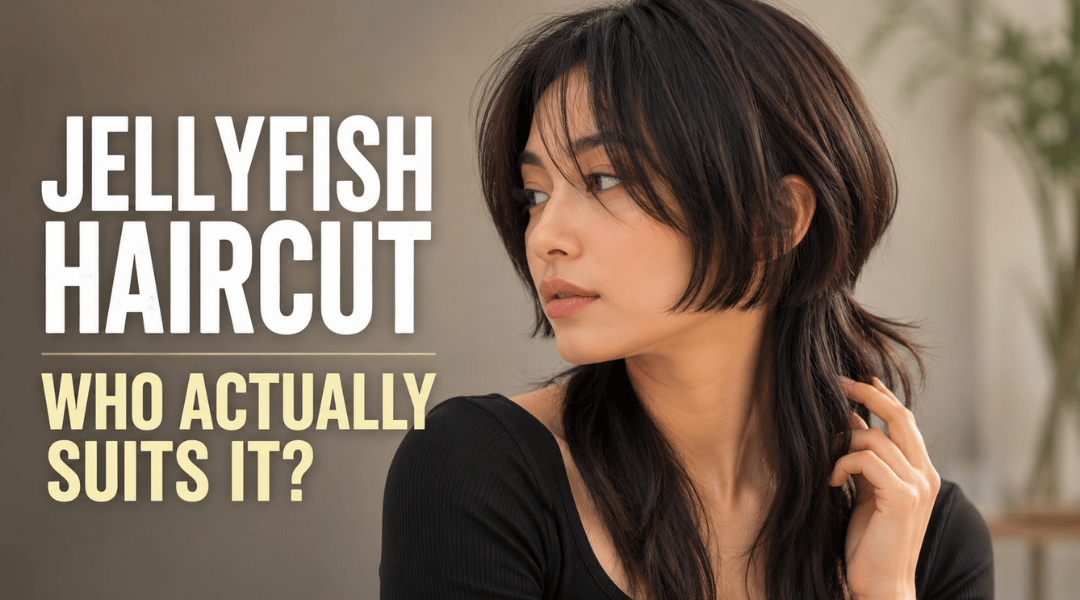
Most haircuts live on a spectrum between safe and interesting. The jellyfish cut doesn’t bother with that spectrum — it jumps off it entirely. Two distinct lengths. A visible, deliberate disconnection between layers. A silhouette that looks like someone took a bob and a set of waist-length extensions and refused to choose.
It’s the kind of cut that stops people mid-scroll — and that’s part of the problem. Because what you’re seeing on TikTok, with the perfect lighting and the fresh blowout and the 47 seconds of slow-motion hair flipping, isn’t what this cut looks like on a Tuesday morning when you’re running late and your round brush is missing.
That’s not a reason to skip it. It’s a reason to understand it first.
This guide covers everything the gallery-dump articles leave out: which face shapes actually benefit from this silhouette, what happens when it grows out, how it behaves on curly versus straight hair, and what to tell your stylist so you don’t end up with a cut that looks like a mistake instead of a statement.
What Is a Jellyfish Haircut?
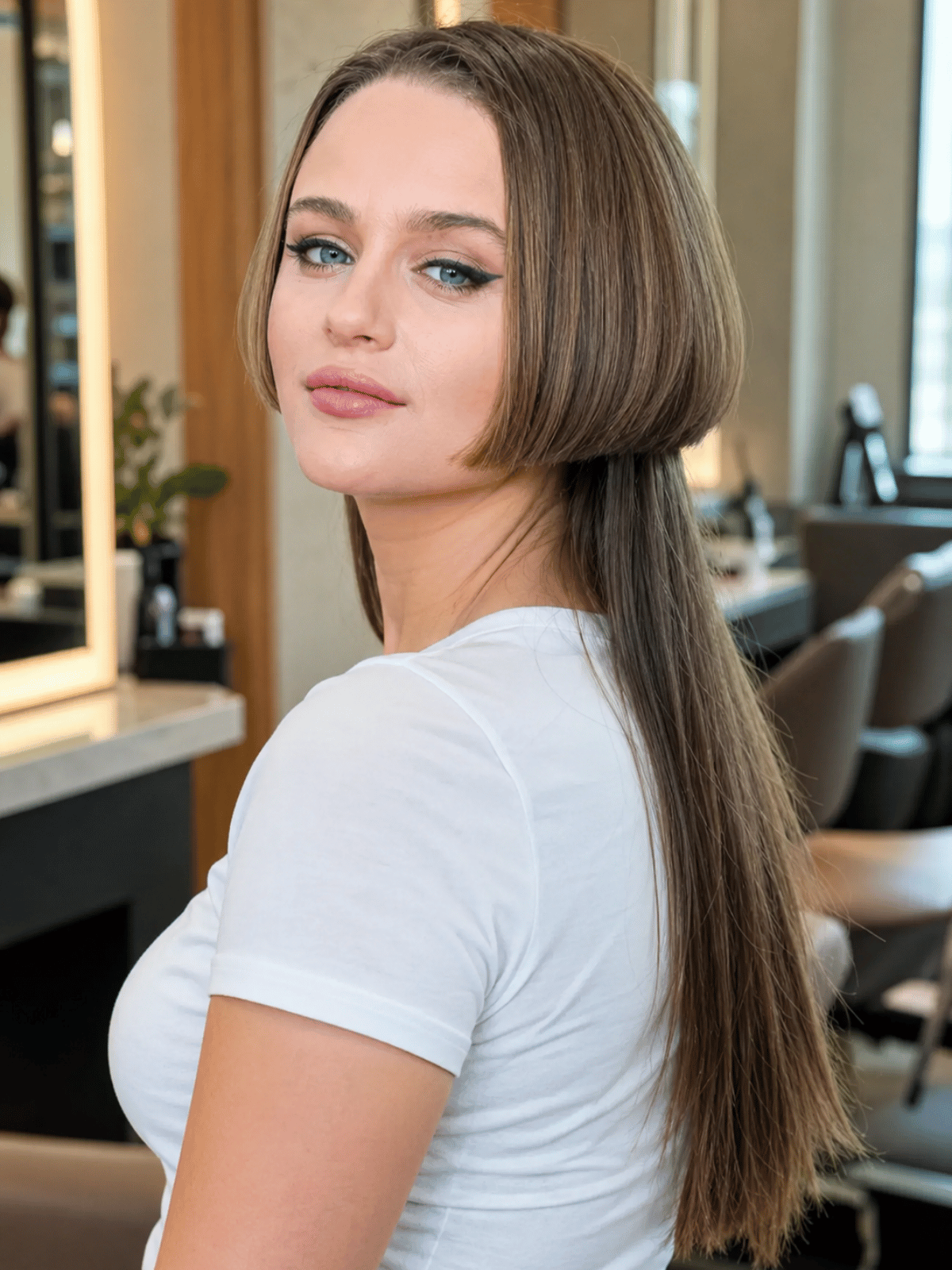
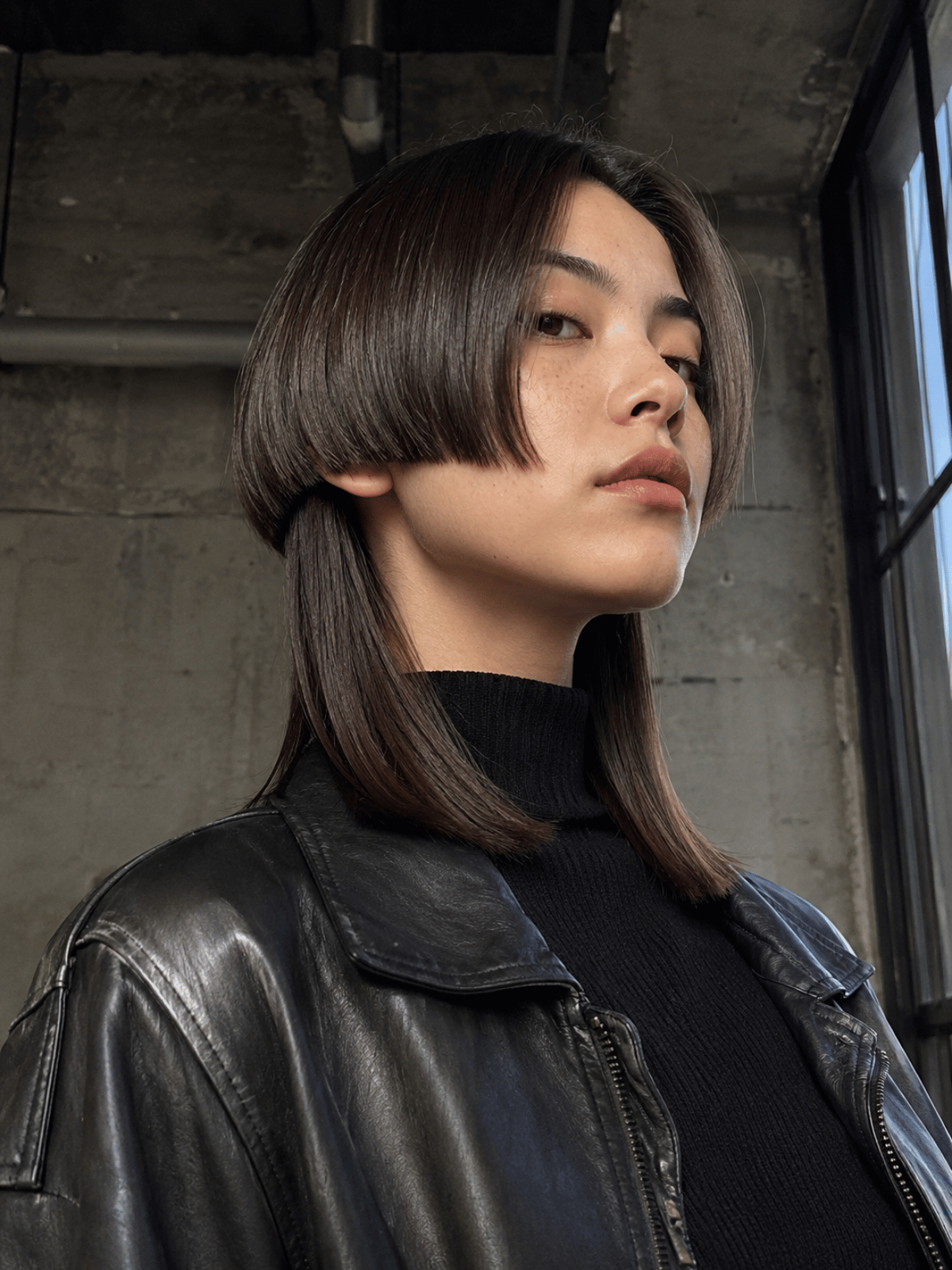
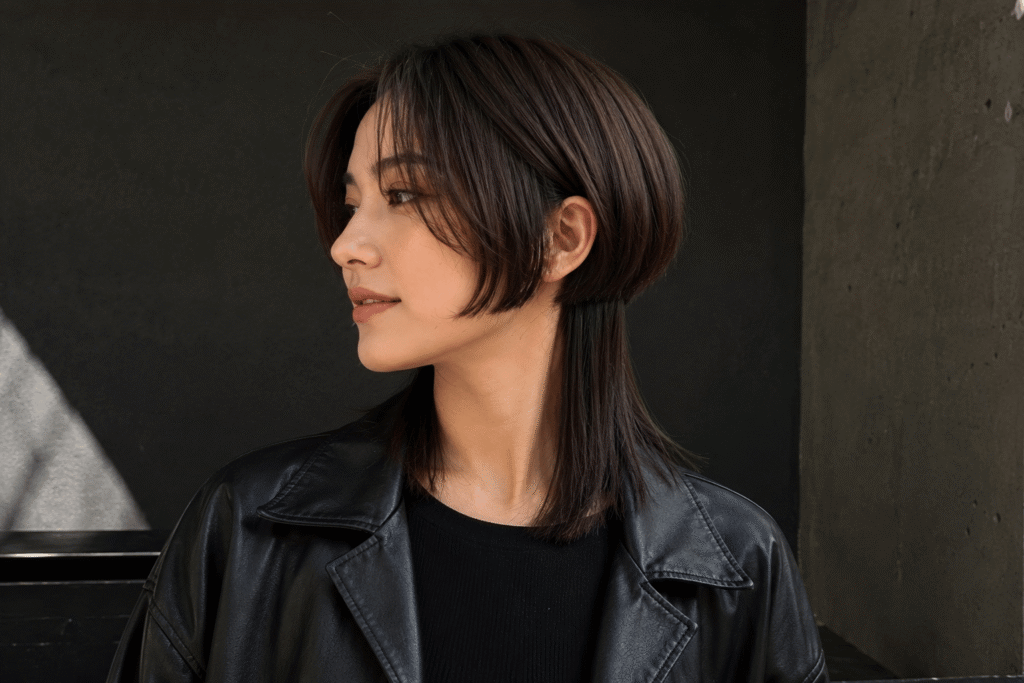
A jellyfish haircut is a two-tiered style where the top layer is cut short — typically into a rounded bob or bowl shape — while the bottom layer is left significantly longer, creating a dramatic disconnection between the two lengths. The short upper section mimics the bell of a jellyfish; the longer strands beneath resemble its trailing tentacles.
What makes this cut different from other layered styles is the intentional separation between those two lengths. There’s no blending. No gradual transition. The disconnection is the point. If a stylist blends the layers too much, the jellyfish effect disappears entirely, and you end up with a standard layered cut that doesn’t quite make sense.
How It Differs from Similar Cuts
The jellyfish cut gets compared to the wolf cut, the hime cut, and the octopus cut constantly — but the mechanics are different.
Wolf cut: Heavily layered throughout, with a shaggy, blended feel. The layers flow into each other. There’s no hard disconnection. It’s meant to look undone. If the jellyfish cut is architectural, the wolf cut is organic.
Hime cut: A Japanese-origin style with blunt, cheekbone-length side pieces framing the face while the back stays long. It shares the two-length DNA with the jellyfish, but the hime cut is flatter, more symmetrical, and traditionally worn pin-straight. The jellyfish cut wraps the short layer all the way around the head, not just at the sides.
Octopus cut: Closer to the jellyfish in spirit — layered and dramatic — but typically blended more gradually. Think of it as the jellyfish cut’s less confrontational cousin.
Where the Trend Came From
The jellyfish cut gained traction through K-pop and Japanese street style before TikTok turned it into a global search term. It’s part of a broader wave of experimental, edgy haircuts that reject the idea that hair has to look “finished” in a conventional sense. The cut resonates with people who see their hair as creative expression — not just grooming.
That said, trend origin matters less than execution. The best jellyfish cuts are built by stylists who understand the geometry of disconnection, not by anyone chasing a hashtag.
Who Does the Jellyfish Haircut Actually Suit?
Here’s where most articles fail you. They’ll say “the jellyfish cut works for everyone” and move on to the gallery. That’s not honest — and it’s not helpful if you’re trying to decide whether to actually sit in the chair and commit.
Face Shapes That Work Best
Oval and heart-shaped faces get the most natural benefit from this cut. The rounded top layer mirrors the natural proportions of an oval face, and the longer bottom layer adds visual length that keeps the overall silhouette balanced. Heart-shaped faces benefit because the volume at the jawline (where the short layer ends) fills out the narrower chin area.
Diamond faces can work well too — the width of the short layer at cheekbone level plays into the face’s natural angles rather than fighting them.
Round faces need more careful calibration. A jellyfish cut that ends at the widest point of the cheeks will emphasize roundness. The fix: position the short layer slightly below the chin, and keep the bottom layer longer to create vertical pull. Wispy bangs help more than blunt ones here. If you’re exploring this, our guide to the best haircuts for round faces covers the structural reasoning in more detail.
Square faces benefit from softer edges on the top layer — think slightly textured rather than razor-blunt. A hard geometric bob on top combined with a strong jawline can read as heavy. Curtain bangs or a side-swept fringe soften the frame.
Not sure where you land? Our face shape and haircut guide and our breakdown of face shape rules and exceptions can help you assess before booking.
Hair Textures and the Jellyfish Cut
Straight hair is the easiest canvas. The disconnection reads cleanly, the silhouette stays defined between washes, and the styling effort is lower than with other textures. Most of the TikTok inspiration you’ve seen is straight hair, which is partly why the cut looks so effortless online.
Wavy hair works well — often better than people expect. Waves soften the hard disconnection between layers, which gives the cut a more wearable, less costume-y quality. If you want the jellyfish effect without the extreme architecture, wavy texture is your friend.
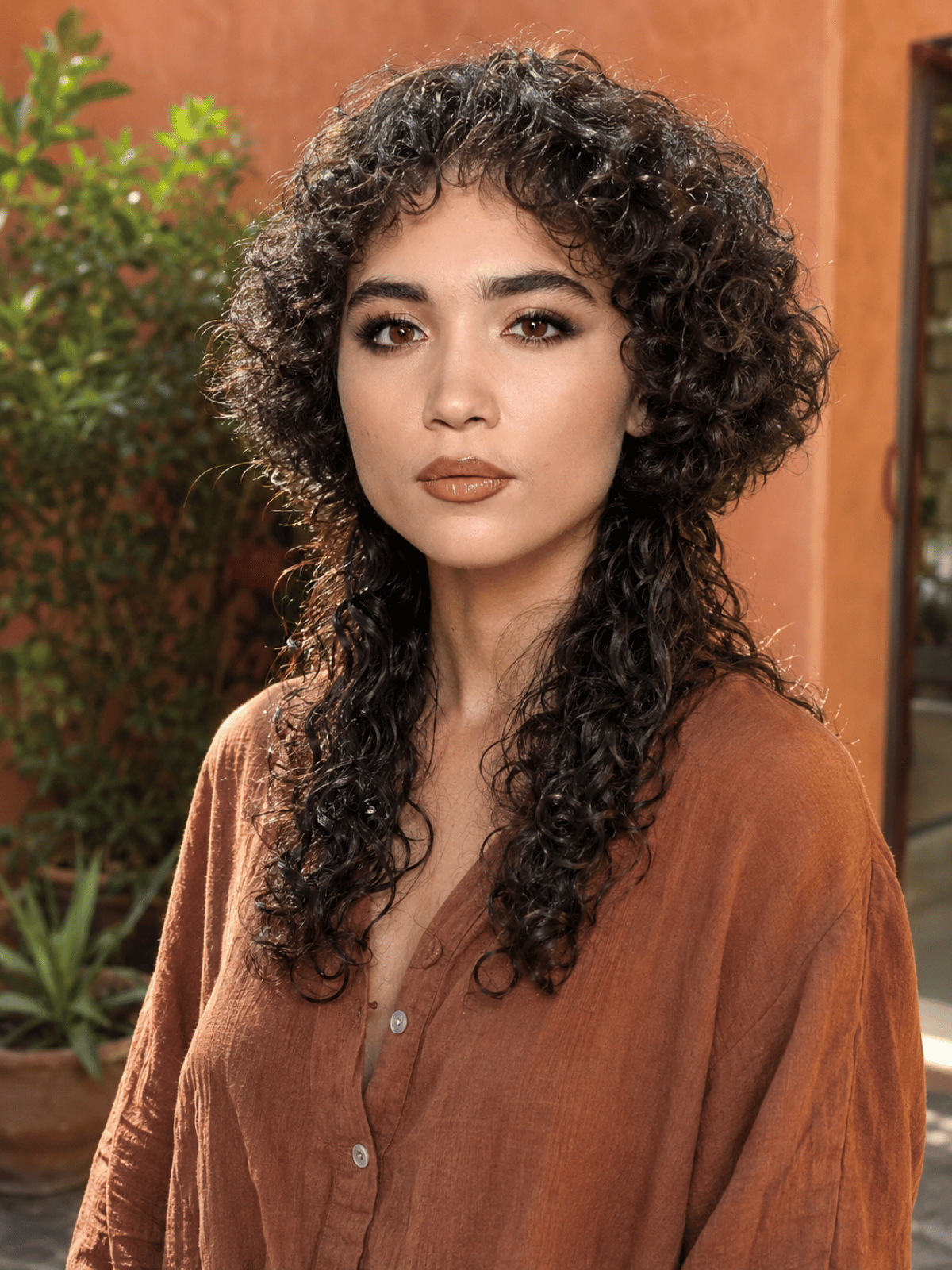
Curly hair changes everything about how this cut looks — and that’s not a bad thing, but you need to understand it going in. On curls, the short top layer will have significantly more volume than on straight hair. The “bell” shape becomes rounder, more dramatic. The bottom layer, depending on curl pattern, may appear thinner by comparison. This can look incredible if the curl density is even throughout, but if your curls are looser on top and tighter underneath (or vice versa), the two layers can look disconnected in a way that reads as accidental rather than intentional.
The key with curly hair: your stylist needs to cut it dry. Cutting curly hair wet and expecting the jellyfish proportions to hold once it springs up is one of the most common mistakes in this category.
Fine hair is where honesty matters most. The short top layer can actually help — it creates the appearance of density and volume around the head. But the long bottom layer is where fine hair struggles. Those longer strands can look sparse, stringy, and see-through, which undermines the entire point of the cut. If your hair is fine and thin (low density), this cut may not deliver what you’re imagining.
Thick hair is arguably where the jellyfish cut is at its best. Thick hair gives both layers enough body to hold their shapes independently, and the disconnection reads as dramatic rather than accidental.
Who Should Think Twice
This cut is not for people who want something subtle. If you’re hoping for “just a little bit jellyfish,” you’ll likely end up with a haircut that confuses people rather than impresses them. The disconnection needs to be visible and deliberate — otherwise it looks like your layers are growing out badly.
It’s also not for people who want a true wash-and-go lifestyle. We’ll get into maintenance below, but the short version: this cut needs daily attention to look intentional.
Jellyfish Haircut Variations
The term “jellyfish haircut” covers a wider range than most people realize. The level of disconnection, the length of each layer, and the addition of bangs or texture all change the personality of the cut dramatically.
Short Jellyfish Haircut
The top layer sits at or above the ears; the bottom layer ends around the collarbone. This is the boldest version — the one that makes people do a double take. It reads as editorial, fashion-forward, and unapologetically intentional. It also requires the most confidence and the most styling effort, because there’s nowhere to hide a bad execution.
The short version looks best on people with strong bone structure and medium-to-thick hair density. On very fine hair, the bottom collarbone-length layer can look wispy.
Long Jellyfish Haircut
The top layer sits at chin or jaw length; the bottom extends to mid-back or waist. This is the most popular version for a reason — the proportions feel balanced, and the longer bottom layer provides enough visual weight to anchor the cut. It’s also the most forgiving for different hair densities and the easiest to style on a daily basis.
If you’re considering a jellyfish cut for the first time, this is usually the safest entry point.
Layered Jellyfish Haircut
A variation where additional layers are added within the top section, creating more texture and movement in the “bell” area. This softens the hard geometric quality and makes the cut feel less severe. It’s a good option for wavy hair or for anyone who wants the jellyfish silhouette without the full blunt-cut commitment.
One caution: too many interior layers can start to blur the disconnection, and then you’ve lost the jellyfish effect entirely. The balance is delicate — this is a version that really depends on stylist skill.
Jellyfish Haircut with Bangs
Bangs change the face frame significantly. Blunt micro bangs push the cut toward a more editorial, Japanese street-style aesthetic. Curtain bangs soften it. Wispy bangs make it more approachable. For those exploring fringe options, our bangs guide for thin hair and our bangs by face shape breakdown cover the practical considerations.
The biggest mistake with bangs on a jellyfish cut: going too heavy. A thick, dense fringe combined with a blunt top layer can overwhelm the face and make the cut feel top-heavy. Lighter, more textured bangs keep the proportions balanced.
Jellyfish Haircut for Curly Hair
Covered in depth above, but worth repeating: curly jellyfish cuts need a stylist who specializes in textured hair. The cut should be done dry. The disconnection should account for shrinkage — meaning the wet-hair measurement and the dry-hair result will be meaningfully different. If your stylist doesn’t discuss this, bring it up.
Curly jellyfish cuts also benefit from keeping the top layer slightly longer than you’d go with straight hair, because curl volume will shorten the visual length. What reads as chin-length on straight hair might read as cheekbone-length on curls.
What the Jellyfish Cut Looks Like in Real Life
This is the section nobody else writes — and it’s the one that might save you from disappointment.
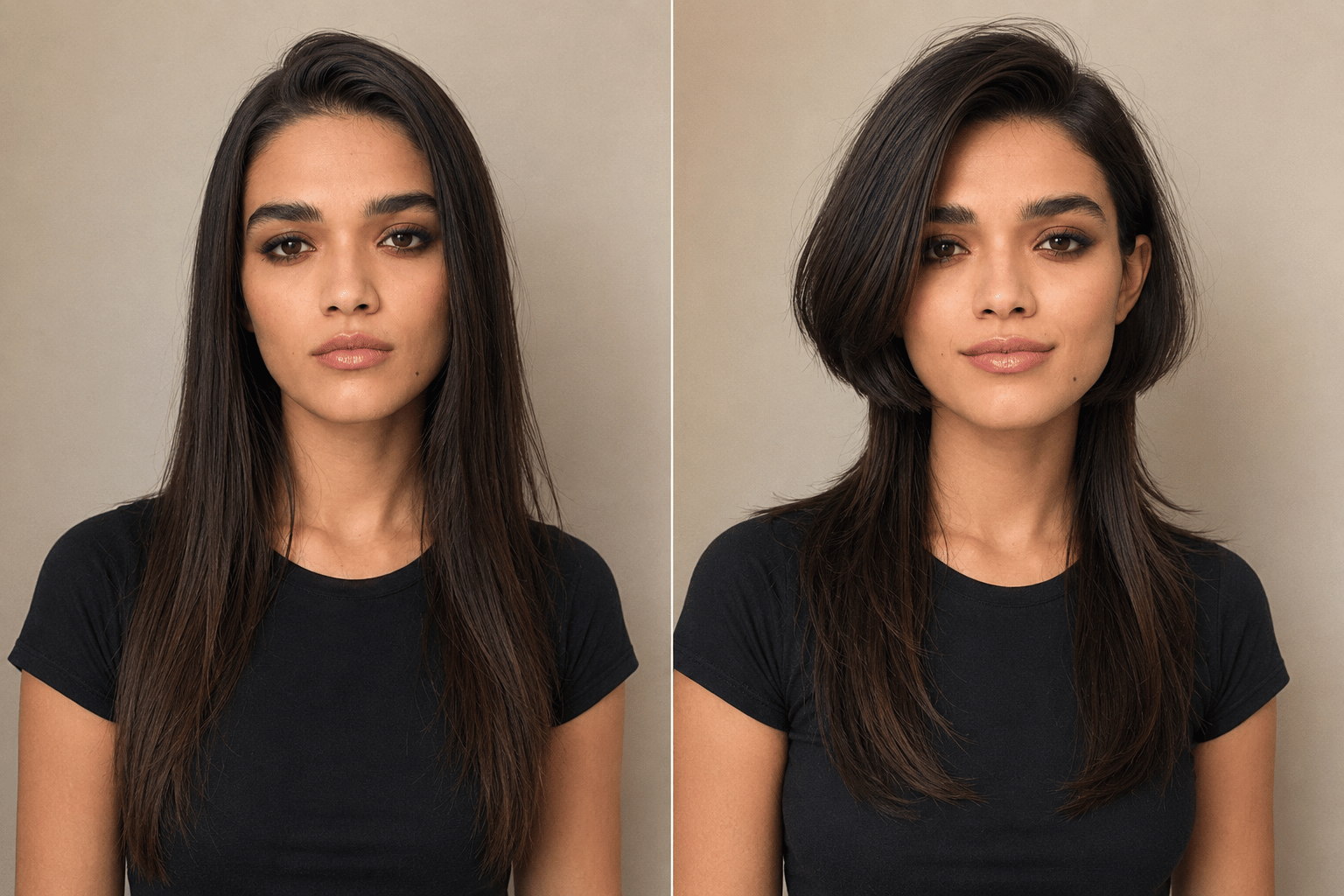
Every jellyfish haircut you’ve seen on social media was photographed within an hour of being styled, in controlled lighting, often with a fresh blowout and possibly a temporary straightening treatment. That’s the version that gets 50,000 likes. That’s not the version you wake up with.
In real life, the top layer loses its perfect rounded shape overnight. On straight hair, it can flip outward awkwardly. On wavy hair, it puffs. On curly hair, it expands in ways that may or may not match the bottom layer’s behavior. None of this is unfixable — but it requires a round brush, a blow dryer, and about 15 to 20 minutes every morning.
The bottom layer is easier. Long, less-structured hair is more forgiving. But the contrast between a perfectly shaped top and a relaxed bottom is what makes the cut work — so if you only half-style it, the cut can look like two different haircuts fighting each other.
Humidity changes things too. In Austin’s summers, the top layer absorbs moisture and swells, while the bottom layer weighs itself down. The result is a shifting silhouette that doesn’t match your reference photo. A good anti-humidity spray helps. Expecting perfection does not.
Here’s the honest takeaway: the jellyfish cut looks best when you style it. Not “professional blowout every day” styling — but conscious, daily effort. If that sounds like too much, a softer layered cut with a more gradual transition might give you 80% of the visual impact with 40% of the maintenance.
Maintenance and Grow-Out: What to Expect
How Often You’ll Need Trims
The short top layer grows out fast — and because the entire cut depends on the contrast between layers, even half an inch of growth can blur the effect. For a high-contrast jellyfish cut, plan on trims every four to six weeks. For a subtler version with a softer disconnection, you can stretch to six to eight weeks.
Skipping trims doesn’t just make the cut look less sharp. It changes the proportions. As the top layer grows, it starts to blend into the bottom layer, and you gradually lose the silhouette that makes this cut distinctive. At a certain point, it just looks like an overgrown layered cut.
Daily Styling Reality
On a scale of “wash-and-go” to “salon-level effort,” the jellyfish cut sits firmly in the middle-to-upper range. You’ll need:
A round brush and blow dryer to shape the top layer. A flat iron or curling iron if you want the bottom layer sleek or uniformly waved. A texturizing spray to define the separation between layers. A lightweight finishing product to manage flyaways at the disconnection line — this is where stray hairs show most.
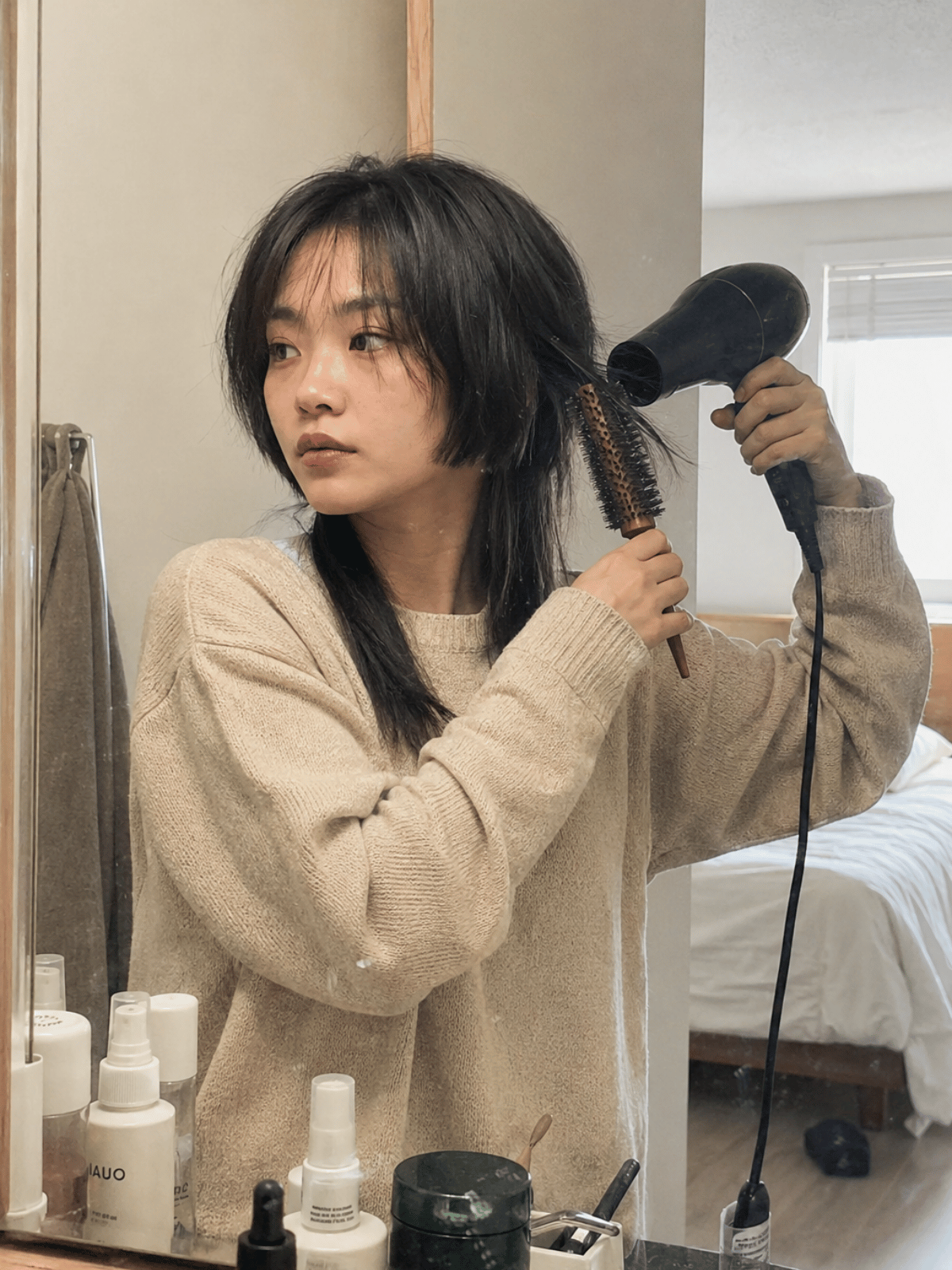
Products like texturizing sprays and lightweight creams are worth the investment here. They’re what keep the two layers reading as “intentional contrast” rather than “haircut growing out.”
Grow-Out Behavior
This is where the jellyfish cut demands the most honesty.
High-contrast versions (very short top, very long bottom) grow out awkwardly. The top layer hits an in-between length where it’s too long to hold its rounded shape but too short to blend with the bottom. This awkward phase can last two to three months, and during that time, the cut will look progressively less intentional.
Softer versions (longer top, less dramatic disconnection) grow out more gracefully. The layers start to merge naturally, and you can transition into a wolf cut or a textured shag without a drastic change.
If you’re someone who commits to haircuts for six-plus months without salon visits, the jellyfish cut will test your patience. If you keep a regular trim schedule, it stays sharp indefinitely.
Growing it out intentionally: many people transition a jellyfish cut into a wolf cut as it grows — the layering naturally evolves in that direction. A stylist can reshape the growing layers during this transition so you never hit the fully-awkward stage.
How to Ask Your Stylist for a Jellyfish Haircut
Walking into a salon and saying “I want a jellyfish cut” will get you a different result depending on the stylist’s interpretation. This is a cut where communication matters more than usual.
Bring multiple reference photos. Not one — several. Show front, side, and back angles. Show the level of disconnection you want. Show the length of both layers. If you can find photos on hair that looks similar to yours in texture and density, even better.
Specify where you want the disconnection. Do you want the top layer at ear level? Chin level? Jaw level? This single decision changes the entire personality of the cut. Shorter top = more dramatic. Longer top = more wearable.
Be honest about your styling commitment. If you tell your stylist you’ll blow-dry and flat-iron every day, they’ll give you a sharper version. If you admit you’re a wash-and-air-dry person, they should soften the disconnection and add more texture so the cut survives your routine.

Discuss blending vs. hard line. Some jellyfish cuts have a razor-sharp line where the top layer ends. Others have a slight softening at the transition point. Both are valid — but they look very different, and the maintenance expectations change. A hard line requires more frequent trims. A softened transition is more forgiving.
Ask about grow-out. A good stylist will talk to you about what happens in three months, not just what happens today. If they don’t bring it up, ask: “What will this look like in eight weeks if I miss a trim?” The answer tells you a lot about whether you’re ready.
If you’re in Austin and want to talk through the specifics before committing, booking a consultation is always worth it for a cut this structural. A consultation lets your stylist assess your texture, density, face shape, and lifestyle before picking up the shears.
Styling Ideas and Inspiration
Beyond the basic structure, the jellyfish cut takes on different moods depending on how you style it.
Sleek and polished: Flat-iron both layers pin-straight. Keep the disconnection line razor-clean. This is the most editorial version — it reads as high fashion, very intentional, very graphic. It works best for events, photo shoots, or days when you want the cut to be the focus.
Textured and lived-in: Add wave to the bottom layer with a large-barrel curling iron, and let the top layer air-dry with a lightweight mousse. The texture softens the geometry and makes the cut feel more wearable for daily life. This is the version most people actually end up wearing most often.
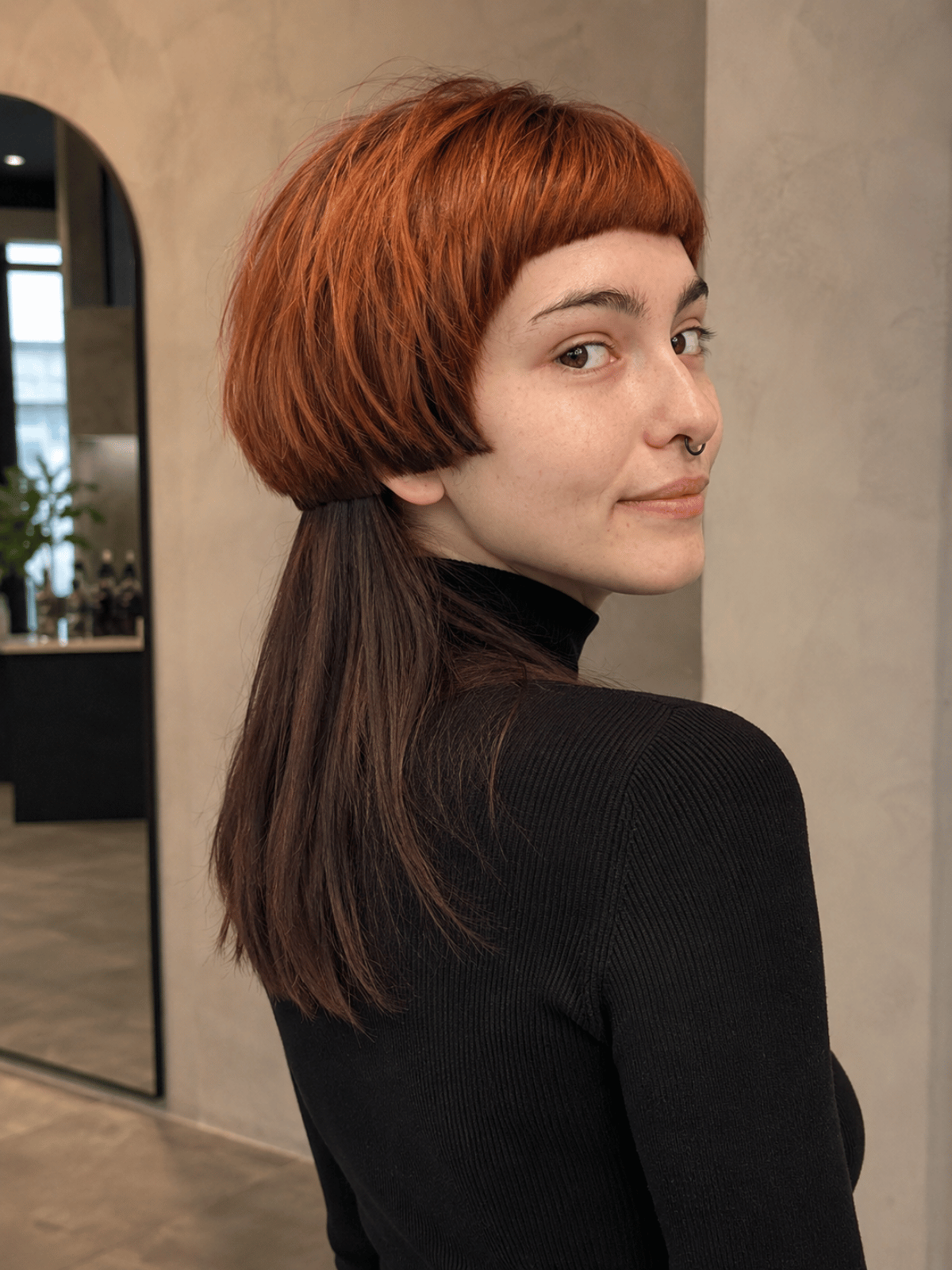
Bold color contrast: The two-tier structure is practically built for two-tone color blocking — a different shade on the top layer versus the bottom. Platinum over jet black. Copper over brunette. Vivid teal over a natural base. The structural disconnection gives the color blocking a clean boundary. That said, two-tone color doubles your color maintenance commitment, so factor that into your decision.
Pulled back: One styling reality nobody mentions — when you pull the bottom layer into a low ponytail or bun, the short top layer stays loose and frames your face like a bob. This gives you two looks in one: the full jellyfish when your hair is down, and a framed-face bob effect when it’s up. It’s one of the cut’s underrated strengths.
If you’re drawn to bold texture work and want to see how perms interact with dramatic layering, that’s another direction worth exploring with your stylist.


FAQ
What is a jellyfish haircut?
A jellyfish haircut is a two-tiered style where the top layer is cut short into a rounded bob or bowl shape, and the bottom layer is left significantly longer. The intentional disconnection between the two lengths creates a silhouette that resembles a jellyfish — a rounded “bell” on top with long, flowing “tentacles” below.
Who suits a jellyfish haircut best?
Oval, heart, and diamond face shapes tend to work best with this cut’s proportions. Thick to medium hair density gives both layers enough body to hold their shape. The cut also works on straight, wavy, and curly hair — but the styling approach changes with each texture, and curly hair should be cut dry by a texture specialist.
Is the jellyfish haircut hard to maintain?
Yes — more than most articles will tell you. The top layer needs reshaping every four to six weeks, and daily styling with a round brush and blow dryer keeps the silhouette defined. A softer version with less disconnection is more forgiving, but this is not a low-effort cut overall.
Can you get a jellyfish haircut with curly hair?
Absolutely, and it can look incredible — but the approach is different. Curls add volume to the top layer and can change the proportions significantly. The cut should be done dry to account for shrinkage, and the top layer should be left slightly longer than you’d go on straight hair because curl volume will shorten the visual length.
How do you ask your stylist for a jellyfish haircut?
Bring several reference photos showing front, side, and back angles. Specify where you want the top layer to end (ear, chin, jaw). Discuss your daily styling willingness — it affects how sharp or soft the disconnection should be. Ask about grow-out behavior so you know what to expect in eight to twelve weeks.
The jellyfish cut isn’t a haircut you fall into. It’s one you choose — with clear eyes about the styling effort, the maintenance cycle, and the reality that it will look different in your bathroom mirror than it does on someone’s Instagram grid.
That’s not a warning. That’s the price of a cut with actual personality. The best jellyfish cuts are the ones where the person wearing them understood what they were getting before the first snip — and still wanted it anyway. That kind of intentionality is what makes a haircut feel expensive, not the price tag.
If you want to explore whether the jellyfish cut is right for your hair texture, face shape, and daily routine, a consultation takes the guesswork out of it. A good stylist won’t just cut what you ask for — they’ll help you figure out which version of this cut will actually work for your life.