The most common French bob regret has nothing to do with the haircut itself. It’s the version of it that wasn’t right — too short for the face shape, too blunt for the texture, too far from what the stylist actually understood you wanted. And it happens constantly, because the French bob lives in this strange space between “simple” and “precise” where a quarter-inch difference changes everything.
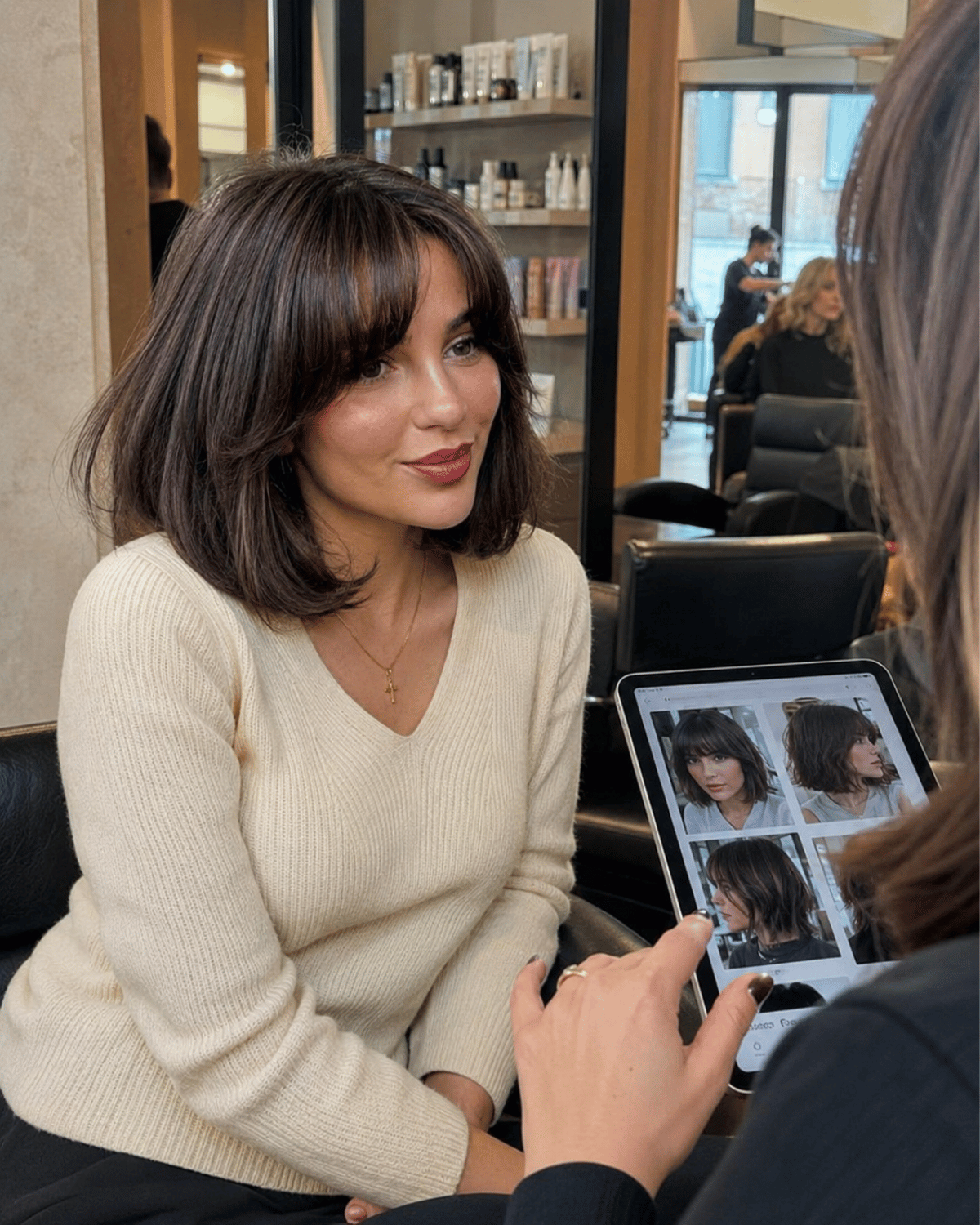
That gap between the Pinterest screenshot and what actually happens in the chair? That’s what this guide is for. Not another gallery of pretty photos with zero context. This is the kind of information you need before your consultation — face shape guidance, texture expectations, the words to actually use with your stylist, and an honest look at what maintenance really involves. Because a French bob can be one of the most flattering cuts you’ll ever get. It can also be the one that makes you avoid mirrors for eight weeks if the details aren’t dialed in.
What Makes a French Bob a French Bob
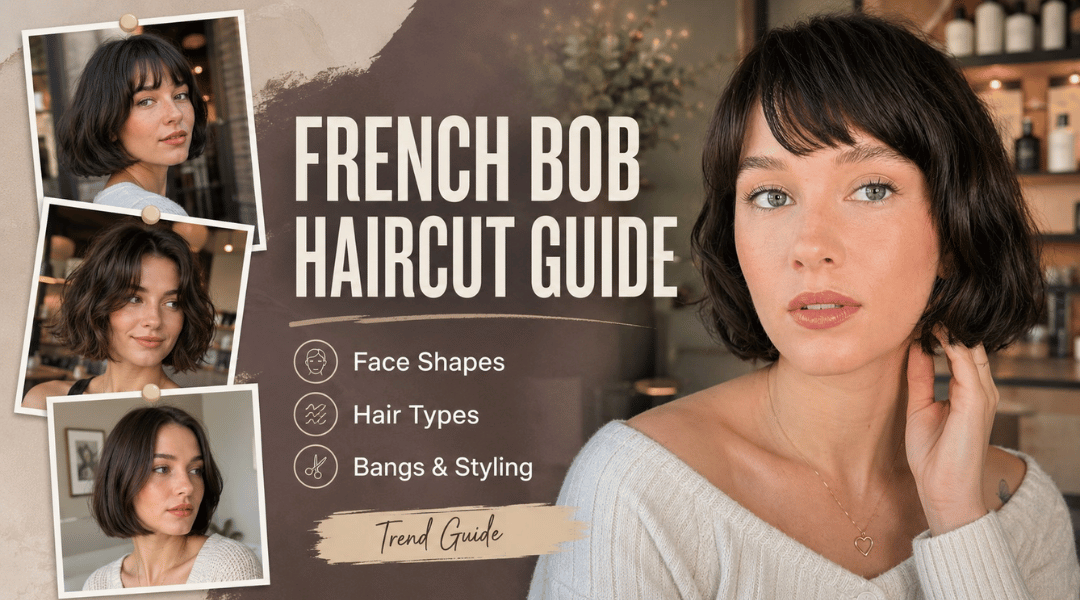
A French bob sits at or just above the chin. That’s the defining feature — shorter than a standard bob, long enough to graze the jawline but not reach the shoulders. The cut is typically blunt or lightly textured at the ends, and it almost always carries some version of bangs, whether that’s a full fringe skimming the brows or wispy curtain bangs parted at the center.

The texture matters as much as the length. French bobs lean into natural movement rather than rigid precision. Think tousled, slightly undone, lived-in. The whole aesthetic is built on the idea that the hair looks like it fell into place on its own, even when it didn’t. That “I woke up like this” quality is what separates a French bob from a sharp, geometric bob — the edges are softer, the movement is looser, and the overall effect feels relaxed rather than structured.
What makes precision so critical with this cut is the margin for error. With a lob or shoulder-length bob, half an inch too short barely registers. At chin length, half an inch changes the entire silhouette. It can be the difference between a cut that frames your jaw beautifully and one that sits above it looking unfinished.
French Bob vs. Italian Bob vs. Classic Bob
These three get confused constantly, and knowing the difference will save you from asking for the wrong thing.
The French Bob
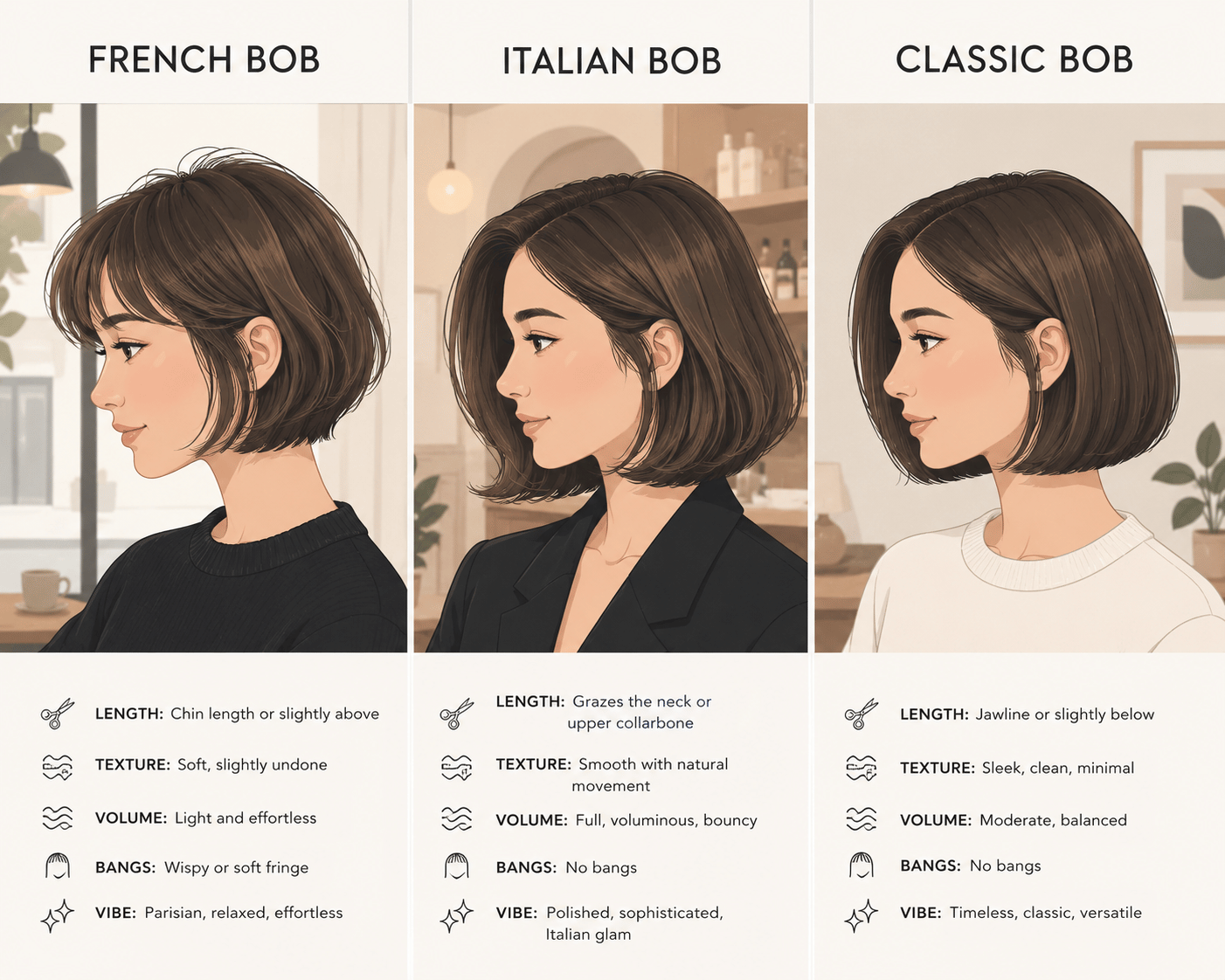
Chin-length or slightly above. Blunt or softly textured ends. Usually includes some form of bangs. Embraces natural texture and movement. The vibe is Parisian — intellectual, slightly rebellious, intentionally undone. Think Amélie, not Anna Wintour.
The Italian Bob
Longer — usually grazing the neck or hitting the collarbone. More volume, more body, more deliberate styling. Layers are built in for bounce and movement. No bangs required. The Italian bob is the glamorous sibling: think Monica Bellucci, Hailey Bieber’s rich-girl blowout, high-gloss magazine hair. It demands more styling time and rewards it with more drama.
The Classic Bob
Falls between the two in length, typically at the jaw or just below. Can be sharp and geometric (think Vogue editor) or softened with layers. More versatile in terms of styling but lacks the specific character of either the French or Italian version.
How to Choose Between Them
If you want something short that works with your natural texture, requires moderate maintenance, and reads as cool rather than polished — go French. If you want volume, bounce, and a look that feels more luxurious than laid-back, the Italian bob is your cut. And if you’re not ready to commit to the chin-length chop but want the bob silhouette, the classic gives you more length to work with.
The honest tradeoff: the French bob is easier to style daily but needs more frequent trims to hold its shape. The Italian bob takes longer to style each morning but grows out more gracefully.
Which Face Shapes Work Best with a French Bob
Every article about face shape and haircut rules will tell you that bobs are universally flattering. That’s half true. A French bob can work on most face shapes — but the version of it changes significantly depending on your proportions.
Oval Faces
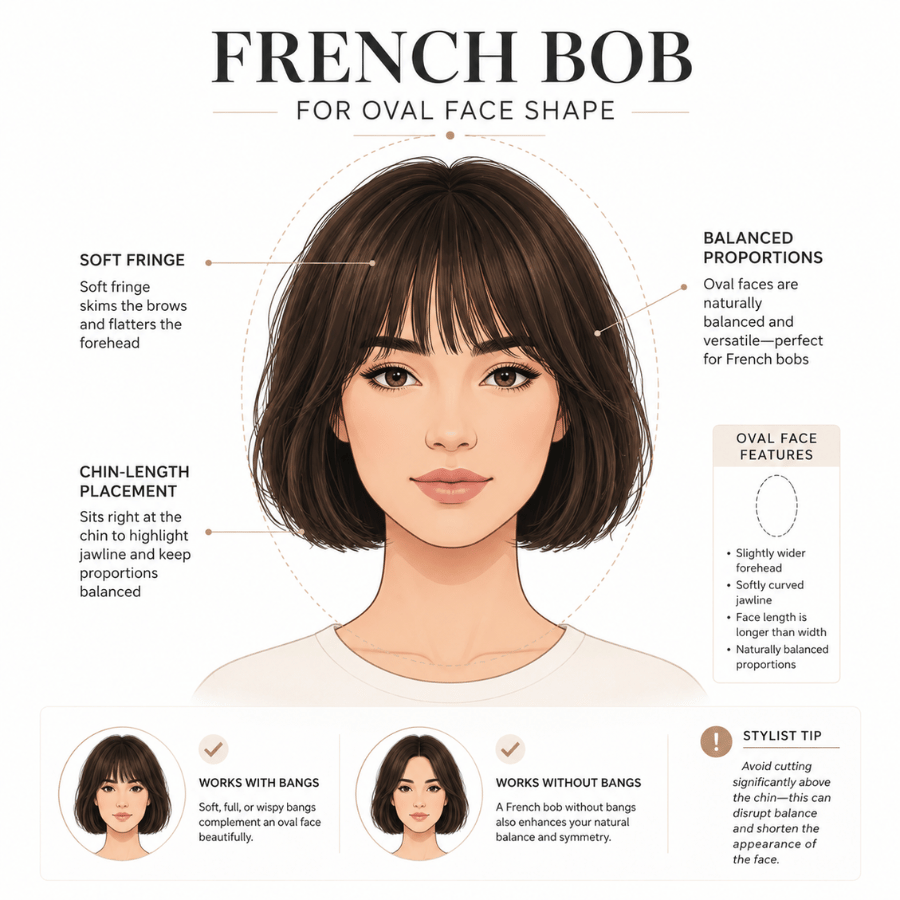
The easiest face shape for a French bob. The balanced proportions mean you can go classic (blunt, chin-length, with a full fringe) without much customization. Oval faces handle both the with-bangs and without-bangs versions equally well. The main thing to avoid: going too short above the chin, which can make an oval face appear longer than it is.
Round Faces
This is where the cut needs the most adjustment — and where most mistakes happen. A blunt, one-length French bob with heavy bangs can widen a round face rather than balance it. The fix is subtle but important: keep the length just below the chin rather than at it, add light texture at the ends so the outline doesn’t read as circular, and opt for wispy or curtain bangs over blunt fringe.
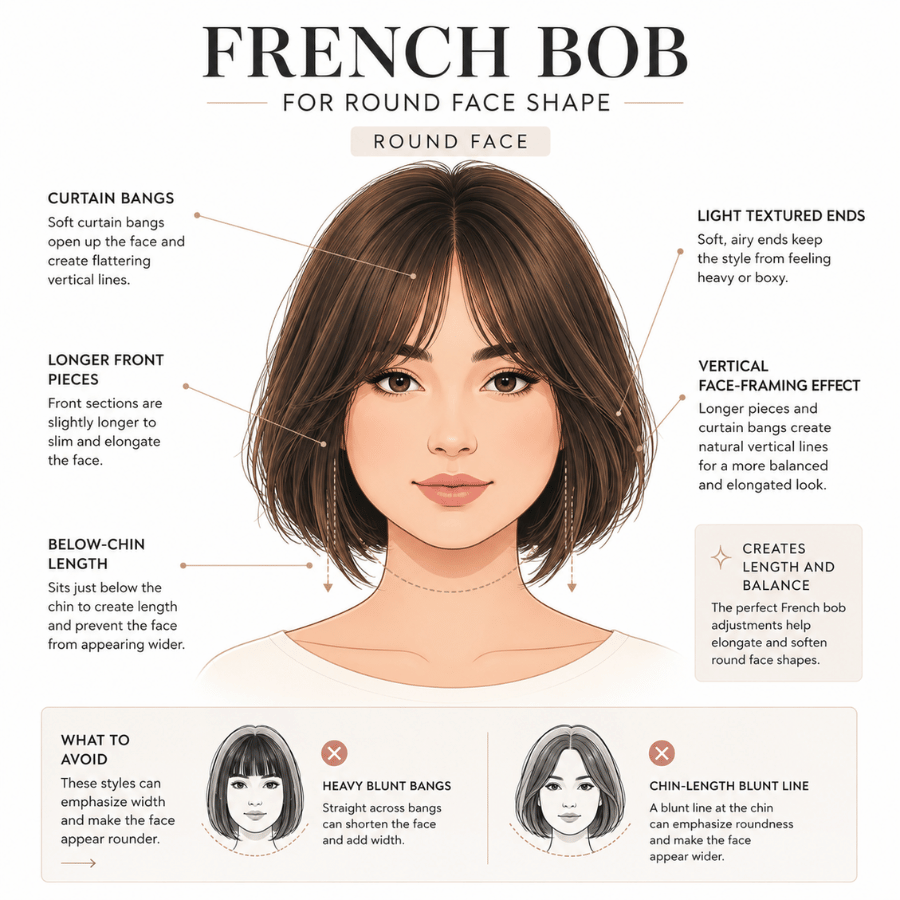
The stylist trick that makes this work: cutting the front pieces slightly longer to create vertical lines that draw the eye downward rather than outward. If a French bob is on your list and you have a round face shape, our full guide on the best haircuts for round faces covers this in more detail.
Square and Heart-Shaped Faces
Square faces benefit from the softness a French bob naturally provides. The tousled texture breaks up strong jawlines without hiding them. Keep the length at the chin or just below — landing above the jaw on a square face can create a boxy look. Soft, side-swept bangs work better than blunt fringe here, adding curves where the bone structure is angular.
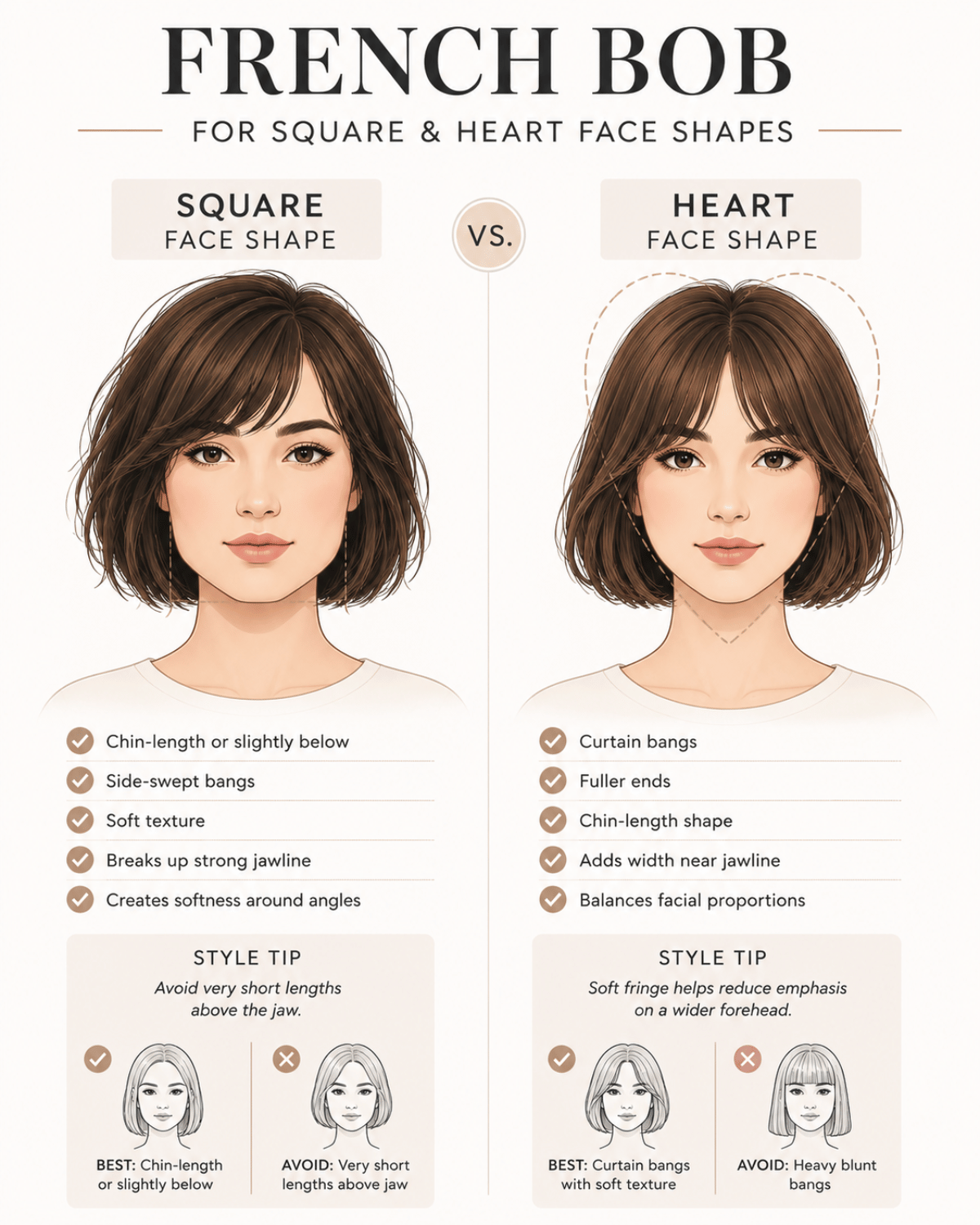
Heart-shaped faces (wider forehead, narrower chin) do well with a French bob that adds width at the jaw. A slightly fuller, chin-length cut with volume at the ends balances the proportions. Curtain bangs help soften a wider forehead without drawing attention to it.
Long and Oblong Faces
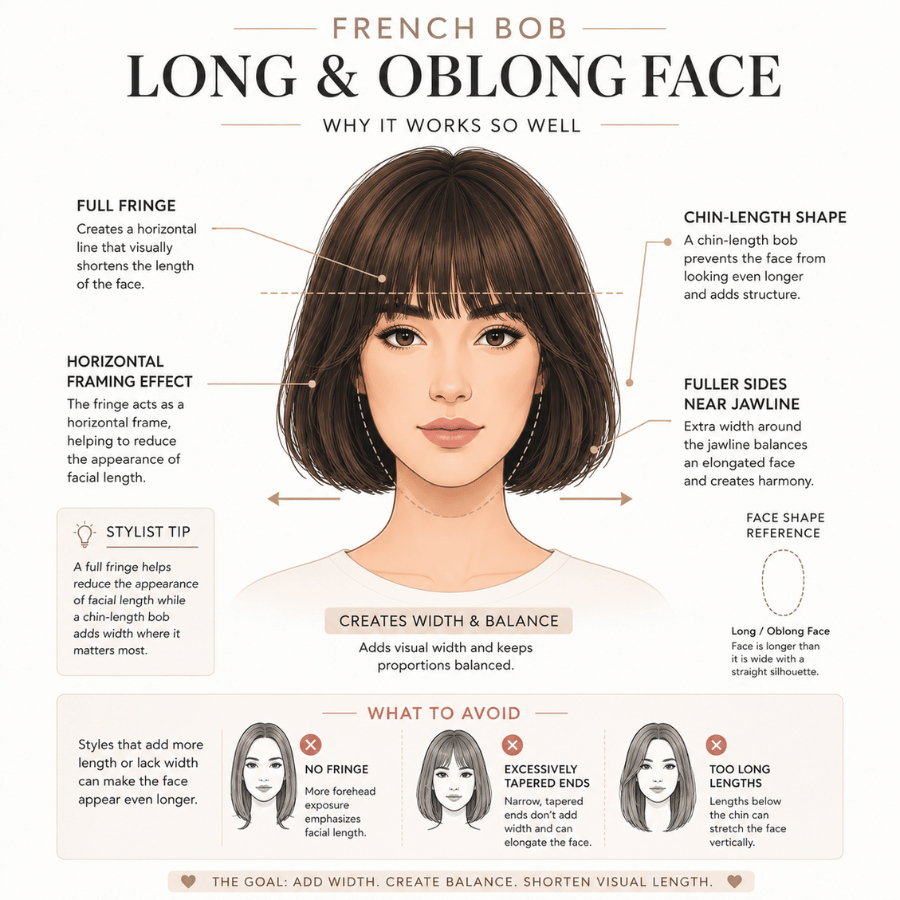
The French bob’s natural length — chin to jaw — is actually ideal for elongated face shapes because it adds width rather than length. A full fringe is your best friend here, creating a horizontal line that shortens the visual frame of the face. Avoid versions that are too textured or tapered at the ends, which can make a long face look even narrower.
French Bob Variations Worth Knowing
Messy French Bob

The most forgiving version. Deliberate texture, piece-y separation, and that slept-in quality that makes it look like you put in zero effort. Best for wavy or naturally textured hair because the movement does the work for you. Not ideal for very straight, fine hair unless you’re willing to use a curling iron or texturizing spray daily — without it, “messy” just looks flat.
Wavy French Bob

The sweet spot between polished and undone. Loose, soft bends through the mid-lengths and ends. Works beautifully on hair that already has natural wave (type 2A–2B) because you can air-dry with a bit of product and call it done. For straight hair, a quick pass with a flat iron to create bends takes about five minutes and holds well at this length.
Curly French Bob
Underrepresented in most guides, which is a problem because curly French bobs require the most specific cutting technique. The critical thing to understand: curly hair shrinks. If your stylist cuts to chin-length on wet, stretched curls, it will spring up above the jaw once it dries. A good curly cut accounts for shrinkage by cutting longer than the target length — sometimes significantly longer, depending on your curl pattern.
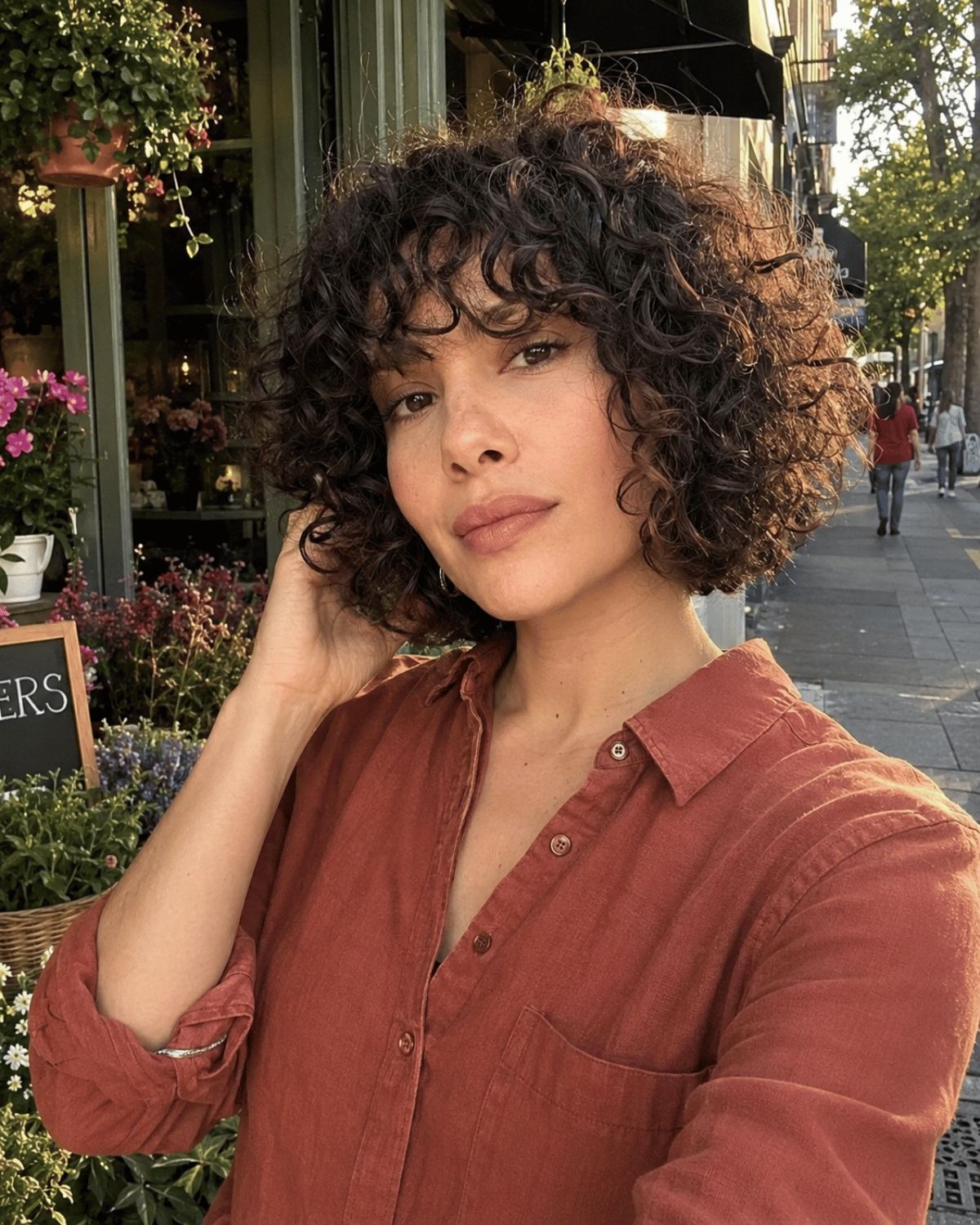
Type 3A–3B curls can look incredible in a French bob when cut with the right shape, but the silhouette is rounder and fuller than what you see in most reference photos (which tend to feature straight or wavy hair). Expect more volume, a wider shape, and a different aesthetic than the sleek Parisian version. That’s not a flaw — it’s just a different, equally beautiful interpretation.
French Bob with Bangs
The most classic version. A soft fringe that sits just above or at the brow, creating that unmistakable Parisian silhouette. Full bangs work best on oval and long faces; curtain bangs suit round and square shapes better. Before committing, know this: bangs at this length need trimming every 3–4 weeks, and they require daily styling (even just a quick blast with a round brush) to sit properly.
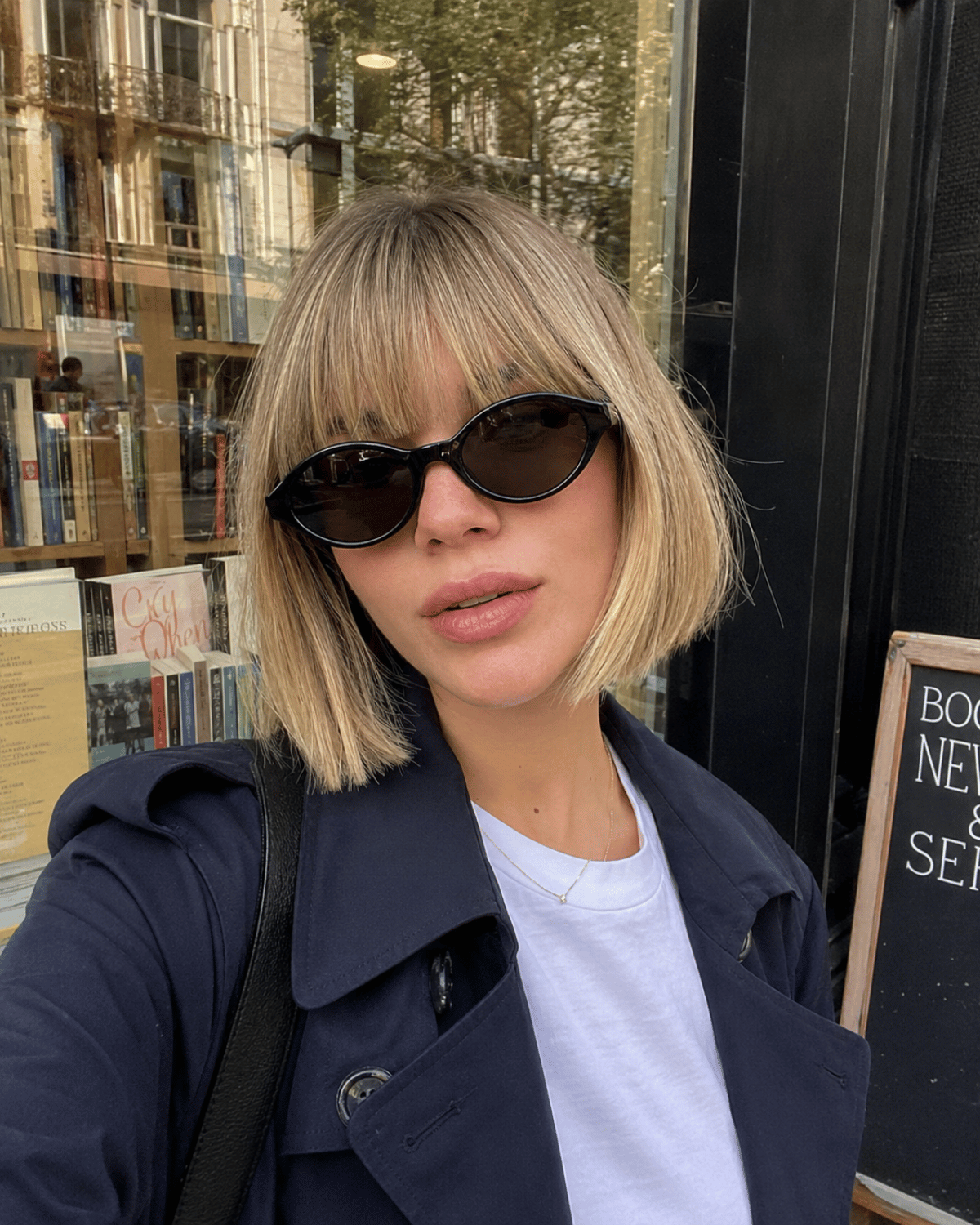
If you’re considering bangs for the first time, our bangs for thin hair guide covers density and face-framing considerations worth reading first.
French Bob Without Bangs

A more modern take that’s been gaining ground over the last two years. Without bangs, the French bob shifts from Parisian ingenue to something cooler and more minimal. Center parts and deep side parts both work. The trade-off: without bangs to frame the face, the cut relies more heavily on the length placement and jawline relationship. Getting the length exactly right matters even more here.
Modern vs. Classic French Bob
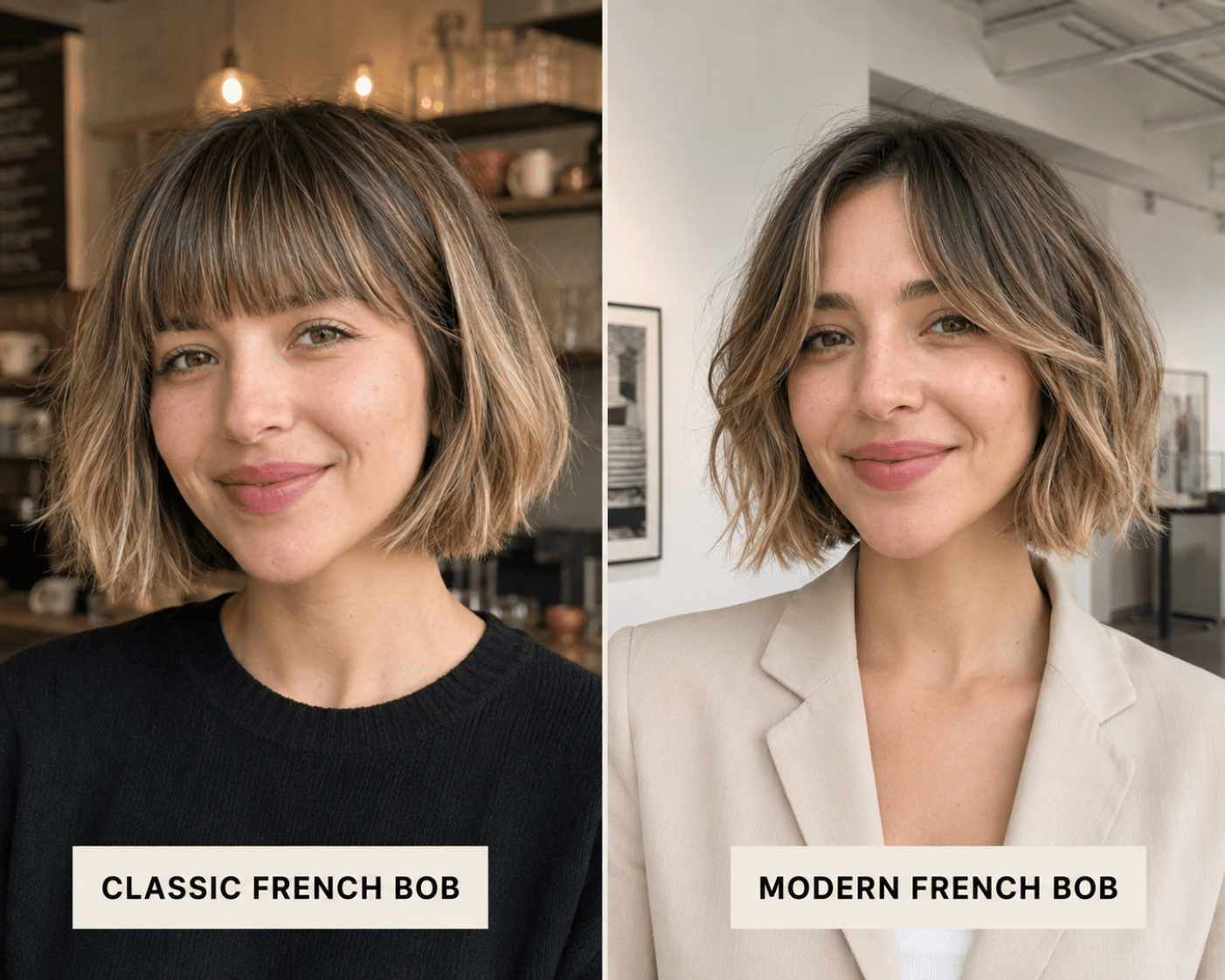
The classic sits right at the chin with a straight fringe and blunt ends — Amélie, early Coco Chanel. The modern version pushes longer (jaw to just below), incorporates more texture, plays with curtain bangs or no bangs at all, and sometimes adds subtle face-framing layers. Most stylists today default to the modern interpretation unless you specifically ask for the vintage look. Both are valid — just different energy.
Fine Hair, Thick Hair, Curly Hair — What to Actually Expect
This is where most articles lose you, because they describe the French bob as universally low-maintenance without acknowledging that your texture and density completely change the experience.
Fine hair: A French bob can actually be one of the best cuts for fine hair. The short, blunt length makes thin strands look denser and fuller than they would at longer lengths. But fine hair at chin length doesn’t hold texture well, which means the tousled, lived-in look that defines the French bob requires effort. Plan on using a volumizing mousse or root-lift spray, blow-drying with a round brush for body, and possibly touching up with a curling iron for bends. Without this, fine hair tends to fall flat against the face by midday. Air-drying works, but the result is closer to “sleek” than “tousled.”
Thick hair: Volume isn’t the issue — control is. A French bob on thick hair can get bulky fast, especially in humid conditions. Internal layering and texturizing techniques (point cutting, razor work) help remove weight without sacrificing the blunt silhouette. The good news: thick hair holds texture beautifully, so the messy, wavy versions practically style themselves. The bad news: without the right thinning during the cut, you’ll fight against a triangular shape that widens at the jaw. This is a cut where your stylist’s technical skill matters enormously.
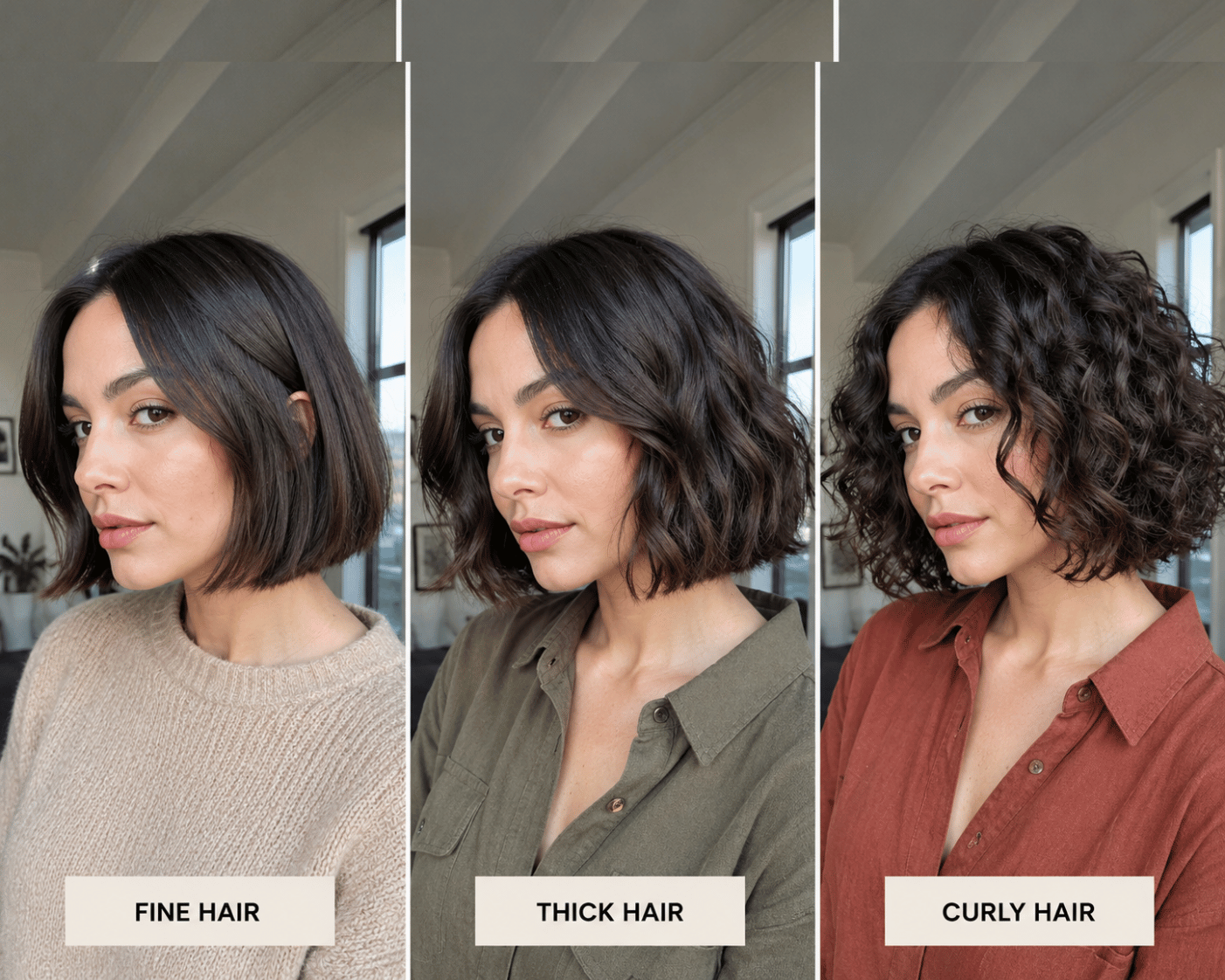
Curly hair: Already covered above, but the daily reality bears repeating. A curly French bob is not a wash-and-go situation for most curl patterns. Diffusing is usually necessary to define the shape without frizz. Curl cream or mousse applied to soaking-wet hair, scrunch, diffuse, then don’t touch it until it’s fully dry. The shape will be rounder and fuller than straight-haired versions, and it will shift with humidity. Beautiful when it works, but not the “throw it up and forget it” experience some articles promise.
The day 2–3 reality: Fresh out of the salon, any French bob looks polished. By day two, your natural texture starts taking over. Straight hair may flip at the ends where it hits your shoulders when you sleep. Wavy hair might frizz at the crown. Curly hair could lose definition on one side. This is normal, and it’s what dry shampoo, a quick refresh with a curling iron, and realistic expectations are for. The French bob is a haircut that looks best with a small amount of daily attention — not a set-it-and-forget-it style.
How to Ask Your Stylist for a French Bob (Without Regretting It)
This is the part no other article gives you, and it’s arguably the most important section here. The gap between what you picture and what your stylist executes usually comes down to communication — not skill.
Bring the right reference photos. Not one photo. Bring three to five, and make sure at least one shows hair similar to your texture and density. A photo of a straight-haired French bob on a model with thick hair won’t translate if your hair is fine and wavy. Point to what you like about each photo — is it the length? The bangs? The texture? The way it sits at the jaw? Be specific.
Specify length relative to your jaw. Don’t just say “chin-length.” Touch your face and show where you want the shortest pieces to land. Ask your stylist to show you on your own hair — holding a section at the target length — before they cut. For curly hair, discuss shrinkage and ask them to cut conservatively on the first pass.
Talk about bangs before anything else. Full fringe, curtain bangs, wispy bangs, no bangs. This single decision changes the entire look of the cut. If you’re unsure, ask for longer curtain bangs that can be trimmed shorter later — you can always go shorter, but you can’t go back.
Ask about maintenance upfront. How often will I need trims? How should I style this at home? What happens when it grows out? A good stylist will give you honest answers. If someone tells you a French bob is completely no-maintenance on your hair type, get a second opinion.
Questions worth asking in the chair:
- “Where will the shortest pieces sit when my hair is dry and in its natural texture?”
- “How much shrinkage should I expect?” (for curly/wavy hair)
- “What products will I need to get this to look like it does right now when I style it at home?”
- “How will this grow out, and when should I come back?”
If you’d rather have this conversation in person before committing, that’s exactly what a consultation at Salon 1150 is designed for — no cutting required until you’re confident in the plan.
Maintenance, Styling, and the Grow-Out Truth
Daily Styling by Hair Type
Straight/fine hair: 10–15 minutes. Volumizing product, round brush blow-dry, optional curling iron for bends. Can air-dry for a sleeker look, but won’t have the tousled texture without heat.
Wavy hair: 5–10 minutes. Scrunch with a texture spray or sea salt spray, air-dry or diffuse. Wavy hair is the ideal texture for a French bob because it naturally produces the lived-in movement the cut is designed for.
Curly hair: 15–20 minutes. Curl cream on wet hair, diffuse, hands-off until dry. Refresh with water and product on day two. Requires more technique but rewards with volume and shape that straight hair can’t replicate.
Thick hair: 10–15 minutes. Blow-dry for control, light smoothing serum to manage bulk. The main priority is keeping the silhouette from going triangular.
Trim Schedule
Every 6–8 weeks is the standard recommendation, and it’s not flexible if you want the cut to look intentional. A French bob that’s grown out by even an inch starts losing its shape — the blunt line softens, the bangs get into your eyes, and the whole thing drifts toward “growing out a haircut” rather than “wearing a French bob.” If your budget or schedule doesn’t support bi-monthly trims, this might not be the right cut for you. That’s not a judgment — it’s just a reality of short hair.
Growing It Out Gracefully
If you eventually want to move past the French bob, here’s what the timeline actually looks like:
Weeks 1–8: The cut holds its shape. This is the sweet spot.
Weeks 8–12: The bob starts loosening. The blunt line softens. Bangs may start to part on their own. At this stage, a light reshape (not a full cut) can extend the life of the style without resetting the length.
Weeks 12–16: You’re in lob territory. The French bob has transitioned into something longer, and this is where most people either commit to a new cut or decide to keep growing. Adding subtle layers during this phase helps avoid the “helmet” look that one-length bobs can develop as they grow out.
The good news: a French bob grows out more gracefully than a pixie. There’s no truly terrible in-between stage if you work with your stylist to shape the transition rather than just letting it go.
What Social Media Won’t Show You
Every French bob you’ve saved on Instagram or TikTok was photographed within an hour of being styled by a professional, in good lighting, with the right products, at the perfect angle. That’s not cynicism — it’s just how content works. The issue is that it sets an expectation for what this haircut looks like on a Tuesday morning when you’re running late and slept on your left side.
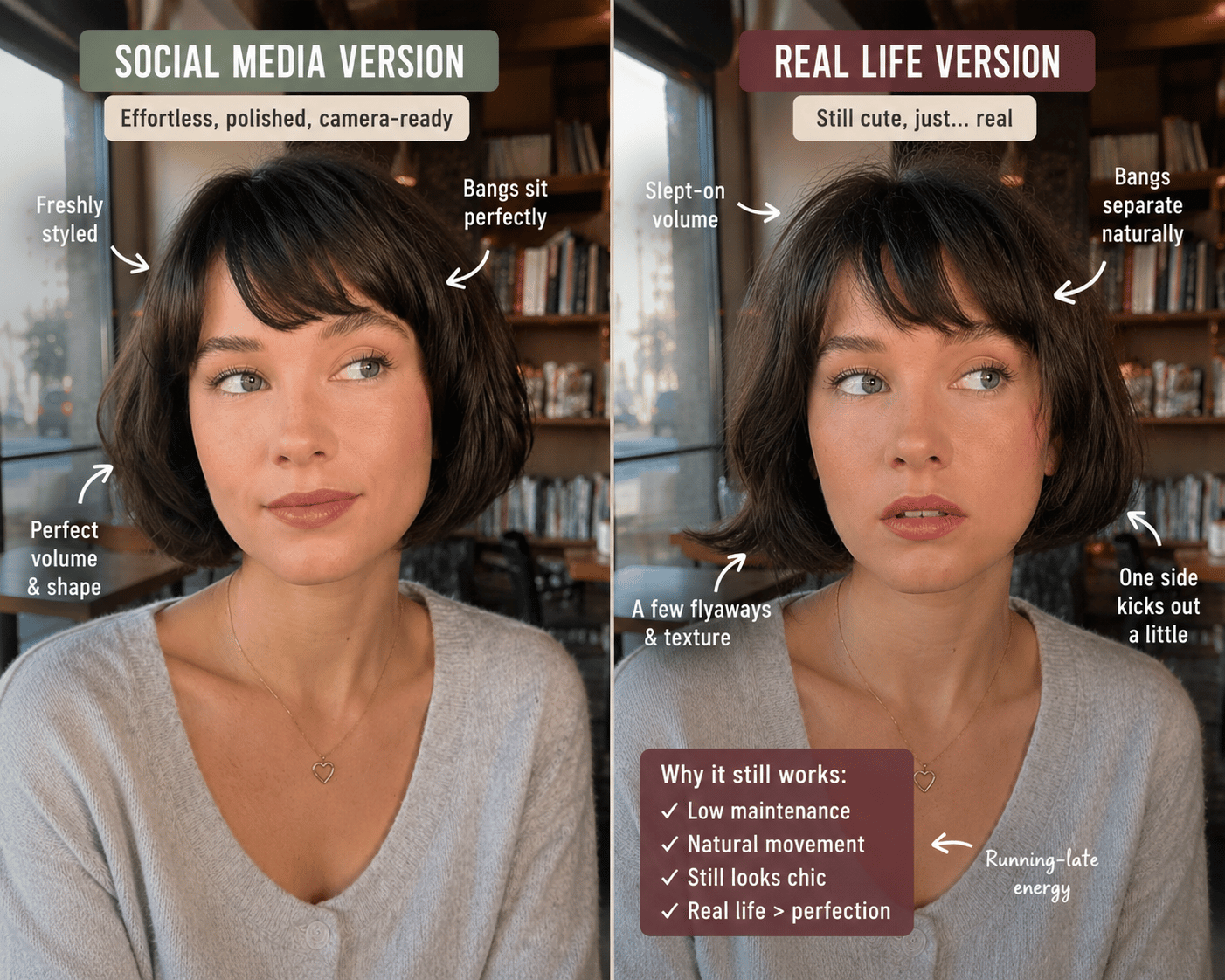
Real French bobs have a flat spot where your head hit the pillow. They flip outward on one side and inward on the other after a night’s sleep. They frizz in Austin humidity. The bangs separate by 2 PM. And when you wash your hair, the whole thing takes on a completely different shape for the first two hours before settling into its actual texture.
None of this means the cut isn’t worth it. It absolutely is. But going in expecting the filtered version to be your daily reality is the fastest path to disappointment. The French bobs that look the best in real life are the ones where the person understands their hair’s natural behavior and works with it instead of fighting against a photo that was never meant to represent everyday wear.
FAQ — French Bob Haircut
What is a French bob haircut? A French bob is a short, chin-length bob with blunt or softly textured ends, often paired with bangs. It originates from 1920s Parisian style and is defined by its natural, tousled texture and relaxed silhouette — shorter and less structured than a classic bob, with an emphasis on effortless movement.
Is a French bob good for round faces? Yes, with the right modifications. A French bob for round faces works best when the length sits just below the chin (rather than at it), the ends are lightly textured rather than bluntly cut, and the bangs are wispy or curtain-style rather than heavy and blunt. These adjustments create vertical lines that elongate rather than widen.
What is the difference between a French bob and an Italian bob? The French bob is shorter (chin-length), blunter, and styled for a tousled, undone look. The Italian bob is longer (neck to collarbone), more voluminous, with soft layers for bounce and body. The French version is easier to maintain daily; the Italian version offers more styling versatility and a more polished finish.
Does a French bob haircut need bangs? No. The classic French bob includes a soft fringe, but modern versions without bangs are increasingly popular. Without bangs, the cut relies more on the length placement and parting to frame the face. Both versions are valid — the decision should be based on your face shape, maintenance tolerance, and personal style.
Is a French bob easy to maintain? It depends on your hair type. Wavy hair requires the least daily effort. Fine and straight hair need volumizing products and some heat styling. Curly hair needs a specific wash-and-diffuse routine. All textures require trims every 6–8 weeks. The French bob is lower-effort than many short cuts, but calling it “no-maintenance” isn’t accurate for most hair types.
The best French bobs aren’t copied from a screenshot. They’re built in the chair, with a stylist who can see your bone structure, feel your texture, and cut for the way your hair actually behaves — not the way it looked in someone else’s ring light. If you’re ready to have that conversation, book a consultation at Salon 1150 and let’s figure out your version.