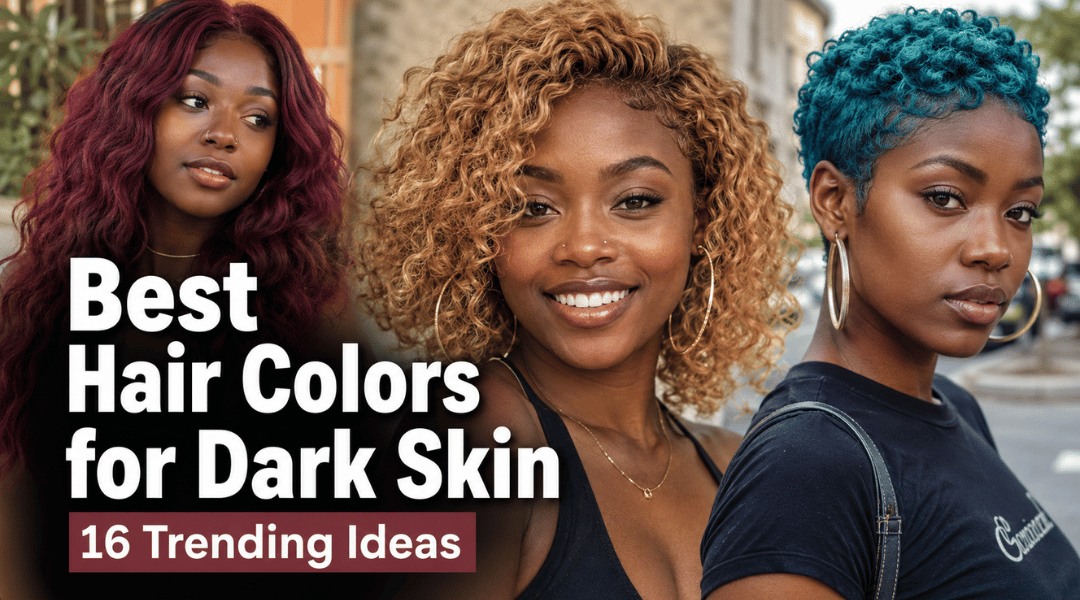
The right hair color on dark skin doesn’t just look good, it makes your complexion glow. The wrong one washes you out or clashes with your undertone. The difference between the two usually comes down to one thing: matching the shade’s warmth or coolness to what’s already in your skin.
Quick framework before you scroll: if your veins lean green, you’re warm, and golden and copper tones will enhance your natural warmth. If they lean blue or purple, you’re cool, and burgundy, ash, and jewel tones will complement without competing. Can’t tell? You’re likely neutral, which means you have the most flexibility across families.
This gallery is sorted by shade family. Each look includes an undertone match and the technique used so you know exactly what to ask for.
Brown Hair Colors for Dark Skin
Browns are the most natural-looking shift you can make on dark skin. They don’t require heavy lightening, they blend with regrowth, and they add warmth and dimension without drama. For most first-time color clients with dark or brown skin, this is the safest starting point.
1. Golden Brown
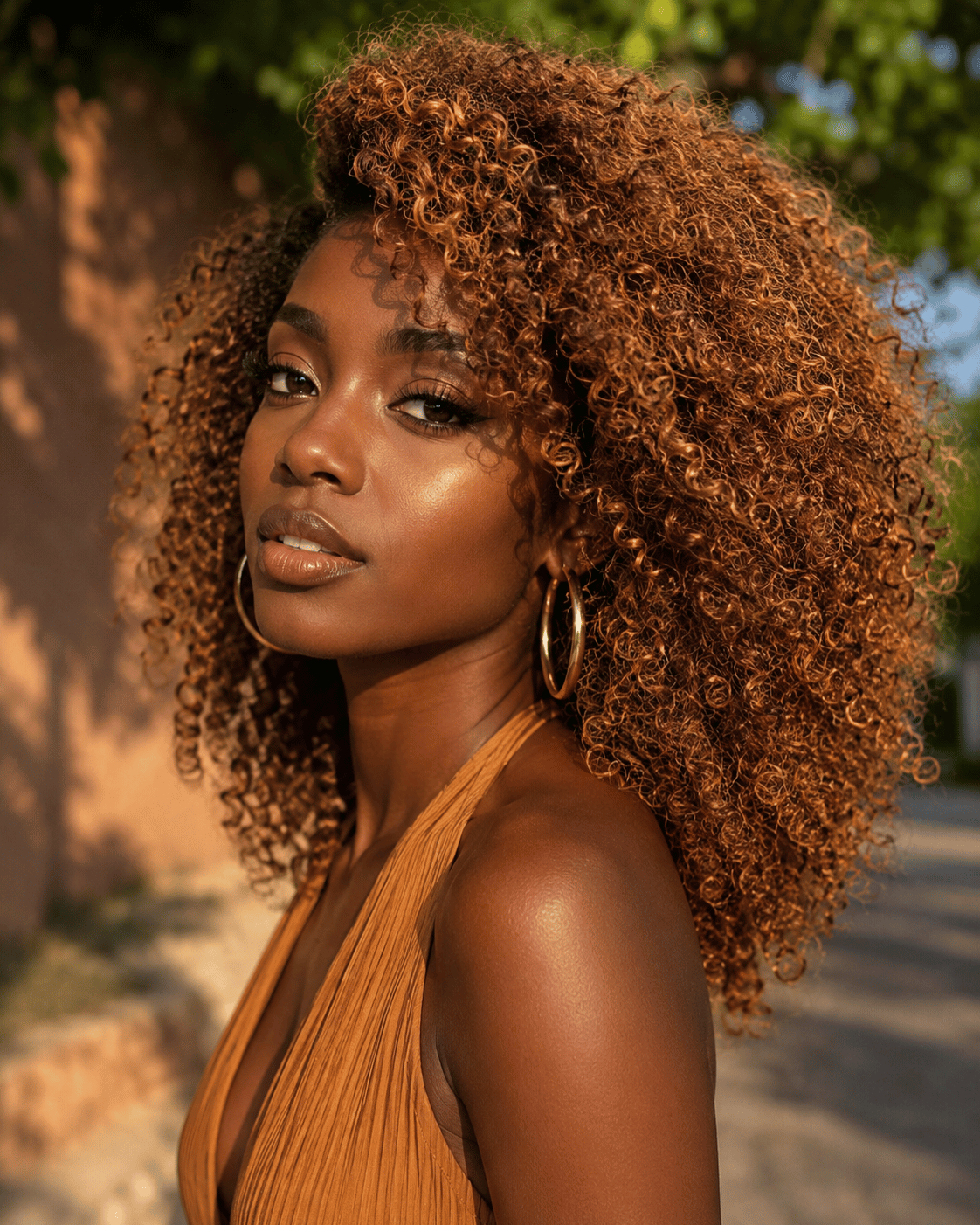
A warm brown with golden undertones that catches light and brightens the face without reading as blonde. This shade sits around a level 4–5 and works particularly well on warm and neutral skin tones. On textured hair, the golden reflects create a halo effect in sunlight that reads rich and dimensional.
Undertone match: Warm / Neutral | Technique: All-over color or balayage
2. Chocolate Brown
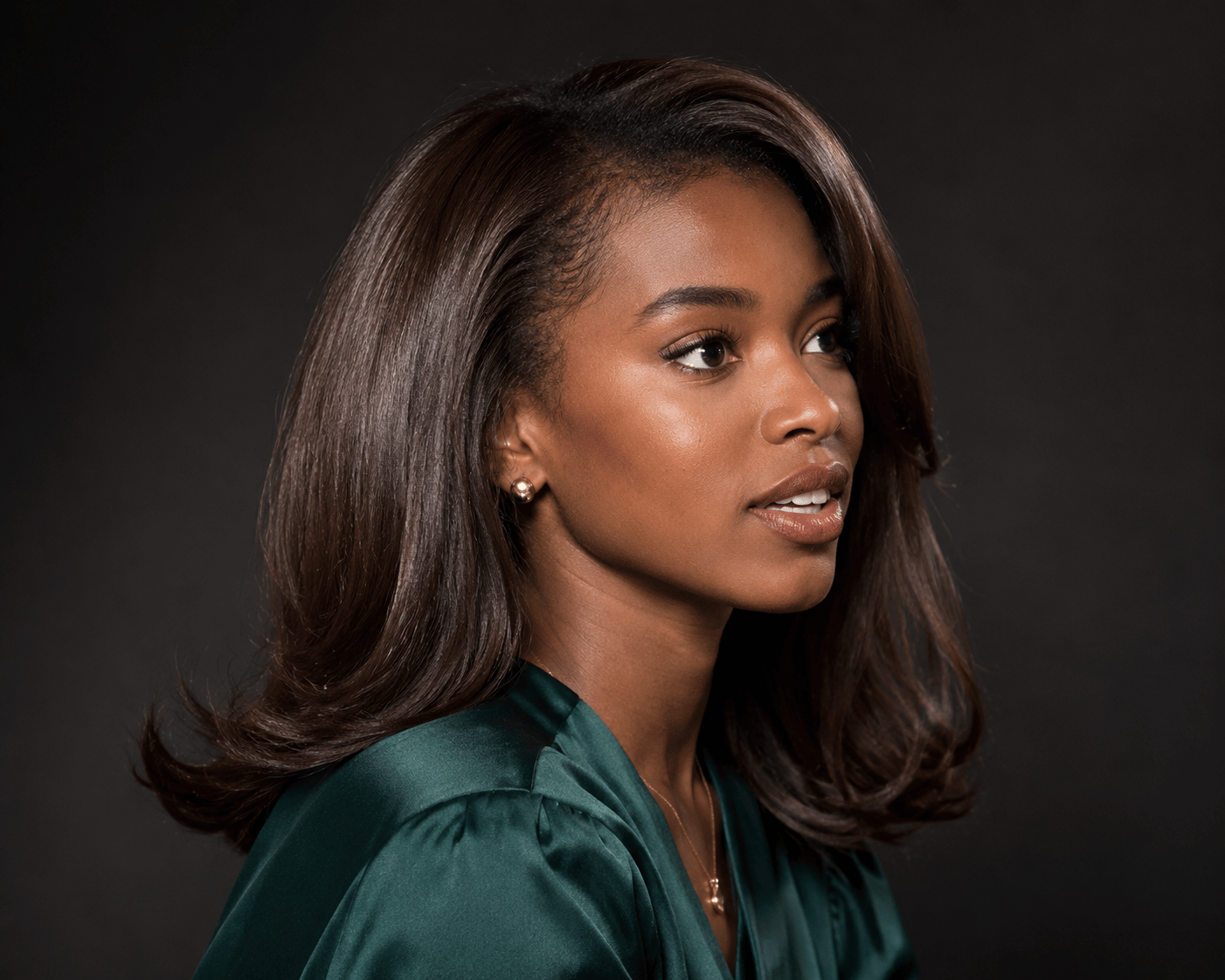
Richer and deeper than golden brown, chocolate sits at a level 3–4 with cool-neutral undertones. It reads as an enhanced version of natural dark hair — not obviously colored, but noticeably richer and more reflective. This shade works across all undertones and is one of the lowest-maintenance color options for dark skin.
Undertone match: Universal — works across warm, cool, and neutral | Technique: Semi-permanent or demi-permanent gloss
3. Caramel Brown
Caramel adds warmth and noticeable lift to dark hair without crossing into blonde territory. On brown and dark skin, it creates a flattering contrast — especially when concentrated around the face as highlights or balayage. This is a higher-maintenance shade than chocolate or golden brown because the lightened sections will need toning every 6–8 weeks to prevent brassiness.
For a full breakdown of caramel hair color variations, our dedicated gallery covers every shade from light to dark.
Undertone match: Warm / Neutral | Technique: Balayage or face-framing highlights
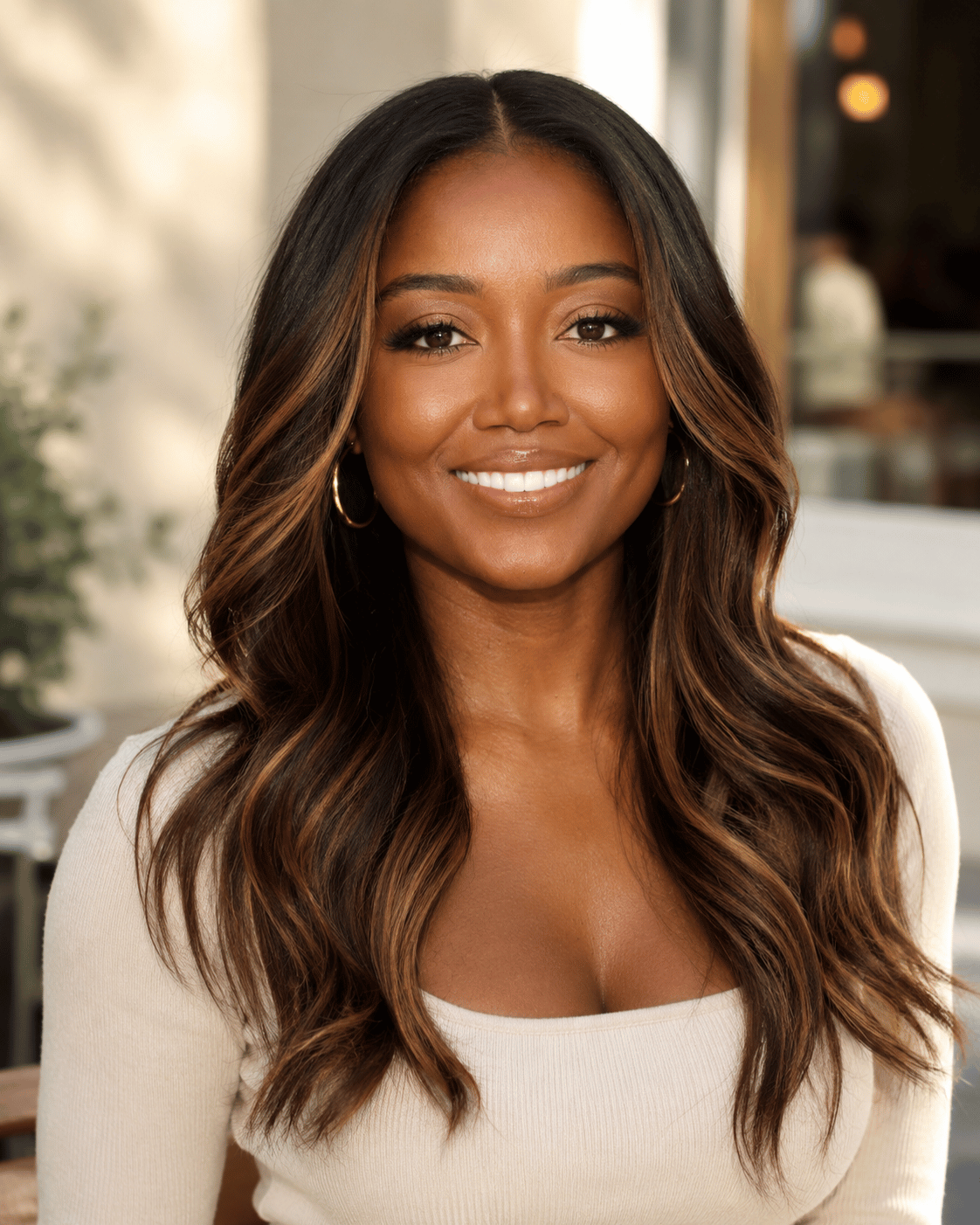
4. Chestnut Brown
Chestnut sits between brown and red — a warm, amber-toned shade with just enough copper to feel lively without reading as a true redhead. It’s one of the most flattering brown variations on dark skin with warm undertones because the reddish warmth mirrors the natural warmth in the complexion. Lower maintenance than caramel since it’s closer in depth to most natural dark bases.
Undertone match: Warm | Technique: All-over color with a warm glaze
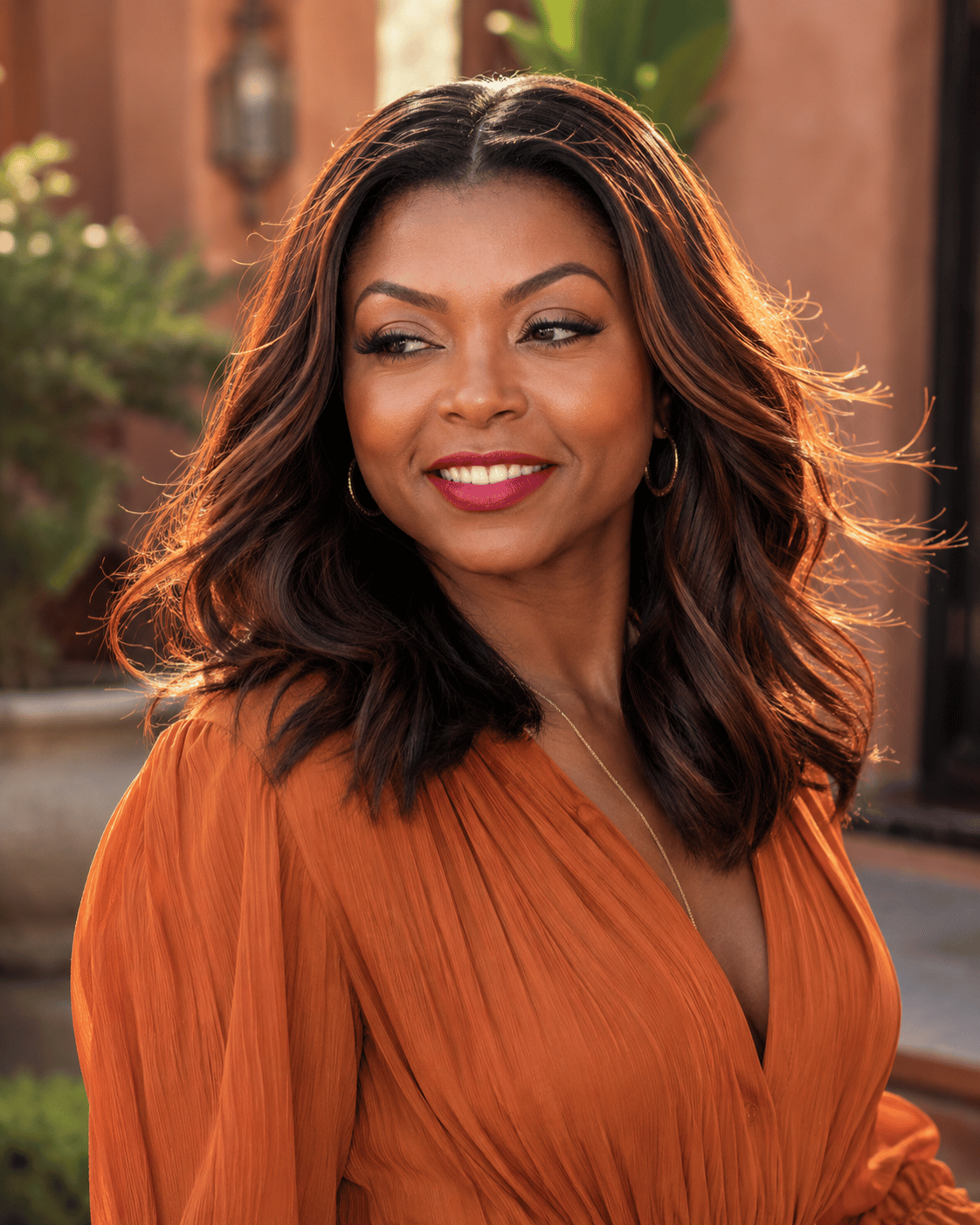
Red Hair Colors for Dark Skin
Red is one of the most striking color families on dark skin — the contrast between red tones and deep complexions creates an intensity that browns and blondes don’t match. The key is choosing the right depth and undertone: deeper reds (burgundy, auburn) are more universally wearable, while brighter reds (copper, ginger) skew warm and require more precise undertone matching.
One honest note: reds fade faster than any other color family. Plan for touch-ups every 4–6 weeks, use color-depositing products between appointments, and avoid hot water on wash days.
5. Auburn
The most natural-looking red for dark skin. Auburn is a red-brown that adds warmth without shock — it reads as “brunette with a reddish glow” rather than an obvious red. This shade flatters neutral and warm undertones and works especially well as a semi-permanent option that deepens with each application.
Undertone match: Warm / Neutral | Technique: Semi-permanent all-over color
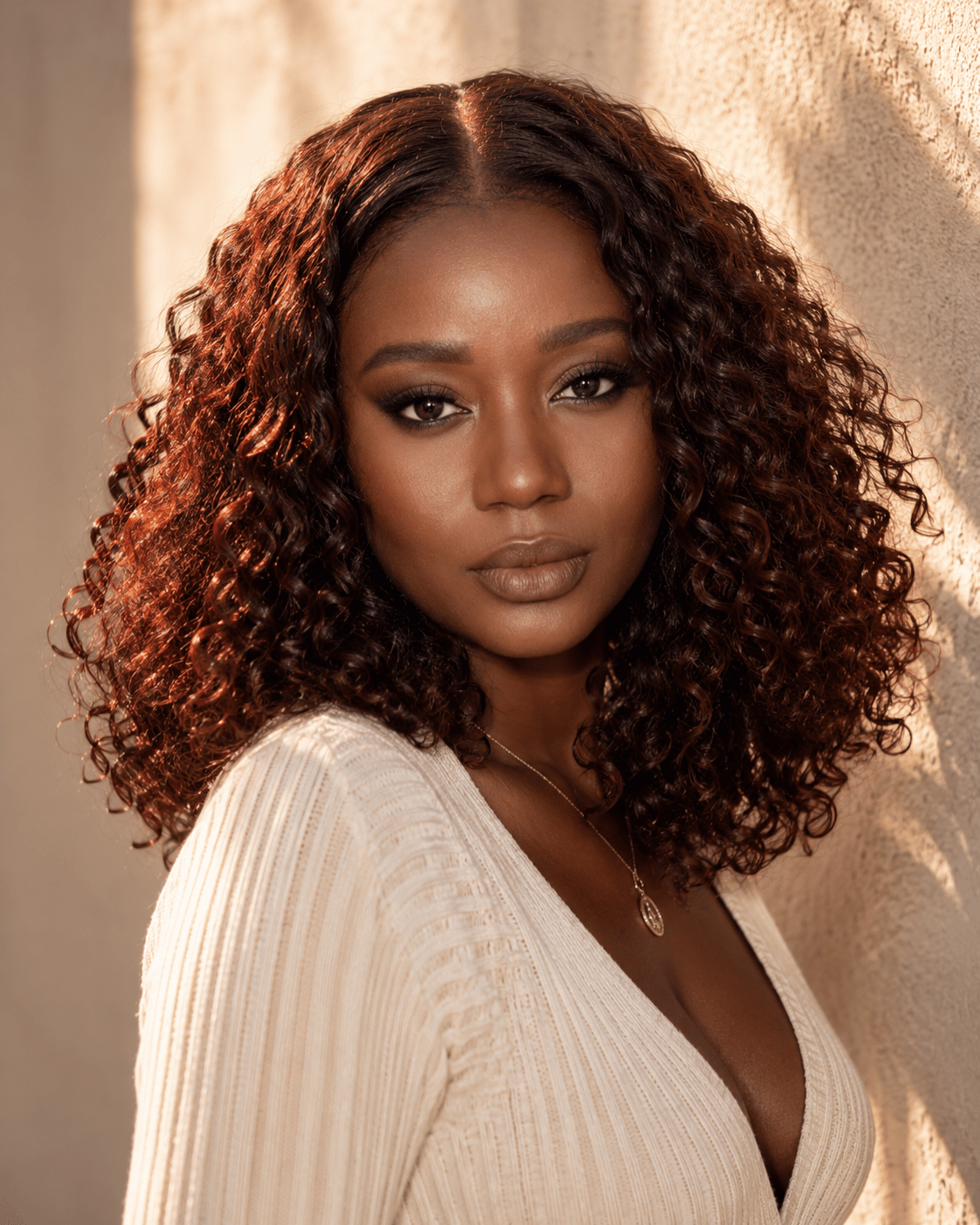
6. Burgundy
Deep, wine-toned, and unmistakably cool. Burgundy is one of the few reds that works on cool undertones because its blue-red base complements cooler complexions rather than clashing. On dark skin, it creates a rich, luxurious contrast — dramatic but still sophisticated. The depth of the shade also means the grow-out is gentler than with brighter reds.
Undertone match: Cool / Neutral | Technique: Permanent all-over color or gloss
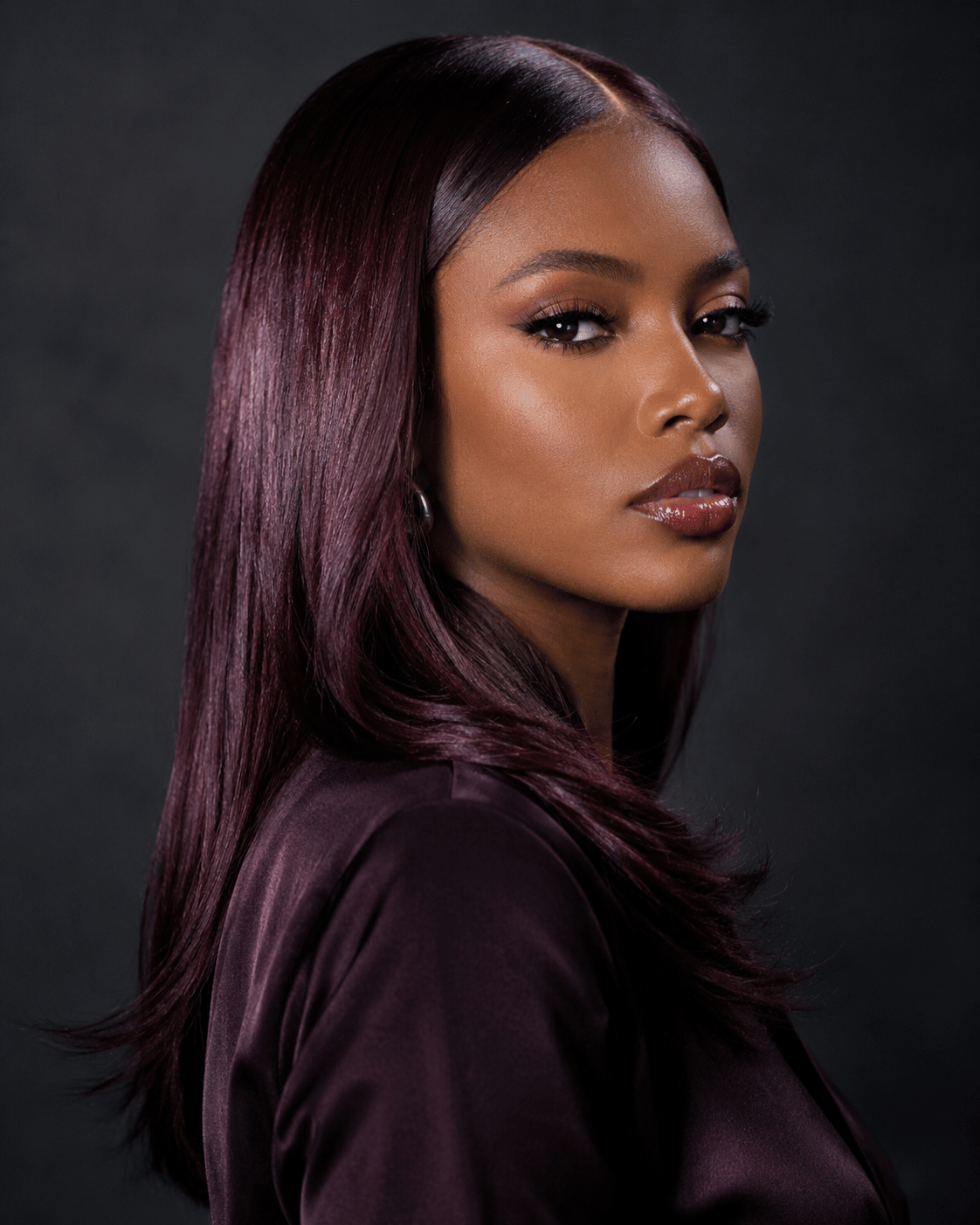
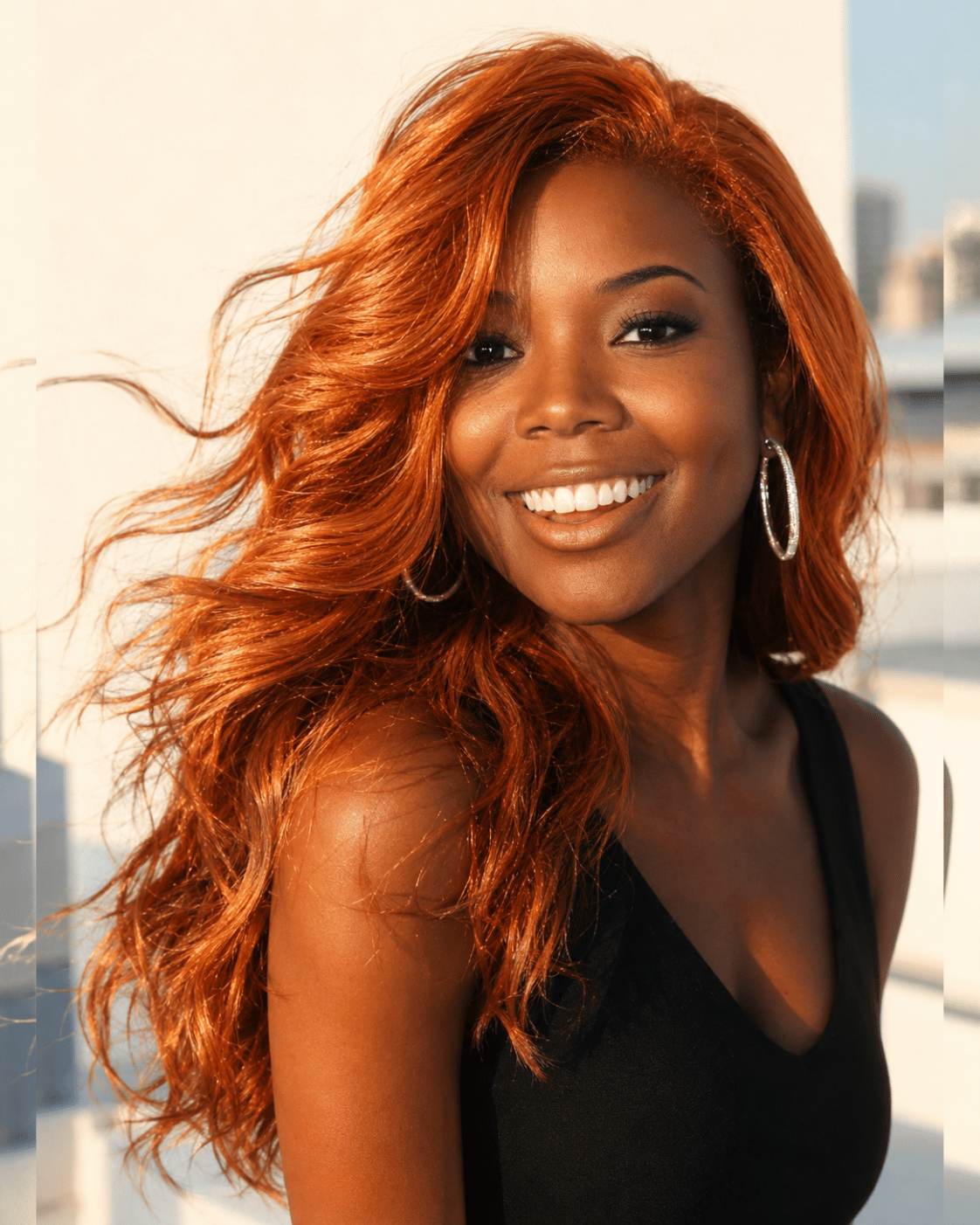
7. Copper
Copper is warm, bold, and having a major moment. On dark skin with warm undertones, it creates a striking, editorial contrast — the orange-gold of copper against deep brown skin has an intensity that other shades can’t match. This is a statement color, though. If your skin leans cool, copper can pull too orange and clash with pink undertones. A consultation is non-negotiable here.
For more copper inspiration, our copper balayage ideas gallery covers the full range.
Undertone match: Warm only | Technique: Balayage or full color
Blonde Hair Colors for Dark Skin
Blonde on dark skin is entirely achievable — but it requires more planning than other color families. The lightening process is more involved, the maintenance is higher, and the shade selection matters more because the wrong blonde can look brassy or unflattering. The key: match the blonde’s undertone to your skin, and have an honest conversation with your colorist about the condition of your hair before lifting.
If you’re coming from a natural dark base, understanding what the coloring process involves will set your expectations.
8. Honey Blonde
The most universally flattering blonde for dark skin. Honey blonde has golden warmth without being too light or too cool — it brightens the face while still feeling connected to the natural depth of dark hair. As highlights or balayage on a dark base, honey creates a sun-kissed effect that grows out naturally. Honey and caramel can overlap — honey sits lighter and more golden, while caramel leans richer and more brown.
Undertone match: Warm / Neutral | Technique: Balayage or highlights
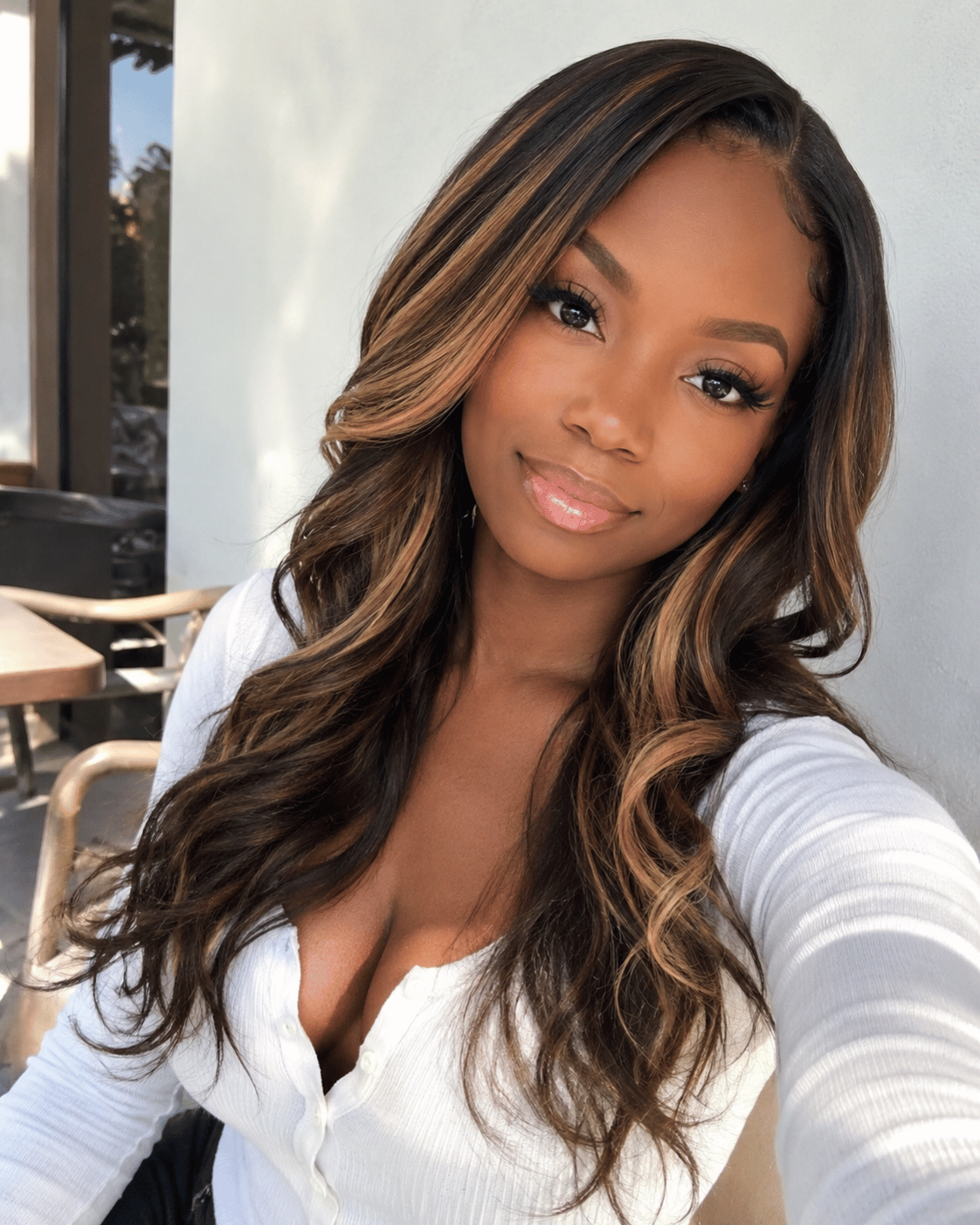
9. Caramel Blonde
Slightly deeper and warmer than honey, caramel blonde sits in the space between brown and blonde. On dark skin, it reads as a warm, luminous shade that adds dimension without the stark contrast of a lighter blonde. This is a great option if honey feels too bright for you but you still want noticeable warmth and lightness.
Undertone match: Warm / Neutral | Technique: Balayage or all-over color
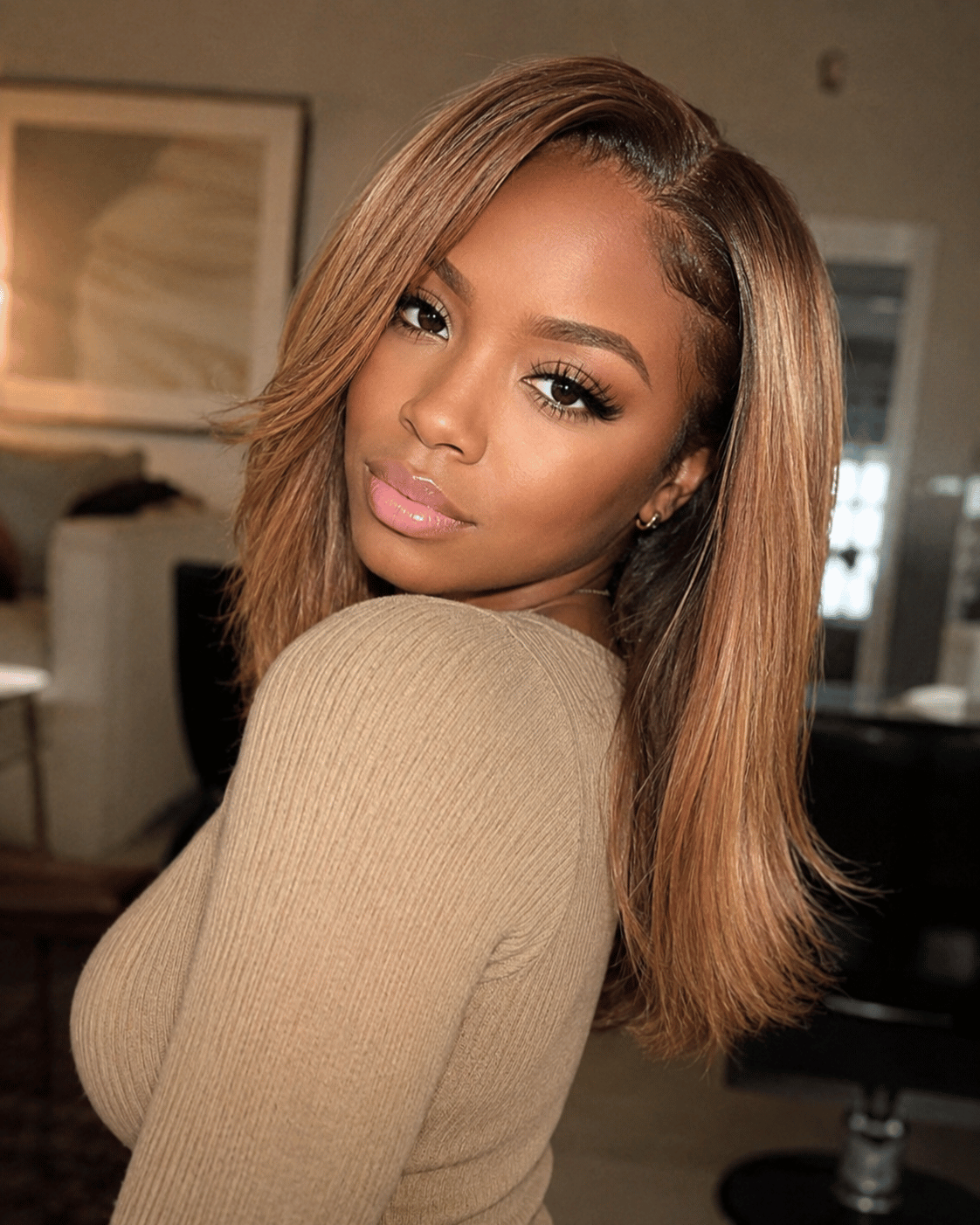
10. Bronde
Bronde — the blend of brown and blonde — works on dark skin when the blonde component leans warm and the brown component stays deep enough to anchor the look. The result is a multi-tonal shade that has brightness without being obviously “blonde.” Lower maintenance than a full blonde because the darker tones mask regrowth.
Undertone match: Warm / Neutral | Technique: Balayage with warm toner
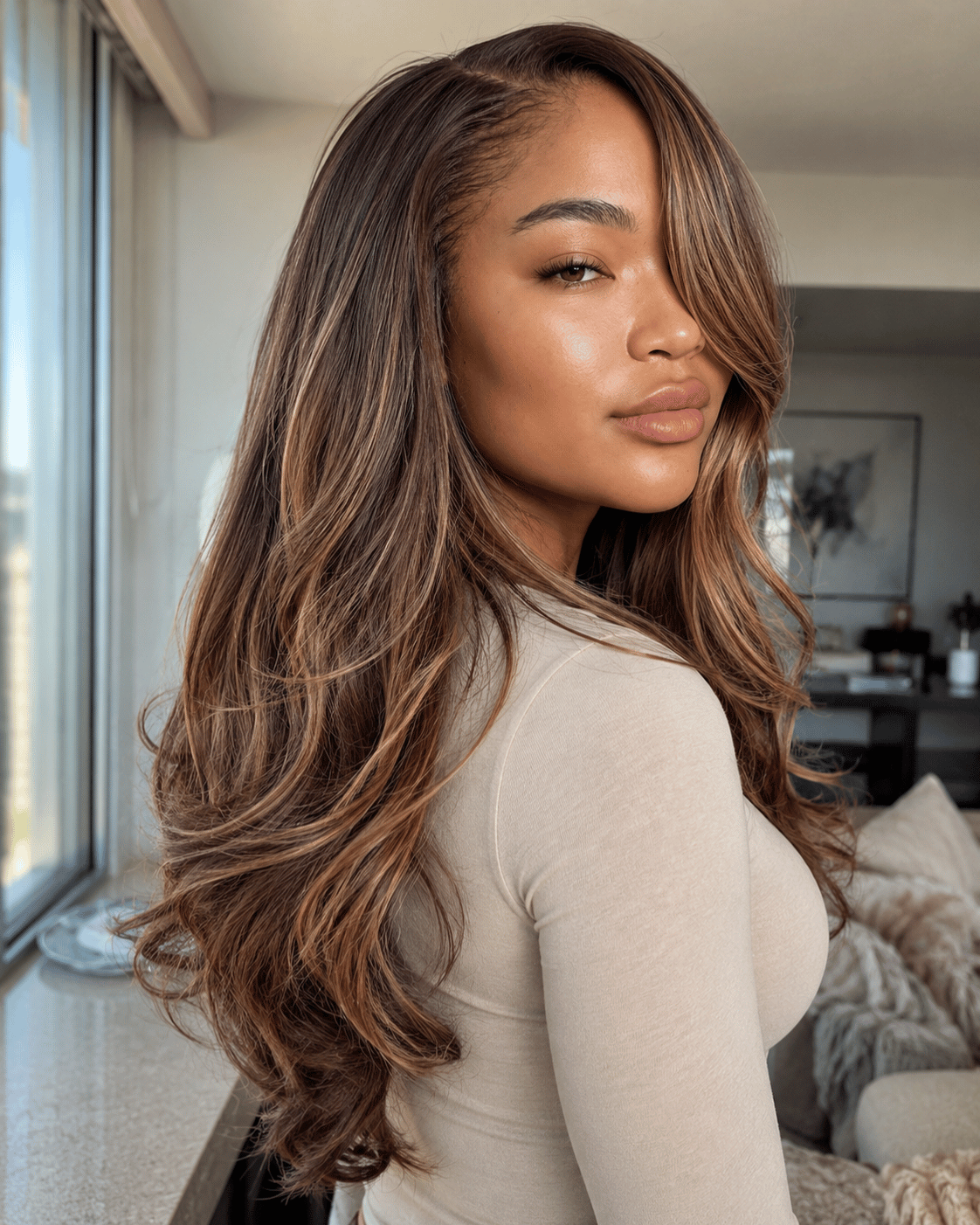
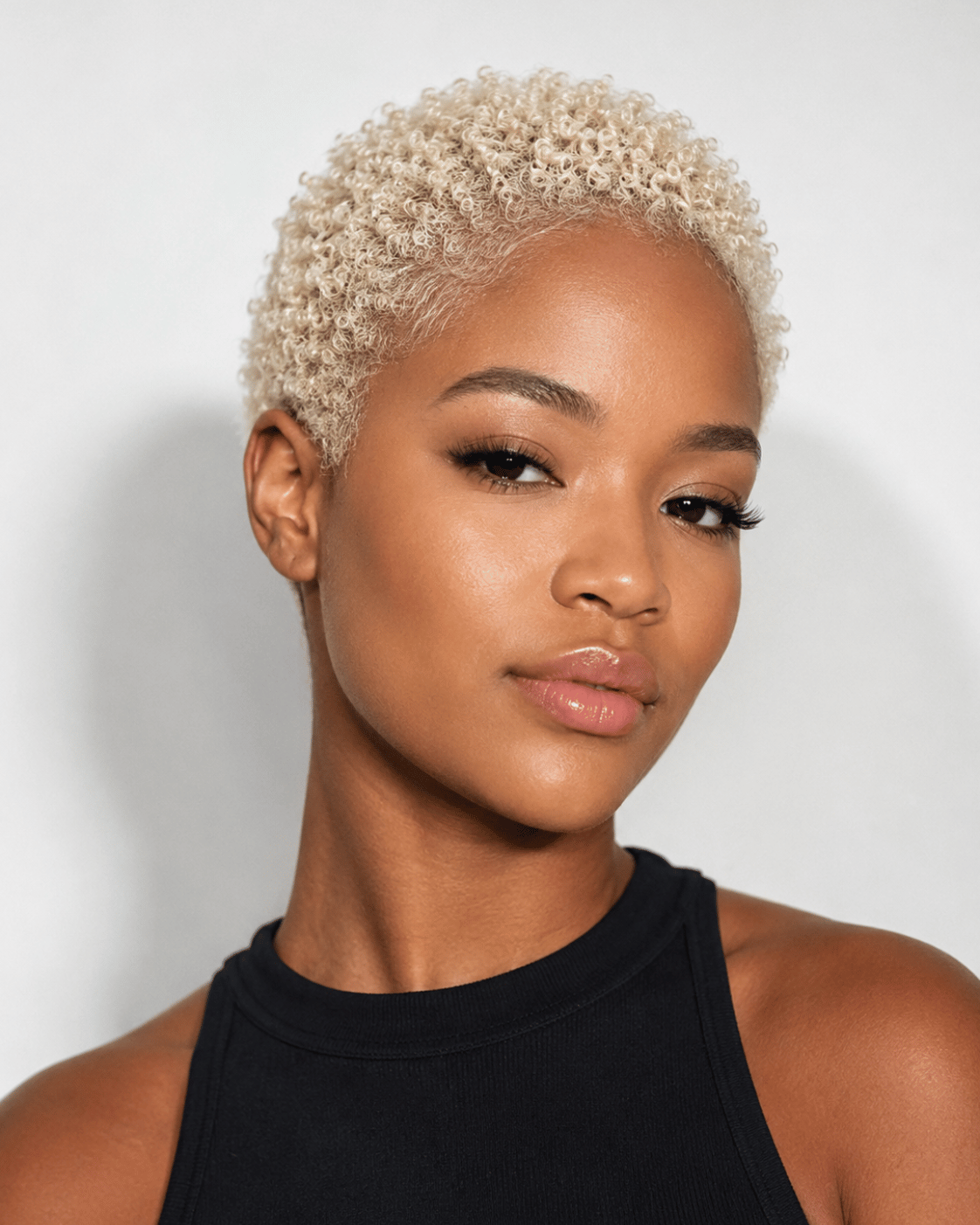
11. Platinum Blonde
The boldest blonde option. Platinum on dark skin is a statement — high-contrast, high-impact, and high-maintenance. It requires significant lightening and regular toning to prevent brassiness. The look works best on short hair (where damage is minimized and the grow-out is controlled) and suits confidence more than undertone — though it tends to look sharpest on cool and neutral skin tones.
Undertone match: Cool / Neutral | Technique: Full bleach with cool toner
Black Hair Colors for Dark Skin
Black doesn’t mean boring. The right black shade on dark skin maximizes gloss, adds depth, and makes your hair look healthier and more defined. These are the lowest-maintenance options in the gallery — most can be achieved with a semi-permanent formula and require zero lightening.
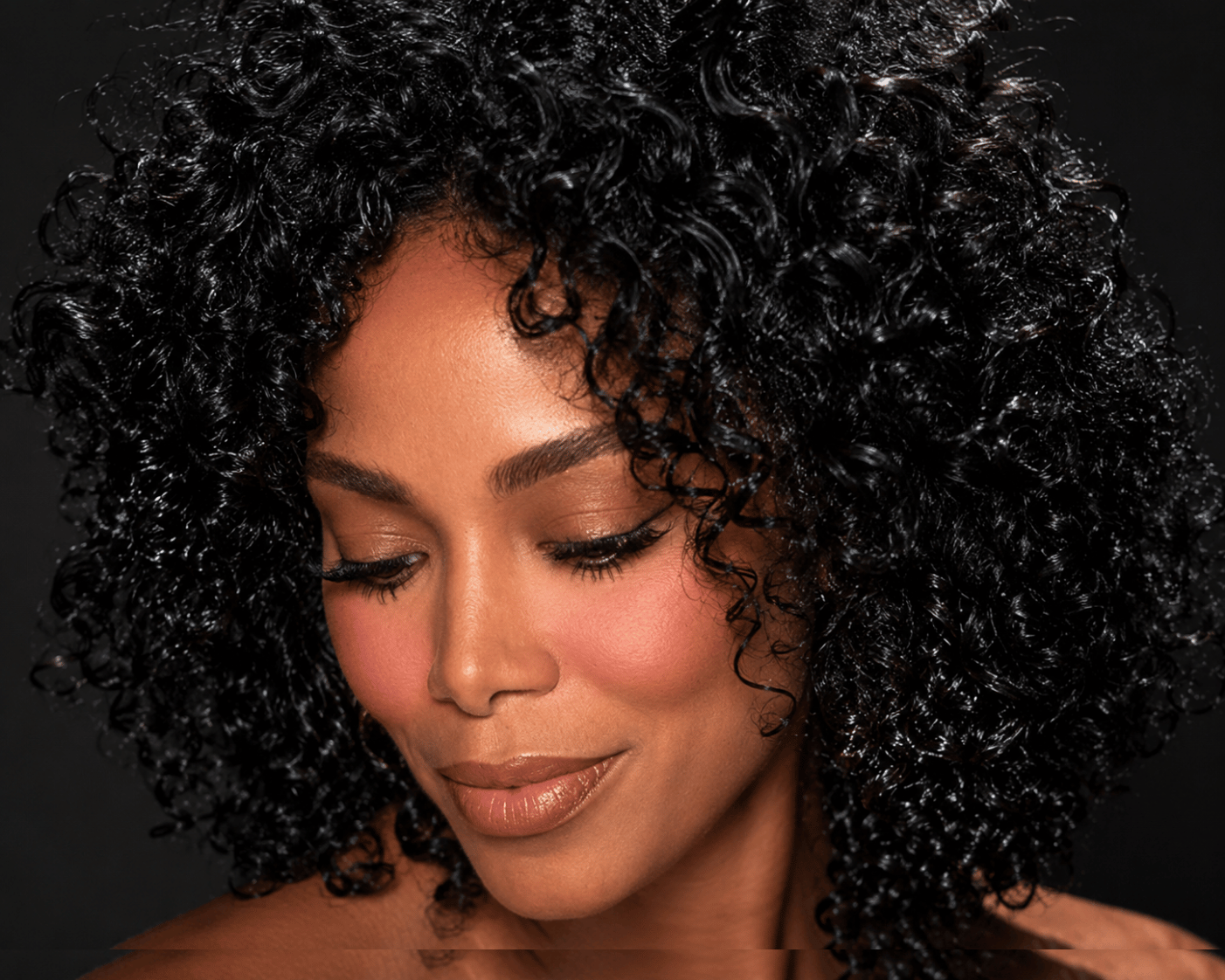
12. Jet Black
The deepest, glossiest option. Jet black on dark skin creates a seamless, striking effect — the hair and complexion feel unified, and the emphasis shifts entirely to shine, texture, and shape. This shade works on every undertone and is especially effective on natural hair textures where gloss and definition matter most.
Undertone match: Universal | Technique: Semi-permanent gloss
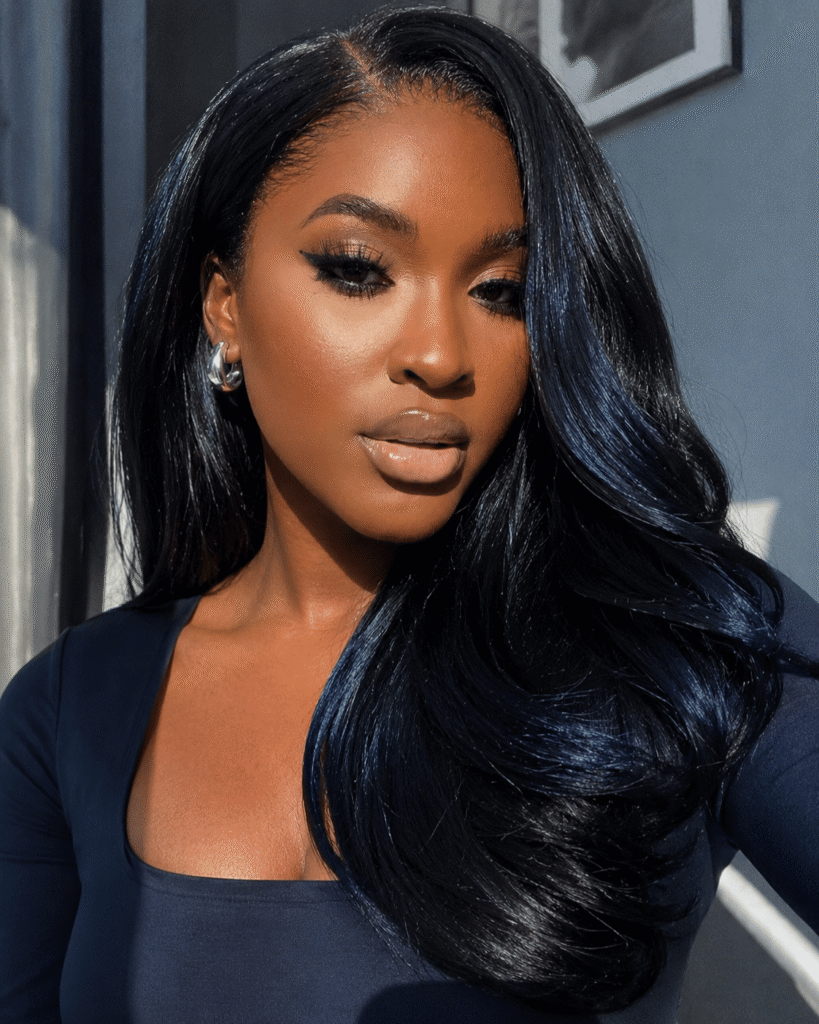
13. Blue-Black
A cooler, more dimensional version of black. Blue-black has a subtle blue sheen that’s visible in direct light — it reads as black indoors but flashes blue-violet when the sun hits it. This shade is particularly flattering on cool-toned dark skin and adds visual interest without any lightening or commitment to visible color.
Undertone match: Cool / Neutral | Technique: Demi-permanent or gloss with blue-black formula
Bold and Statement Hair Colors for Dark Skin
Dark skin is one of the best canvases for bold color — the depth of the complexion creates natural contrast that makes vivid shades pop harder than they would on lighter skin. These aren’t everyday shades for everyone, but they’re worth considering if you want to make a statement.
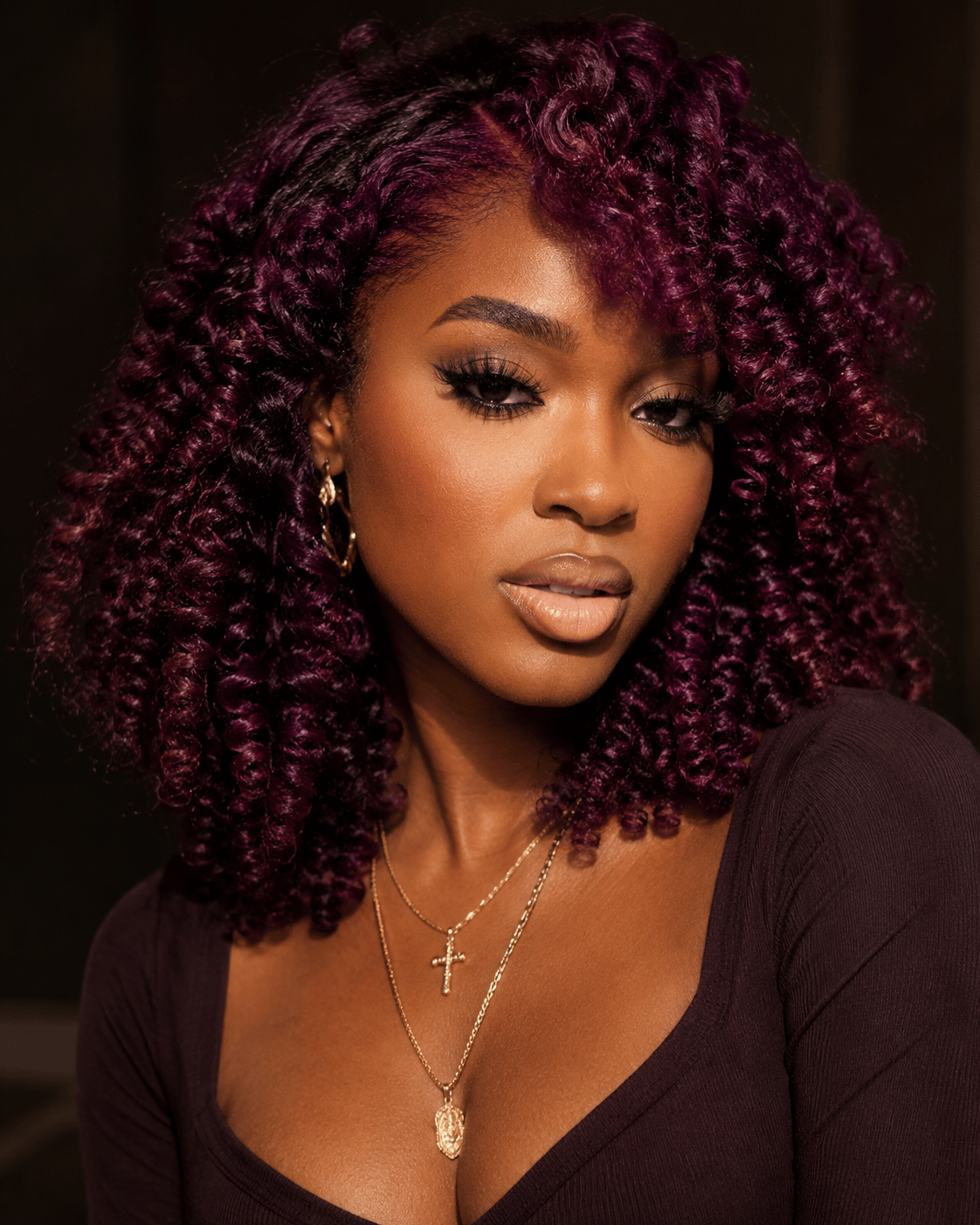
14. Plum
A deep purple-red that’s more wearable than it sounds. Plum sits in the space between burgundy and violet — warm enough to complement dark skin, deep enough to feel sophisticated rather than costume-y. On cool and neutral undertones, it creates a rich, jewel-toned effect. This can be achieved as a full color or as a gloss over dark hair for a more subtle shift.
Undertone match: Cool / Neutral | Technique: Semi-permanent or gloss overlay
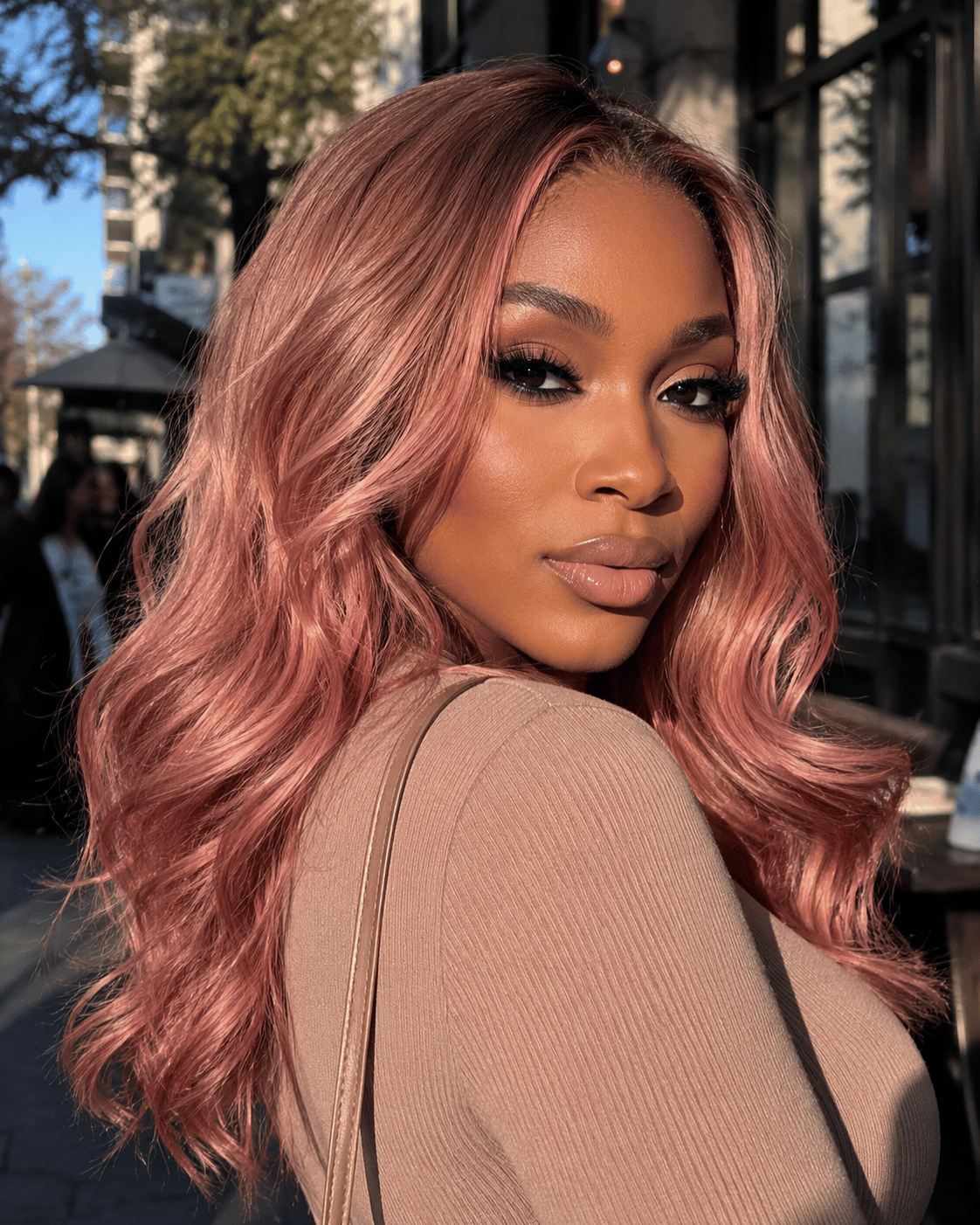
15. Rose Gold
Rose gold on dark skin hits differently than it does on lighter complexions — the pink-copper tones create a softer, more unexpected contrast that’s simultaneously warm and metallic. This shade works best on warm and neutral undertones and can be done as an all-over color or as highlights/ends on a dark base. Maintenance is moderate — the metallic tone fades toward warm pink, which is still flattering.
Undertone match: Warm / Neutral | Technique: Balayage or all-over with rose-gold toner
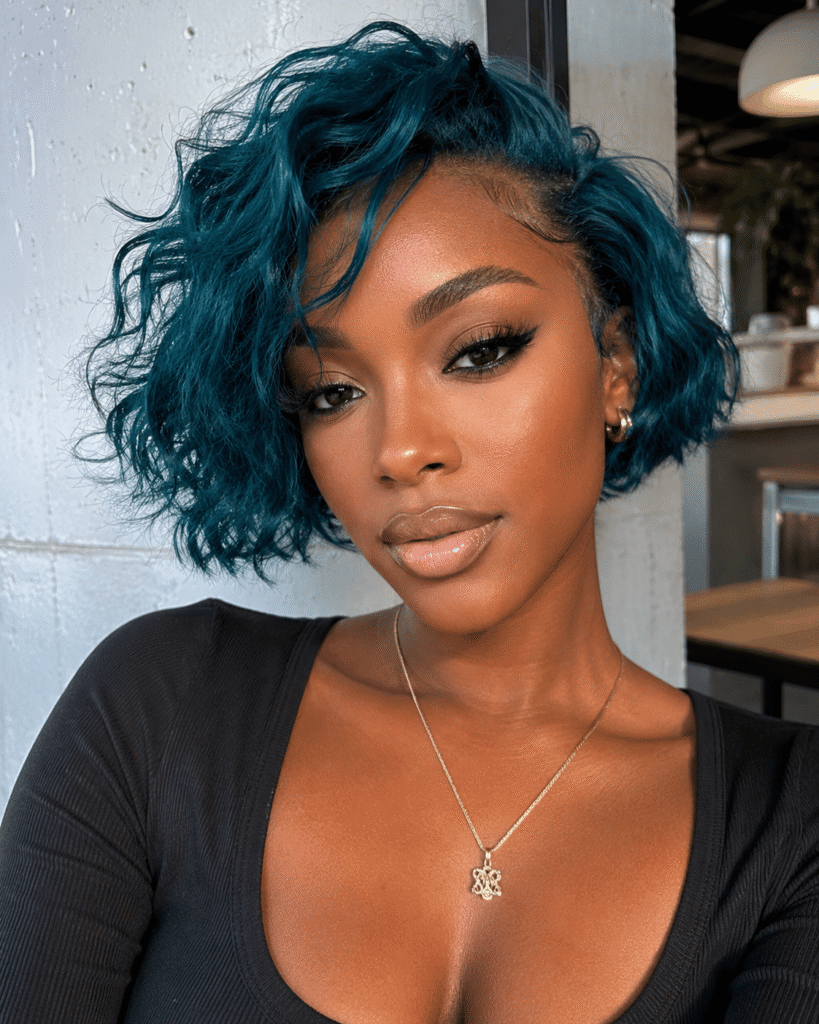
16. Teal
For maximum impact. Teal — a deep blue-green — against dark skin is one of the most visually striking combinations in color. The cool, jewel-toned shade creates a dramatic contrast that works on cool and neutral skin tones. This is a high-maintenance color (vivid shades fade fast and require dedicated aftercare), but the visual payoff is significant.
Undertone match: Cool / Neutral | Technique: Permanent or semi-permanent; requires pre-lightening
How to Choose Your Best Shade
The undertone framework — warm, cool, neutral — is your starting point, but it’s not the whole picture. Your natural hair level, your hair’s current condition, and your maintenance tolerance all factor in.
If you’re starting with natural dark hair and want to go lighter (blonde, copper, vivid colors), the lightening process is more involved on textured hair. Bond-protecting treatments help, but being honest about your hair’s health before lifting is critical. A good colorist will assess your strand integrity before committing to a shade.
If you’re looking for a lower-risk starting point, semi-permanent shades in the brown, black, and burgundy families add dimension and richness without lightening. They fade gradually, don’t leave harsh grow-out lines, and can be deepened with each application.
Whatever you’re considering, knowing what to expect before your appointment will make the consultation more productive and the results closer to what you had in mind. And if you’re already colored, a good color-safe shampoo routine makes the difference between a shade that lasts and one that fades in two weeks.
Frequently Asked Questions
What hair color looks best on dark skin with warm undertones?
Shades with golden, copper, or amber undertones — golden brown, honey blonde, caramel, chestnut, copper, and auburn. These warm tones mirror the warmth already in your skin and enhance your natural glow. Avoid ashy or cool-toned shades, which can look flat or grayish against warm complexions.
Can dark skin pull off blonde hair?
Yes — but shade selection and technique matter more than on lighter skin. Honey blonde, caramel blonde, and bronde are the most universally flattering blondes for dark skin because they maintain warmth. Platinum and icy blondes are achievable but require more lightening, more maintenance, and more toning. The key is matching the blonde’s undertone to your complexion and being realistic about the upkeep.
What’s the lowest-maintenance hair color for brown skin?
Jet black and chocolate brown. Both can be achieved with semi-permanent formulas that don’t require lightening, fade naturally, and blend with regrowth. Burgundy and blue-black are also relatively low-maintenance since their depth masks grow-out. The more you lighten your hair, the more maintenance you’re signing up for — blondes and vivid shades are on the opposite end of the commitment spectrum.
Does hair color damage textured or natural hair?
Any chemical process carries some risk, but the degree depends on the technique. Semi-permanent and demi-permanent colors don’t require developer and add color without altering your hair structure. Permanent color and lightening (for blondes, coppers, and vivid shades) open the cuticle and can cause dryness and breakage if your hair isn’t properly conditioned before and after. Bond-strengthening treatments, deep conditioning, and limiting heat exposure all help minimize damage.
What hair color makes dark skin look brighter?
Warm shades near the face — honey blonde, golden brown, caramel, and copper — tend to brighten dark skin by reflecting warm light back onto the complexion. Face-framing highlights or balayage create this effect even without changing your entire base color. For a broader look at shades that have a brightening, youthful effect, our dedicated guide covers options across the color spectrum.
Looking for a specific shade? Browse our caramel hair color ideas or copper balayage gallery for more inspiration. Or start with what to know before you color your hair if this is your first time.