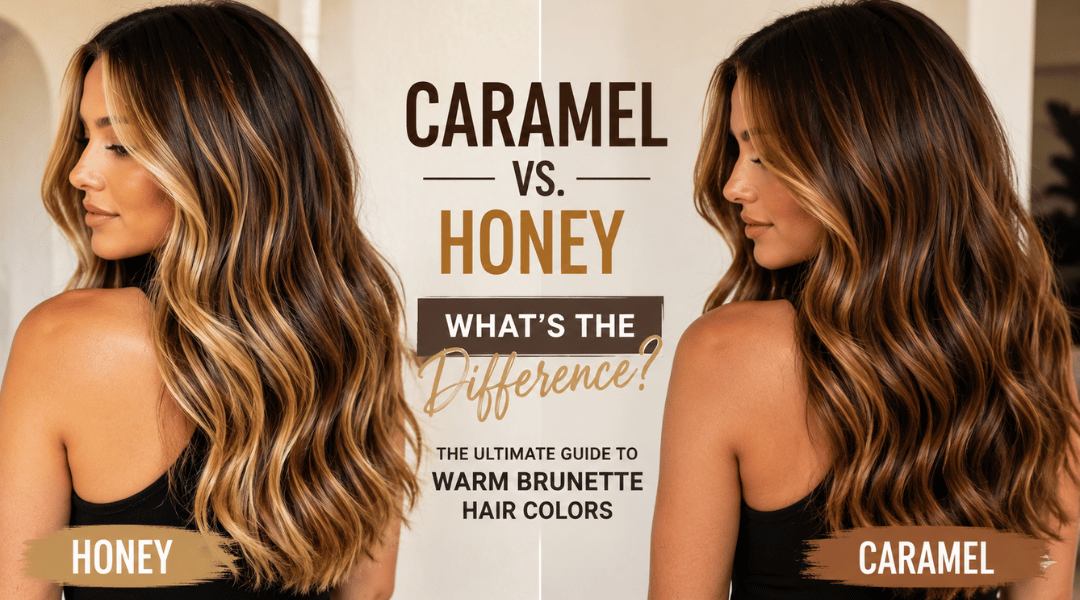
They’re both warm, they’re both flattering on brunettes, and they get confused constantly — in salon chairs and on Pinterest boards alike. But caramel and honey are distinct shades with different undertones, different effects, and different maintenance demands. Here’s how to tell them apart and figure out which one actually works for your hair.
The Short Answer
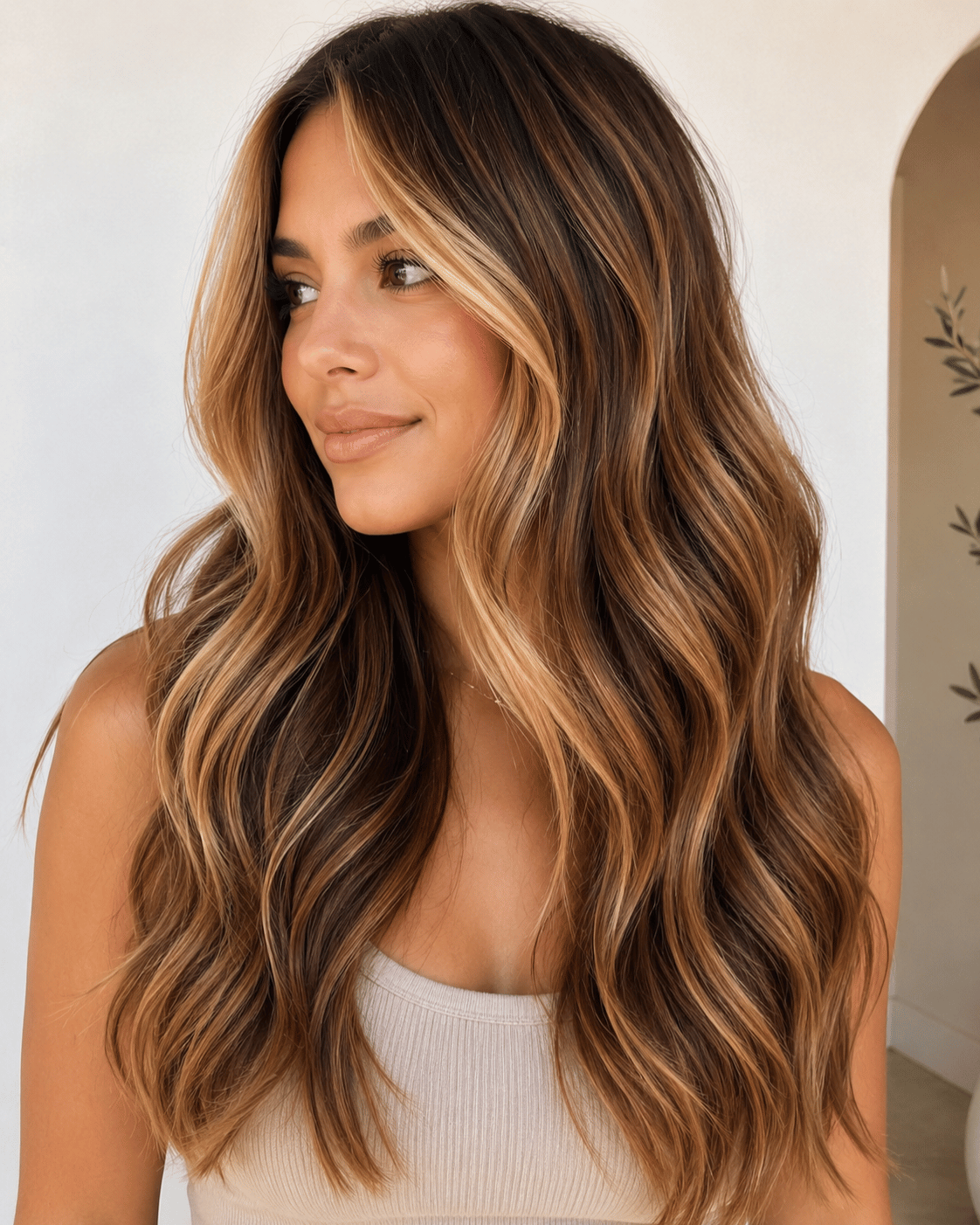
Honey hair color leans golden and bright. It sits closer to blonde on the spectrum, with yellow-gold undertones that catch light and read as luminous. Think of actual honey in a jar — warm, translucent, distinctly gold.
Caramel leans richer and deeper. It has more brown in it, with amber and toffee undertones that create warmth without brightness. Where honey glows, caramel warms. The overall impression is closer to a sun-warmed brown than a golden blonde.
How They Differ
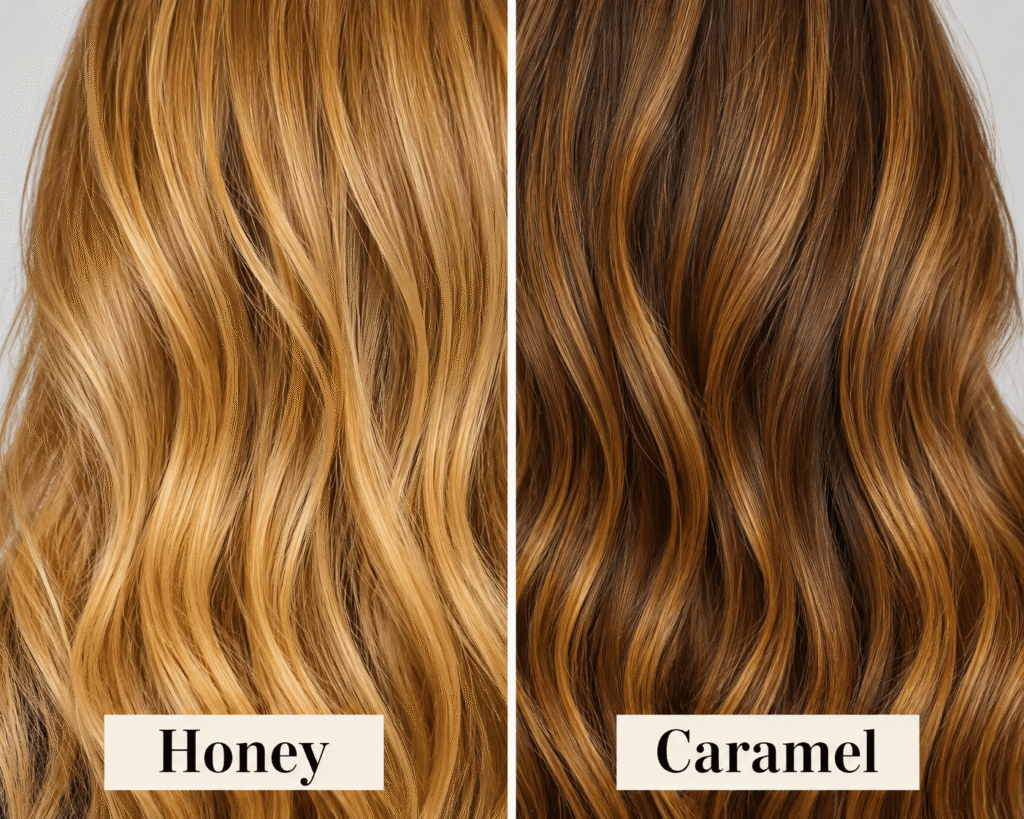
Undertone. Honey is yellow-gold. Caramel is amber-brown. This is the fundamental difference. If you pulled both shades out of context and placed them next to each other, honey would look noticeably more golden and caramel would look noticeably more brown.
Depth. Honey reads lighter — it sits around a level 7 to 8 on the hair color scale. Caramel has more range, landing anywhere from a level 5 to 7 depending on whether you’re looking at a light caramel or a dark one. For a visual breakdown of the full caramel range, our caramel hair color ideas gallery organizes shades from light to dark.
Skin tone compatibility. Honey tends to flatter warm and neutral skin tones with peachy or golden undertones — the golden quality of the shade enhances natural warmth. Caramel is more versatile across skin tones because it doesn’t push as hard toward gold. Olive, warm, and neutral complexions all tend to wear caramel well. If you have cool or pink undertones, a muted or mocha-leaning caramel is usually the safer choice over honey.
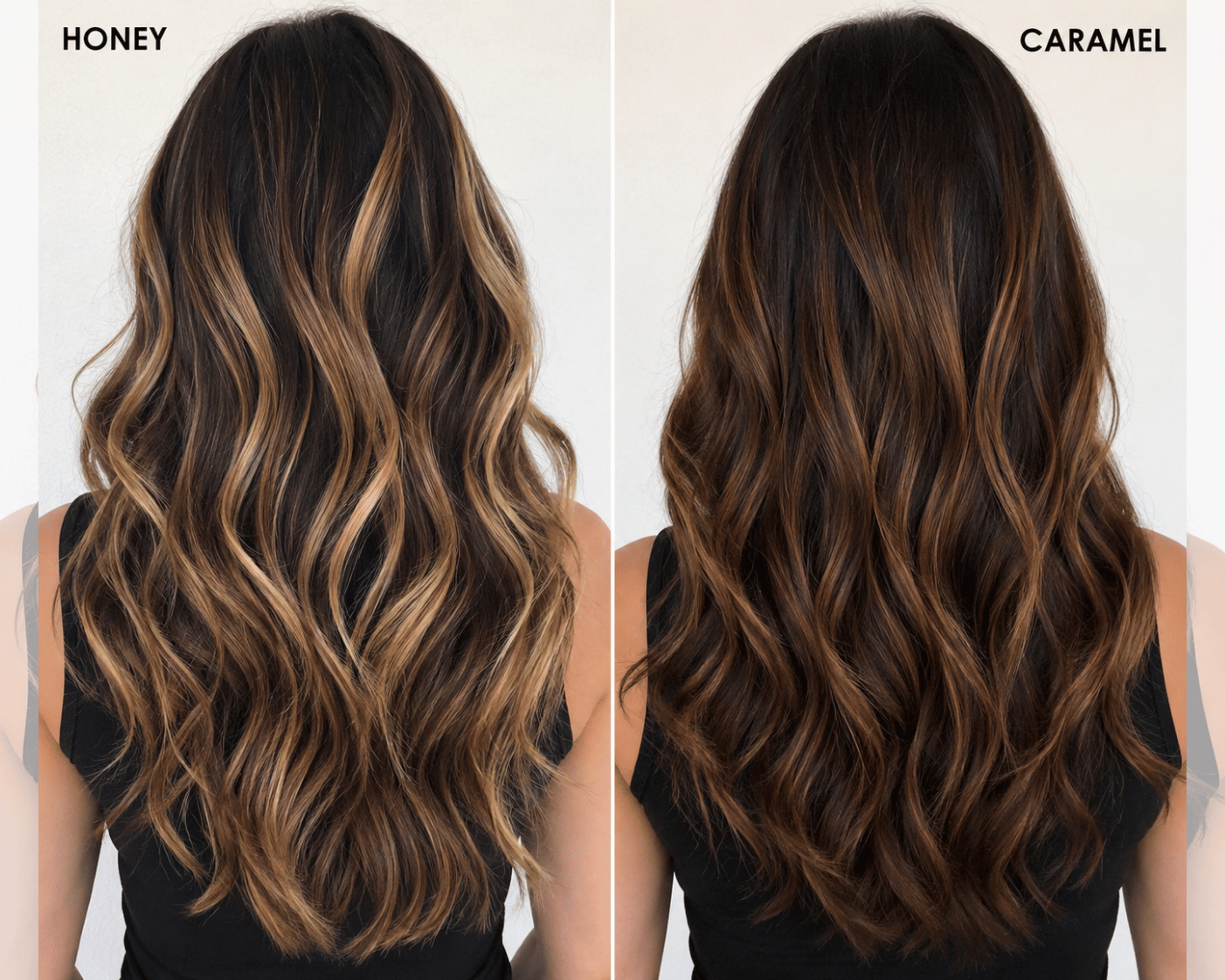
Effect on dark hair. On a dark brown base, honey highlights create noticeable contrast — the gold pops against the dark background. Caramel highlights blend more seamlessly, adding warmth and dimension without as much visual separation. Neither is better; it depends on whether you want the color to stand out or fold in.
Maintenance Differences
Honey requires more upkeep. Because it’s lighter and more golden, it’s more prone to brassiness — especially if your water is hard or you spend a lot of time in the sun. A purple or blue-toned shampoo helps, and you’ll likely want a gloss or toner refresh every 6 to 8 weeks to keep the golden tone clean.
Caramel is more forgiving. The deeper, amber-brown tone fades more gracefully and doesn’t brass as noticeably. Touch-ups can stretch to 8 to 12 weeks depending on the technique, and the grow-out tends to look intentional rather than overdue. If low maintenance is a priority, caramel is generally the easier shade to live with.
Both benefit from sulfate-free, color-safe shampoo and conditioner to extend the life of the tone between appointments.
Can You Combine Them?
Yes — and many colorists do. A honey-caramel blend uses both tones in the same head of hair, with honey concentrated around the face and ends for brightness and caramel through the mid-lengths and base for depth. The result is a multi-tonal warmth that reads rich and natural. If you’re drawn to both shades and can’t choose, this is the approach worth discussing with your colorist.
The Quick Comparison
| Honey | Caramel | |
|---|---|---|
| Undertone | Yellow-gold | Amber-brown |
| Depth | Lighter (level 7–8) | Medium (level 5–7) |
| Best for | Warm/neutral skin, lighter bases | Most skin tones, darker bases |
| Maintenance | Higher — brasses faster | Lower — fades gracefully |
| Effect | Bright, golden lift | Warm, blended depth |
| Grow-out | More visible | More natural |
Which Should You Ask For?
If you want brightness and a sun-kissed, golden quality — ask for honey. If you want warmth and depth that blends into your natural color — ask for caramel. And if you want both, say that. A skilled colorist can map honey and caramel into a single look that gives you dimension without choosing sides.
Not sure which direction to go? Understanding your base color and skin tone first will make the conversation with your colorist a lot more productive.
Exploring caramel shades? Browse our full caramel hair color ideas gallery, or see how caramel works as a balayage technique.