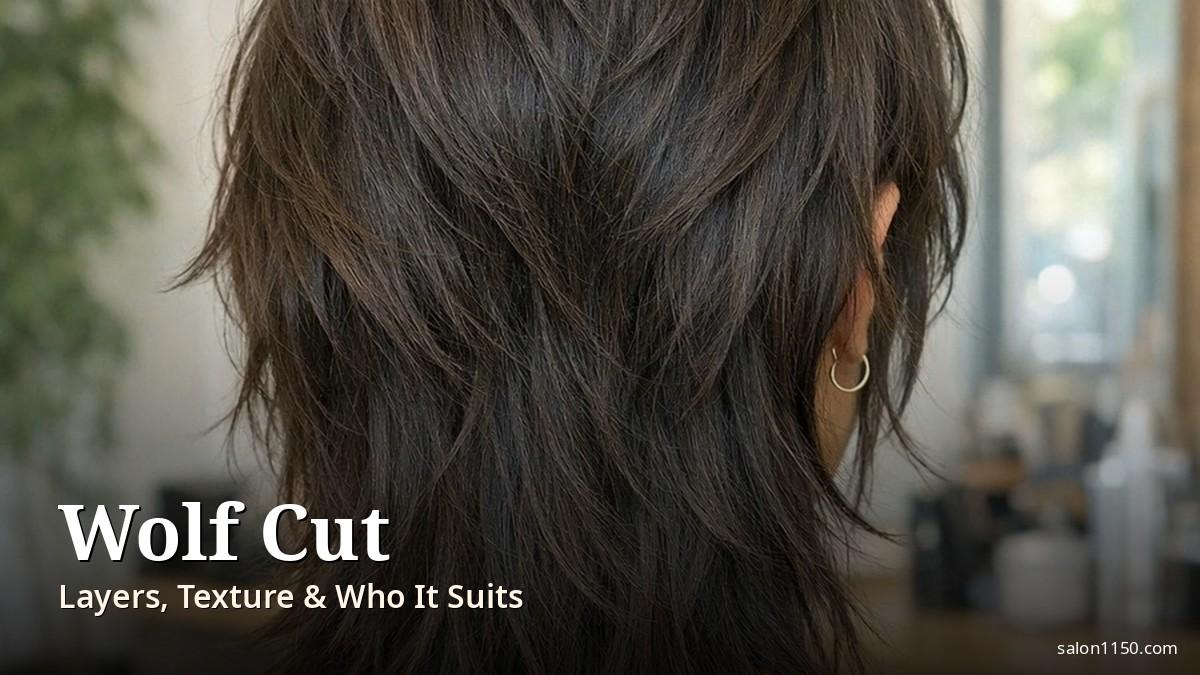
The wolf cut has been one of the most searched haircuts for the last three years — and most of the content ranking for it is useless.
Scroll through any search result and you’ll find 30-image galleries with one-line captions, celebrity roundups that tell you nothing about your own hair, and blog posts that claim this cut “suits everyone” and is “low maintenance.” Neither of those things is true, and repeating them doesn’t help anyone sitting in a salon chair wondering if this is a mistake.
This is a different kind of guide. We’re going to cover whether a wolf cut will actually work for your face shape, your hair type, and your daily routine. We’ll walk through what separates a wolf cut from a shag and a mullet (because even stylists use these terms loosely), what the grow-out phase actually looks like, and exactly what to say when you sit down for a consultation — word for word.
If you’ve been browsing Pinterest for an hour and still feel unsure, start here. If you already know you want one, skip to the consultation script and bring it to your appointment.
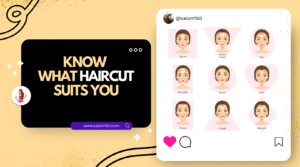
Not sure a wolf cut is right for you at all? Our guide to finding your best haircut can help you narrow down the options.
What Is a Wolf Cut? (And What It Isn’t)
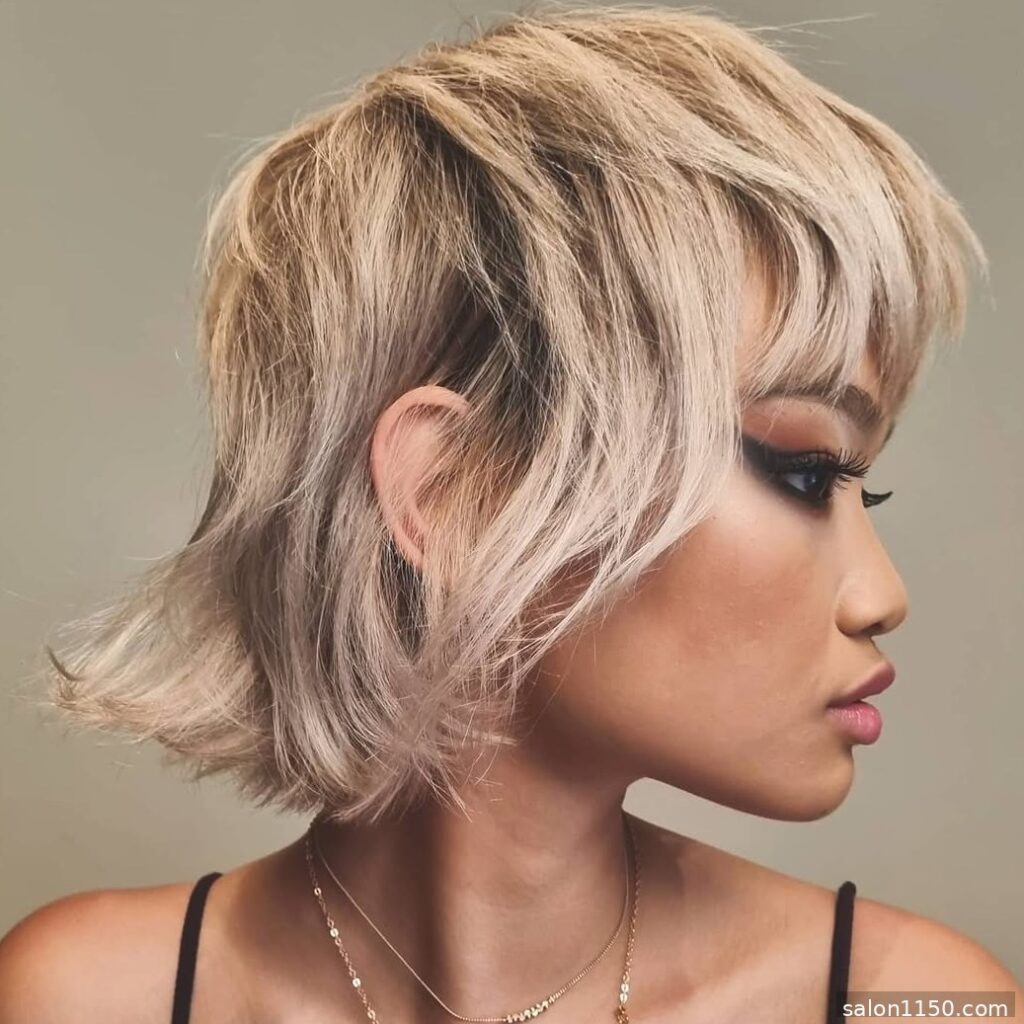
A wolf cut is a heavily layered hairstyle that blends elements of a shag and a mullet. Shorter layers are cut around the crown to create volume and height, while the sides and back are left longer and more textured. The result is a cut with visible movement, deliberate separation between the top and bottom sections, and a slightly wild silhouette — which is where the name comes from.
But here’s what matters more than the definition: there isn’t one wolf cut. There’s a spectrum.
On the subtle end, you have the soft wolf cut — blended layers, lighter texture, face-framing pieces that look polished enough for professional settings. On the bold end, the full wolf cut leans into dramatic disconnection, choppy ends, and visible contrast between the short crown layers and longer bottom sections. Most people end up somewhere in between, and the version you choose should depend on your hair type, face shape, and how much you’re willing to style it daily — not on whatever looks best in a filtered TikTok.
One common misconception: a wolf cut is not just “layers.” Standard layered haircuts blend seamlessly. A wolf cut creates intentional contrast. If your stylist blends everything smooth, you’ve got a layered cut — not a wolf cut. That distinction matters when you’re in the chair.
Wolf Cut vs Shag vs Mullet — The Real Differences
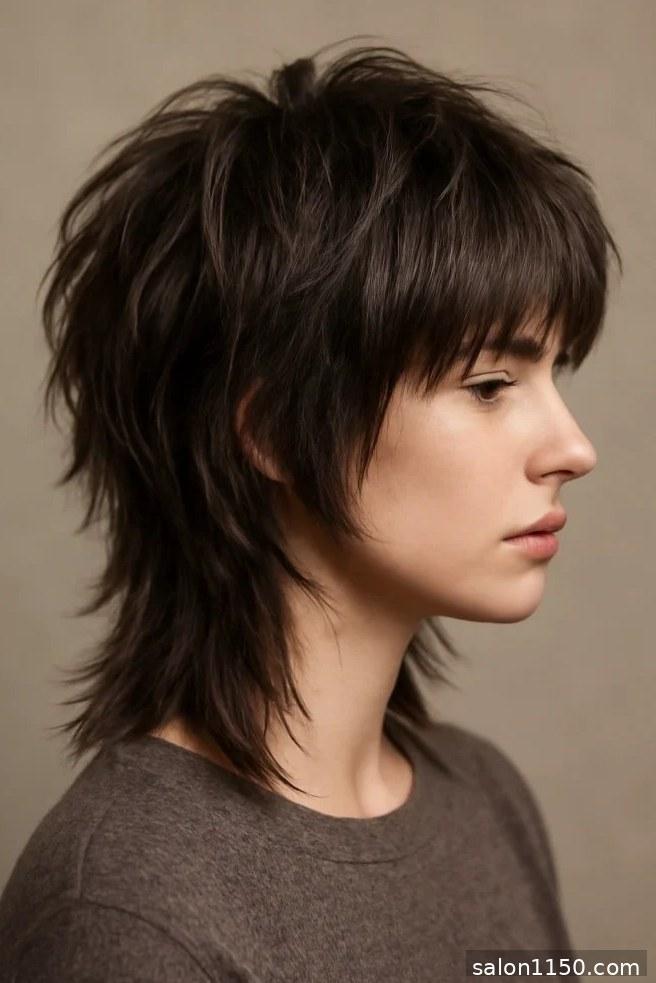
These three cuts get lumped together constantly, and that confusion causes real problems at the salon. A client asks for a wolf cut, the stylist hears “shag,” and the result isn’t what anyone expected. Here’s how they actually differ.
| Wolf Cut | Shag | Mullet | |
|---|---|---|---|
| Silhouette | Volume on top, longer and thinner at the bottom — visible contrast | Even, all-over texture — layers blend more smoothly | Short on top and sides, dramatically longer in back — “business in front” |
| Layer Style | Choppy, disconnected layers with intentional separation | Soft, blended, feathered layers throughout | Minimal layering — the drama comes from length contrast, not texture |
| Vibe | Modern, edgy, textured — TikTok-era cool | Retro, bohemian, relaxed — 70s revival | Punk, rebellious, statement-making |
| Maintenance | Medium-high — needs styling products and regular trims (every 6–8 weeks) | Low-medium — grows out more gracefully | Low — unless you want it precise, it just grows |
| Best For | Medium to thick hair, wavy or curly texture, anyone willing to style daily | Most hair types, lower commitment, relaxed style | Bold personal style, thick hair, comfort with an unconventional look |
| Grow-Out | Gets messy fast — layers separate unevenly by week 6–8 | Grows out softly — often looks good even when overdue | Grows into a longer shag naturally — forgiving |
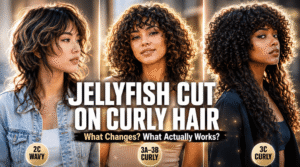
The takeaway: if you want texture with visible edge, that’s a wolf cut. If you want something softer and easier to maintain, you’re probably looking at a shag. If you want dramatic length contrast without heavy layering, that’s a mullet. Many stylists will blend elements of all three — which is fine, as long as you and your stylist are speaking the same language before they start cutting. If you’re choosing between the two edgy cuts, our wolf cut vs jellyfish cut comparison breaks down the real differences. The jellyfish haircut is the wolf cut’s closest cousin — same shaggy DNA, different silhouette.
Best Wolf Cut by Face Shape

Most articles on this topic give you a face shape chart and call it done. “Oval can wear anything. Round should try layers.” That’s not helpful. The wolf cut has enough variations that the real question isn’t whether it works for your face shape — it’s which version works.
Here’s how each face shape should approach the wolf cut, with specific guidance on what to ask for and what to avoid.
Oval Face
You have the most flexibility. Oval faces can handle both the soft wolf cut and the full choppy version without fighting the proportions. The only real risk is going too short on the crown layers, which can make the face look longer than it is.
Best version: Medium-length wolf cut with curtain bangs or face-framing layers. Keep the shortest layers at jaw level or below.
Avoid: Extreme crown volume without any face framing — it elongates.
Round Face
This is where the wolf cut can really work in your favor — but only with the right modifications. The volume at the crown adds height, which visually elongates a round face. The layered sides create vertical movement instead of width.
The mistake most people make: choosing a wolf cut with heavy, blunt bangs that cut straight across the forehead. That shortens the face visually and adds width — exactly what a round face doesn’t need.
Best version: Wolf cut with longer curtain bangs that part in the center or off to one side. Keep length past the chin to maintain the elongating effect. Side-swept face framing over blunt.
Avoid: Short, full bangs. Very short wolf cuts that end at the jawline — they emphasize width.
For more round-face-specific haircut options, see our full guide to the best haircuts for round faces.
Square Face
Square faces have strong jawlines and angular proportions. The wolf cut’s texture and movement work well here because they soften those angles without hiding them. The key is keeping the layers around the jaw wispy and textured — not blunt or heavy.
Best version: Medium to long wolf cut with soft, textured layers that start around the cheekbones. Curtain bangs work well. Avoid anything that creates a hard horizontal line at the jaw.
Avoid: Very short wolf cuts that expose the full jawline without any softening layers. Heavy, straight-across bangs that mirror the angular jaw.
Heart Face
Heart-shaped faces — wider at the forehead, narrower at the chin — pair well with wolf cuts that add volume and width around the jaw and chin area. This balances the proportions and keeps the forehead from looking dominant.
Best version: Wolf cut with longer layers that add fullness around the chin and below. Side-parted curtain bangs that narrow the forehead visually. Medium to long length works best.
Avoid: Heavy crown volume with no width at the bottom — this exaggerates the inverted triangle shape. Very short wolf cuts that leave the chin area exposed.
Long / Oblong Face
If your face is noticeably longer than it is wide, you need to be careful with the wolf cut. Crown volume — one of the cut’s defining features — adds height, which makes a long face look even longer.
Best version: Wolf cut with bangs (curtain or choppy) that create a horizontal line across the forehead, visually shortening the face. Keep crown layers modest — you want texture, not height. Medium length at or just past the shoulders.
Avoid: Excessive crown volume. Very long wolf cuts without bangs — nothing breaks up the vertical line.
Understanding which face shape rules apply to you — and which are exceptions — makes a real difference when you’re choosing any layered cut. Not sure which cut flatters you? See our guide to what haircut suits you by face shape.
Best Wolf Cut by Hair Type
Face shape tells you which version to choose. Hair type tells you whether the cut will cooperate once you leave the salon. This is where the “wolf cuts work for everyone” myth starts to fall apart.
Straight Hair
Straight hair can absolutely pull off a wolf cut — but it requires more daily effort than most people expect. Without natural wave or curl, the layers can fall flat and the cut loses its textured, lived-in quality.
What to expect: You’ll likely need to use a texturizing spray or sea salt spray daily. Blow-drying with a round brush or diffuser adds body. Air-drying often leaves straight hair looking limp rather than tousled.
Stylist note: Ask about internal layering vs surface layering. Surface layers (cut on top of the hair) create visible separation. Internal layers (cut underneath) remove weight and create movement without visible choppiness. For straight hair, you often need both.
Wavy Hair
Wavy hair is arguably the best match for a wolf cut. The natural texture does most of the work — the waves fill out the layers, create movement, and hold the shape without heavy product use.
 See alsoFace Shape vs Haircut: face shape haircut rules exceptions That Matter
What to expect: Easier daily styling than straight hair. A light mousse or texturizing spray enhances what’s already there. Air-drying often works.
Watch for: Humidity can push wavy hair toward frizz, which makes the wolf cut look messy rather than intentional. In humid climates, a lightweight anti-frizz product becomes essential.
Curly Hair
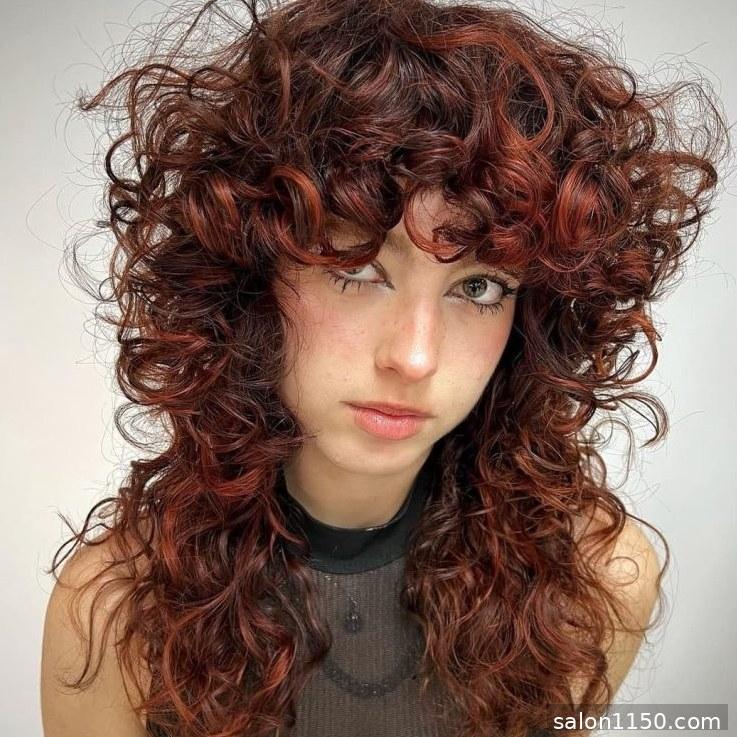
Curly wolf cuts can look incredible — but the execution has to account for shrinkage. Hair that hangs to your shoulders when wet may bounce up to chin length when dry. If your stylist doesn’t cut for shrinkage, you’ll end up shorter than planned.
What to expect: The layers enhance natural curl definition and reduce weight, which can actually improve your curl pattern. Less product needed for texture — your hair already has it.
Warning: Heavy layering on tight curls can create a triangle shape where the bottom fans out too wide. Make sure your stylist understands curl-specific layering — it’s a different skill set than cutting straight hair.
Coily Hair (Type 4)
This is the texture most articles skip entirely. Coily hair can wear a wolf cut, but the approach needs to be significantly different. Traditional wolf cut layering — which assumes some natural fall and swing — doesn’t translate directly to type 4 textures.
What to expect: A coily wolf cut relies on shaping and sculpting rather than just layering. The crown volume comes naturally, so the focus shifts to creating definition and controlling the silhouette.
Stylist note: Seek a stylist experienced with natural hair and type 4 textures specifically. A stylist who primarily cuts straight hair won’t approach the layering correctly.
Thin / Fine Hair
Here’s the honest answer most articles won’t give you: a traditional wolf cut with heavy, choppy layers can make thin hair look thinner. Removing too much weight from already-fine hair creates wispy, sparse-looking ends that read as damaged rather than intentional.
That said, thin hair isn’t automatically disqualified. The version matters.
What works: A softer wolf cut with lighter, more blended layering. Internal layers that create movement without removing visible density. Shorter lengths (above the shoulders) where the hair has more natural fullness.
What doesn’t: Heavy, disconnected layers on long thin hair. The longer it gets, the thinner the ends look, and the wolf cut shape collapses.
Products: Volumizing mousse applied at the roots before blow-drying makes a significant difference. Without it, the crown volume that defines the wolf cut just won’t hold.
If you’re considering bangs as part of your wolf cut, our guide to bangs for thin hair covers what works and what to avoid. You might also find our breakdown of the best bangs by face shape and hair type useful.
Thick Hair
Thick hair handles the wolf cut extremely well. There’s enough density to support heavy layering without looking sparse, and the weight removal actually makes thick hair more manageable. The choppy, textured look comes naturally.
Watch for: Over-layering. Some stylists get enthusiastic with thick hair and remove too much weight, which creates a poufy, triangle shape. You want controlled volume, not explosion.
Wolf Cut Length Guide: Short, Medium, and Long
The length you choose changes everything — maintenance level, styling flexibility, and grow-out behavior all shift significantly.
Short Wolf Cut
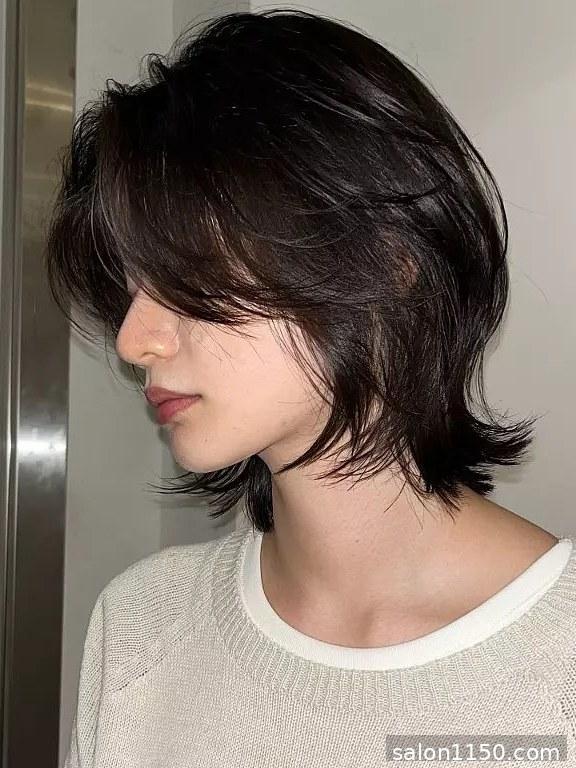
A short wolf cut typically sits between chin and ear length, with crown layers that can be quite short and textured. It’s bold, it’s high-impact, and it requires confidence. Short wolf cuts carry a lot of visual weight because there’s nowhere to hide — every layer is visible.
Best for: Medium to thick hair, wavy or curly texture, strong personal style. Also works well on oval and heart-shaped faces.
Reality check: Short wolf cuts require the most frequent trims (every 5–6 weeks) because the shape deteriorates fast at shorter lengths. They also require daily styling — you’re not pulling this into a ponytail on lazy mornings.
For more short-cut inspiration, browse our gallery of celebrity short haircuts. If you want to go shorter still, the bixie haircut is the bob-pixie hybrid version.
Medium Wolf Cut
Shoulder-length to collarbone-length. This is the most versatile and forgiving version. Long enough to pull back when needed, short enough to show the layered structure. Most people asking for a wolf cut end up here.
Best for: Nearly all face shapes and hair types. The medium length provides enough density to maintain the cut’s shape without extreme styling effort.
Reality check: Medium-length wolf cuts offer the best maintenance-to-impact ratio. Trims every 6–8 weeks keep the shape.
Long Wolf Cut
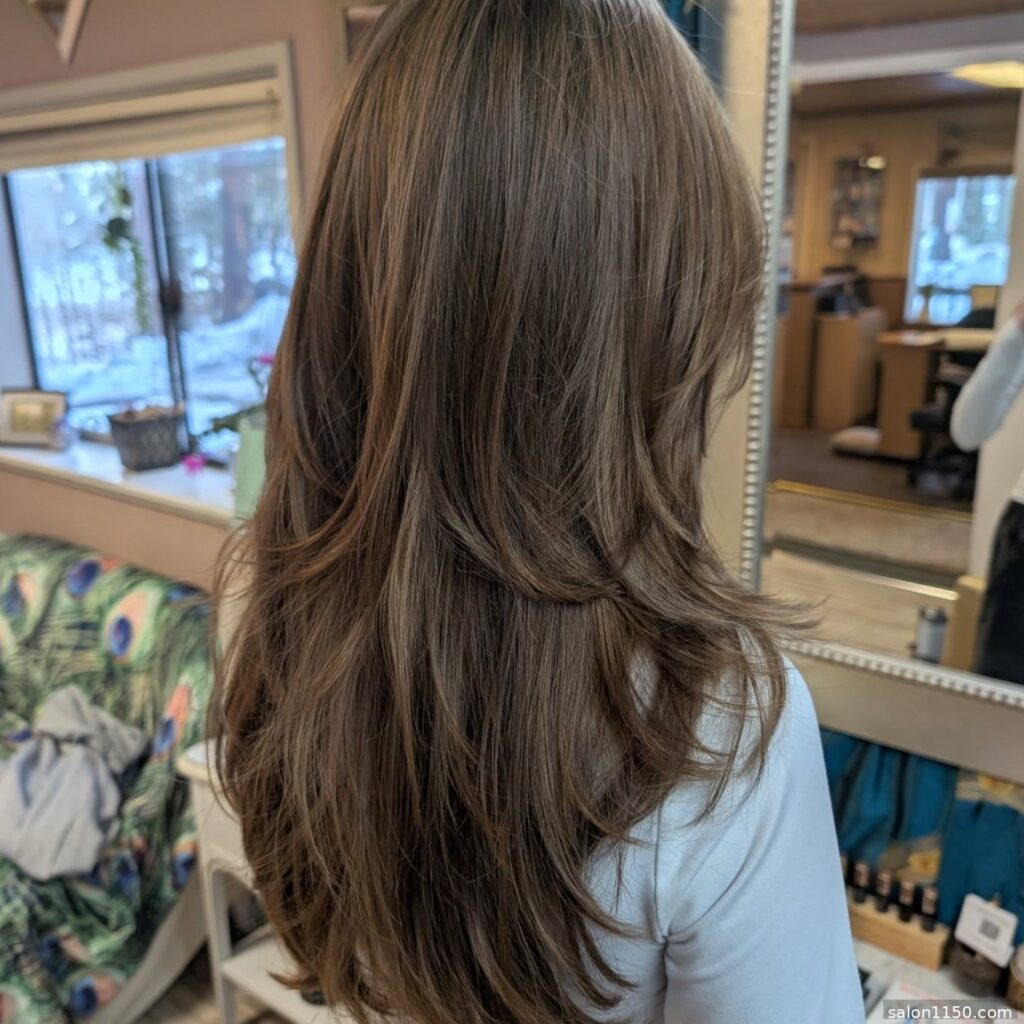
Below the collarbone, sometimes mid-back. The long wolf cut keeps the choppy crown layers but lets the bottom length flow. It’s less dramatic than the short version and can read as “heavily layered” rather than distinctly wolf-cut unless the crown layers are noticeably shorter.
Best for: Thick or wavy hair that can maintain density at length. Anyone who wants the wolf cut texture without committing to a dramatic chop.
Reality check: The longer it gets, the more the wolf cut shape fades between trims. Long versions need more intentional styling to maintain the contrast between crown and length. They also grow out into a less structured shape than medium versions.
Wolf Cut With and Without Bangs
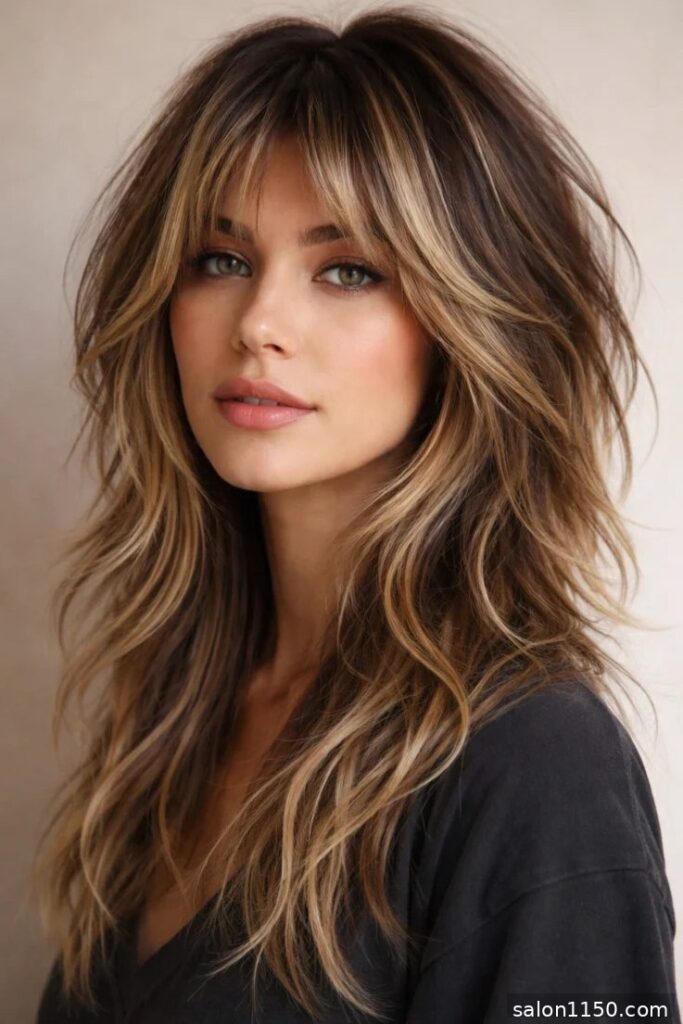
Bangs change the entire character of a wolf cut. They also change the maintenance equation — so choose deliberately.
Curtain Bangs
The most common pairing. Curtain bangs part in the center or slightly off-center and frame the face on both sides. They blend naturally into the wolf cut’s face-framing layers, creating a seamless transition from fringe to cut.
Best for: Oval, round, and heart faces. Curtain bangs narrow a wide forehead, elongate a round face, and balance a heart shape.
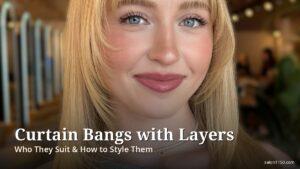
Maintenance reality: Curtain bangs grow out relatively gracefully. They’ll start looking long around week 4–5 but can be swept to the side rather than trimmed immediately. See our full guide to curtain bangs with layers for the cut by length and texture.
Choppy / Textured Bangs
More statement-making. Choppy bangs add edge and personality to the wolf cut. They’re typically shorter and more visible than curtain bangs.
Best for: Oval and square faces. They soften angular features on square faces while adding interest to balanced oval shapes.
Maintenance reality: Shorter bangs need trimming more often — every 3–4 weeks, or they start looking grown-out rather than intentional. If you’re not willing to trim (or learn to trim) between salon visits, curtain bangs are the safer choice.
No Bangs
Some wolf cuts work without any fringe at all, especially on longer versions where the face-framing layers do the work. Going bangless keeps the focus on the layered body of the cut.
Best for: Anyone who doesn’t want the maintenance commitment of bangs. Also works well for people who exercise frequently and need hair out of their face.
Trade-off: Without bangs, the wolf cut can look less defined — more “heavily layered” than distinctly wolf-cut.
The Styling Reality: What a Wolf Cut Actually Requires
Let’s talk about what nobody in the comments section mentions. The wolf cut is not a wash-and-go style. Not on straight hair. Not on fine hair. And often not even on wavy hair unless you’re comfortable with a genuinely undone look.
Daily time commitment: 10–20 minutes of active styling for most hair types. Straight hair lands on the higher end. Wavy and curly hair can get away with less if the cut is well-executed.
Products you’ll actually need: A texturizing spray or sea salt spray is non-negotiable for most textures — it’s what gives the layers that separated, lived-in look. Volumizing mousse at the roots helps maintain crown height. If your hair is thick or frizz-prone, a lightweight anti-frizz serum keeps the texture intentional instead of chaotic.
Tools: A blow dryer and a round brush are the baseline. For extra texture, a flat iron or curling wand used loosely on the mid-lengths adds definition. Hair rollers can work too — especially velcro rollers at the crown for volume that holds.
The air-dry truth: If you let a wolf cut air dry on straight or fine hair, you’ll get flat layers with no volume — which defeats the purpose. Wavy and curly textures fare better, but even then, a diffuser helps. Expecting to air-dry and still get the TikTok look is the number one source of wolf cut disappointment.
Climate note: In humid environments, the wolf cut’s texture can shift from “lived-in cool” to “uncontrolled frizz” quickly. If you live somewhere humid, budget an extra few minutes for smoothing products and consider a slightly less layered version. You want the layers to enhance texture, not become a vehicle for frizz.
 See alsoBest Haircuts for Round Faces: Short, Long & More
Color pairing — a quick note: Wolf cuts pair especially well with balayage or face-framing highlights because the layers make color dimension stand out. The shorter crown layers catch light differently than the longer sections, creating depth that single-process color can’t match. If you’re considering color, explore balayage styles or caramel balayage options for ideas that complement layered cuts.
Grow-Out Timeline: What Happens at Week 1, Week 4, and Week 8
This is the section no other wolf cut article will give you — and it’s probably the one you need most. The wolf cut looks best in a narrow window after cutting, and understanding the timeline helps you plan trims, set expectations, and avoid the “is my hair just bad or is this normal” panic.
Week 1: The Sweet Spot
Everything looks intentional. The layers are sharp, the crown has height, the face framing sits where it should. This is what your reference photo looked like. Enjoy it — this is peak wolf cut.
Week 4: The Settling Phase
The layers start to lose their crisp separation. Crown volume begins to settle as the shortest layers grow out. Bangs, if you have them, are getting into your eyes. Still wearable with product and styling, but the cut is softer and less defined than week one.
This is also when you’ll notice how your specific hair type handles the grow-out. Straight hair tends to flatten. Wavy hair fills in. Curly hair gets bigger.
Week 8: Decision Time
By week eight, most wolf cuts have lost their distinct silhouette. The shorter crown layers have grown into the mid-lengths, creating an uneven look that reads more “I haven’t been to the salon” than “edgy and textured.” Bangs are fully overgrown. The face framing has lost its shape.
This is when you need a trim. Not necessarily a full re-cut — a reshape of the crown layers, a bang trim, and some texturizing can bring it back. Pushing past week 8–10 without a trim often means the next appointment requires cutting off more length to restore the shape.
Our hair growth reality check covers the science behind why regular trims actually help your hair look better, even if they don’t technically speed up growth.
Who Should Skip the Wolf Cut
Not everyone should get this cut. That’s not gatekeeping — it’s honesty that saves you money, frustration, and an awkward grow-out phase.
Skip the wolf cut if:
Your hair is very thin or flat and you don’t want to style daily. A traditional wolf cut on ultra-fine hair without daily product and blow-drying will look limp and sparse. A soft wolf cut with minimal layering can work, but you need to be realistic about the effort involved.
You expect a wash-and-go result. On most hair types, letting a wolf cut air dry produces a significantly different result than what you see on social media. If your beauty routine is “shower, towel, leave,” this cut will disappoint you.
Your workplace requires a polished, conservative appearance. The full wolf cut has inherent texture and edge. A very soft version can pass in professional settings, but the classic wolf cut reads casual and trendy — not boardroom-ready.
Your hair is severely damaged or over-processed. Layering already-compromised hair creates more visible breakage points. Get your hair healthy first, then consider the cut.
You hate frequent salon visits. If you’re the type to go six months between haircuts, the wolf cut will look great for about three weeks and then progressively worse. This cut needs maintenance every 6–8 weeks to hold its shape.
You want predictability. The wolf cut looks different every day depending on how you style it, the humidity, whether you slept on it weird. If you prefer a haircut that looks the same morning to night with minimal input, a blunt bob or a one-length cut is a better match.
How to Ask Your Stylist for a Wolf Cut (Exact Phrases)
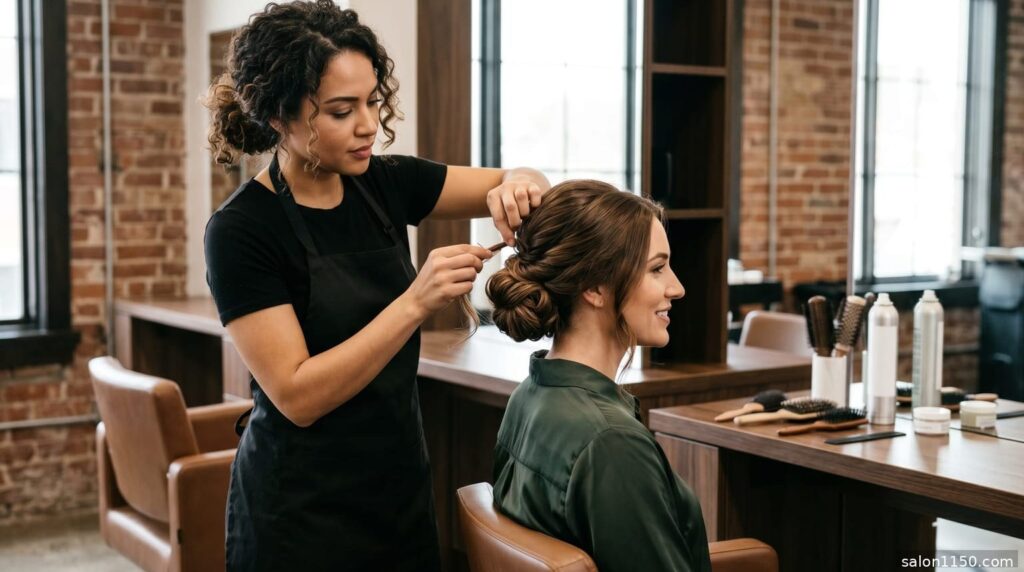
Walking into a salon and saying “I want a wolf cut” leaves too much open to interpretation. Different stylists picture different things. Here’s a consultation script you can use — adjust the specifics based on the face-shape and hair-type guidance above.
Before the Appointment
Collect 3–5 reference photos. Not from the same angle — find at least one front view, one side view, and ideally one showing the back. Pay attention to the crown layer length, the amount of texture, and whether bangs are included.
Important: Choose photos of people with similar hair type and density to yours. A wolf cut on thick, wavy hair will look completely different on fine, straight hair — even if the cut is technically the same.
The Script
Here’s what to say when you sit down:
“I’d like a wolf cut — specifically, I want [soft/medium/full] disconnection in the layers. I want the shortest layers to start around [crown/cheekbone/jaw level], and I want the overall length to stay around [collarbone/shoulders/mid-back].”
Then add detail based on your specifics:
For bangs: “I’d like curtain bangs that start around [cheekbone/chin length] — I don’t want them too short, because I want the option to sweep them back.”
For thin hair: “My hair is on the finer side, so I’d rather have softer, blended layers than heavy disconnection. I don’t want to lose too much density at the ends.”
For thick hair: “I have a lot of density, so I want some weight removed — but I don’t want it thinned out so much that it goes flat. Internal layers would help.”
For curly hair: “Please cut it dry or at least check the dry length before finishing. My hair shrinks a lot when it dries.”
For minimal styling: “I want a version of this that looks decent air-dried, even if it’s not as textured as the photos. I’m realistic about styling — I’ll use product but I won’t blow-dry every day.”
Questions to Ask Your Stylist Before They Cut
- “How would you adjust this for my hair type?”
- “How often will I need to come back for trims?”
- “What products will I need to maintain this at home?”
- “Can you show me how to style it before I leave today?”
Red Flags
If your stylist says “this works on everyone” without asking about your hair type, daily routine, or styling commitment — that’s a concern. A good stylist will tell you what modifications your hair needs, not just agree with whatever reference photo you show them.
What Social Media Gets Wrong About the Wolf Cut
Every wolf cut you’ve seen on TikTok was styled immediately before filming. Many were filmed in professional lighting with professional products. Some were shot in the salon chair before the client even stood up. That’s not what your hair will look like on a Wednesday morning.
The texture is manufactured. Those perfectly separated, tousled layers? Texturizing spray, a curling wand on select pieces, and careful placement. It takes 15–20 minutes and looks effortless, which is the whole illusion.
The volume isn’t natural. Crown volume in most wolf cut videos comes from blow-drying upside down, root-lifting spray, and sometimes velcro rollers. Without those steps, the crown sits flat on most hair types — especially fine and straight textures.
The grow-out doesn’t make the cut. Social media shows the wolf cut at its best — week one, freshly styled. Nobody posts the week-seven photo where the layers have collapsed and the bangs are in their eyes. The grow-out is real, and it’s not cute.
Product lists are missing. Watch any wolf cut styling video and count how many products are actually used. Now read the caption. Usually says something like “easy, no-fuss style.” Meanwhile there’s mousse, texturizing spray, heat protectant, and finishing spray involved.
This isn’t to discourage you. It’s to calibrate expectations so you’re happy with your cut instead of wondering what went wrong. For the full lineup of bold cuts, see our edgy haircuts guide.
Frequently Asked Questions
What is a wolf cut for women?
A wolf cut is a heavily layered hairstyle that combines elements of a shag and a mullet. Short, textured layers at the crown create volume, while longer layers at the sides and back create a tapered, slightly wild silhouette. It comes in variations from soft and blended to choppy and disconnected.
Does a wolf cut suit round faces?
Yes — and it can actually be very flattering. The crown volume adds height, visually elongating a round face. The key is choosing curtain bangs over blunt bangs and keeping the overall length past the chin. Avoid very short wolf cuts on round faces, as they can emphasize width. See our guide to the best haircuts for round faces for more options.
Is a wolf cut high maintenance?
Higher than most articles suggest. It requires daily styling with texturizing products and a blow dryer for most hair types, plus trims every 6–8 weeks to maintain the shape. Wavy and curly hair can get away with less daily effort, but straight and fine hair will need consistent work to keep the cut looking intentional.
Can you get a wolf cut with thin hair?
You can, but the approach needs to be different. Heavy, disconnected layers will make thin hair look sparse. A softer version with lighter, blended layering and internal layers works better. Shorter lengths (above the shoulders) maintain more density. Volumizing products become essential. Read our thin hair bangs guide for related advice.
How do you ask your stylist for a wolf cut?
Be specific about the level of disconnection you want (soft, medium, or full), where you want the shortest layers to start, your desired overall length, and whether you want bangs. Bring 3–5 reference photos from different angles, and choose photos of people with a similar hair type to yours. Tell your stylist about your daily styling routine so they can adjust the cut to be realistic for your lifestyle.
Your Next Step
The wolf cut works — when it’s the right version for the right hair. The difference between a wolf cut you regret and one you love usually comes down to three things: choosing the version that matches your texture and maintenance tolerance, finding a stylist who asks questions before picking up scissors, and going in with realistic expectations about what happens after week one.
If you’ve read this far, you’re already more prepared than most people who sit down in the chair. Bring your reference photos. Use the consultation phrases. Ask the hard questions about maintenance. And if you’re still not sure which version is right for you, a consultation is the smartest first move you can make — it costs less than a bad haircut and gives you a plan before anything gets cut.
Ready to find out which wolf cut works for your hair? Book a consultation with a stylist who’ll give you an honest answer.