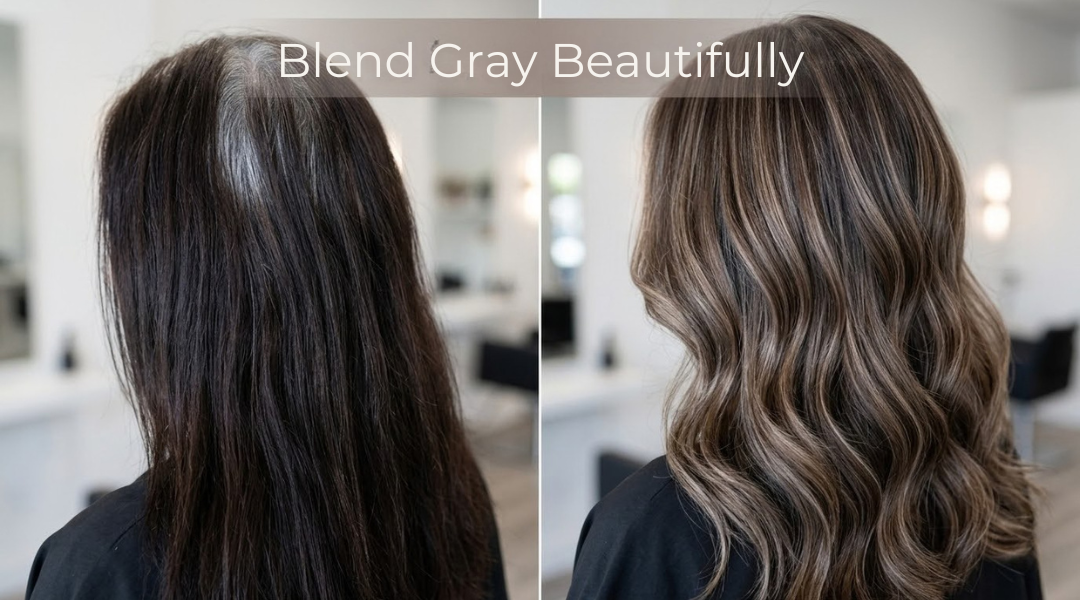
Gray hair often feels more noticeable on brunettes than on lighter hair colors. The contrast between deep brown strands and bright silver roots can appear quickly, sometimes within only a few weeks of regrowth. Many people respond by applying darker permanent color, hoping to eliminate the contrast entirely. In practice, that approach often creates a cycle of frequent root touch-ups and visible demarcation lines.
Professional colorists now approach gray hair differently. Instead of masking silver strands completely, modern techniques blend them into the overall color pattern. According to guidance from the American Academy of Dermatology, gray hair develops when pigment-producing melanocytes gradually leave the hair follicle, making new strands grow without color. Learn more about why hair turns gray.
At Salon 1150, our stylists specialize in dimensional color designed for darker hair. By combining strategic highlights, lowlights, and gloss treatments, we create a balanced finish that allows gray strands to integrate naturally into brunette hair.
Why Gray Hair Appears More Visible on Dark Brunette Hair
The High Contrast Challenge With Dark Hair Color
Gray strands contain no melanin, which makes them appear bright against darker hair. This contrast is the reason even a small amount of silver can stand out strongly in brunette hair.
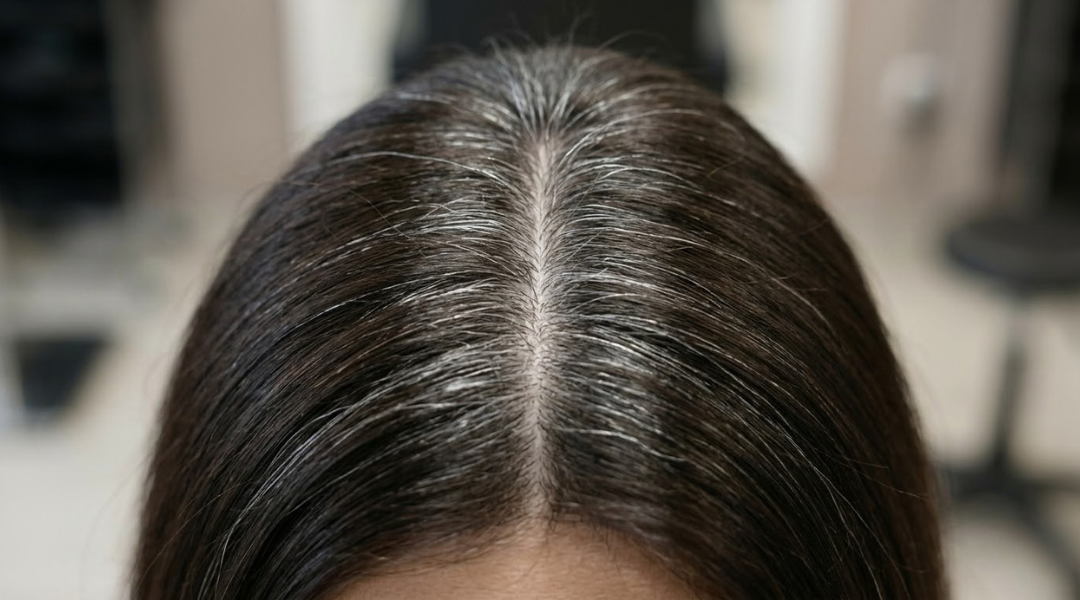
Dermatology research shows that as pigment cells decline, hair texture often changes as well. Gray strands can feel drier because aging follicles produce less sebum. Hydration and gentle color techniques therefore become especially important when blending gray hair.
Why Permanent Dye Often Creates Harsh Regrowth Lines
Permanent color creates a uniform shade across the entire hair shaft. While that temporarily hides gray roots, the regrowth line becomes obvious as new hair grows.
Many stylists caution against relying on solid permanent coverage. Repeated root touch-ups can darken mid-lengths over time and make future color correction more difficult.
Professional Color Techniques That Hide Gray Hair for Brunettes
Balayage and Babylights for Subtle Gray Blending
Balayage allows stylists to hand-paint highlights through the hair, creating natural brightness that integrates gray strands into the overall color pattern. Babylights are finer highlights placed near the hairline and crown.
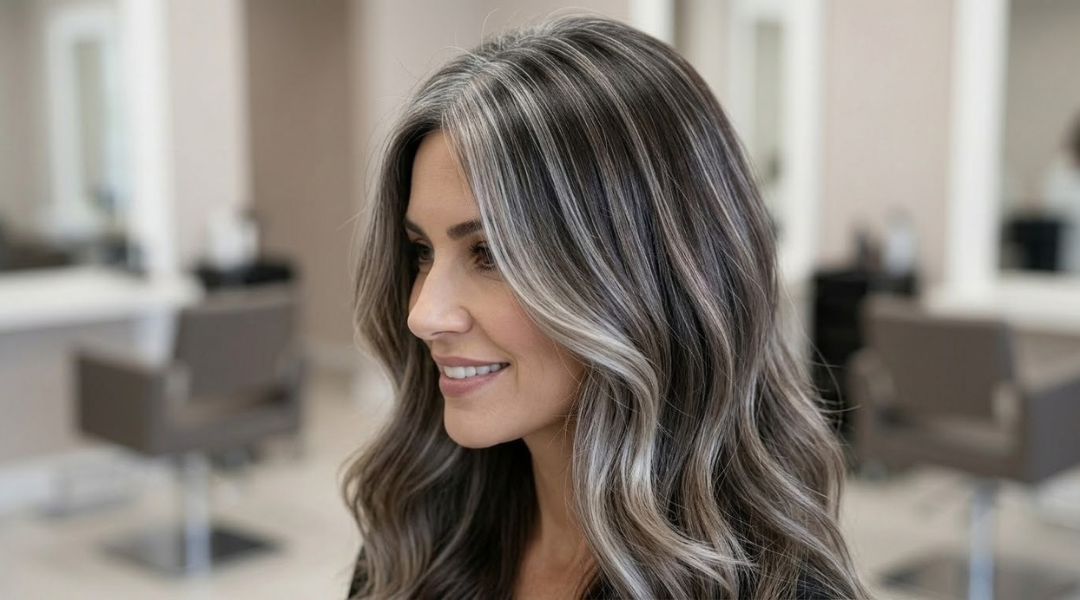
Celebrity colorist Tracey Cunningham often recommends subtle tonal highlights when blending gray hair in brunettes. She explains that integrating cool ash tones allows silver strands to blend naturally with darker bases.
Foilyage for Controlled Lift in Dark Hair
Foilyage combines balayage with foil processing. The foil traps heat during the lightening process, allowing stylists to lift dark hair in a controlled way.
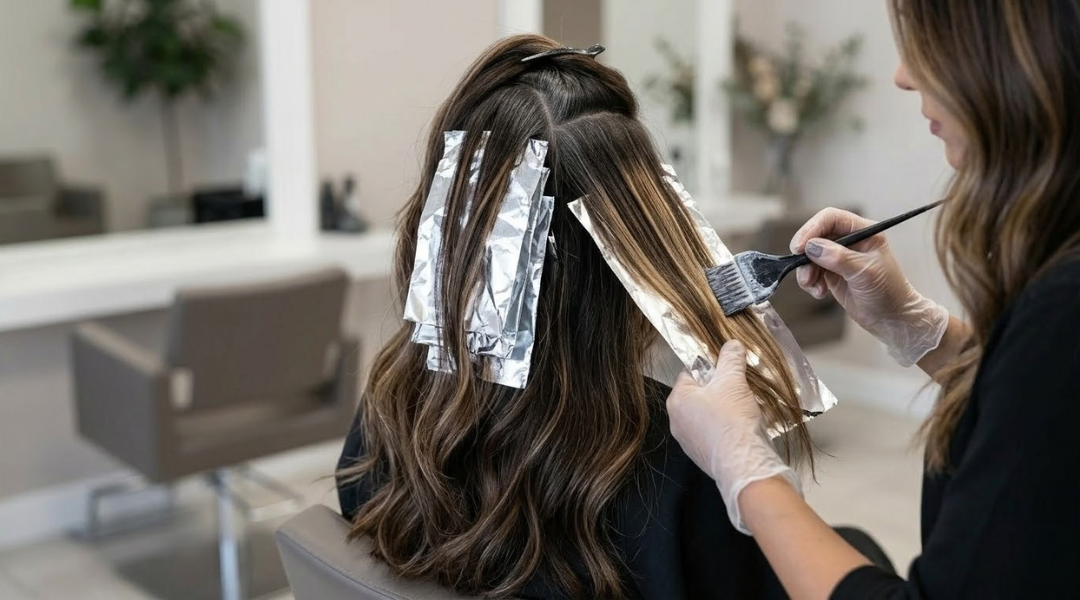
Professional color brands such as Wella emphasize the importance of balancing undertones when working with darker hair. Warm brunette tones paired with golden highlights can help maintain a natural complexion balance. Read Wella’s guidance on choosing hair colors for gray hair.
Root Smudge, Shadow Root, and Root Melt Explained
Root blending techniques help soften the visual line between new growth and colored hair.
- Root smudge gently blurs the line between highlights and roots.
- Shadow root adds subtle depth near the scalp.
- Root melt blends root color gradually into the mid-lengths.
These techniques create a gradient rather than a solid color block, which makes regrowth far less noticeable.
Demi Gloss Treatments for Early Gray Hair
When gray hair first appears, a demi-permanent gloss often provides a balanced solution. Unlike permanent color, a gloss deposits tone without fully altering the natural base.
Professional educators from Davines frequently recommend gloss treatments for early gray hair because they add shine while softening the appearance of silver strands. Read the Davines explanation of demi-gloss treatments.
Why Many Clients Prefer Gray Blending Instead of Full Coverage
Lower Maintenance Than Traditional Root Coloring
Full coverage color often requires touch-ups every three to four weeks because new gray roots contrast sharply with darker dyed hair. Dimensional color grows out gradually, allowing clients to extend the time between appointments.
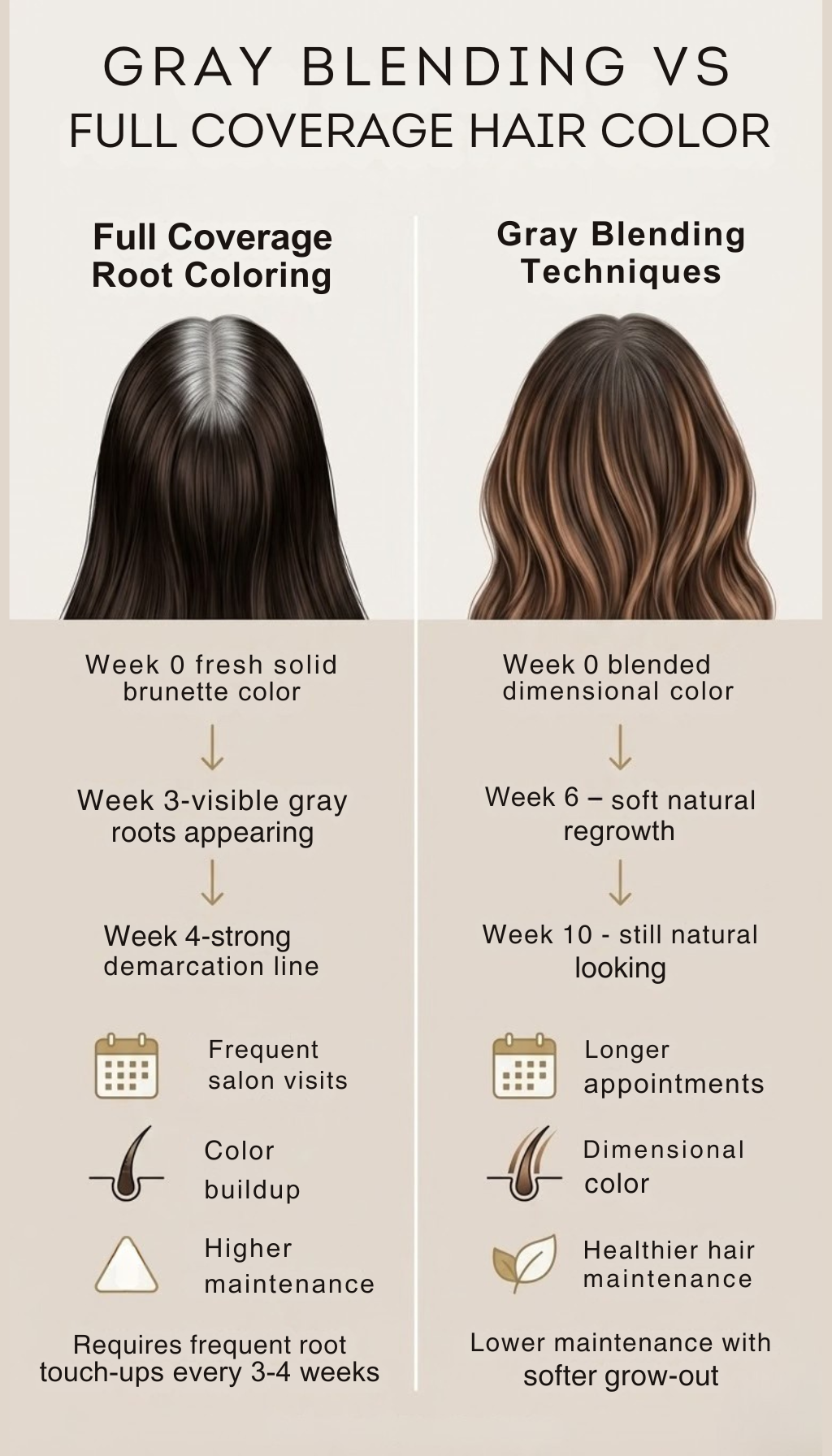
How Blended Color Protects Long Term Hair Health
Repeated permanent coloring can weaken hair over time, particularly when color overlaps previous applications. Dimensional techniques reduce this buildup and maintain healthier strands.
How Gray Blending Works During Your Salon Appointment
Consultation and Color Mapping Based on Gray Percentage
Every gray blending service begins with a consultation. Stylists evaluate the percentage of gray hair and its placement to determine the most effective technique.
Placement of Highlights and Lowlights for Balance
Highlights brighten selected strands to integrate silver hair into the overall color pattern. Lowlights restore depth and richness to the brunette base.
Gloss and Toner Finishing for Seamless Dimension
A gloss or toner refines the final tone and enhances shine, ensuring each color blends smoothly with the surrounding hair.
Choosing the Right Gray Blending Strategy for Your Hair
| Gray Percentage | Recommended Technique | Maintenance |
|---|---|---|
| 5–20% | Demi-gloss or gray veiling | 4–6 weeks |
| 20–50% | Highlights with root smudge | 6–8 weeks |
| 50–70% | Foilyage with lowlights | 8–10 weeks |
| 70%+ | Dimensional lowlights and blending | 8–12 weeks |
How to Maintain Gray Blending Between Salon Visits
Temporary Root Coverage Products That Protect Color
Temporary root powders and sprays can conceal visible gray strands between appointments without interfering with professional color services.
Beauty editors frequently recommend temporary coverage products because they protect the integrity of salon highlights. See recommended root touch-up products from Cosmopolitan.
Purple and Silver Conditioners for Tone Control
Purple or silver conditioners help neutralize yellow tones that may develop in gray or highlighted strands, keeping the overall color balanced.
Frequently Asked Questions About Hiding Gray Hair for Brunettes
Can highlights really hide gray hair on brunettes
Yes. Fine highlights break up the contrast between dark hair and silver strands, allowing gray hair to blend naturally into surrounding tones.
What color works best for gray hair on dark hair
Warm brunette tones combined with soft highlights often create the most balanced appearance.
Is gray blending lower maintenance than full color
Yes. Blended color grows out gradually, which reduces the need for frequent root touch-ups.
How often should brunettes refresh gray blending
Most clients refresh their color every six to ten weeks depending on hair growth and technique used.
Expert Gray Blending for Brunettes at Salon 1150
Gray hair does not require a single solution. The most successful results come from techniques tailored to your natural color, hair texture, and lifestyle.
At Salon 1150, our stylists specialize in dimensional color strategies designed for brunettes. Through consultation and precise color placement, we create personalized plans that enhance natural hair while softening the appearance of gray.