When clients ask how long a manicure lasts, most answers are misleading. “Two to three weeks” is the industry default, but it ignores nail biology, prep quality, lifestyle, and product mismatch. That’s why your gel lasted five weeks, while your friend’s chipped in six days.
This guide explains what actually determines manicure longevity. Not marketing claims. Real wear time. You’ll learn what to expect from gel, acrylic, builder gel, and press-on nails, and how to choose the right option for your lifestyle.
What Determines How Long a Manicure Lasts?
Longevity isn’t about the product alone. It’s about compatibility.
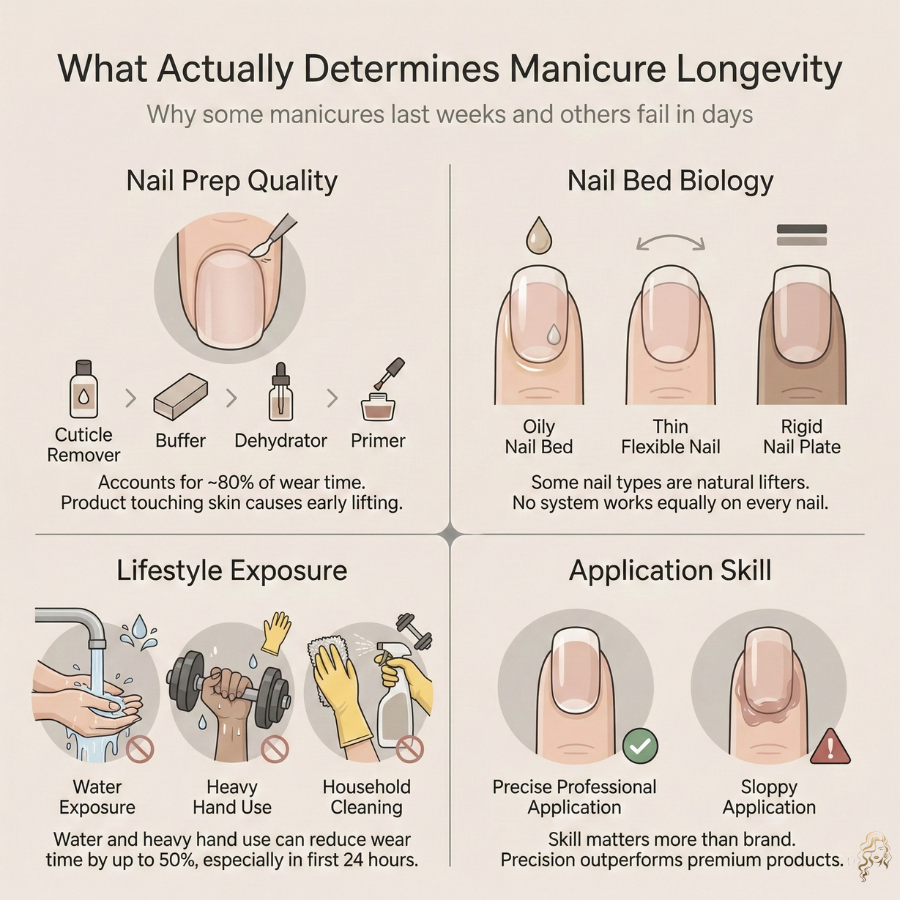
Four factors decide whether a manicure lasts days or weeks.
Nail prep quality
Professional prep is responsible for over 80 percent of wear time. This includes full cuticle removal, proper buffing, dehydration, and correct priming. When product touches skin or cuticle, early lifting is almost guaranteed.
If nails have already been weakened by improper removal or over-filing, no amount of prep will fully compensate. In those cases, learning how to repair damaged nails after acrylics and gel is essential before applying any long-wear service again.
Nail bed biology
Some nail beds are oily. Some are thin and flexible. Others are rigid. No product works equally on every nail type, and some clients are natural “lifters” regardless of technique.
Lifestyle exposure
Water is the biggest enemy of longevity. Frequent dishwashing, gym use, swimming, or heavy hand use can cut wear time in half, especially during the first 24 hours.
Application skill
Professional application matters more than brand prestige. A skilled technician using mid-tier products will outperform premium products applied poorly.
Gel Polish: Real-World Longevity
Gel polish is marketed as lasting two to three weeks. In practice, results vary widely.
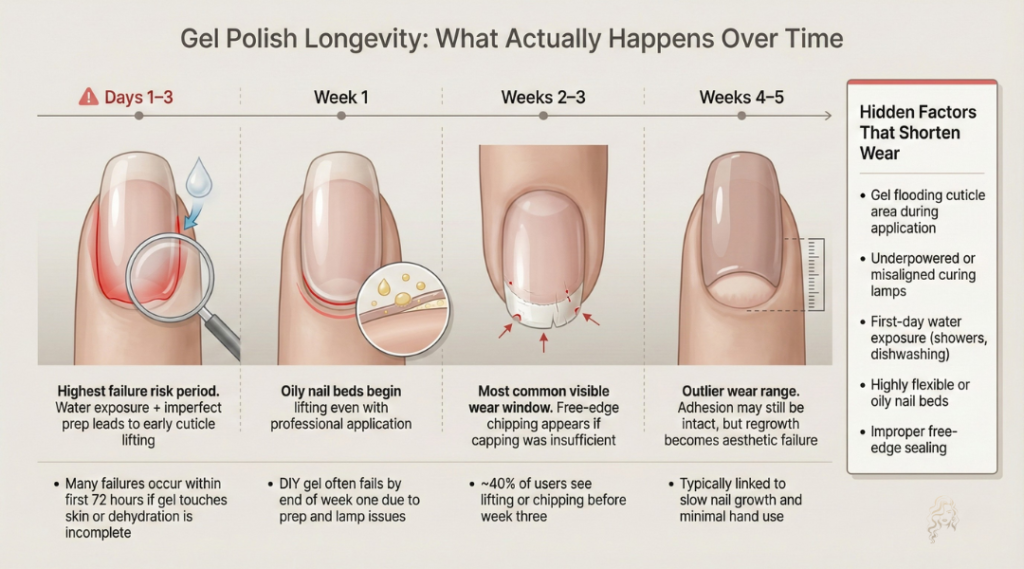
What you can realistically expect
Most professionally applied gel manicures last three to four weeks before visible regrowth or edge wear appears. Around 40 percent of clients see lifting or chipping before week three. DIY gel typically fails within one week.
Five-week wear does happen, but it’s uncommon and usually tied to slow nail growth or minimal hand use.
Why gel fails early
The most common failure is cuticle lifting. This happens when gel touches skin or when nails weren’t fully dehydrated. Water enters the gap, the nail expands and contracts, and adhesion breaks.
Free-edge chipping is the second issue. It’s often caused by poor capping or gel shrinkage during curing.
Who gel works best for
Gel is ideal if you want flexibility, lower trauma risk, and consistent wear. It’s also safer than acrylics for active hands because it flexes with the nail instead of snapping.
Acrylic Nails: Strength With Tradeoffs
Acrylics are known for strength, but that strength comes with risks.
Realistic wear time
With professional application, acrylics typically last two to four weeks before needing a fill. Some clients with slow growth reach five or six weeks, but this reflects regrowth tolerance, not adhesion.
The real risk
Acrylics don’t chip easily, but they fail traumatically. When impacted, the rigid structure can break the natural nail underneath. This is where most acrylic damage occurs.
Over-filing during application is another issue. Thinned nail plates can take four to six months to fully recover.
Product quality matters
Professional acrylics use EMA monomer. Budget kits often use MMA, which bonds too aggressively, is painful to remove, and causes severe nail damage.
Who should avoid acrylics
If your nails are thin, bendy, or you use your hands heavily, acrylics increase injury risk. Strength doesn’t always mean durability.
Builder Gel: Structured, Not Indestructible
Builder gel sits between gel polish and acrylic in both strength and flexibility.
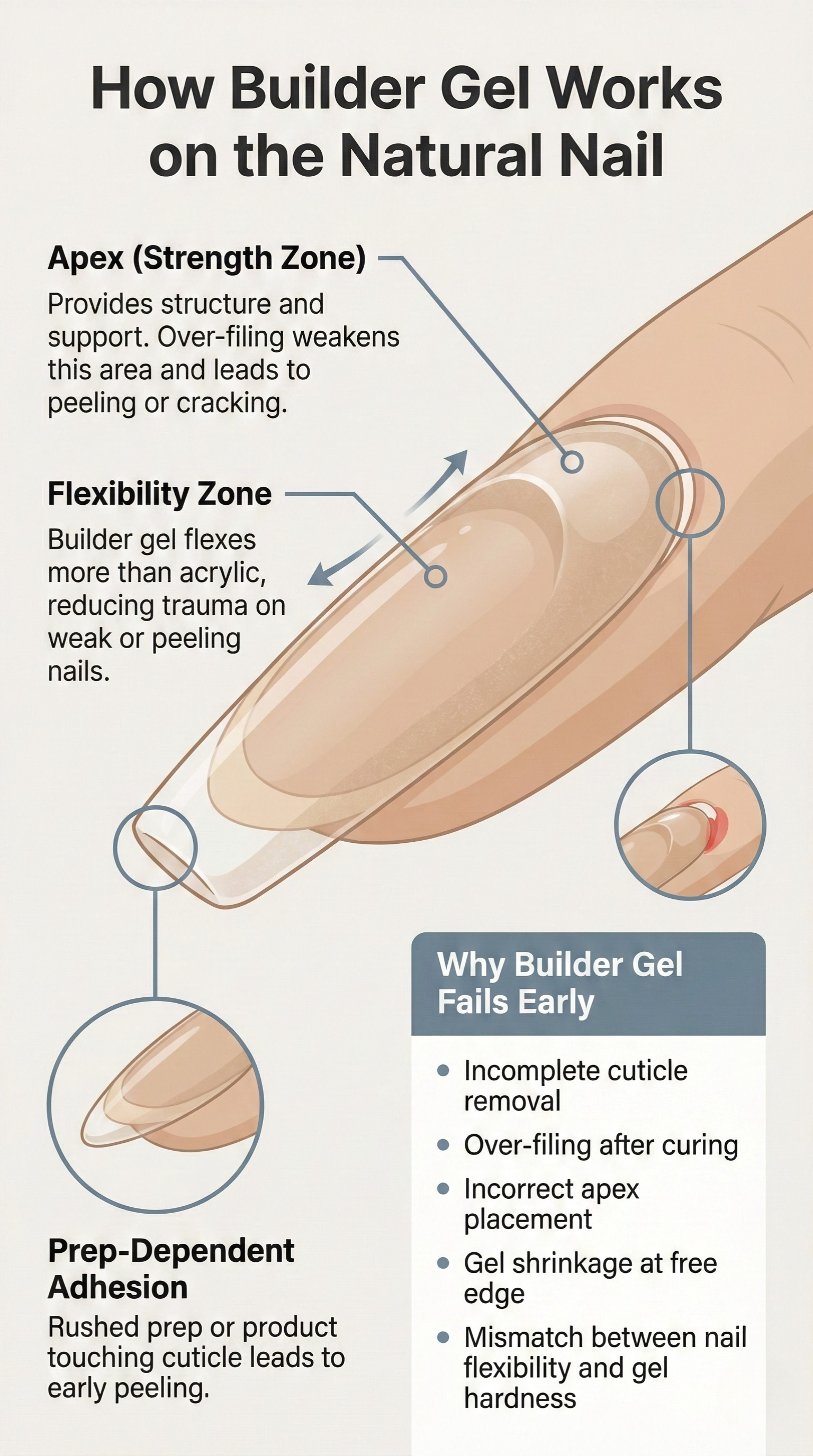
Real-world longevity
Professionally applied builder gel typically lasts three to four weeks. Some clients reach five weeks with minimal water exposure and excellent prep.
Common failures
Builder gel peels when prep is rushed or when the apex is over-filed after curing. It also shrinks slightly during curing, which can cause free-edge lifting if not sealed properly.
When builder gel is the best choice
Builder gel is ideal for clients with weak or peeling nails who want to grow length without the rigidity of acrylic. Matching gel flexibility to nail type is critical.
Press-On Nails: The Most Misunderstood Option
Press-ons are marketed as lasting two weeks. That’s rarely true.
Actual wear time by category
| Type | Typical Wear | Reality |
|---|---|---|
| Drugstore | 5–10 days | Many pop off by day five |
| Premium retail | 10–14 days | Better adhesives, thicker nails |
| Handmade/custom | 10–14 days | Best fit, reusable |
| Tabs only | 3–7 days | Gentle, not durable |
Two-week wear is possible only with intensive daily maintenance. Most clients won’t maintain that level of prep.
Glue vs tabs
Glue lasts longer but is harder to remove. Tabs are safer for natural nails but sacrifice durability. Cost per wear often favors higher-quality press-ons despite higher upfront pricing.
When press-ons make sense
Press-ons are the safest option for nail health. They’re ideal for events, travel, or clients recovering from damage who still want polished nails.
Comparison: Expectation vs Real Life
| Manicure Type | Marketed Claim | Real Expectation |
|---|---|---|
| Gel polish | 2–3 weeks | 3–4 weeks for most |
| Acrylic | 3–4 weeks | 2–4 weeks, trauma risk |
| Builder gel | 4–5 weeks | 3–4 weeks typical |
| Press-ons | 2 weeks | 5–10 days average |
Marketing reflects averages plus outliers. It doesn’t reflect your nail biology.
How to Make Any Manicure Last Longer
A few habits make a measurable difference.
- Avoid water for the first 24 hours
- Wear gloves for dishwashing and cleaning
- Don’t peel or pick lifting edges
- Choose products matched to your nail type
- Prioritize prep over brand names
Longevity starts before the polish goes on.
Frequently Asked Questions
How long do gel nails actually last?
Most professionally applied gel manicures last three to four weeks. Early lifting usually comes from prep issues or heavy water exposure.
Do acrylic nails last longer than gel?
Not always. Acrylics resist chipping but break traumatically and don’t flex, which can shorten wear for active hands.
Are press-on nails damaging?
No, when applied and removed correctly. They’re one of the safest options for nail health.
Why do my nails always lift early?
You may have oily or flexible nail beds. Certain products simply won’t bond well, even with perfect application.
Is DIY gel worth it?
For most people, no. Weekly failures often cost the same monthly as professional gel and cause more damage.
The Bottom Line
There is no manicure that lasts the same for everyone. Prep quality matters more than brand. Nail biology matters more than trends. And strength isn’t the same as durability.
If you want consistent, predictable wear, choose the service that fits your lifestyle and nail type, not the one with the biggest promise.