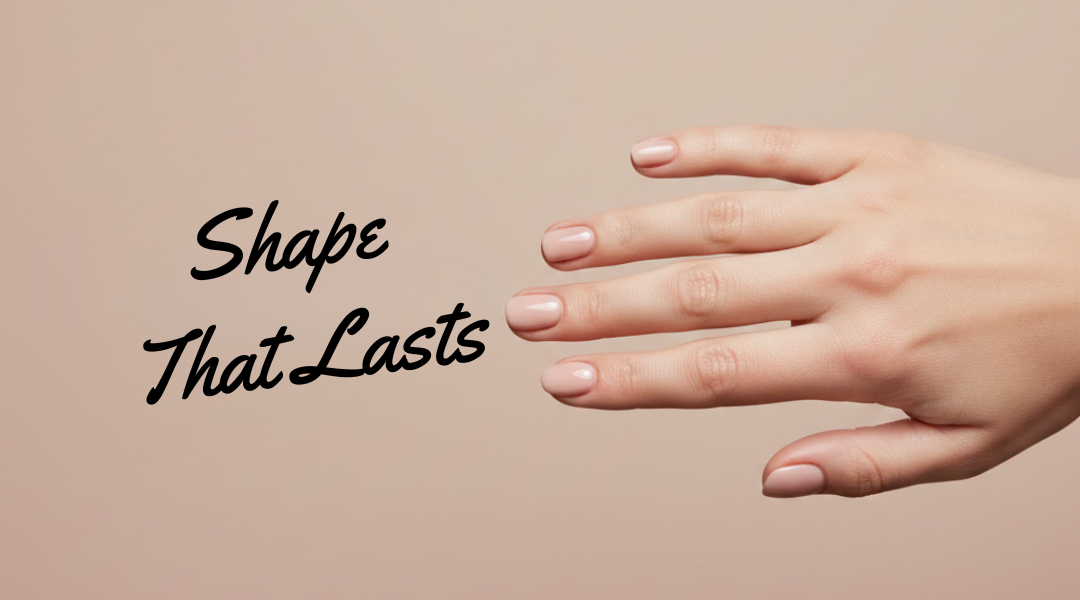
If your manicure chips or breaks within days, the problem might not be weak nails, it could be a mismatch between your nail shape and how you use your hands. At Salon 1150, we specialize in durability focused manicures that account for nail bed width, natural curvature, and lifestyle demands. The best nail shape for long lasting manicure depends on your finger structure and daily activities. A shape that lasts weeks on one client can fail quickly on another, even with identical products. Understanding how shape interacts with anatomy helps you choose options that work with your hands, not against them.
What Makes a Nail Shape Durable
Durability starts with understanding your nail anatomy. Three factors determine how well a shape holds up.
Your Natural Curve Provides Edge Protection
The C-curve is the arch your nail forms from side to side. Deeper curves naturally protect edges by dispersing impact across the curved surface. If you have a pronounced curve, your nails can typically handle more angular shapes like square or almond because the geometry helps deflect force. Flatter nails have less built in protection, impacts concentrate at corners, making breakage more likely. If your nails are relatively flat, rounded shapes tend to perform better.
Nail Bed Proportions Affect Structural Strength
Wider nail beds distribute force across more surface area, but narrowing shapes like almond remove sidewall material, which reduces support. You will face a trade off, tapered shapes create elegant elongation but may chip more often. Narrow nail beds concentrate stress in smaller areas, making wider shapes structurally sounder. If you have wide nail beds and want durability, squoval or short oval preserves strength while still looking polished.
Your Nail’s Natural Thickness Sets Limits
Nail thickness is determined by your nail matrix, the tissue that generates new nail cells. Thicker nails are naturally more resilient, thinner nails are more fragile. This is genetic, and no shape or product can change it. Shape optimization works within your natural limits. If you have naturally thin nails, even the most durable shape will require more careful maintenance than someone with thick nails wearing a less protective shape.
Nail Shapes and Where They Fail
Each shape has characteristic stress points. Heres how they typically perform.
Round: Most Universally Durable
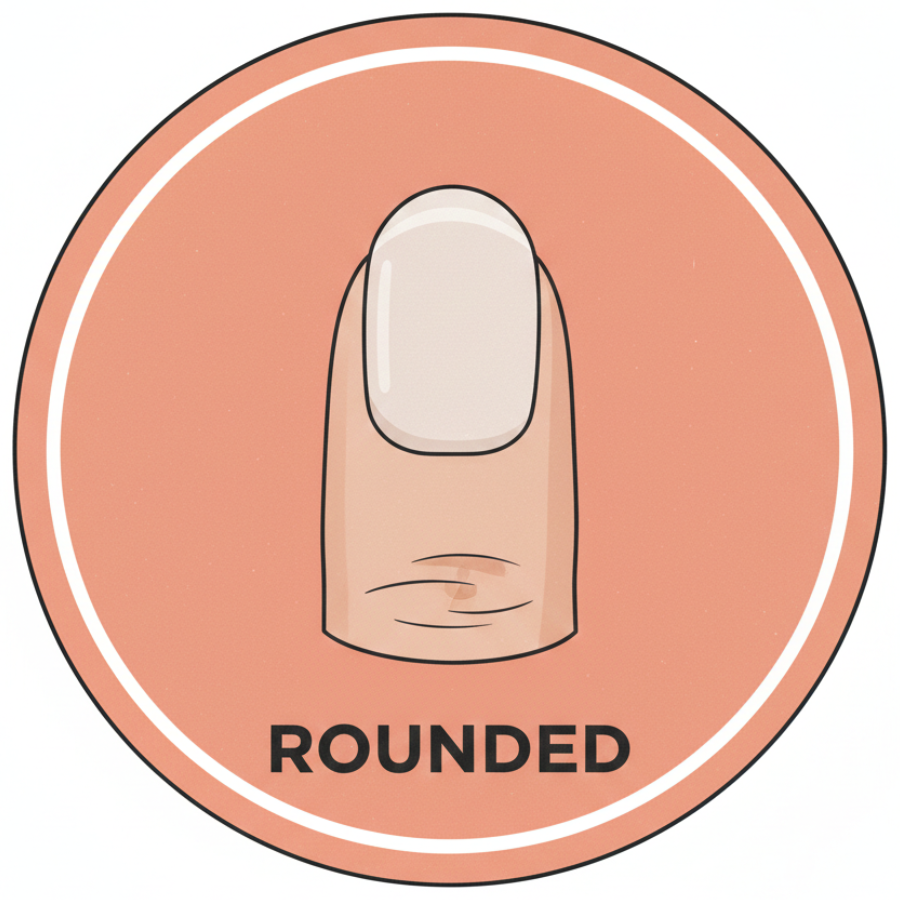
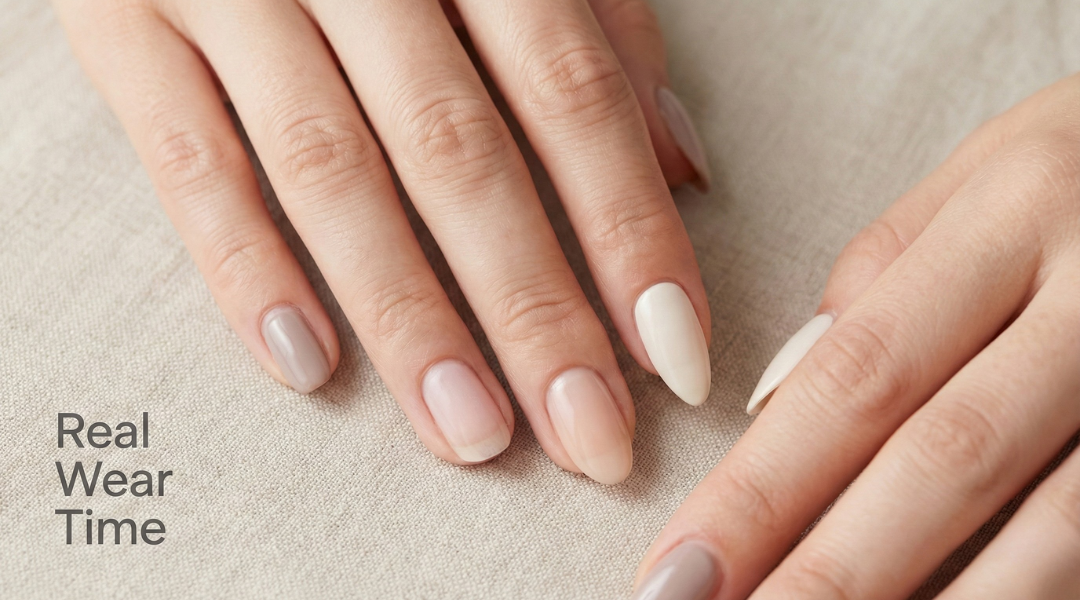
Round nails resist breakage across nearly all lifestyles. They fail mostly through lifting at the free edge, an adhesion issue, not a shape weakness. Because there are no corners to catch or break, round handles repeated impacts well. It works for healthcare workers, typists, manual laborers, and gym goers when properly sealed. The main drawback is aesthetics. Many clients find round too plain, which is why they explore other options despite the durability advantage.
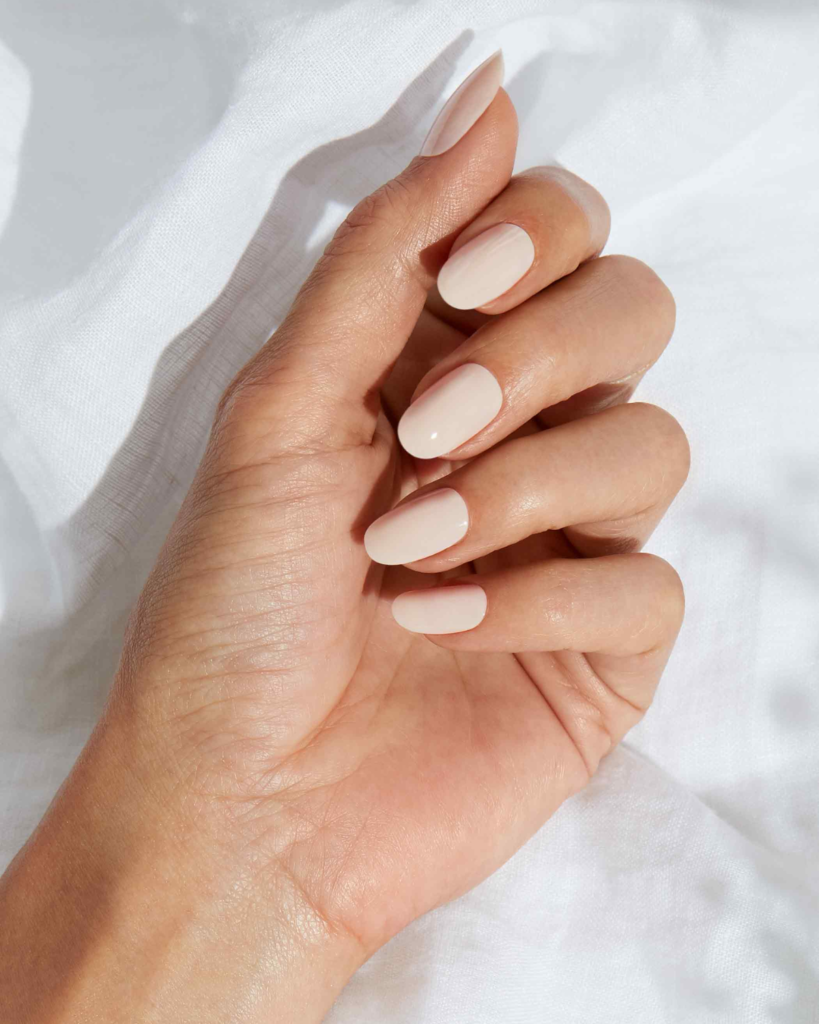
In durability testing, round nails show the lowest failure rates across all nail types. Clients with naturally thin or weak nails typically experience less than fifteen percent breakage within a four week period with round shapes, compared to forty to fifty percent failure with square or almond shapes during the same timeframe. The primary failure mode, lifting at the free edge, occurs after three to four weeks and relates to product adhesion rather than structural weakness.
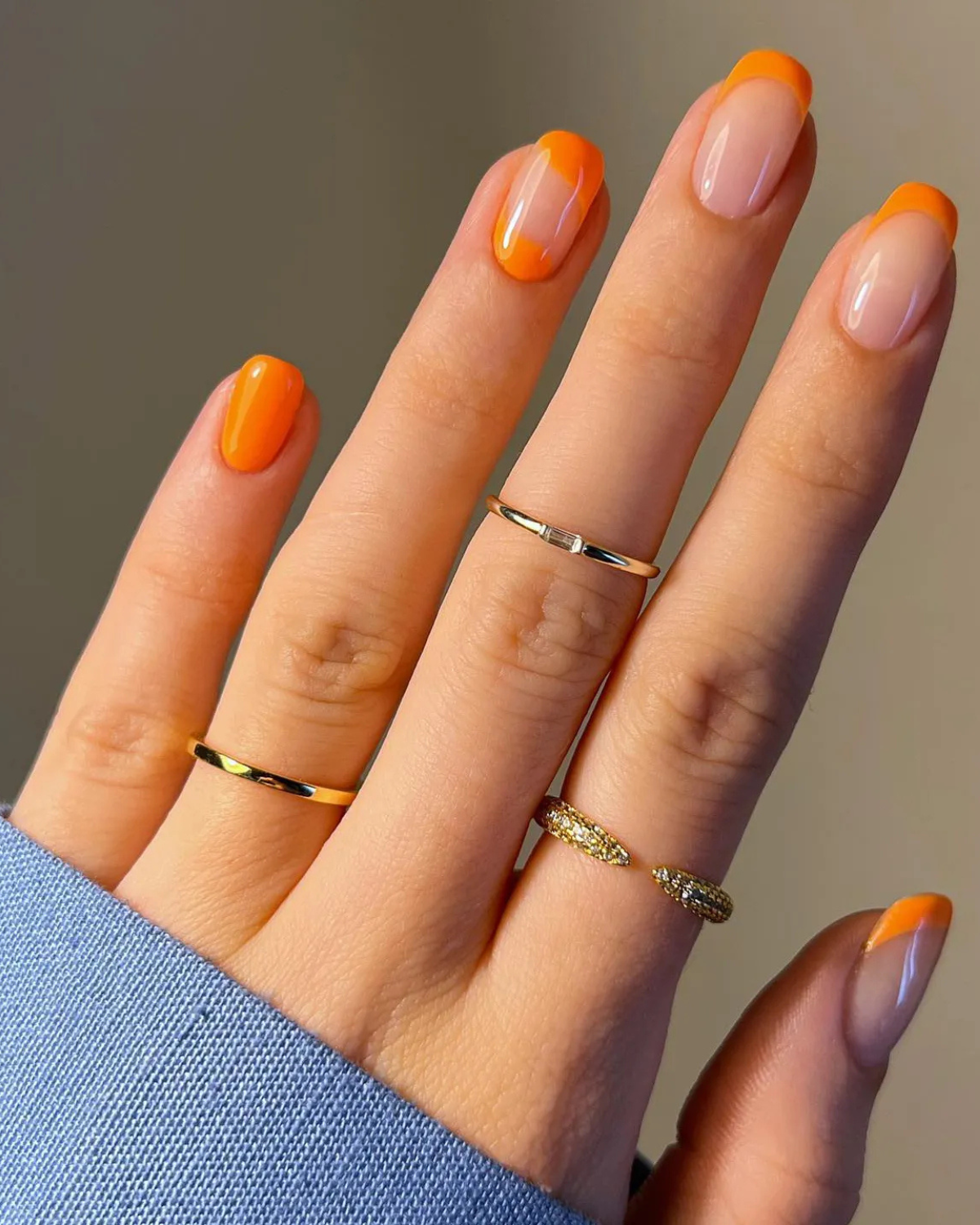
Squoval: Practical Compromise
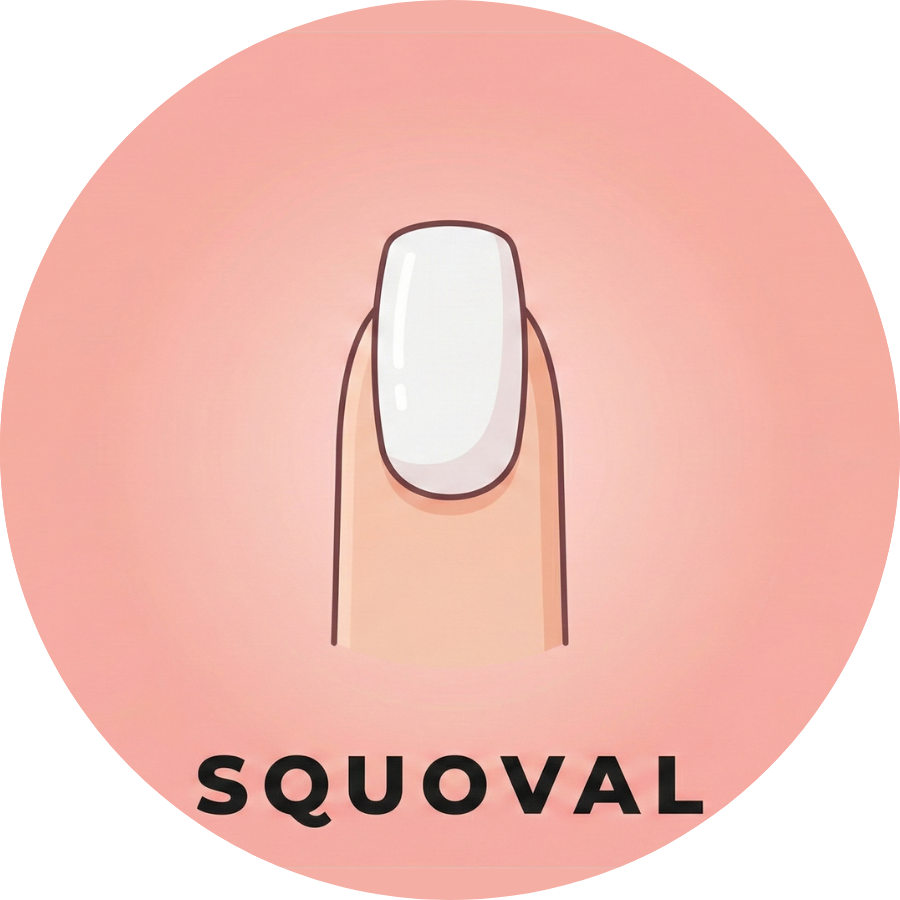
Squoval combines the structure of square with the safety of rounded corners. It maintains full sidewall width while eliminating sharp catching points. This makes it suitable for most lifestyles, typists experience fewer corner impacts than with pure square, active clients benefit from the rounded edges, and professionals appreciate the polished appearance. When squoval does fail, it is usually through lifting rather than breakage. After several weeks of heavy use, corners may soften slightly, but catastrophic breaks are uncommon.
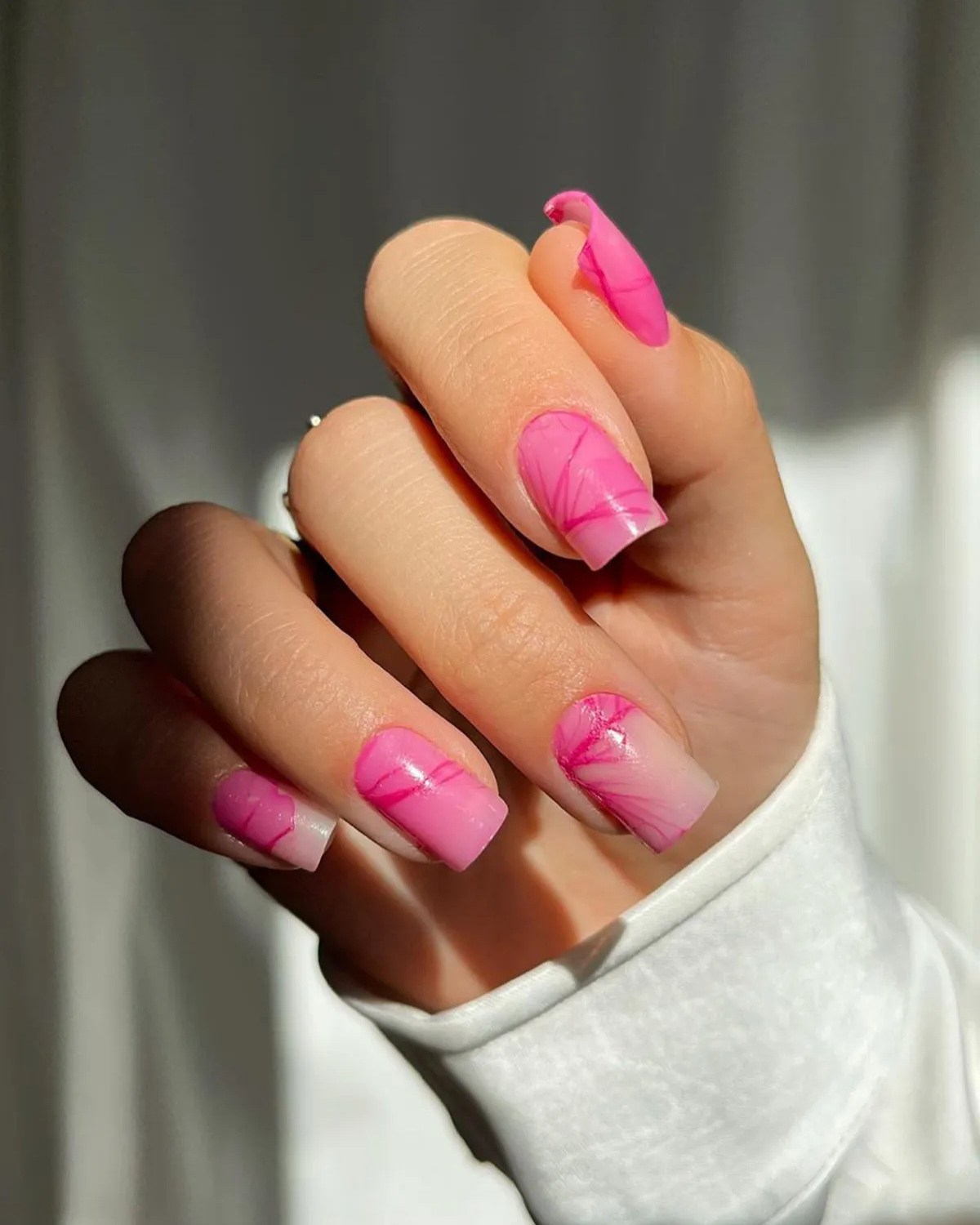
Square: High Maintenance for Active Hands
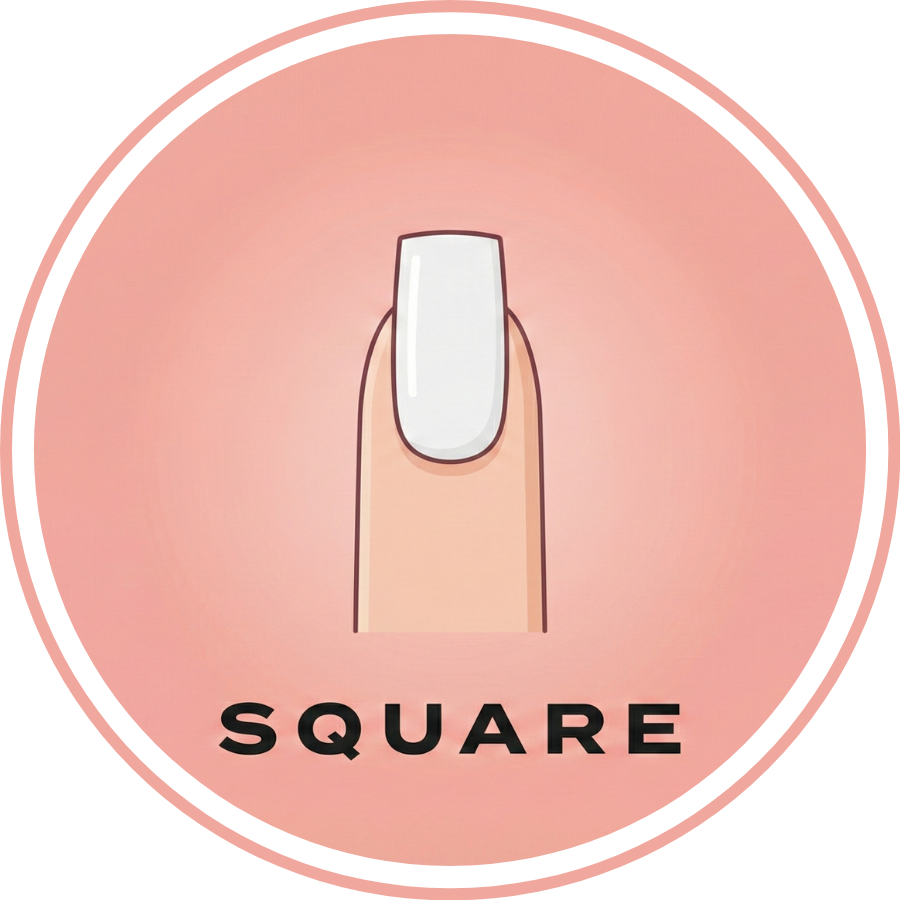
Square nails create right-angle corners that concentrate impact force. Every bump against a keyboard, counter, or tool stresses these corners disproportionately. Over time, micro-fractures accumulate until corners break. If you type frequently, work with your hands, or grip equipment regularly, square corners will catch and chip. They perform better when kept very short or on clients with naturally thick nails and deep curves. For sedentary lifestyles with minimal hand contact, square can last, but it requires favorable anatomy and careful use.
Oval: Length Matters More Than Shape
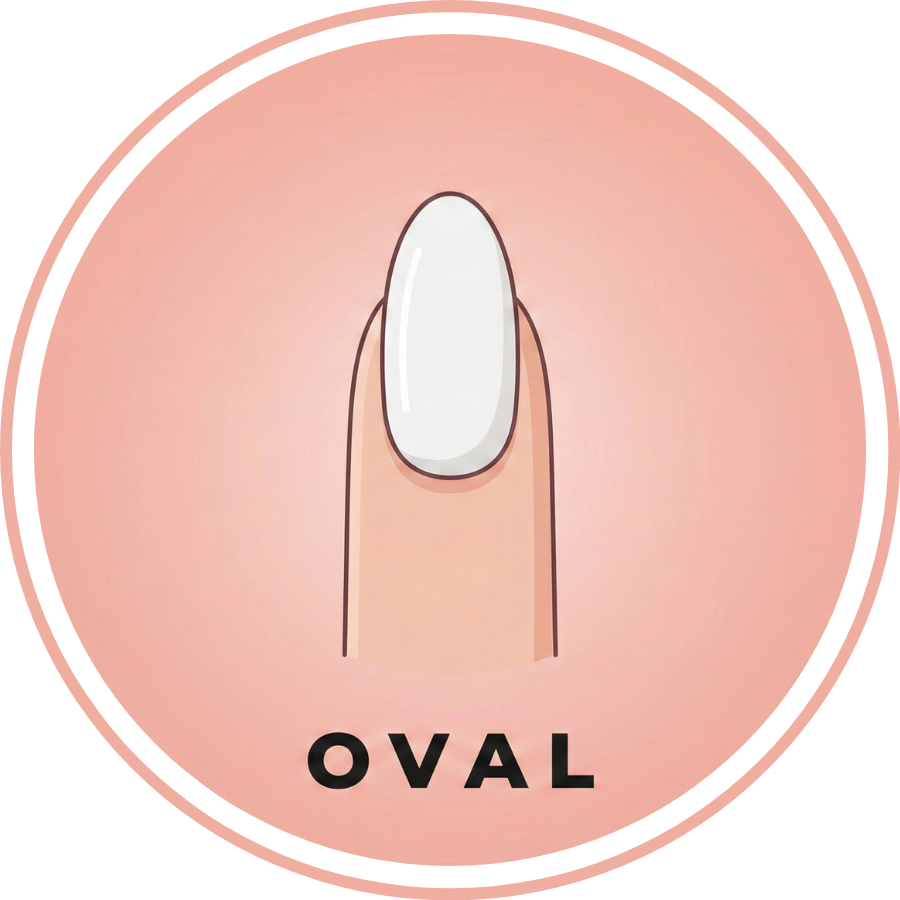
Oval durability depends heavily on length. At moderate length, oval balances elegance with reasonable resilience. As length increases, leverage at the corners creates more stress, leading to faster breakage. If you keep oval relatively short and have decent natural curvature, it holds up well for light to moderate activity. Longer extensions fail more quickly, particularly if you use your hands actively.
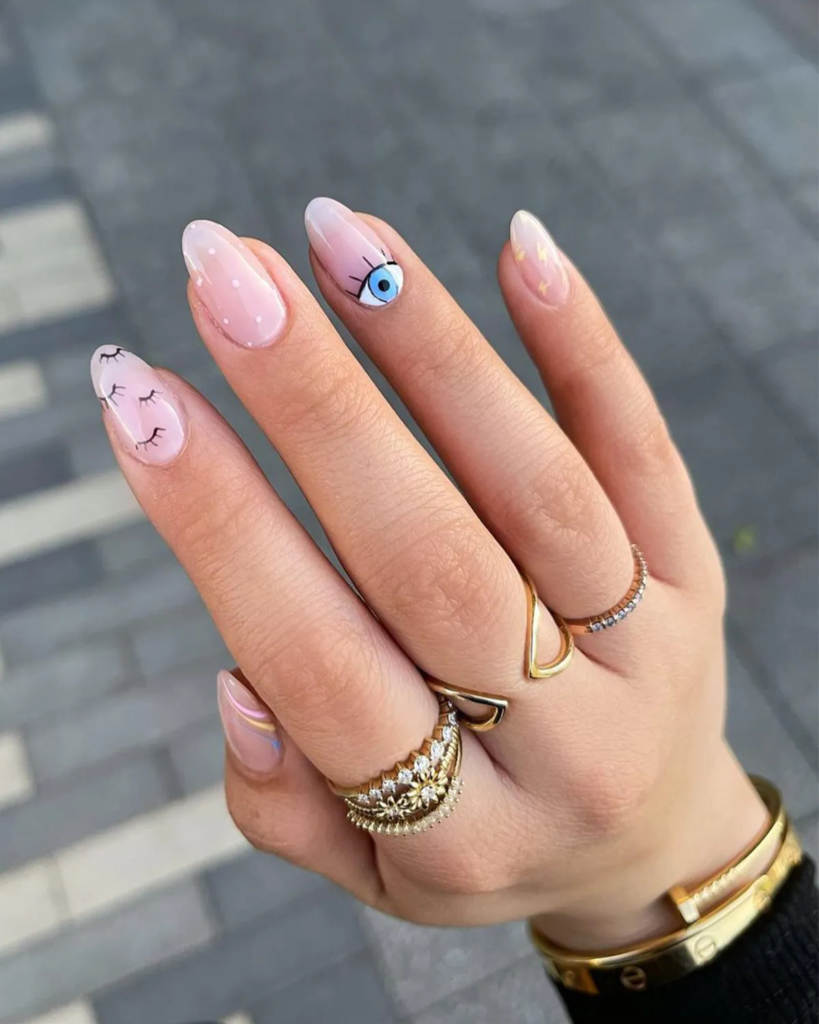
At moderate length, oval shows failure rates of 12-18% within 3-4 weeks for average nails, but this increases to 20-25% when extended beyond 5-6mm of free edge length.
Almond: Beautiful but Higher Maintenance
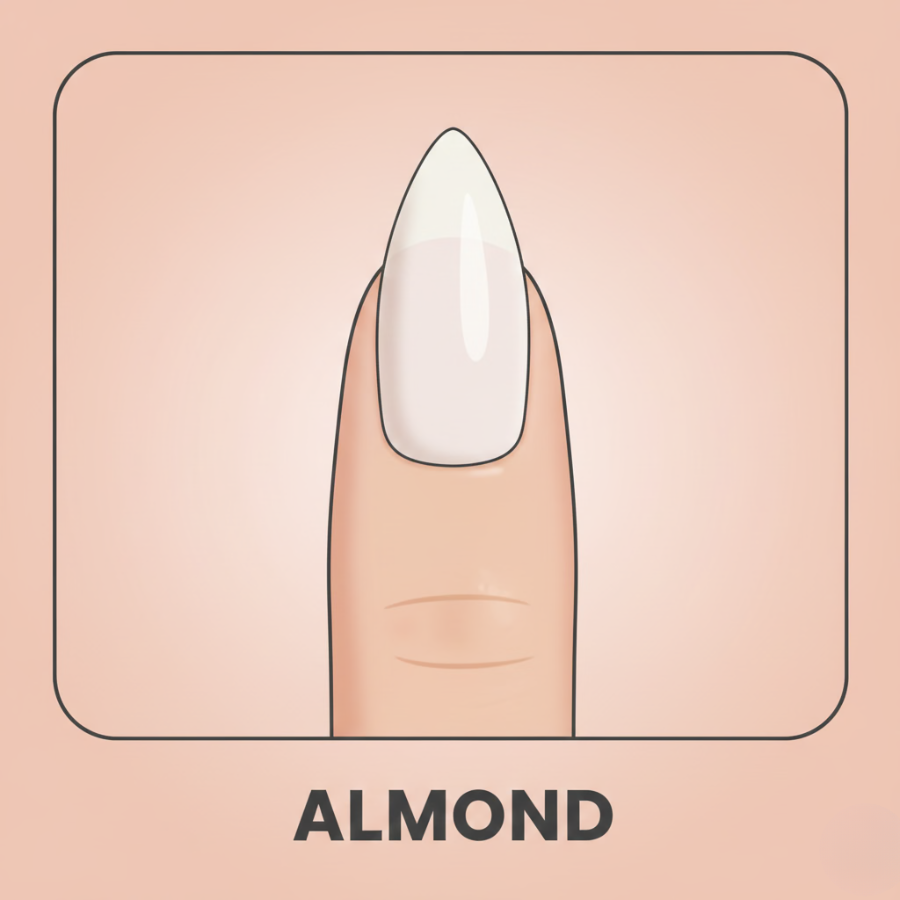
Almond creates elegant elongation, but the tapered geometry removes sidewall material, reducing lateral support. The pointed tip concentrates stress, making it more vulnerable to catching and snapping. If you are active, typing, exercising, working with your hands, an almond will typically require more frequent touch ups than round or squoval. That does not mean you cannot wear it. It means understanding the trade off, almond prioritizes aesthetics and requires accepting shorter wear time or adding gel reinforcement for extra support. For sedentary clients or those willing to maintain it regularly, almond can work well.
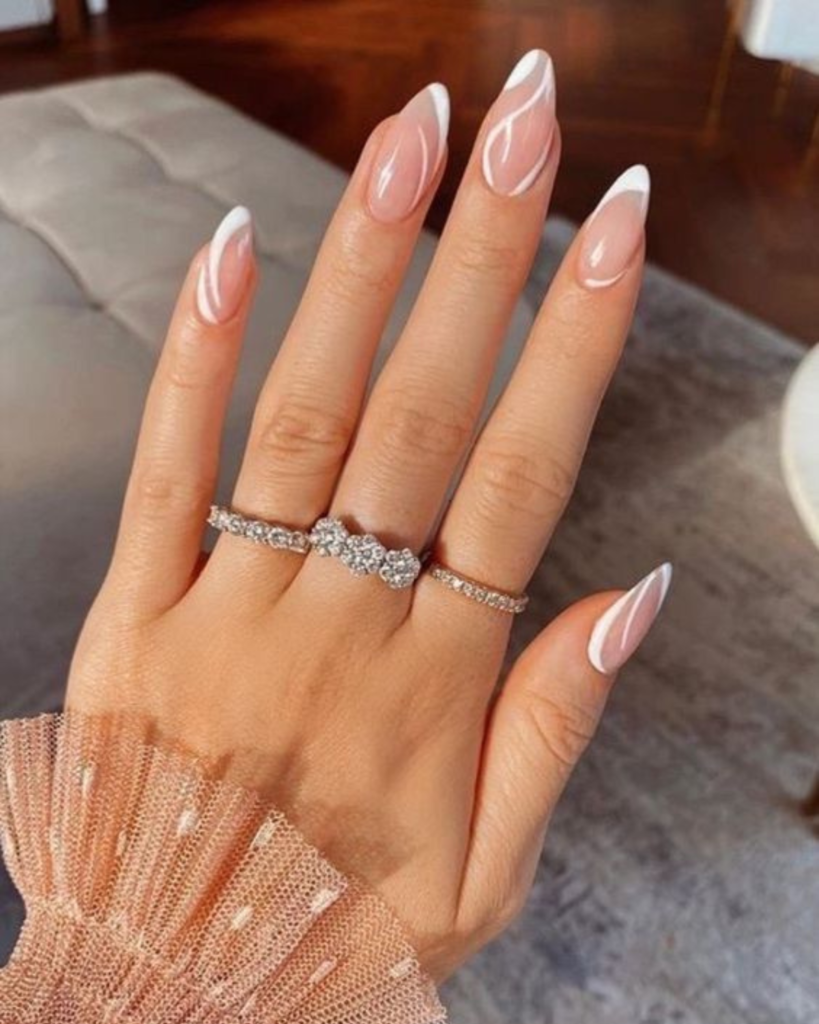
Coffin and Ballerina: Dramatic but Demanding
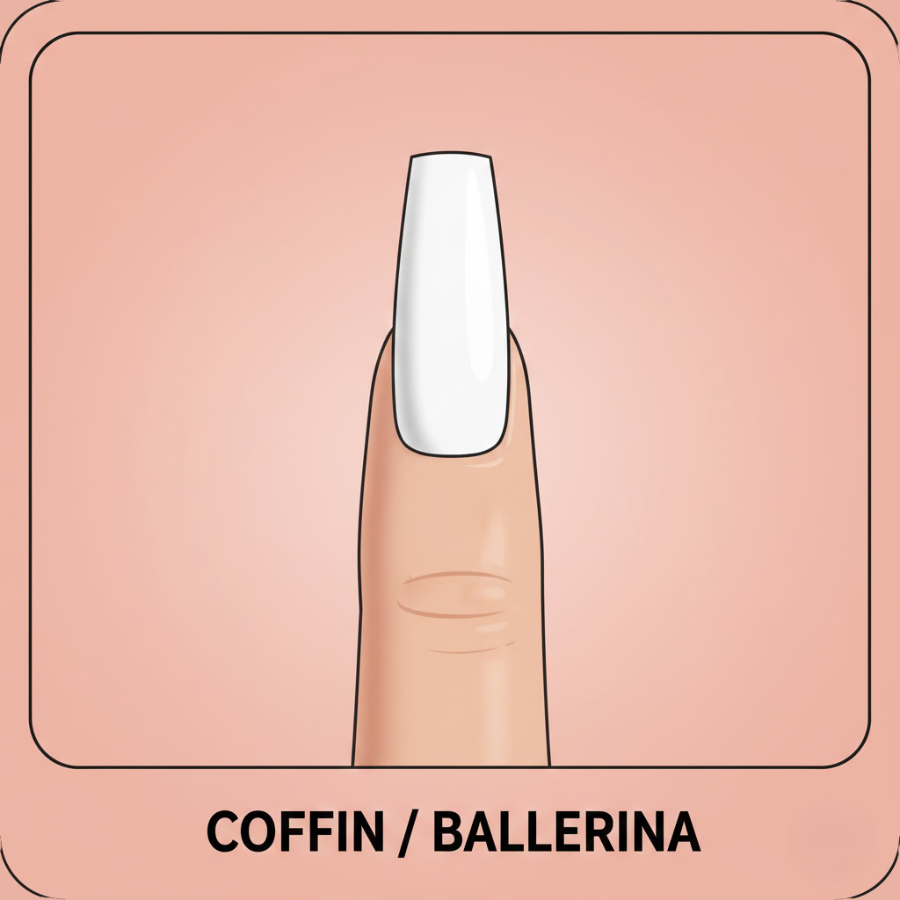
Coffin and ballerina combine tapered sidewalls with a flat, squared off tip. This creates stress concentration at the flat corners while reducing sidewall strength. If you work manually, type heavily, or grip objects frequently, these corners will catch and chip. Maintaining the shape requires regular filing to keep the flat edge crisp, which can further stress already vulnerable corners. These shapes work best when kept relatively short, reinforced with heavy product, or worn by clients with sedentary routines. They are high impact aesthetically but require commitment to upkeep.
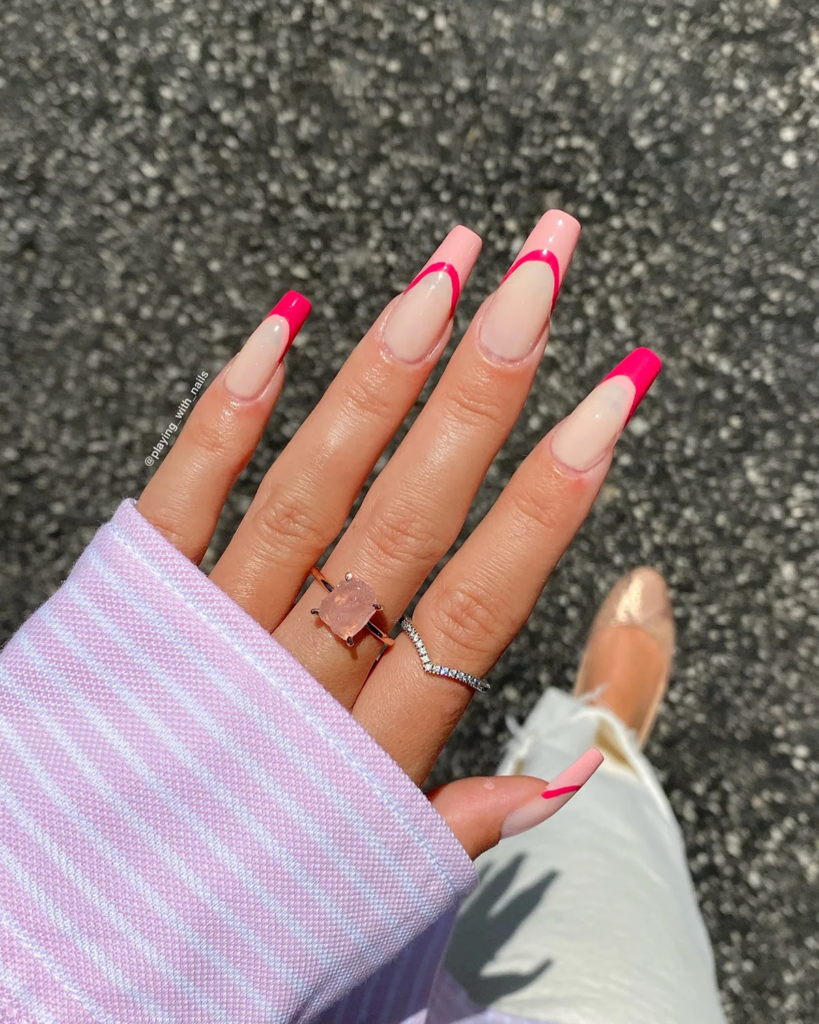
Coffin and ballerina shapes show the highest failure rates of any shape: 50-60% for thin nails within 2-3 weeks, 35-45% for average nails within the same period, and 20-25% even for strong nails within 3-4 weeks.
Durability by Finger Type and Lifestyle
The same shape performs differently depending on how you use your hands. This table maps common activities to shape recommendations.
| Lifestyle | Primary Stress | Best Shape | Challenging Shape | Why |
|---|---|---|---|---|
| Typists/Office Workers | Repetitive corner-to-key contact | Round, Squoval, Short Oval | Almond, Coffin, Long Square | Rounded edges dont catch keys; pointed or flat corners catch constantly |
| Nurses/Healthcare | Glove friction, patient contact | Round, Short Squoval | Almond, Coffin | Short rounded shapes meet regulations and resist glove snagging |
| Manual Labor | Tools, surfaces, water exposure | Round, Short Squoval | Square, Coffin, Almond | Sharp corners snag on equipment; rounded edges deflect contact |
| Gym-Goers | Gripping pressure on sidewalls | Round, Squoval | Almond, Coffin | Tapered shapes flex under gripping force; full-width shapes maintain integrity |
| Service Industry | Constant contact, water, impacts | Round, Squoval | Almond, Coffin, Square | Combined stressors make forgiving shapes essential |
| Sedentary/Office-Only | Minimal hand stress | Most shapes work | Most shapes work | Low activity allows more aesthetic flexibility |
Understanding how your daily activities stress your nails helps you make informed shape choices. If you’re unsure which category fits your routine, consider where your hands make the most contact throughout the day.
Special Cases and Common Misconceptions
Nail Shape for Wide Nail Beds
If you have wide nail beds, narrowing shapes like almond and coffin create beautiful elongation but remove sidewall material. This creates a genuine aesthetic-durability trade-off. Tapered shapes look elegant but may chip more frequently.
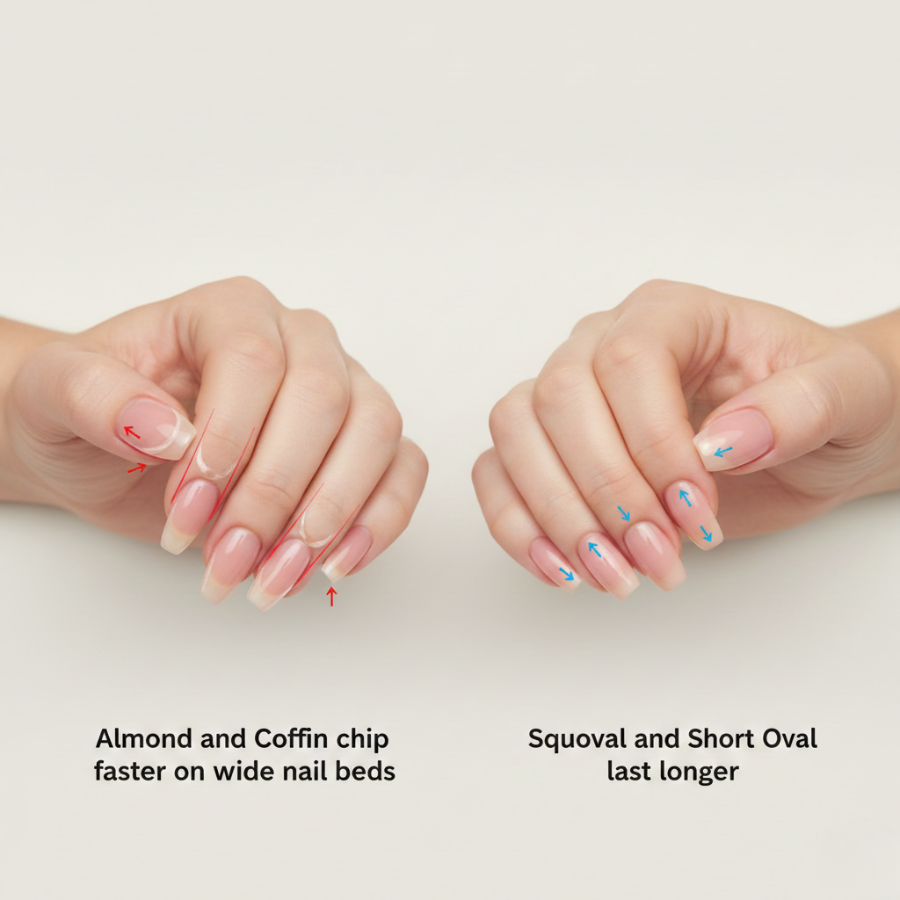
For maximum durability, squoval or short oval maintains structural integrity while still looking polished. If you prioritize the almond or coffin aesthetic, gel or acrylic reinforcement helps support the tapered geometry.
Nail Shape for Thin Weak Nails
Naturally thin nails benefit most from shapes that eliminate stress points. Round provides the highest durability because there are no corners to break. Squoval offers a close second with minimal corner risk.
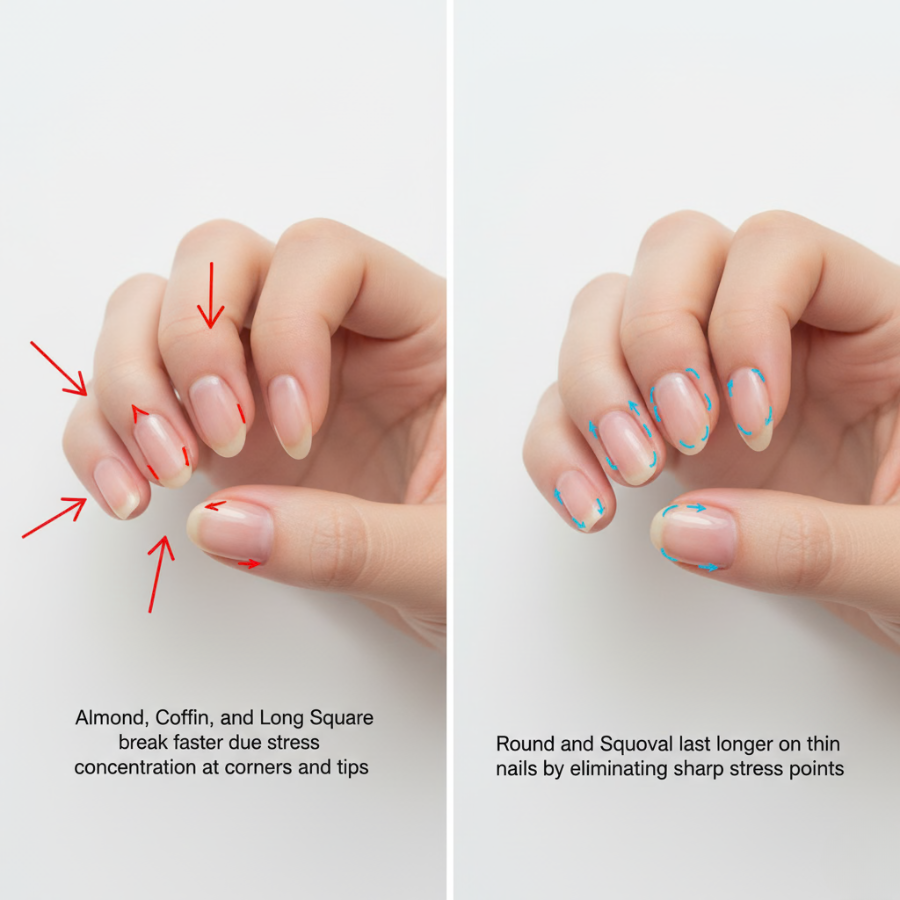
Shapes that remove material or create sharp angles, like almond, coffin, and long square, are harder for thin nails to support structurally. If you have thin weak nails, the best nail shape for long lasting manicure is typically round or squoval. You can still wear other shapes, but expect more frequent maintenance.
The Nail Shape That Doesn’t Chip
Chipping occurs when product sealing at the free edge fails. Round and squoval reduce chipping risk not because their geometry prevents product failure, but because rounded edges catch less frequently on surfaces.
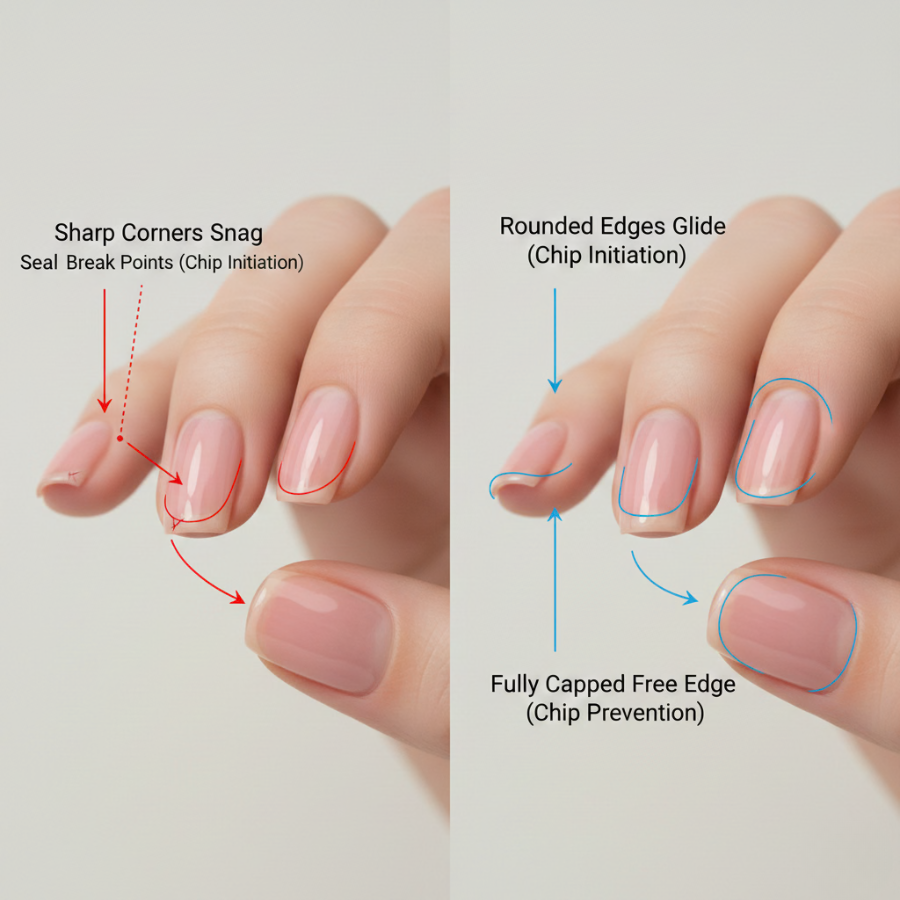
Sharp corners on square, almond, and coffin shapes catch more often, breaking the seal and initiating chips. The nail shape that does not chip combines protective geometry with proper application, specifically, capping the free edge with every coat during application.
Best Nail Shape for Nurses
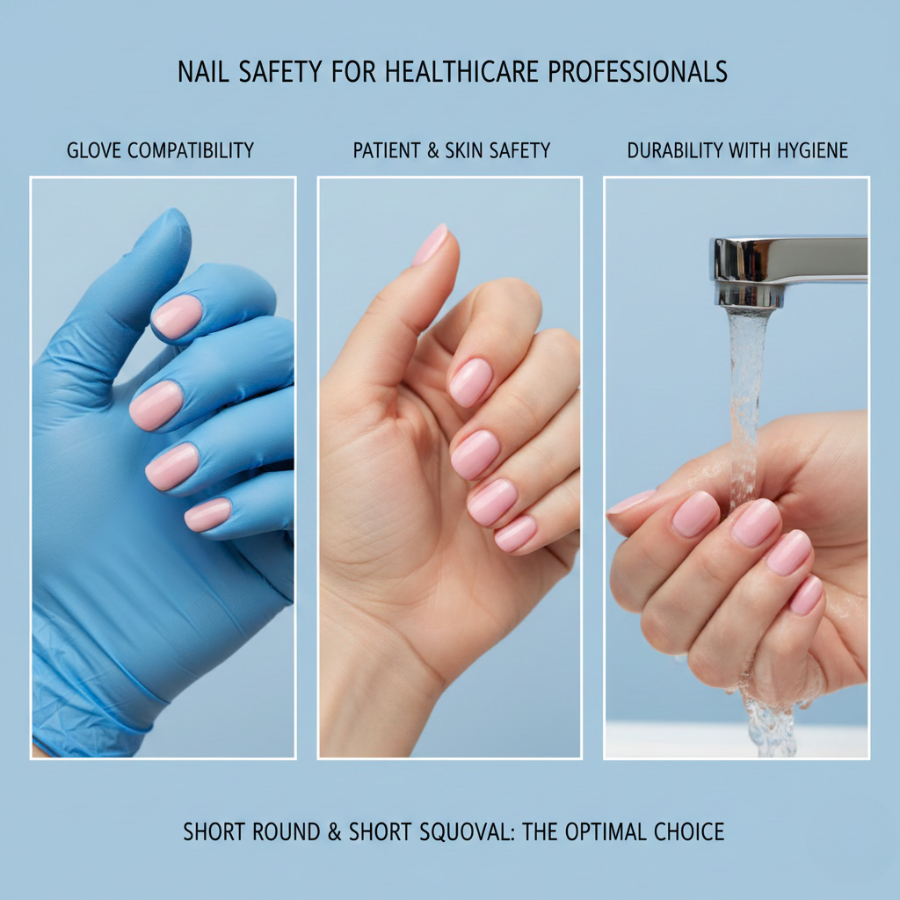
Healthcare facilities typically require short nails to prevent glove tears and patient scratches. The best nail shape for nurses prioritizes rounded edges for safety and durability. Round and short squoval eliminate sharp points that could snag on gloves or patient skin. These shapes also resist breakage from frequent handwashing and glove changes. For nurses seeking professional manicures that comply with regulations and last through demanding shifts, short round or squoval provides the most practical solution.
Frequently Asked Questions
Why do my nails break more with almond shape than square?
Almond shape tapers the sidewalls, removing structural material and concentrating stress at a narrow point that breaks easily under impact. Square maintains full sidewall width, distributing force more evenly, though corners still catch on keyboards and objects if you use your hands actively. If you type frequently or work manually, square will outlast almond because the wider base absorbs stress better than a tapering tip.
What’s the most durable nail shape for typing all day?
Round or short squoval is most durable for typing because rounded edges do not catch on keys, preventing the repetitive corner impacts that cause breakage with square, almond, or coffin shapes. Each keystroke with sharp-cornered shapes concentrates force at the edge, creating micro-fractures that accumulate over days. Keeping length short minimizes leverage and impact stress, extending manicure life by two to three weeks compared to longer shapes.
Can I wear coffin nails if I have naturally thin nails?
Coffin nails require gel or acrylic reinforcement on thin natural nails because the tapered sidewalls and squared corners concentrate stress that thin nail plates cannot support alone. Without reinforcement, corners will chip within one to two weeks. Even with reinforcement, coffin demands more frequent touch-ups than round or squoval, which distribute stress across wider geometry.
How does nail bed width affect which shapes will last?
Wide nail beds distribute force across more surface area, but tapered shapes like almond and coffin remove proportionally more structural material, making them chip faster than on narrow beds. Squoval or short oval on wide nails preserves the full sidewall width while still delivering a refined look, lasting two to three weeks longer than tapered alternatives. If you prefer narrowing shapes for aesthetics, expect increased maintenance and corner repairs.
Does my nail’s natural curve determine which shapes I can wear?
Your C-curve determines how well edges absorb impact; deep curves naturally protect corners and support angular shapes like square or almond, while flat curves leave edges vulnerable to breakage. If your nails are naturally flat, rounded edges distribute impact force instead of concentrating it, making round and squoval significantly more durable for you. C-curve is genetic and cannot be changed through filing, so shape selection should match your natural geometry.
Why do some nail shapes last longer on my coworker than on me?
Durability depends on three factors: nail plate thickness (determined by your nail matrix), C-curve depth, and lifestyle stress from daily activities. Your coworker may have naturally thicker nails, deeper curves that protect edges, or less demanding hand use, all of which extend manicure life regardless of shape or product. The same shape will perform differently on different nail structures, so comparing timelines between people is not reliable.
Choosing the right nail shape extends your manicure by working with your anatomy rather than against it. At Salon 1150, we specialize in durability-focused shape consultations that account for nail bed structure, lifestyle demands, and realistic maintenance expectations. Schedule your appointment to discover which shape delivers the durability you need.