Burgundy gets more search traffic than almost any other hair colour in the red family — and more disappointment, too. The shade someone saves on Instagram rarely matches what they see in their bathroom mirror three weeks after their appointment. That gap between expectation and reality isn’t the colour’s fault. It’s a shade-selection problem, a maintenance misunderstanding, and sometimes a base-color mismatch that could’ve been avoided with better information upfront.
This guide exists to close that gap. Instead of handing you 25 photos and sending you on your way, we’re going to help you figure out which burgundy actually works — for your undertone, your starting hair color, and the amount of upkeep you’re willing to commit to. Because burgundy is one of the most wearable shades in the red spectrum, but only when you choose the right version of it.
See it on you first
Swatches lie — your hair doesn't. Preview this color on your own photo with our free virtual try-on.
If you’re also exploring other shades that complement your features, our guide to hair colors that make you look
younger covers broader color strategy worth reading alongside this one.
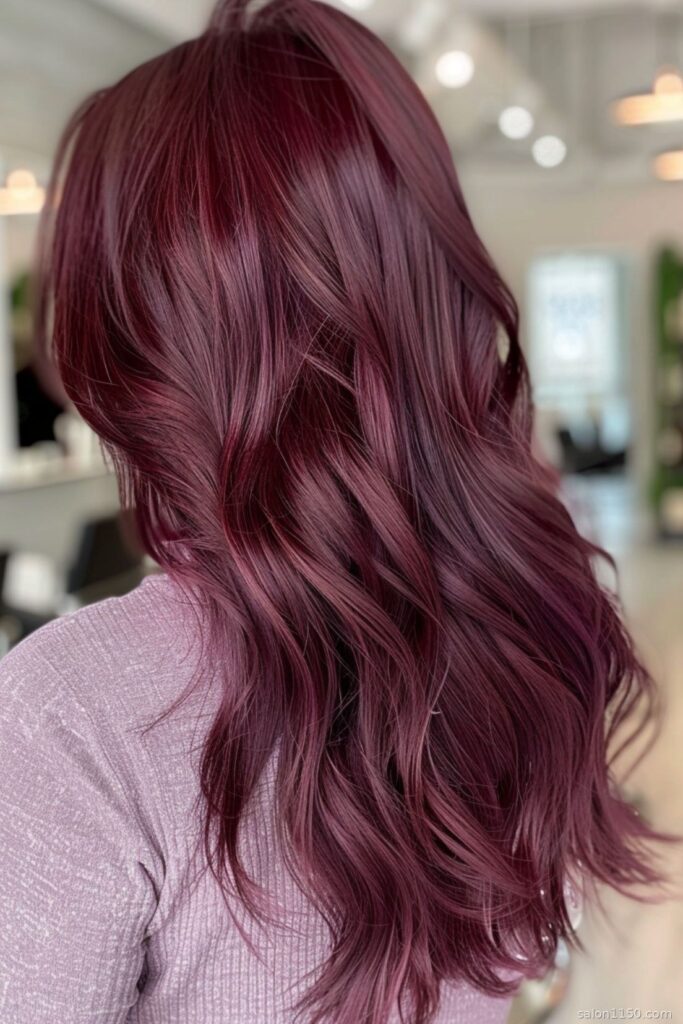
What Burgundy Hair Color Actually Looks Like (And Why Photos Mislead)
Here’s the thing most burgundy inspiration posts won’t tell you: this color reads completely differently depending on whether you’re standing near a window, under fluorescent office lighting, or outdoors in direct sun.
In natural daylight, burgundy opens up. The red tones become visible, sometimes dramatically so. A shade that looked like a rich, dark wine indoors can suddenly read as a bright cherry red outside. Purple-leaning burgundies shift the other direction — they can look almost plum in daylight while appearing nearly black under artificial light.
This matters for two reasons. First, when you’re choosing a shade from photos online, those images are almost always shot in controlled, flattering lighting. Ring lights, golden hour, salon spotlights — none of that replicates your daily environment. Second, if you work in an office with cool overhead lighting and your burgundy has strong purple undertones, the color may read darker and flatter than what you saw in the salon chair under warm halogen bulbs.
The practical takeaway: when discussing burgundy shades with your colorist, talk about where you spend most of your time and what lighting you’re usually in. That context shapes shade selection more than most people realize.
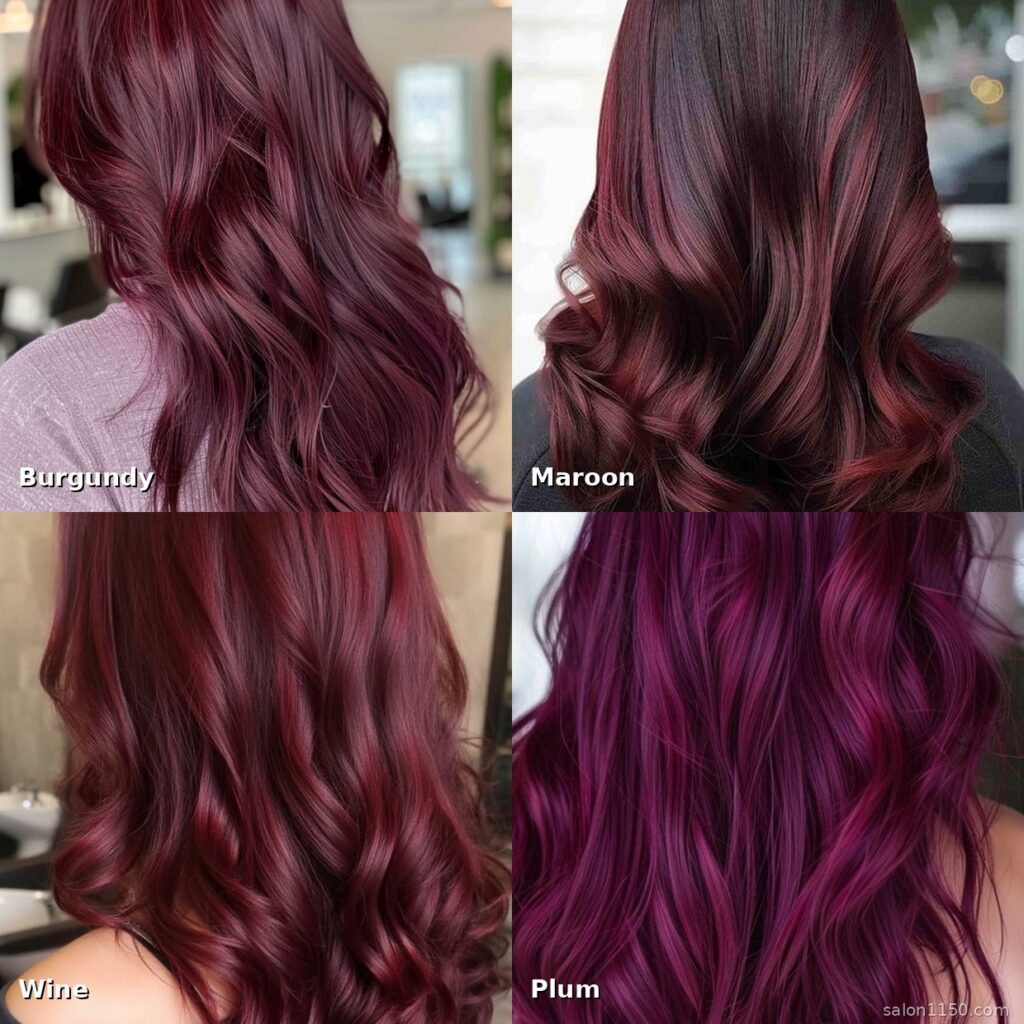
Burgundy vs Maroon vs Wine vs Plum — What’s the Difference?
These terms get used interchangeably online, but they aren’t the same colour. Understanding the distinction helps you communicate clearly with your stylist and avoid ending up with a shade you didn’t intend.
Burgundy sits at the center of the red-purple spectrum. It’s a balanced blend — not dominated by red, not dominated by purple. Think of a glass of Pinot Noir. That’s the territory.
Maroon leans heavier into brown and red. It’s earthier, more muted, and reads warmer. Maroon has less vibrancy than burgundy and tends to sit closer to a dark auburn in practice.
Wine is deeper and cooler than standard burgundy. It pulls more purple, more shadow, more drama. Wine shades tend to look their richest on medium-to-long hair where there’s enough surface for the depth to register.
Plum is the most purple-forward of the group. It’s still in the burgundy family, but barely. Plum reads as a cool, blue-violet shade with just enough red warmth to keep it from tipping into pure purple territory.
If you’re searching for “dark burgundy hair color” or “dark wine hair color,” you’re likely after something in the wine-to-deep-burgundy range. If “burgundy brown hair color” is what caught your eye, maroon or muted burgundy is probably your target.
For a wider look at where burgundy fits within the red colour family, our red hair color guide maps out the full spectrum.
Best Burgundy Shades by Skin Tone and Undertone
Choosing burgundy based on what looks good in a photo is like buying shoes based on how they look on someone else’s feet. Undertone is the filter that determines whether a specific shade makes your complexion glow or washes you out. Here’s how to navigate it.
Warm Undertones
If your veins lean green and gold jewelry tends to flatter you, you’re working with warm undertones. The burgundy shades that work best here are the ones with more red and brown in their base — think cherry cola, auburn burgundy, or burgundy brown. These complement the warmth already in your skin rather than fighting against it.
Avoid burgundies with heavy violet or blue-purple bases. On warm skin, those cooler shades can create a slightly ashy or muddy effect that undermines the richness you’re going for.
Cool Undertones
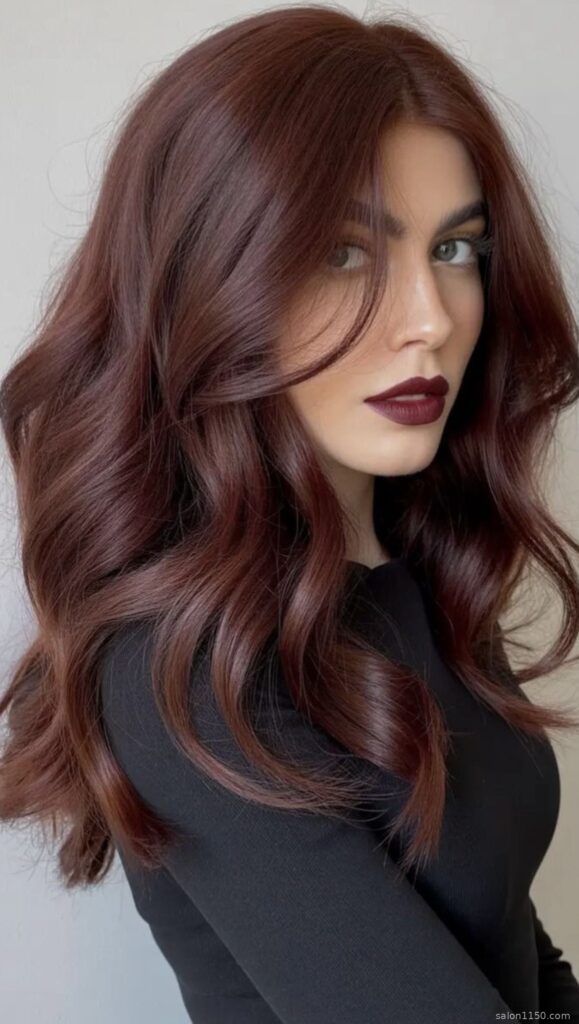
Blue or purple veins, silver jewelry preference — that’s cool territory. You can lean into the purple side of burgundy with confidence. Wine shades, deep plum, and violet-tinged burgundy all work here because the cool tones in the hair harmonize with the cool tones in your skin.
A common mistake for cool-toned clients is choosing a warm, coppery burgundy because it looked vibrant in a photo. On cool skin, those shades can read orangey and clash with the natural pink or blue undertones in your complexion.
Neutral Undertones
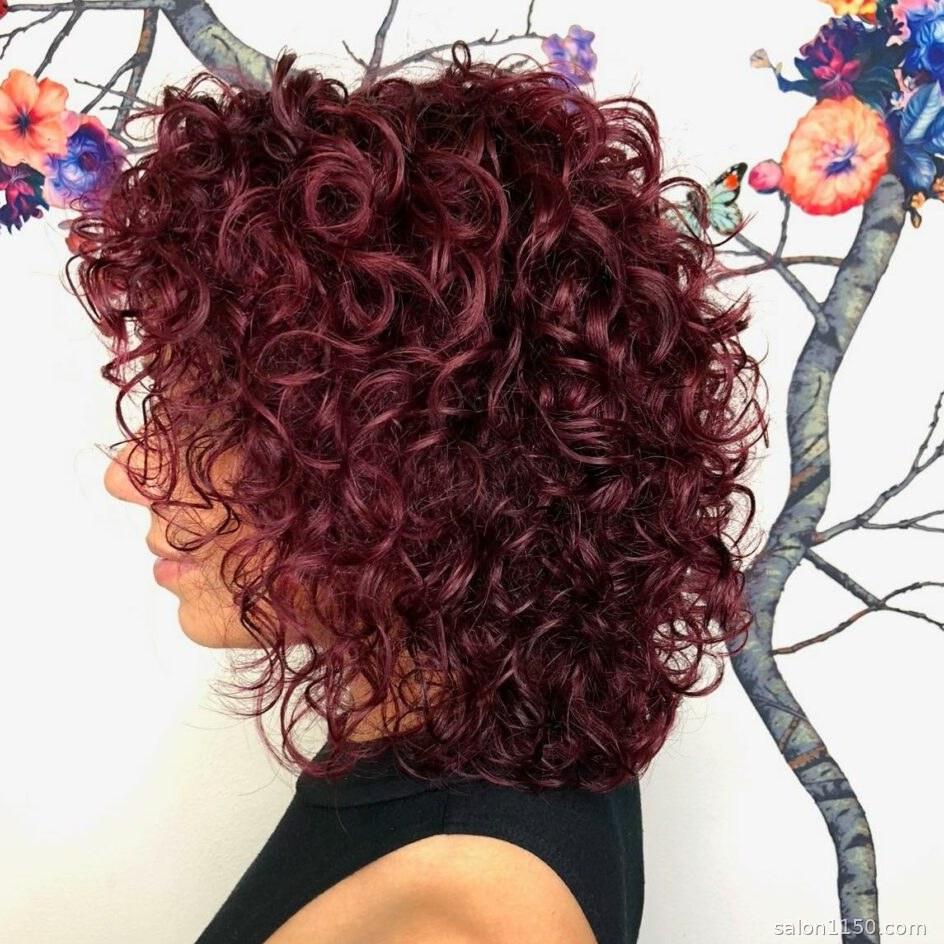
Neutral undertones give you the widest range. True burgundy — that balanced red-purple midpoint — is essentially designed for you. You can swing warmer with a cherry cola shade or cooler with a mulled wine shade and both will read naturally.
The main risk for neutral undertones is going too extreme in either direction. A very warm auburn-burgundy or a very cool violet-plum can both start to look slightly off. Stay closer to the middle of the spectrum and you’ll consistently land well.
 See also28 Soft Caramel Balayage Styles on Brown Hair
Deep and Dark Skin Tones
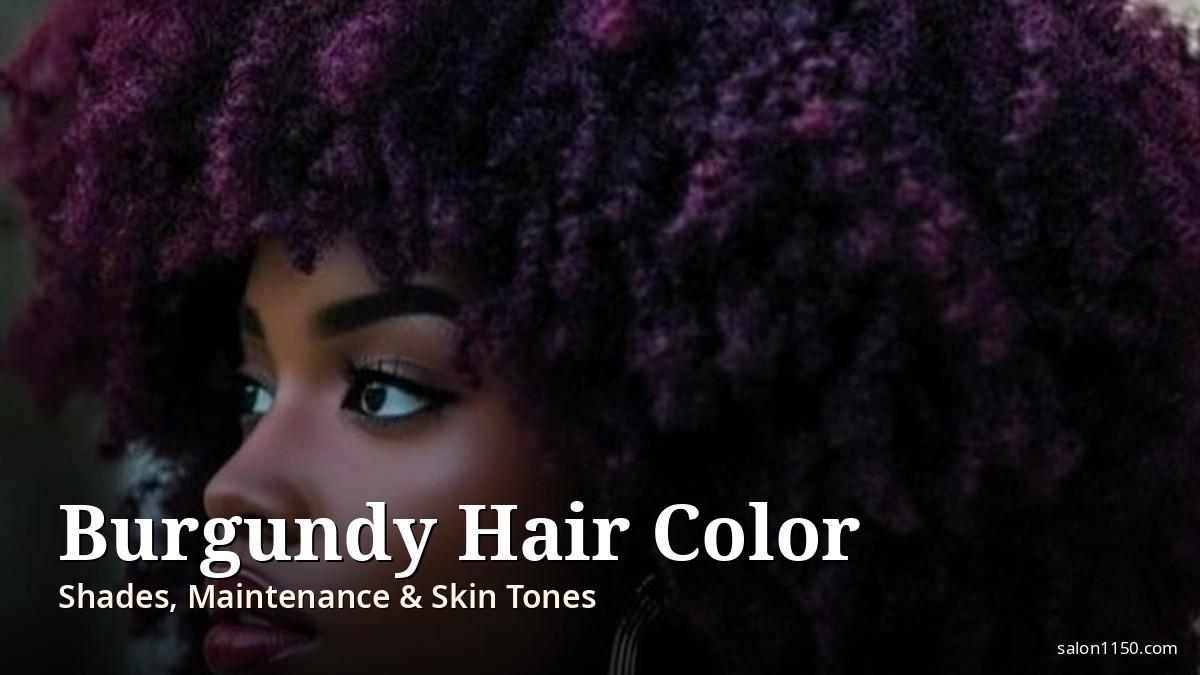
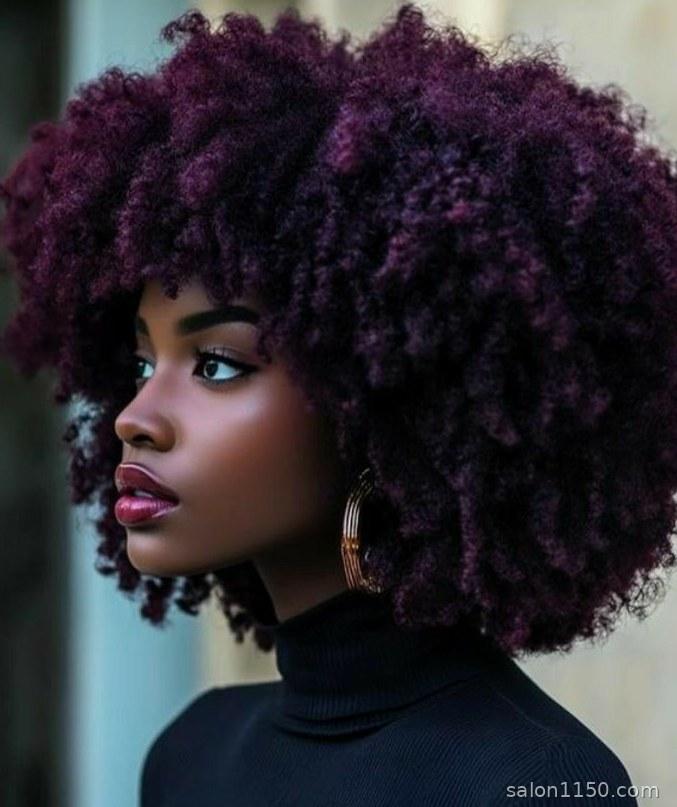
Burgundy is particularly striking on deep skin because the contrast between the dark base complexion and the red-violet tones creates a dimensional, almost jewel-toned effect. Rich wine, velvet burgundy, and black cherry shades are especially strong here.
On deeper skin, lighter or more muted burgundies can sometimes look washed out or insufficiently saturated. The shades that perform best tend to have high pigment density — they should look deep and saturated in the bottle, not sheer.
One thing worth knowing: burgundy on dark skin photographs beautifully in natural light but can appear nearly invisible under dim indoor lighting. If you want the colour to read clearly across environments, slightly brighter shades or adding face-framing burgundy highlights can help.
Burgundy Hair Color on Dark Hair — What to Expect
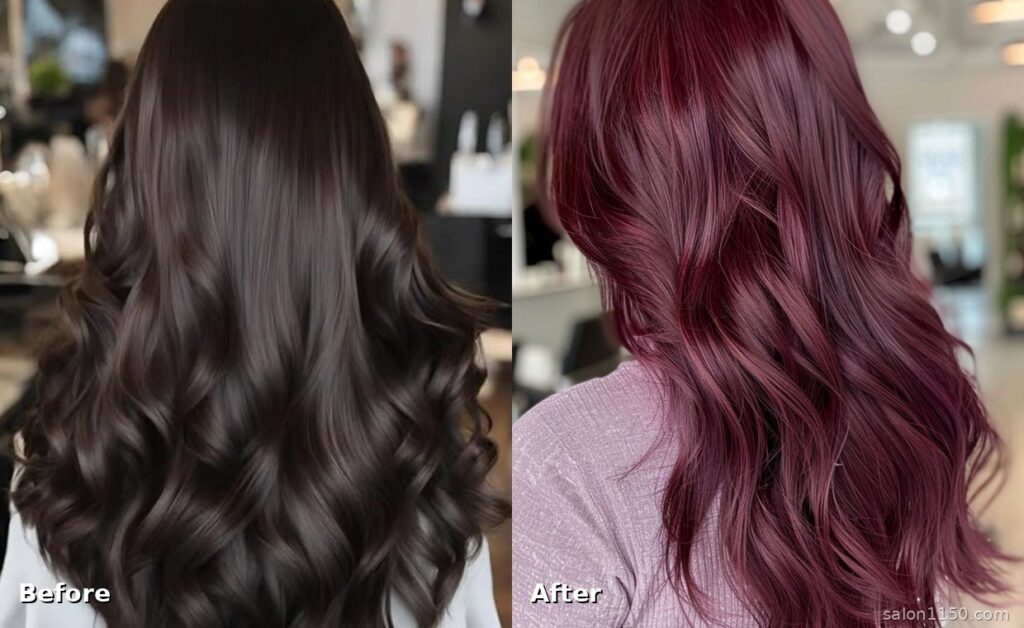
This is where the honest conversation needs to happen, because most naturally dark hair sits at a level 1 through 4, and burgundy pigment needs some degree of lightness to actually show up.
What’s Possible Without Bleach
On a level 3 or 4 base (dark brown), a burgundy gloss or semi-permanent colour can deposit a noticeable tonal shift — especially in sunlight. You’ll get a red-violet sheen rather than a full, saturated burgundy. Think of it as a burgundy cast rather than a burgundy overhaul. This is genuinely beautiful, it’s low-commitment, and it’s the most hair-friendly option. But it’s not the vivid burgundy you’re seeing on Pinterest.
On a level 1 or 2 base (black or near-black), semi-permanent burgundy on virgin hair will barely register. You might catch it in direct sun, but indoors it’ll read as black.
What Lift Opens Up
Lightening naturally dark hair by even one or two levels makes a significant difference in how much burgundy pigment the strand can hold and reflect. This doesn’t mean going blonde — it means bringing a level 2 up to a level 4 or 5 so the burgundy has something to grab onto.
Your colorist may recommend a single bleach-and-tone session for a richer result, particularly if you want a true burgundy rather than a subtle cast. This is standard practice, not a red flag. The key is keeping the lift moderate and letting the burgundy formulation do the heavy work on top.
If your hair has been previously coloured or has existing damage, lifting needs to be approached more cautiously. Build-up from box dye or old permanent color can react unpredictably with lightener. This is a strong reason to have the conversation in a consultation rather than guessing at home.
For more guidance on colour options that complement naturally dark hair, our best hair color for dark hair guide goes deeper on what to expect from the processing side.
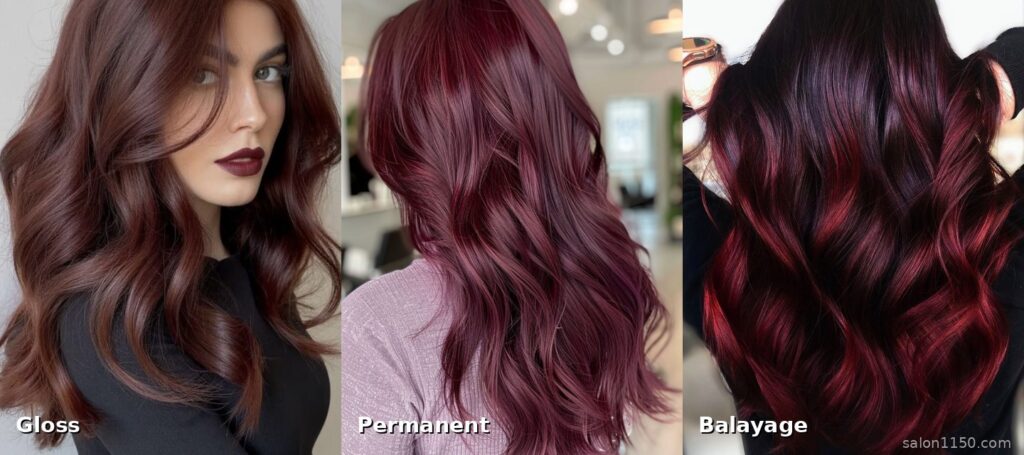
Choosing Your Method: Gloss, Permanent Color, or Balayage
The shade matters, but so does how it’s applied. Different methods produce different results, different maintenance schedules, and different grow-out experiences. Matching the method to your lifestyle prevents the most common source of burgundy regret: choosing a technique that demands more from you than you’re prepared to give.
Gloss or Semi-Permanent
A burgundy gloss deposits colour on the surface of the hair without penetrating the cortex. It lasts roughly 4 to 6 weeks, fades gradually, and doesn’t leave a harsh grow-out line. This is the lowest-commitment entry point into burgundy.
Glosses work particularly well as a tonal refresh — layering a wine or cherry tone over your existing colour to shift the vibe without a full colour service. They also add shine, which is why a hair gloss treatment is often recommended as a maintenance step between full colour appointments.
If you’re unsure whether burgundy suits you, a gloss lets you test-drive the shade with a built-in exit strategy. If you love it, you upgrade. If you don’t, it washes out on its own. Understanding the difference between a gloss and a glaze helps you ask for the right service.
Permanent Dye
Permanent burgundy colour penetrates the hair shaft for longer-lasting, more saturated results. This is the route for anyone who wants true, rich burgundy that reads clearly in any lighting. Expect 6 to 8 weeks before you need a refresh, depending on shade intensity and aftercare.
The trade-off is grow-out. Permanent burgundy on dark roots creates a visible demarcation line as your natural colour comes in. Regular root touch-ups or a gloss between appointments keep this manageable, but you need to budget for it — both time and cost.
Permanent colour is also harder to remove if you change your mind. Transitioning out of a deep burgundy permanent dye usually involves colour correction, not just waiting for it to fade.
Balayage or Highlights
Burgundy balayage or highlights add dimension without fully committing the entire head. The colour is painted on strategically — usually through the mid-lengths and ends — leaving the root area natural or very close to it.
This creates the softest grow-out of any method. You can stretch appointments further because there’s no stark root line. It also lets you control intensity: a few burgundy pieces around the face for a subtle effect, or heavier saturation throughout for more impact.
For curly and wavy textures, burgundy balayage creates a particularly strong visual effect — the curl pattern catches and reflects the colour at different angles, adding movement and depth. Our balayage hair guide and balayage on curly hair collection show how this works across different textures.
Not sure which method is right for your hair? That’s exactly what a color consultation is designed to sort out — matching your goals, your base, and your schedule to the technique that actually fits.
Burgundy Shades Worth Knowing
Rather than listing every possible variation, here are the shades that consistently deliver — along with who they work best for and what to realistically expect from each.
Dark Burgundy
The safest entry point and the most forgiving shade in the family. Dark burgundy reads as a rich, slightly red-shifted brunette in most lighting. It’s subtle enough for conservative workplaces and dramatic enough to feel like a genuine change. Fades gracefully into a warm brown rather than turning brassy or orange. Best on: medium to dark bases, any undertone.
Cherry Cola
One of the strongest trends heading into 2026, and for good reason. Cherry cola blends warm red with a dark brown base, creating a shade that’s less purple than traditional burgundy and more approachable. It photographs well, fades into a warm auburn, and works across a range of skin tones. The name oversells how dramatic it is — in practice, it’s a sophisticated warm brunette with a red kick.
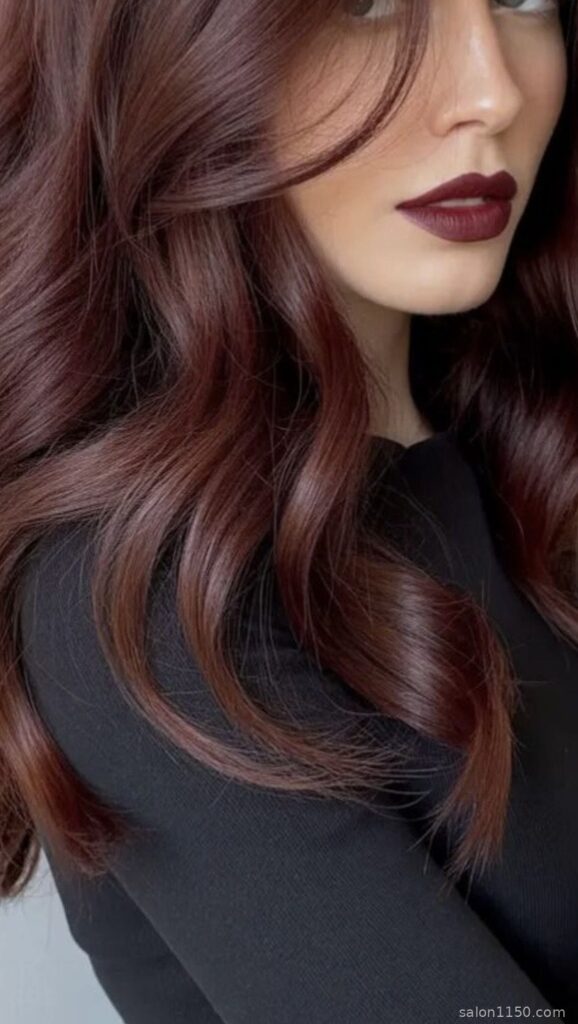
Wine
Deeper and cooler than standard burgundy, wine shades suit anyone who wants the richness of burgundy without the red popping too aggressively. This reads more purple-brown than red-brown and looks especially striking on cool or neutral undertones. Wine burgundy is a strong option for the fall and winter months when darker, moodier colour palettes feel most natural.
Mulberry
A romantic, slightly dusty shade that splits the difference between plum and true burgundy. Mulberry has a softness to it that some of the bolder burgundy shades lack. It’s particularly flattering on wavy and curly textures where the soft colour catches light at varying depths. Fades into a cool-toned mauve-brown — which some clients actually prefer to the fresh shade.
Velvet Burgundy
Rich, dark, and smooth — velvet burgundy has a quality that reads expensive. There’s minimal warmth or brightness; it’s all depth and polish. This shade works well as a full-head permanent colour because the darkness helps disguise grow-out longer than brighter alternatives. Best on: level 3–5 bases, any undertone. If this muted, minimal-warmth richness is what draws you in, our mushroom brown hair color guide explores the brunette version of that cool, understated look.
Auburn Burgundy
The warmest shade in this lineup. Auburn burgundy carries copper and red-gold undertones that give it a sun-warmed quality. It’s the shade that looks most natural on warm-toned skin and reads closest to a dimensional brunette in low light. If you’ve been drawn to copper balayage but want something deeper, auburn burgundy is the bridge.
Black Cherry
Moody, dramatic, and trending hard right now. Black cherry is essentially the darkest wearable burgundy — nearly black with a flash of cherry red that catches in direct light. Indoors, it reads as a rich near-black. Outdoors, the red reveals itself. This is the shade for anyone who wants burgundy as an undertone rather than a statement. Minimal fade visibility, minimal grow-out issues, maximum drama when the light hits right.
 See alsoBronde Hair Color: The Best of Blonde & Brunette
Bright Magenta Burgundy
The highest-maintenance, highest-impact option. This is burgundy pushed toward vivid, fashion-forward territory — strong pink-red saturation that makes no attempt to look natural. It fades the fastest and demands the most frequent refresh cycles. If that doesn’t deter you, the visual payoff is significant. But go in knowing this shade
needs colour-depositing products between salon visits and a realistic appointment schedule.
If burgundy feels too bold, our caramel hair color guide covers 25 warmer, lower-maintenance shades. For a deeper brunette option, see our chocolate brown hair color guide.
For the perfect blonde-brunette middle ground, see our bronde hair color guide.
Maintenance — What Burgundy Hair Actually Needs
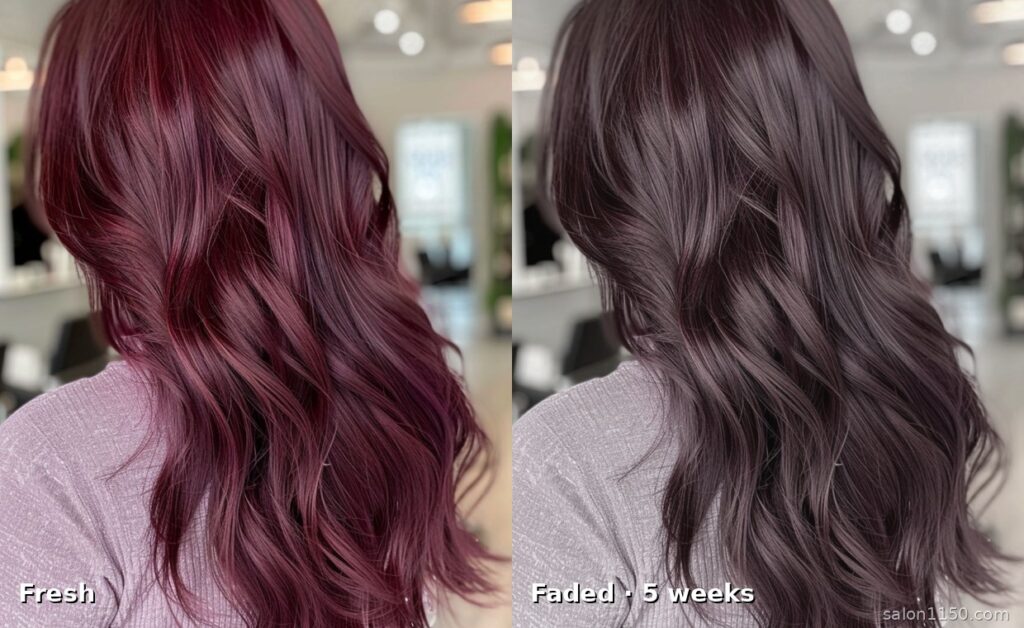
Every colour in the red family fades faster than brunettes or blondes. That’s not a flaw in the dye or a mistake by your colorist — it’s molecular. Red and violet pigment molecules are physically larger than other colour molecules, which means they have a harder time staying inside the hair cuticle. They slip out with every wash, every heat exposure, every hour in the sun.
Brighter burgundy shades fade the fastest. Dark wine or black cherry shades hold their tone the longest. That’s worth factoring into your shade decision if you know you’re unlikely to keep up with frequent colour maintenance.
What Actually Helps
Color-safe shampoo and conditioner — sulfate-free, specifically formulated for colour-treated hair. Sulfates strip pigment faster than almost anything else. Our guide to the best shampoos and conditioners for colour-treated hair has recommendations that apply to burgundy as well.
Cool or lukewarm water when you wash. Hot water opens the hair cuticle, and open cuticles release pigment. This is one of the most effective and most ignored maintenance steps.
Wash less frequently. Every shampoo is a fade event. If you can stretch to two or three washes per week, your colour will hold noticeably longer. Dry shampoo fills the gap.
UV protection. Sunlight breaks down pigment molecules. If you spend significant time outdoors, a UV-protective spray or serum isn’t optional — it’s maintenance. This is especially relevant in climates like Austin’s, where sun exposure is a year-round factor.
Gloss refreshes every 4 to 6 weeks. A quick in-salon gloss deposits a fresh layer of tone without a full recolouring process. This is the single most effective maintenance tool for keeping burgundy from sliding into a dull, faded-out version of itself. If you’ve never had a gloss service, our at-home hair gloss guide covers what to expect.
What Fading Actually Looks Like
Warm-toned burgundies (cherry cola, auburn burgundy) tend to fade into a coppery or warm brown. This can actually look intentional and attractive, making them more forgiving of a slightly lapsed maintenance routine.
Cool-toned burgundies (wine, plum, mulberry) tend to fade into a muted, slightly ashy or pinkish tone that reads less polished. These shades benefit more from regular gloss touch-ups to correct the tone shift.
Bright or vivid burgundies (magenta, bright burgundy) fade the most dramatically and the fastest — sometimes within two to three weeks of fresh application. If vibrancy is your priority, colour-depositing conditioners between salon visits are non-negotiable.
Grow-Out Expectations
If you’ve gone with full-head permanent burgundy, the root line will start becoming visible around weeks 3 to 4. Dark roots against a burgundy mid-shaft aren’t the worst look — the 2026 trend toward darker-rooted reds actually works in your favour here. But if a clean, root-free appearance matters to you, plan for touch-ups every 5 to 6 weeks.
Balayage and highlight placements grow out far more gracefully because there’s no hard root line. This is one of the strongest practical arguments for choosing balayage over a full permanent application if you know your schedule makes frequent appointments difficult.
Common Mistakes to Avoid
Choosing a shade from photos without considering your undertone. A cherry cola that looks warm and inviting on a model with olive skin will read differently on someone with cool, pink undertones. The photo is a starting point, not a promise.
Expecting vivid burgundy to stay vivid without maintenance. Social media makes every colour look freshly done. In reality, vibrant burgundy begins fading after the first wash. If you’re not willing to invest in colour-safe products and periodic gloss refreshes, choose a darker, more muted shade that hides the fade better.
Ignoring your starting base color. A shade that’s achievable in one session on a level 5 brown might require two sessions on a level 2 black. The shade itself isn’t the variable — your starting point is. Discuss base color with your colourist before committing to a target shade.
Skipping the first 48 hours of aftercare. The cuticle is still closing after a fresh color service. Washing, heavy heat styling, or swimming in the first two days can cost you weeks of colour longevity. This is the cheapest, easiest maintenance step and the one most people skip.
Trusting social media colour accuracy. Ring lights, phone camera processing, and photo filters all shift hair colour. The burgundy you saved on TikTok was probably warmer, more saturated, and more dimensional than it would look standing in front of you in person. Bring the photo to your consultation, but understand it’s a reference, not a contract.
FAQ — Burgundy Hair Color
How long does burgundy hair color last?
Permanent burgundy typically holds its richest tone for 4 to 6 weeks before noticeable fading begins. Semi-permanent or gloss applications last 4 to 6 weeks total before they’ve mostly washed out. How quickly your specific shade fades depends on the formulation, your porosity, how often you wash, and whether you’re using colour-safe products. Brighter burgundies fade faster; deeper, darker shades hold their tone longer.
Can you dye dark hair burgundy without bleach?
Yes, but with realistic expectations. On a dark brown base (level 3–4), a burgundy dye or gloss will deposit a red-violet tonal shift — visible in sunlight, subtle indoors. On black hair (level 1–2), the color barely shows without some degree of lift. If you want a rich, clearly visible burgundy, lightening by one or two levels before applying the burgundy creates a significantly better result. This doesn’t mean drastic bleaching — it means controlled, moderate lift to give the pigment a surface to hold onto.
What skin tone suits burgundy hair?
Every skin tone can wear burgundy — but not every shade of burgundy. Warm undertones pair best with red-dominant shades like cherry cola and auburn burgundy. Cool undertones are flattered by purple-leaning shades like wine and plum. Neutral undertones can wear the full range, and deep skin tones look particularly striking in high-pigment shades like velvet burgundy and black cherry. The key is matching the shade’s undertone to yours, not matching it to a photo.
What is the difference between burgundy and maroon hair?
Burgundy is a balanced red-purple blend inspired by the color of Burgundy wine. Maroon leans more into brown and red — it’s earthier, warmer, and more muted. In practice, maroon reads closer to a dark auburn while burgundy has more vibrancy and visible red-violet dimension. If you want depth with warmth, maroon is your lane. If you want depth with a red-purple richness, burgundy is the target.
How do you keep burgundy hair from fading?
Use sulfate-free, colour-safe shampoo and conditioner. Wash with cool water. Reduce wash frequency — two to three times per week is enough. Protect your hair from UV exposure with a spray or serum. Schedule a gloss refresh every 4 to 6 weeks to re-deposit tone and add shine. Between salon visits, a colour-depositing conditioner in a red or burgundy tone helps bridge the gap. And skip the hot tools on the highest setting — excessive heat accelerates pigment breakdown.
Burgundy works. It’s one of the most reliably flattering shades in the red spectrum, and there’s a reason it resurfaces as a top request every fall. But “flattering” and “easy” aren’t the same thing. The clients who love their burgundy long-term are the ones who chose the shade with their undertone and base color in mind, picked a method that matched their actual maintenance habits, and set realistic expectations for how the colour would behave over time.
That’s a lot to sort through on your own — and you don’t have to. Book a color consultation and walk in with your questions, your reference photos, and your honest answer to “how much maintenance am I actually going to do?” That conversation is where the right burgundy starts.