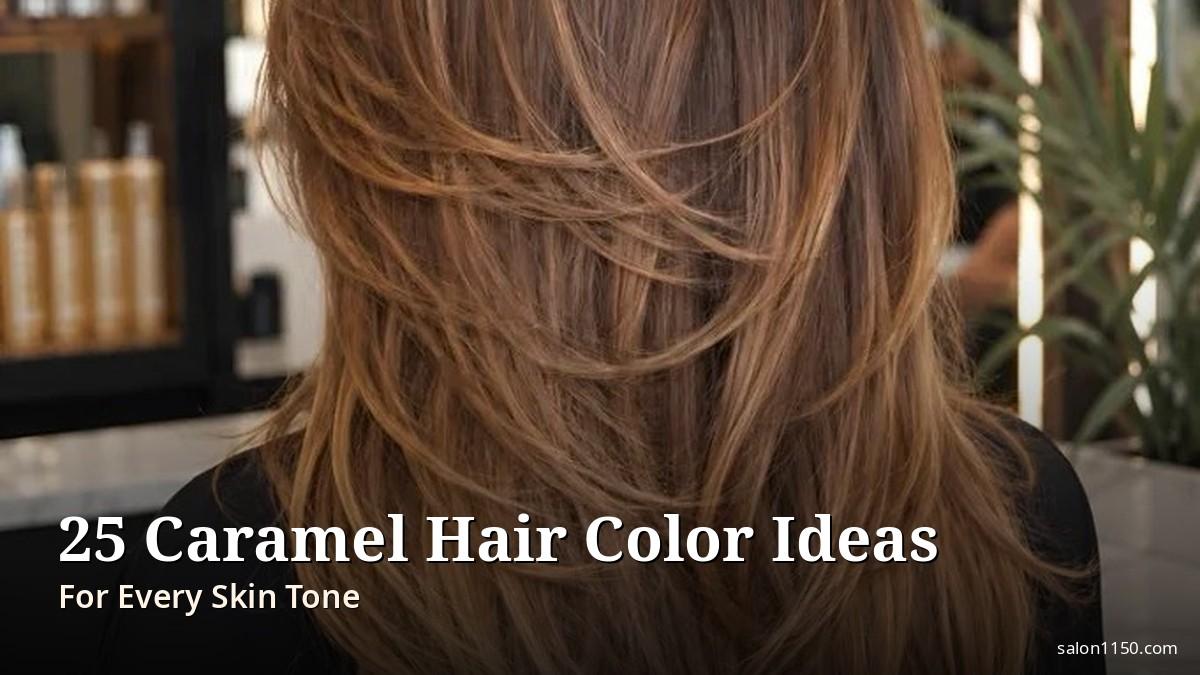
Caramel isn’t one shade — it’s an entire spectrum. Depending on your base color, skin tone, and how much commitment you’re comfortable with, caramel can read as a soft honey wash, a rich toffee dimension, or a bold golden blonde with depth. This gallery is organized by shade family so you can skip straight to the range that interests you. Each look includes the technique used and a quick note on what to expect from maintenance.
Save the ones that speak to you. Bring them to your colorist.
Try before you dye
Not sure this shade suits you? Try it on your own photo with our free virtual hair color try-on — no signup, nothing uploaded.
Light Caramel Hair Color
Light caramel sits in the space between golden blonde and warm brunette — bright enough to catch light, warm enough to avoid looking washed out. These shades tend to work well on medium and light skin tones with warm or neutral undertones.
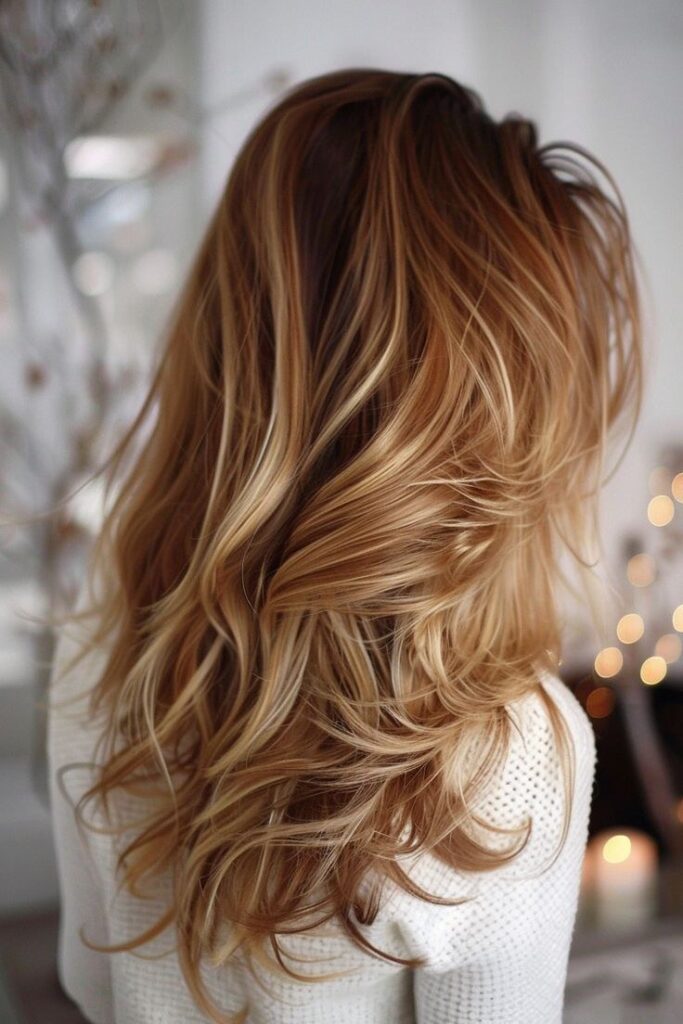
1. Soft Caramel Wash on Medium-Length Waves
A single-process light caramel that reads as an all-over shade rather than a highlight pattern. The warmth here is subtle — more butterscotch than copper — and works especially well on fine-to-medium hair where you want color to add the illusion of thickness. Low to moderate maintenance; expect touch-ups every 8–10 weeks.
Technique: All-over color with a gloss finish
2. Light Caramel Brown with Face-Framing Pieces
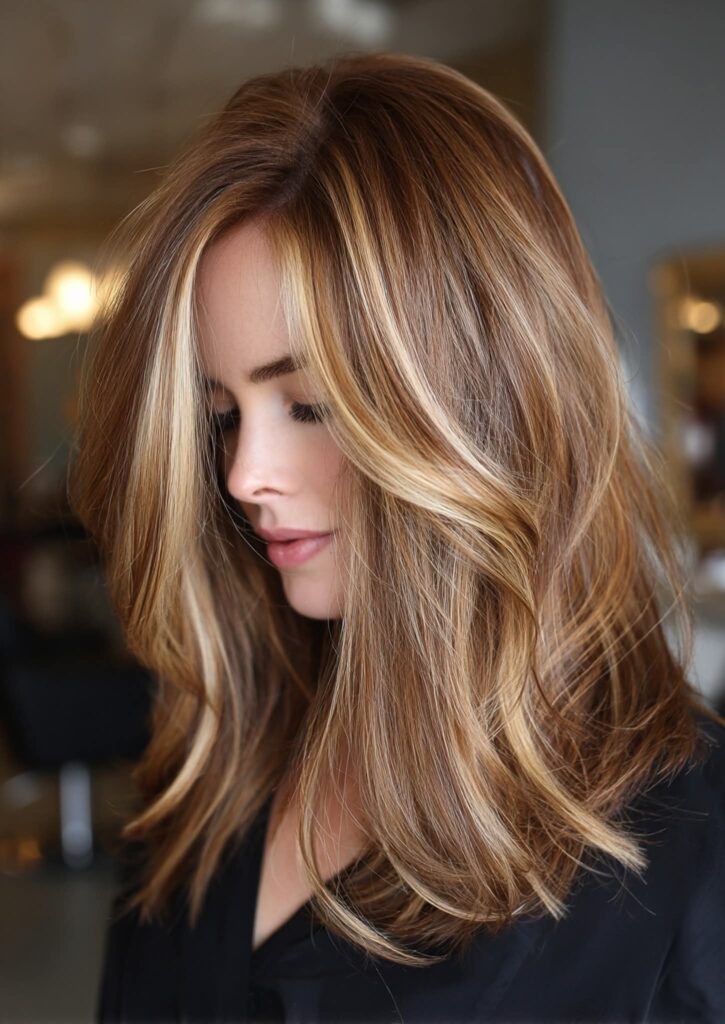
This look uses a darker caramel-brown base with lighter caramel pieces concentrated around the face. The contrast is gentle — more glow than streak — which makes it easier to grow out than traditional highlights. A great entry point if your natural color is a level 5 or 6 brown.
Technique: Face-framing balayage
3. Light Caramel on Curly Hair
Curls absorb and reflect light differently than straight hair, which means the same caramel shade will look richer and more dimensional on textured hair. This light caramel on natural curls has that effect — the color shifts from warm golden to deeper toffee depending on how the curl catches the light. A beautiful low-contrast option for anyone who wants warmth without bleach damage.
Technique: Balayage on natural curls, diffused finish
Honey Caramel Hair Color
Honey caramel leans warmer and more golden than standard caramel. It’s the shade people picture when they think of sun-soaked hair — rich, luminous, and distinctly warm without tipping into orange or copper territory. This range flatters warm and olive skin tones particularly well.
4. Honey Caramel Balayage on Dark Brown Hair
One of the most requested color combinations in any salon — dark espresso roots melting into honey caramel through the mids and ends. The beauty of this pairing is in the contrast: the dark base creates depth, while the honey tones bring movement and brightness. This is a commitment-level color — plan for glossing treatments every 6–8 weeks to prevent brassiness.
Technique: Hand-painted balayage with a warm toner
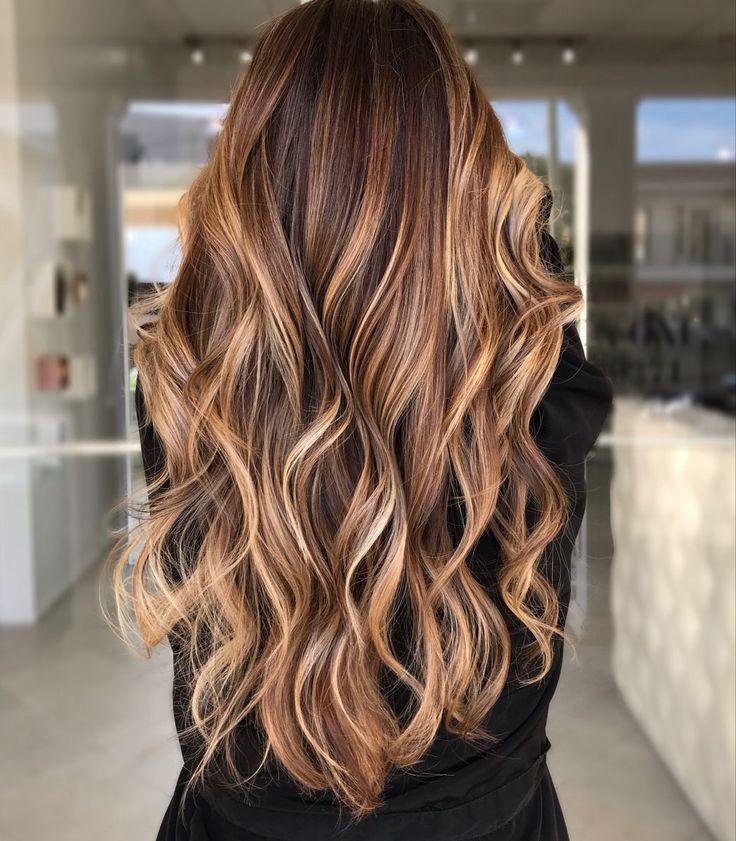
5. Honey Caramel All-Over on Medium Brown
When you want the warmth of honey caramel but prefer a more uniform look over a balayage gradient, all-over color with a honey caramel toner is the move. This lands somewhere between a warm brown and a dark blonde, and it grows out more gracefully than heavily highlighted looks. Best on natural level 4–6 hair.
6. Honey Caramel with Blonde Money Pieces
Money pieces — those two bright face-framing sections — add a pop of brightness that lifts the whole look. When done in a warm blonde against a honey caramel base, the effect is bright but not stark. This is a good option if you want dimension without a full balayage commitment.
Technique: Money piece highlights with balayage base
Golden Caramel Hair Color
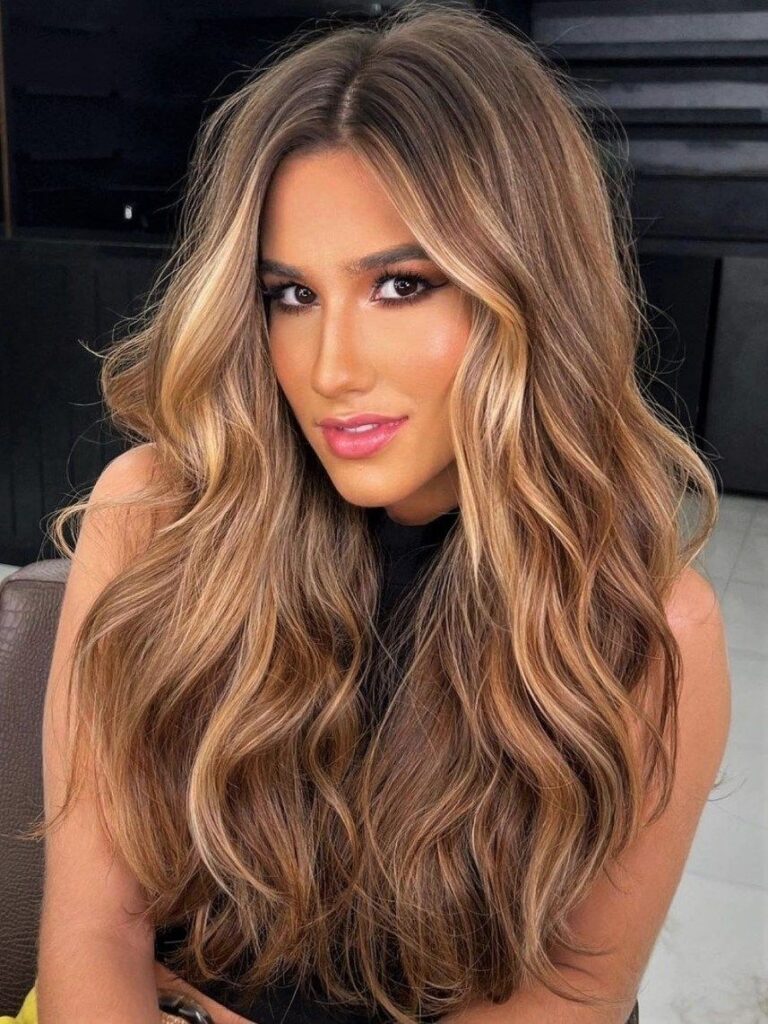
Golden caramel is the warmest shade in the caramel family — close to a dark golden blonde with richer, more amber undertones. It catches light aggressively and photographs beautifully, which is partly why it dominates Pinterest boards. It suits warm and medium skin tones best and can veer coppery on cool-toned skin, so a consultation matters here.
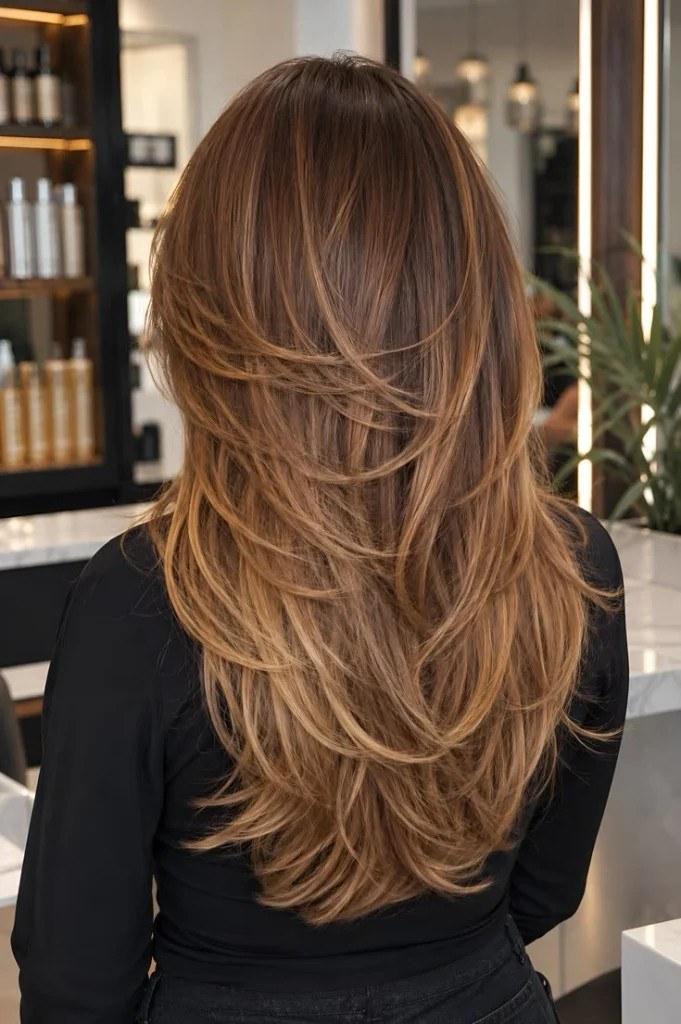
7. Golden Caramel on Long Layered Hair
Layers and golden caramel are a natural pairing — the layers create movement, and the golden tones shift between lighter and deeper as the hair falls. This version uses a warm golden toner over pre-lightened hair for that liquid-gold effect. Expect to maintain with a color-depositing conditioner between appointments.
Technique: Full balayage with golden toner
8. Golden Caramel Highlights on a Warm Brown Base
Rather than going fully golden, this look keeps a rich warm brown as the foundation and adds golden caramel highlights through the mid-lengths. The result is more natural-looking than an all-over golden shade — like hair that’s been sun-kissed over a summer. Less maintenance than a full golden color because the base does most of the heavy lifting.
Technique: Foil highlights with golden caramel toner
 See also28 Soft Caramel Balayage Styles on Brown Hair
Caramel Brown Hair Color
This is the core of the caramel spectrum — true caramel brown sits right in the middle, warm but not golden, rich but not dark. It’s the most universally flattering range in the family because it doesn’t skew too light or too deep. If you’re unsure where to start with caramel, this is your safest bet.
9. Classic Caramel Brown — Warm and Dimensional
A straight-down-the-middle caramel brown with subtle variation. The color has enough warmth to feel alive but enough depth to read as a natural brunette shade. This is the version of caramel that works on virtually every skin tone, and it’s one of the lower-maintenance options because the base stays close to natural.
Technique: Demi-permanent color with a warm caramel tone
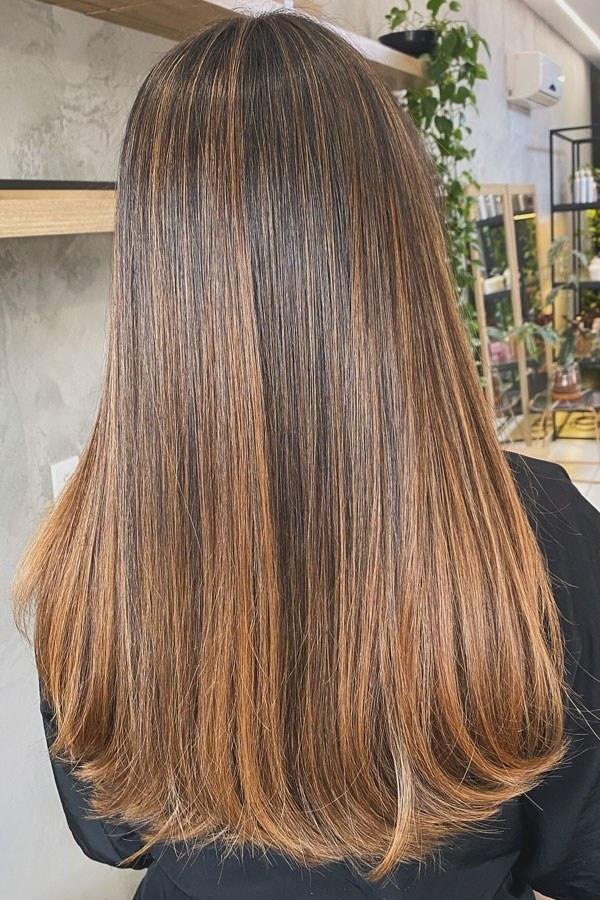
10. Warm Caramel Brown with Subtle Dimension
A step above the classic — this adds gentle hand-painted highlights just one or two levels lighter than the base. The dimension is barely there in indoor light but comes alive outdoors. This is the “your hair but better” version of caramel for brunettes. Very low maintenance since the highlights are so close to the base.
Technique: Subtle babylights with a caramel tone
11. Caramel Chocolate Brown
Leaning deeper and richer than standard caramel brown, this shade blends chocolate and caramel for a color that feels indulgent without being dark. Think of it as a brunette shade with a caramel undertone rather than a caramel shade with brown depth. Works well on medium-to-dark skin tones and requires minimal upkeep since the shade is close to most natural dark brunette bases. For a deeper brunette option, see our chocolate brown hair color guide.
Technique: Single-process color with a warm chocolate-caramel formula
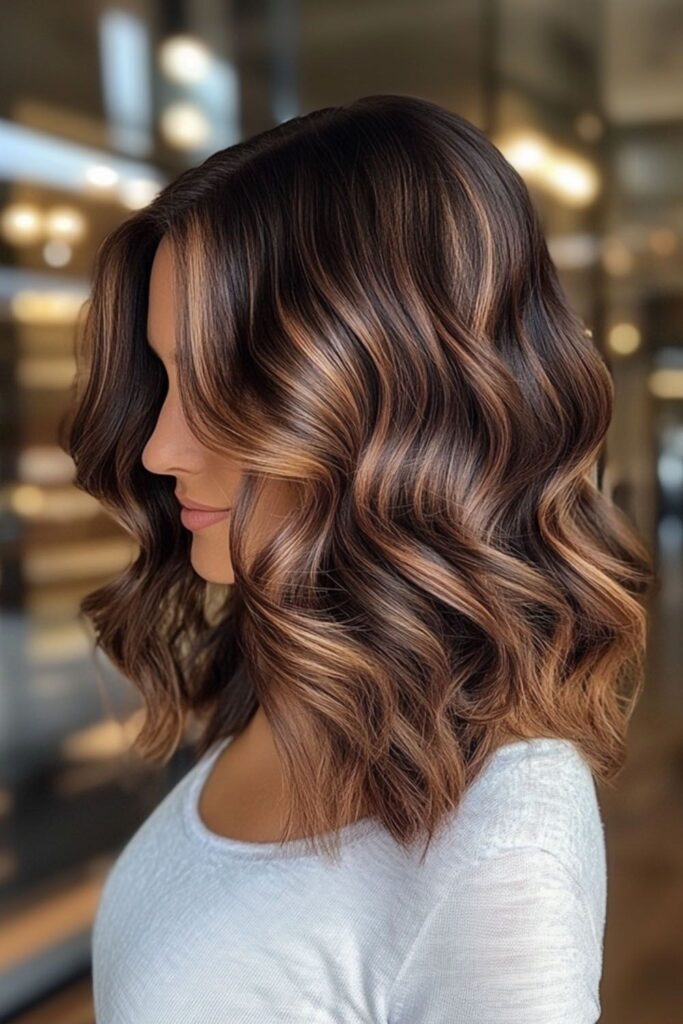
12. Caramel Brown Ombre on Straight Hair
Ombre may not be the newest technique, but it still works when executed with restraint. This version keeps a rich brown through the top half and transitions into a warm caramel at the lower third — a gradual shift, not a hard line. On straight hair, the gradient reads clean and intentional. Moderate maintenance; the ends will lighten and warm over time without touch-ups.
Technique: Ombre — traditional gradient
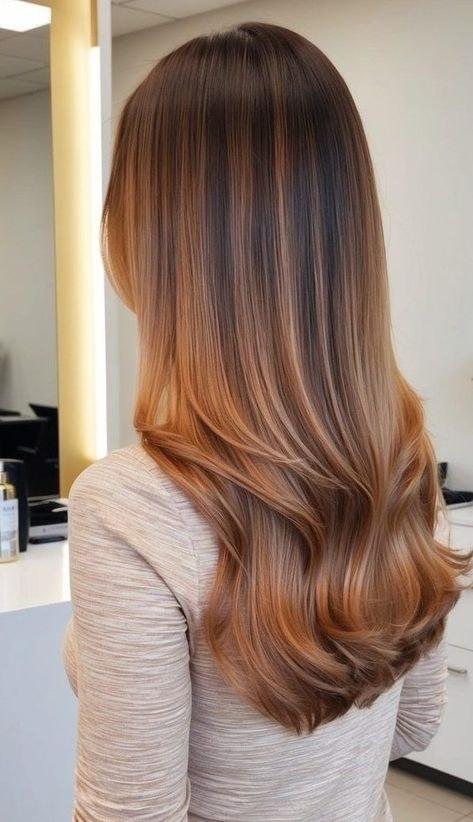
Dark Caramel Hair Color
Dark caramel is for the brunettes who want warmth without going noticeably lighter. These shades stay in the brown family but have that underlying caramel richness — visible in sunlight, subtle indoors. They’re the lowest-maintenance options in this gallery and the easiest to achieve without bleach on naturally dark hair.
13. Dark Caramel with Natural Root Shadow
A deeper take on caramel that keeps the darkest tones at the root and lets caramel warmth build through the mid-lengths and ends. The overall impression is “warm brunette” rather than “caramel,” which is exactly the appeal for anyone who doesn’t want an obviously colored look. Minimal upkeep — the root shadow grows out naturally.
Technique: Root shadow with demi-permanent caramel tone
14. Dark Caramel on Short Hair
Caramel on short cuts is underrepresented in every gallery on the internet — and it shouldn’t be. A dark caramel on a bob or lob adds warmth and dimension to a shorter shape without the length needed for a dramatic balayage. The color feels modern and deliberate on a blunt cut, especially with a glossy finish.
Technique: Gloss treatment over lightened base
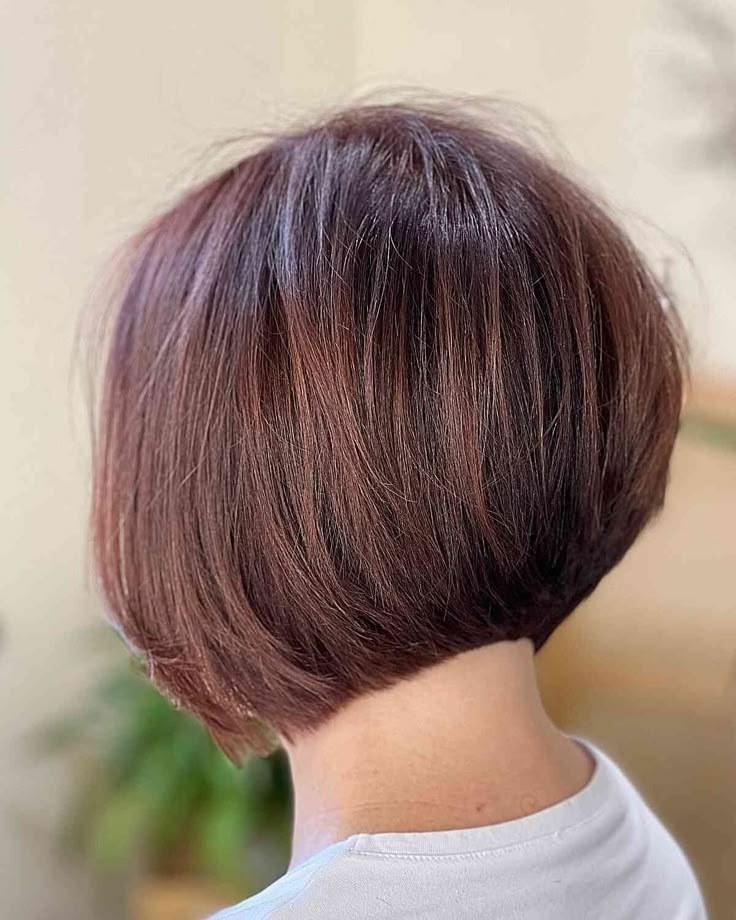
15. Caramel Mocha — Dark Caramel with Cool Undertones
Not all caramel has to skew warm. Caramel mocha sits in a cooler lane — the caramel reads more as a muted toffee than a golden brown, with ashy or cool-neutral undertones that suit cooler skin tones. This shade is often overlooked in caramel galleries, which tend to lean heavily warm. If standard caramel feels too coppery on you, this is the alternative. For a brunette that leans even further into cool, ashy territory, see our mushroom brown hair color guide.
Technique: Single-process color with cool-neutral toner
Caramel Blonde Hair Color
Caramel blonde is the lightest expression of caramel — more blonde than brown, but with enough warmth and depth to avoid reading as a standard blonde. It’s where caramel meets bronde, and it tends to work best on lighter natural bases (level 6 and above) or as a high-maintenance transformation on darker hair.
16. Caramel Blonde Balayage
A sun-drenched balayage that leans blonde through the ends with caramel warmth holding the mid-section together. The roots stay natural — dark blonde to light brown — and the caramel tones prevent that “grown-out platinum” look that can happen with standard blonde balayage. The warmth here is what keeps it grounded.
Technique: Balayage with warm blonde toner
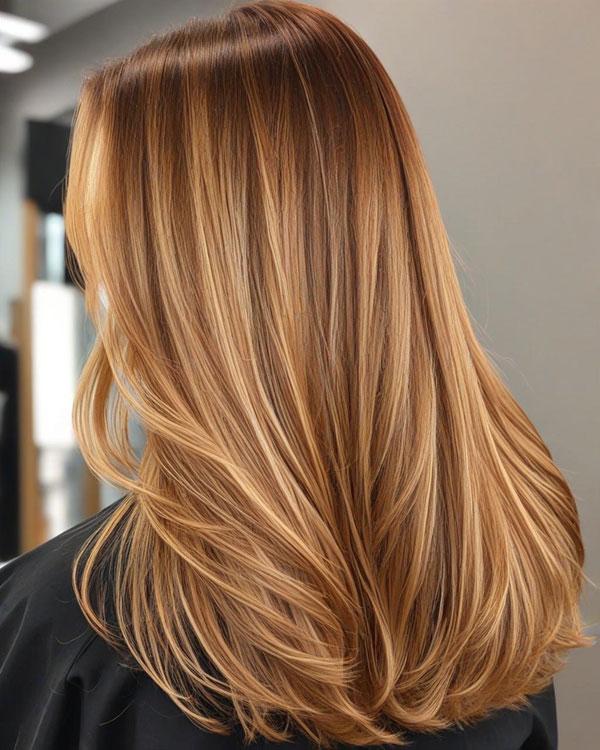
17. Caramel Bronde — The 2026 Shade
Bronde — that perfectly balanced zone between brown and blonde — gets a caramel upgrade when the toner skews warm. Caramel bronde has been trending heavily heading into 2026, and the appeal is clear: it’s sophisticated, it’s versatile, and it looks expensive. This shade works across a wide range of skin tones because it sits right in the center of the depth spectrum.
Technique: Full head balayage with caramel-bronde toner
18. Caramel Blonde on a Lob
A shoulder-length lob in caramel blonde is one of those combinations that looks immediately pulled-together. The warmth of caramel blonde softens the blunt edges of a lob, and the shorter length means the color stays bright and healthy-looking longer — less surface area, less fading. Great for anyone who wants a lighter look without long-hair maintenance.
Technique: Full balayage on a lob, warm blonde toner
Caramel Highlights and Balayage
If you want caramel without changing your entire base color, highlights and balayage are the way to go. The difference: highlights use foils for more precise, consistent brightness; balayage is hand-painted for a more organic, lived-in result. Both can be done in caramel tones, and both let you keep your natural base intact.
For a deeper look at balayage-specific caramel shades, see our caramel balayage styles guide.
19. Caramel Highlights on Dark Brown Hair
The classic combination — dark brown base with caramel highlights woven throughout. This works because the contrast creates instant dimension, and caramel is warm enough to blend naturally with dark brown rather than looking stripy. Foil highlights give a more noticeable, defined result compared to balayage.
 See alsoBurgundy Hair Color: Shades, Maintenance & Best Skin Tones
Technique: Foil highlights with caramel toner
Technique: Hand-painted balayage
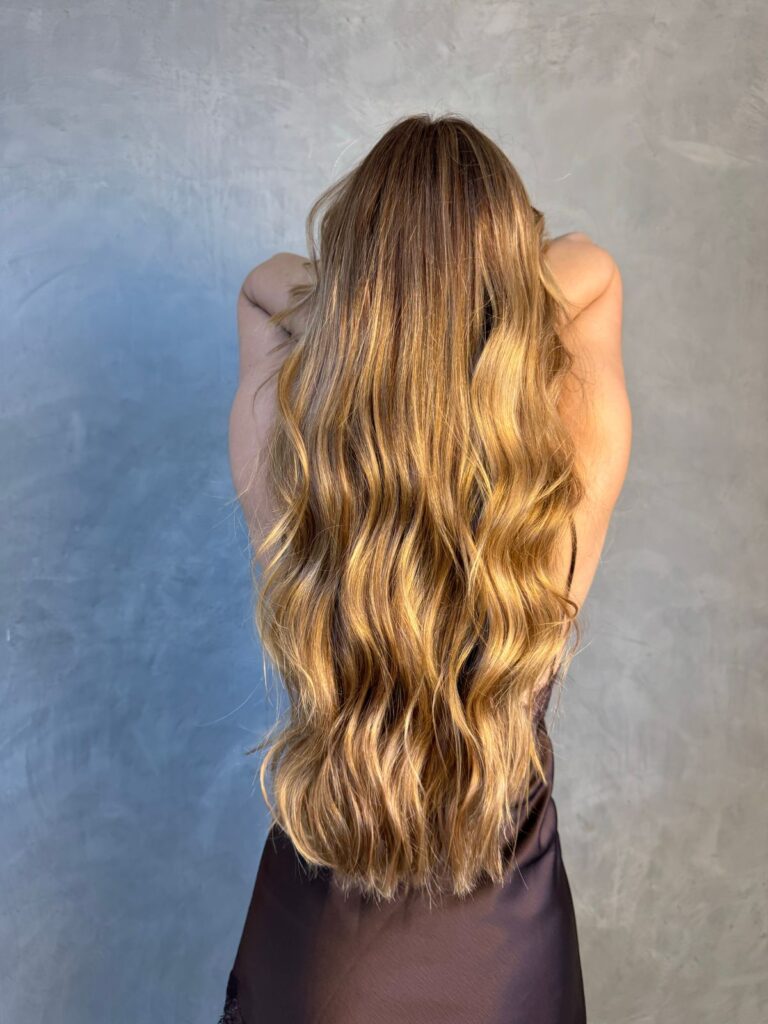
21. Caramel Highlights with Lowlights
Adding lowlights (sections darker than your base) alongside caramel highlights creates the most multi-dimensional result. The lowlights add depth; the highlights add brightness. Together, they create a color that reads rich and natural — like hair that has multiple tones working together rather than a single shade overlaid on top.
Technique: Foil highlights and lowlights, multi-tonal
22. Caramel Color Melt on Dark Hair
A color melt is the most seamless blending technique — no visible lines, no distinct highlight pattern, just one color melting into another. Caramel color melt on dark hair creates that gradient effect where you can’t tell where the dark ends and the caramel begins. It photographs well and is lower maintenance than highlights because there are no defined sections to grow out.
Technique: Color melt — seamless gradient
23. Caramel Babylights for a Sun-Kissed Effect
Babylights are ultra-fine highlights that mimic the way the sun naturally lightens hair — particularly around the hairline, temples, and the outer layers. Caramel babylights on a brunette base create a barely-there brightness that’s essentially undetectable as coloring. The look is entirely about subtlety. If you’ve never colored your hair and want to start conservatively, this is where to begin.
Technique: Ultra-fine foil babylights with caramel toner
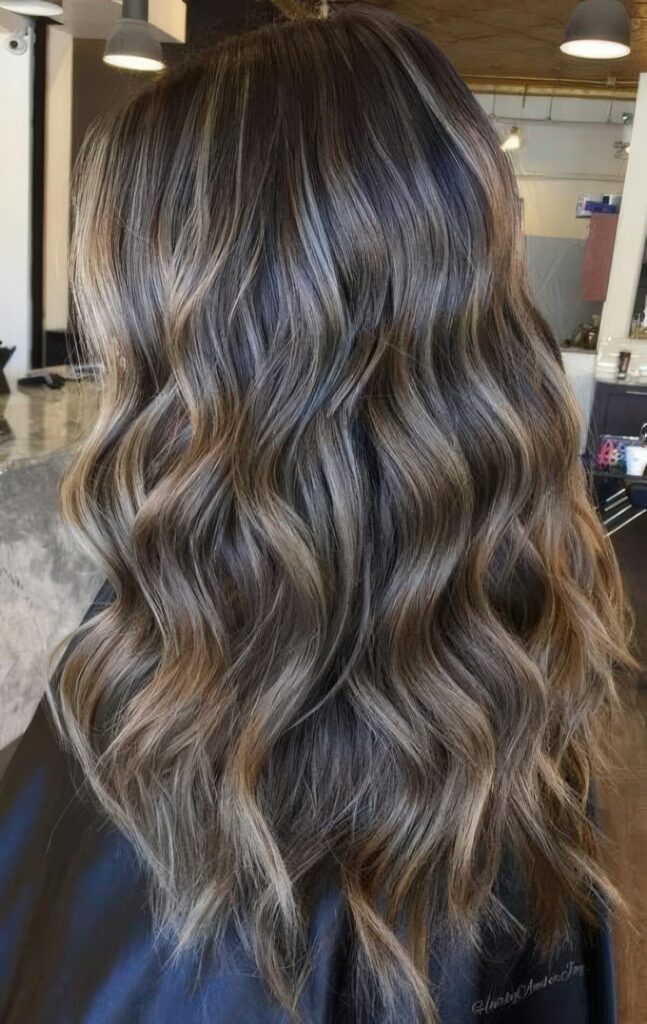
24. Caramel Highlights on Curly Hair
Highlights on curly hair require different placement than straight hair because curls compress and rotate — what looks evenly spaced on straight strands can clump or disappear on curls. A skilled colorist places caramel highlights on the surface of curls and around the face to maximize visibility. The result is bright, dimensional, and beautifully organic.
Technique: Curl-specific highlight placement
25. Salted Caramel Balayage
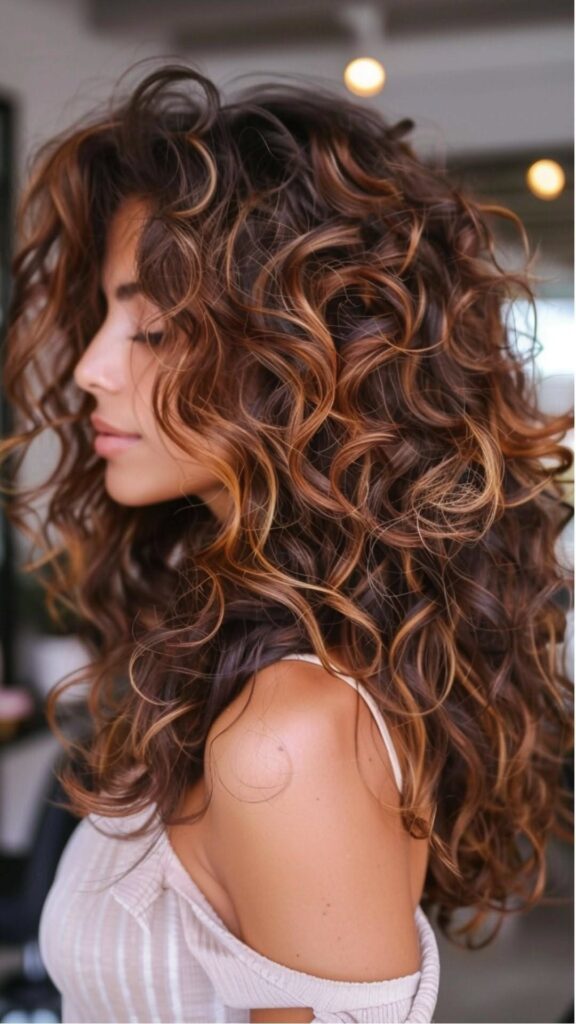
Salted caramel blends warm caramel tones with cooler, ashier blonde sections — the “salt” in salted caramel. The mix of warm and cool within the same head of hair creates a complex, multi-dimensional color that avoids looking one-note. It’s a good choice if you find standard caramel too warm but don’t want to go fully ash.
Technique: Balayage with alternating warm and cool toners
How to Choose the Right Caramel Shade
Caramel is versatile, but not every shade suits every person equally. Three things matter most:
Your skin tone. Warm and olive skin tones tend to pair naturally with warmer caramels — honey, golden, classic caramel brown. If your skin has cool or pink undertones, lean toward caramel mocha, salted caramel, or caramel bronde, which have enough cool balance to complement rather than clash. A good colorist will hold swatches near your face in natural light before committing.
Your natural base color. The closer the caramel shade is to your natural level, the less maintenance and damage you’re looking at. If you’re a natural level 3 (dark brown), jumping to a light caramel blonde requires significant lightening and ongoing toning. A dark caramel or caramel-brown with highlights is a more sustainable starting point.
Your maintenance tolerance. Be realistic about how often you’ll return for touch-ups. Highlights and light caramels require glossing every 6–8 weeks to prevent brassiness. Dark caramel and color melts can stretch to 12–16 weeks. All-over single-process caramel falls somewhere in between. Understanding what’s involved before your appointment makes the whole process easier.
If you’re considering caramel as a way to ease into color or refresh a dark base, it’s also worth knowing which hair colors tend to have a brightening, youthful effect — caramel consistently makes that list.
Frequently Asked Questions
What skin tone does caramel hair color look best on?
Caramel shades work across most skin tones, but the specific shade matters. Warm caramels (honey, golden) complement warm and olive complexions. Cooler caramels (mocha, salted caramel, bronde) tend to flatter cool and neutral skin tones. The best way to find your match is a consultation with a colorist who can assess your undertones in person.
What’s the difference between caramel and honey hair color?
Honey sits on the lighter, more golden end of the spectrum and leans closer to blonde. Caramel is warmer and richer — more brown than gold. Honey caramel blends both: it has the golden luminosity of honey with the warmth and depth of caramel. In practice, the line between them is blurry, and most colorists can adjust the toner to push a shade in either direction.
How long does caramel hair color last?
That depends on the technique and shade. An all-over caramel demi-permanent color fades gradually over 6–8 weeks. Balayage and highlights are permanent lightening, so the caramel tone itself will last until you cut or re-tone, though the toner may warm or brass over time. Using a sulfate-free, color-safe shampoo helps extend the tone between appointments.
Can you get caramel hair color on dark hair?
Yes — dark hair is one of the most popular bases for caramel. The approach depends on how light you want to go. Dark caramel and caramel highlights are achievable with moderate lightening. Lighter shades (honey caramel, caramel blonde) require more processing and carry more maintenance. Starting with a caramel balayage or face-framing highlights is a low-risk way to introduce caramel into a dark base.
Is caramel hair color high maintenance?
It ranges. Dark caramel and subtle babylights are among the lowest-maintenance color options. Light caramel, all-over honey, and caramel blonde require more frequent toning and glossing. As a general rule: the further you go from your natural base, the more maintenance you’re committing to. A balayage aftercare routine will help you preserve the color regardless of shade.
Looking for more caramel inspiration? Browse our caramel balayage styles gallery, or explore warm-toned alternatives like copper balayage and ash brown balayage.
For a bolder red-family option, see our burgundy hair color guide.
For the perfect blonde-brunette middle ground, see our bronde hair color guide.