You’ve saved dozens of photos. Maybe more. Every shade looks slightly different — some are warm and honey-drenched, others are cool and smoky, and a few look so dark they’re almost black. You keep calling it “chocolate brown” but you’re starting to suspect that phrase covers about fifteen different colors, and you’re right.
Chocolate brown isn’t a single shade. It’s a spectrum — one that shifts dramatically depending on your natural hair color, your skin tone, the technique your stylist uses, and how much maintenance you’re willing to commit to. The version you see on TikTok at 11pm is not the version you’ll see in your bathroom mirror at 7am. And the sooner you understand that gap, the better your color appointment will go.
See it on you first
Swatches lie — your hair doesn't. Preview this color on your own photo with our free virtual try-on.
This is the guide that closes that gap.
Quick Match — Which Chocolate Brown Is Right for You?
Before diving deep, here’s a fast read based on what matters most to you.
If your hair is naturally black or very dark brown, you can get a chocolate brown effect without bleach — but it’ll read as a subtle warm shift in direct sunlight, not a dramatic change. Visible dimension requires lifting one to three levels first.
If low maintenance is your priority, skip warm-toned chocolates (they fade fastest) and lean toward a mocha or neutral-based shade with a gloss overlay. You’ll get longer stretches between appointments.
If your skin has warm undertones, milk chocolate and warm chocolate browns will complement you naturally. Gold and copper micro-tones in the color will echo the warmth already in your skin.
If you hate brassiness, avoid anything labeled “warm” or “golden” chocolate. Go mocha, cool, or ashy — and budget for a gloss refresh every four to six weeks.
If you’ve previously colored your hair with box dye, especially black, tell your stylist before anything else. Previously deposited color changes the entire game plan.
What Chocolate Brown Hair Color Actually Is (And Isn’t)
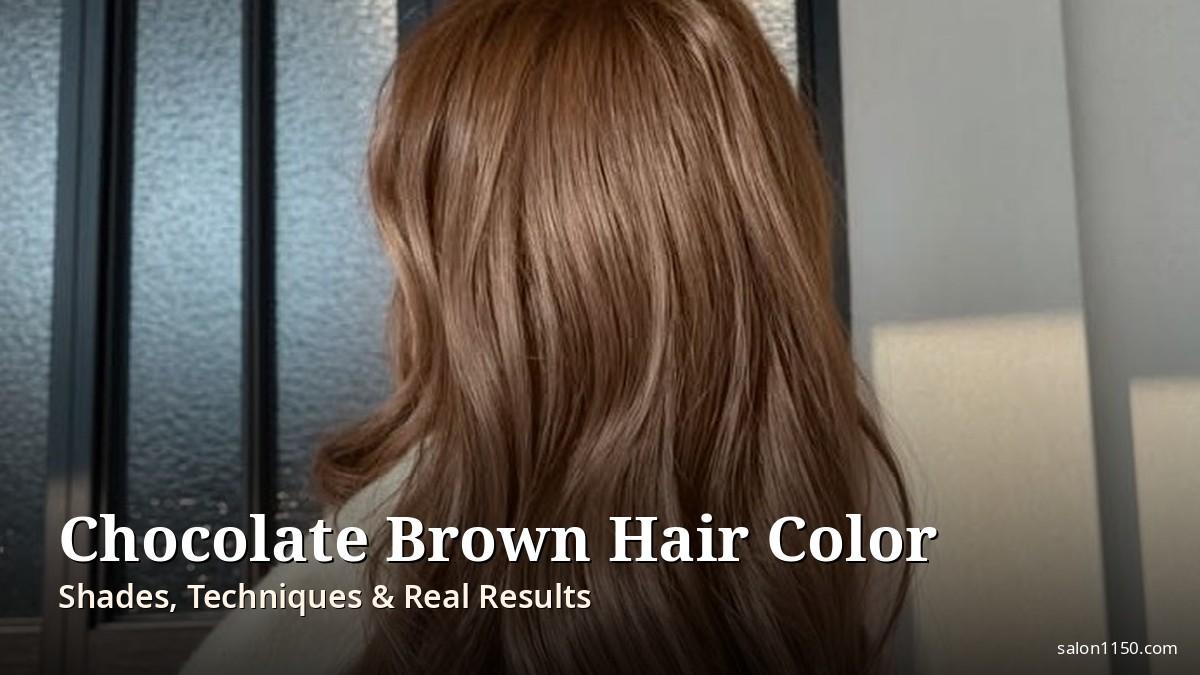
Chocolate brown hair color is a rich, medium-to-dark brunette shade built on a base of brown with deliberate undertone choices — warm (gold, copper, red), cool (ash, violet, smoke), or neutral. It sits between light caramel brunettes and deep espresso shades, and its depth is what separates it from generic “brown.”
What it isn’t: a one-size-fits-all color. The term gets thrown around so loosely online that it covers everything from a sun-kissed bronde to a near-black espresso. In a salon, “chocolate brown” means something specific — a shade with visible richness, controlled warmth or coolness, and enough depth to feel intentional. The difference between a chocolate brown you love and one that feels flat usually comes down to undertone selection and technique, not the color itself.
The Chocolate Brown Shade Spectrum
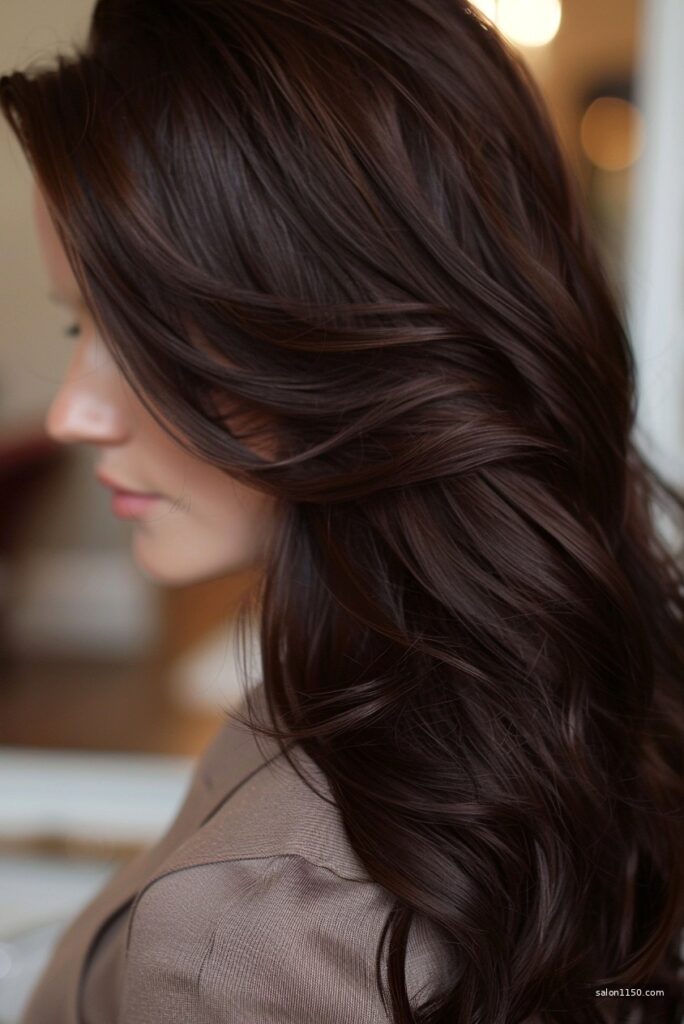
Dark Chocolate Brown
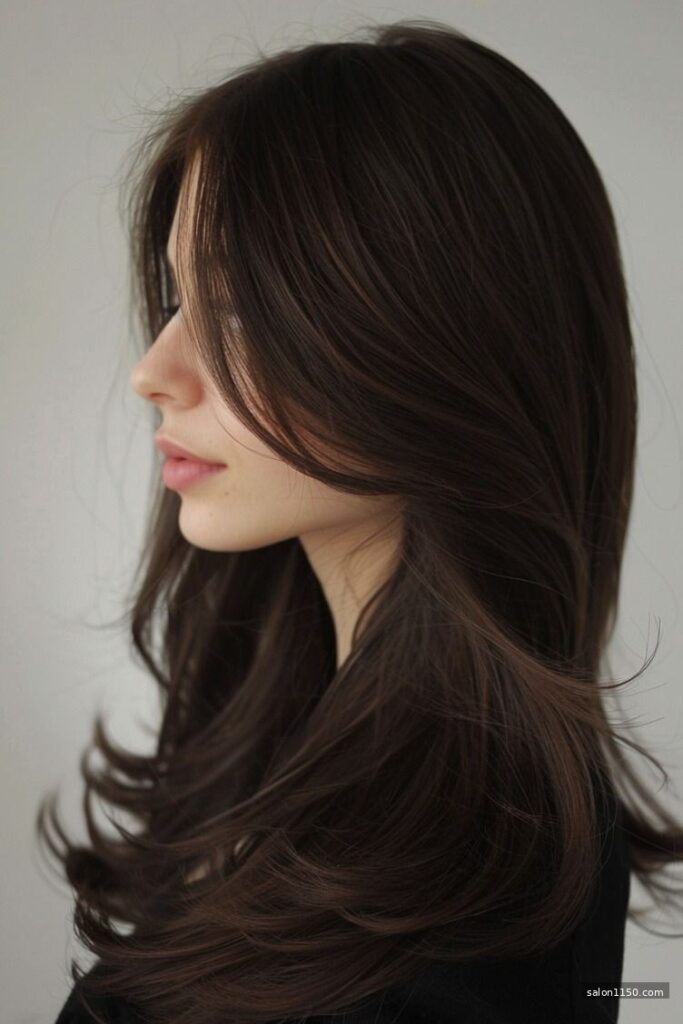
The deepest end of the spectrum. Dark chocolate sits close to espresso territory — rich, intense, with just enough warmth to keep it from reading as black. It creates strong contrast against lighter skin tones and adds serious depth to medium and deeper complexions.
The tradeoff: dark chocolate is forgiving on grow-out (roots blend naturally) but unforgiving on flatness. Without some form of dimension — even subtle tonal variation — a single-process dark chocolate can look like a helmet in certain lighting. Ask your stylist about layering two shades within the dark range to keep it from going one-dimensional.
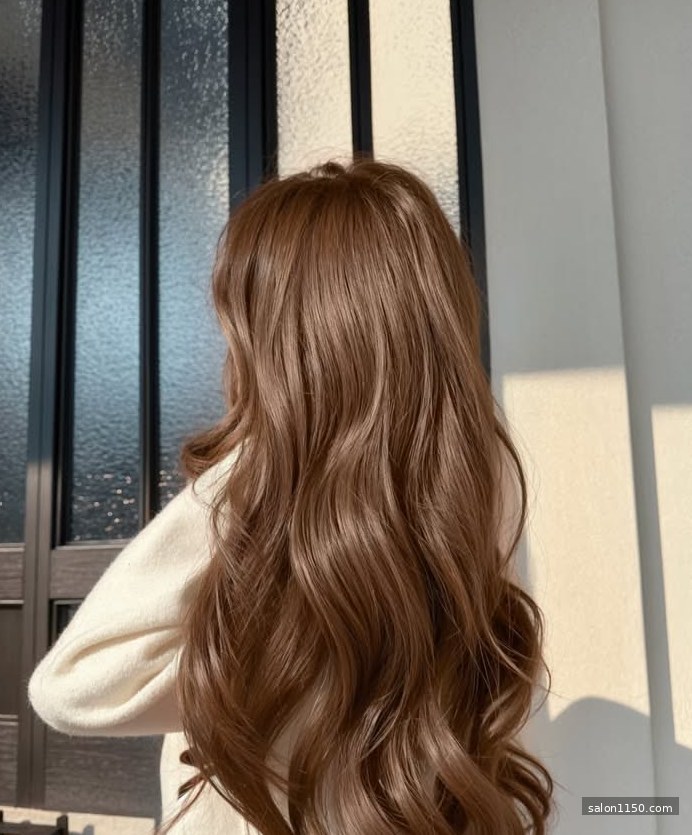
Milk Chocolate Brown
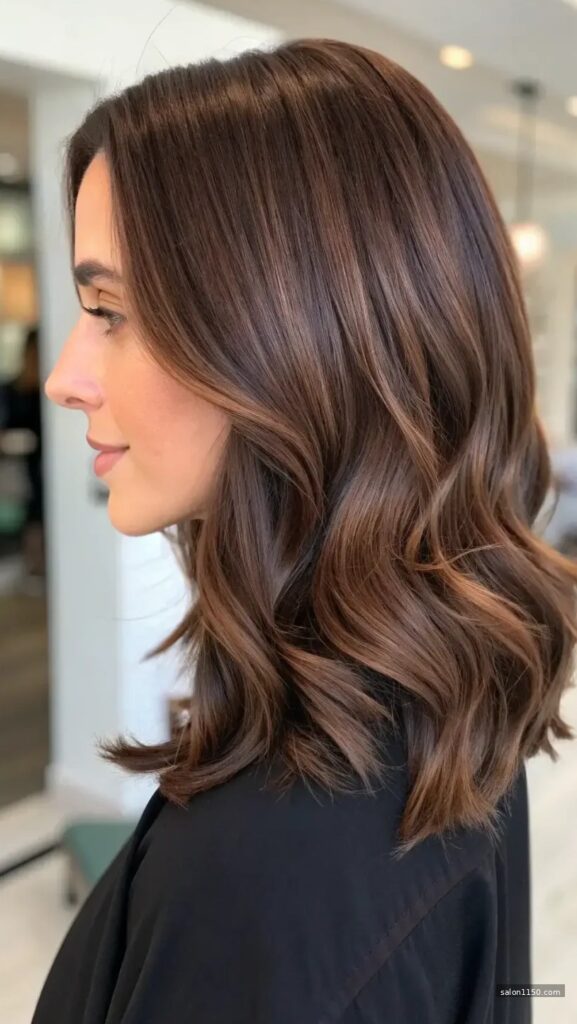
The approachable middle ground. Milk chocolate is lighter, warmer, and softer than its darker counterpart — think golden-brown with a caramel lean. It’s the shade most people picture when they hear “chocolate brown,” and it works across a wide range of skin tones, from fair to medium-deep.
Here’s what nobody tells you: milk chocolate is the shade most affected by lighting differences. It looks warm and honeyed in golden-hour sunlight and can shift noticeably cooler under fluorescent office lights. If you work indoors most of the day, talk to your stylist about how the shade will read in your actual daily environment, not just in salon lighting.
Mocha Chocolate Brown
The sophisticated option. Mocha leans coffee-toned with a slight coolness — less gold than milk chocolate, more depth than ash brown. This is the shade behind the “expensive brunette” trend, and it photographs beautifully without heavy editing.
Mocha is also one of the more stable shades in terms of fading. Because it sits in a neutral-to-cool zone, it doesn’t warm up as aggressively as golden-toned chocolates. That said, it does require precise toner selection — the wrong toner can push mocha into muddy territory fast.
 See alsoSandy Blonde Hair: A Shade-by-Shade Guide to Getting It Right
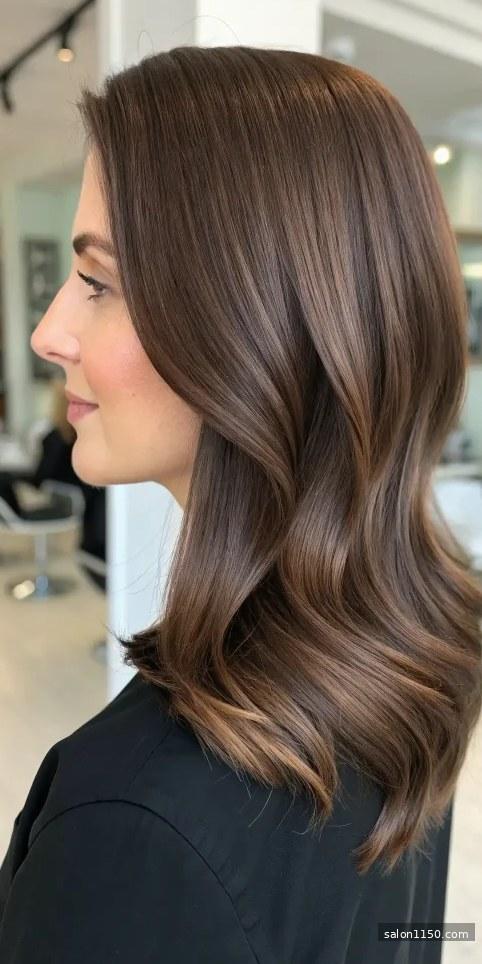
Warm Chocolate Brown
Copper undertones, gold reflections, a richness that catches light and holds it. Warm chocolate brown is fall in a bottle — it peaks in popularity every September and holds through winter. On warm and olive skin tones, it creates a glow that’s hard to replicate with cooler shades.
The honest truth about warm chocolate: it fades the fastest. Warm pigments (reds, coppers, golds) are smaller molecules that wash out more quickly than cool-toned ones. If you choose warm chocolate, you’re committing to color-safe products and gloss refreshes every four to six weeks. That’s the cost of the warmth. It’s worth knowing before you sit down. For a bolder red-family shade, see our burgundy hair color guide.
Cool and Ashy Chocolate Brown
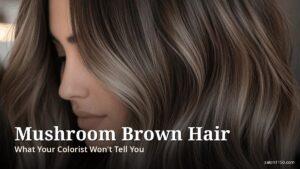
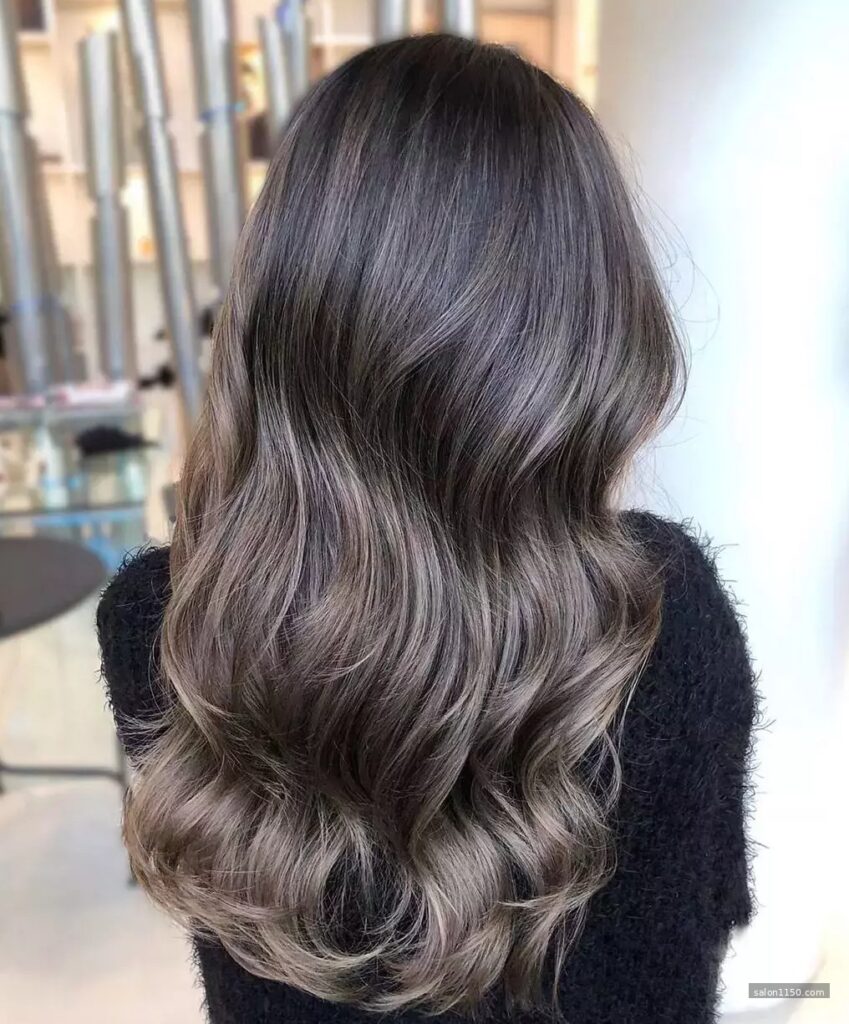
Smoky, modern, and increasingly popular. Cool chocolate brown strips out the gold and copper undertones, replacing them with violet, ash, or mushroom tones. It’s the hardest chocolate shade to maintain — and the most rewarding when it’s done right. If the mushroom tones are what caught your eye, our mushroom brown hair color guide explores the coolest brunette shades in depth.
Why it’s difficult: cool tones fight against most people’s natural hair pigment, which leans warm. Without regular toning, ashy chocolate will drift toward brassy or muddy within weeks. If your lifestyle doesn’t support frequent maintenance appointments, this shade will frustrate you. But if you’re willing to invest, the result is a depth and sophistication that warmer chocolates can’t match.
How Chocolate Brown Works on Different Hair and Starting Points
This is where most articles fail you. They show the finished shade but skip the part where your starting point determines everything. For complete gray-coverage strategies, see our guide to hiding gray hair for brunettes.
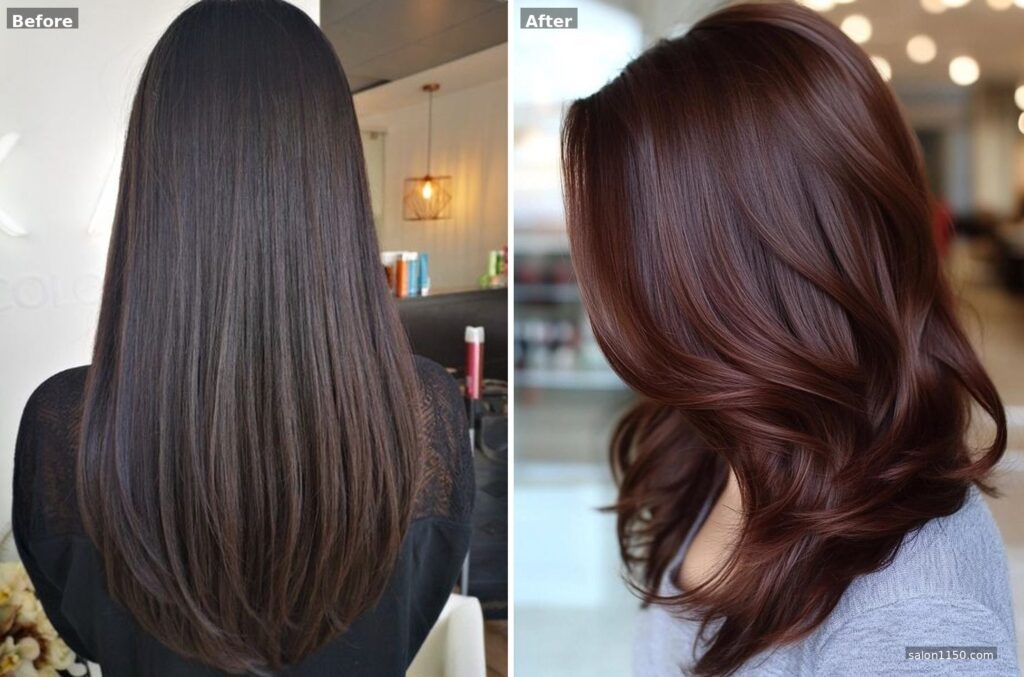
If your natural hair is black or very dark brown — including South Asian, East Asian, and Afro-textured hair — chocolate brown without bleach will give you a warm shift visible mainly in direct sunlight. It’s subtle, and for some people, that’s exactly what they want. But if you’re expecting the visible chocolate dimension you see in photos, your stylist will likely need to lift your hair one to three levels first. That’s not a bad thing — it just means the process is longer than a single appointment, and your stylist needs to know your expectations upfront.
If you’ve previously dyed your hair black with box dye, the conversation changes entirely. Box dye deposits metallic salts that interact unpredictably with professional color. A color remover may be needed before your stylist can even begin. Be honest about your color history — this is the single most important piece of information your colorist needs.
If your starting point is lighter — medium brown, dark blonde, previously highlighted — chocolate brown is one of the easier color transitions. Your stylist can often achieve it in a single session with a demi-permanent or permanent color, and the result tends to be rich and dimensional from the start.
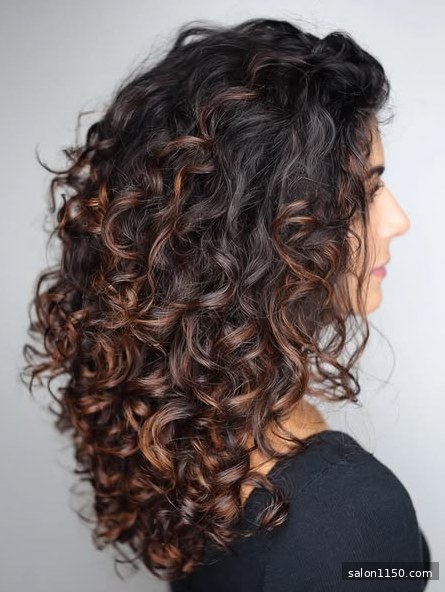
Texture matters too. Chocolate brown reads differently on straight hair versus curly or coily hair. On straight hair, the color appears more uniform and glossy. On curls and coils, light hits each curve differently, which naturally creates dimension — meaning you may need less highlighting work to get a multi-tonal result. Your stylist should adjust the technique to work with your texture, not against it.
Techniques That Change Everything
The shade you pick is only half the equation. The technique determines how the color lives on your hair — how it grows out, how it fades, and what it costs to maintain.
Global (All-Over) Color
A single shade applied root to tip. It’s the fastest application, the lowest upfront cost, and the most straightforward option. It also carries the highest risk of looking flat, especially in darker shades. A solid dark chocolate global color without any dimension can read heavy and one-note.
Maintenance reality: global color produces a visible root line as your hair grows. Depending on how close the shade is to your natural color, you’ll see regrowth within three to five weeks. Budget for touch-ups every six to eight weeks.
Balayage and Highlights
Hand-painted balayage or foil highlights create dimension within the chocolate range — lighter pieces woven through a deeper base. The result is movement, depth, and a grow-out that looks intentional rather than neglected.
The tradeoff: higher upfront cost (longer appointment, more technical skill required) but significantly softer maintenance. Because the lighter pieces don’t start at your root, you can stretch appointments to ten or even twelve weeks. For a deeper comparison of these methods, see our breakdown of balayage vs highlights.
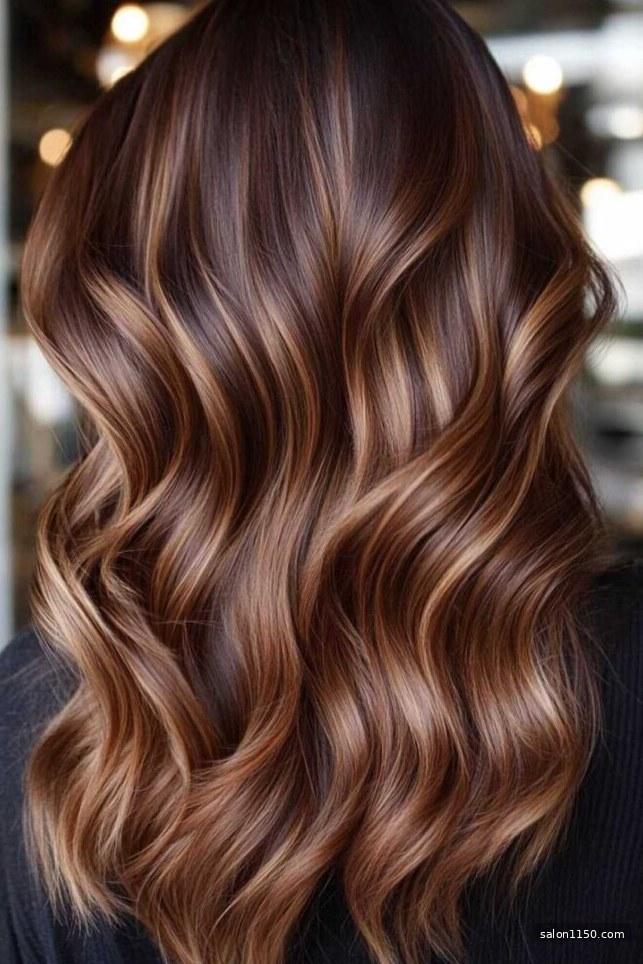
For the lighter end of the spectrum, explore our caramel hair color ideas guide.
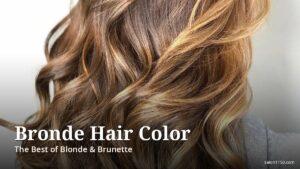
For the perfect blonde-brunette middle ground, see our bronde hair color guide.
Gloss and Toner Overlay
A gloss is the lowest-commitment way to enter chocolate brown territory. It deposits translucent color over your existing shade, adding richness and shine without permanently altering your hair. Think of it as a filter for your actual hair color — it enhances what’s there without restructuring it.
Glosses fade gradually over four to eight weeks and don’t leave a harsh line. They’re also the best tool for refreshing an existing chocolate brown between full color appointments. If you’re curious about whether a hair gloss treatment is right for you, it’s worth understanding the difference between salon and at-home options.
Layered Color (Depth + Dimension)
This is the stylist-level approach — combining a base shade with a slightly different tone through the mid-lengths or ends, sometimes adding a gloss finish on top. It’s more complex, takes longer, and costs more. It also produces the most natural, multi-dimensional chocolate brown, the kind that shifts in different lighting without looking artificially highlighted.
If you’ve ever wondered why your colorist’s work looks different from what you achieved with a single box of dye, this is usually why. Layered color is where technique and artistry merge.
What Your Stylist Needs to Hear
Walk in with a reference photo — but also walk in with words. Photos show a destination. Words help your stylist understand the route.
Tell them your natural hair color (not what it was five years ago — what’s growing out of your head right now). Tell them every color treatment you’ve had in the last two years, including box dye, henna, and “just a glaze.” Tell them how often you’re realistically willing to come back for maintenance — not how often you’d like to in theory, but how often your schedule and budget actually allow.
 See alsoCaramel Hair Color Ideas: 25 Shades Worth Saving for Your Next Appointment
Then tell them what you don’t want. “I don’t want it to look flat.” “I don’t want it to go brassy.” “I don’t want a visible root line in four weeks.” Knowing what to avoid is sometimes more useful to a colorist than knowing what you want.
If you’re new to color entirely, our guide on things to know before you color your hair covers the basics every first-timer should understand.
Maintenance, Fading, and the Stuff Nobody Mentions
Chocolate brown is often marketed as low maintenance. That’s true compared to platinum blonde or vivid fashion colors — but “lower maintenance” and “no maintenance” are different things. A gloss for chocolate brown shine every few weeks keeps the color reflective.
All chocolate brown shades fade. Warm tones fade first, pulling toward brassy gold or orange (yes, chocolate brown can fade to orange — especially if the underlying pigment was lifted and not properly toned). Cool tones fade toward muddy or ashy. Neutral tones hold the longest but still shift over time.
A sulfate-free shampoo helps, but it’s not magic. The real maintenance tool is a gloss refresh every four to six weeks — a quick, affordable appointment that redeposits tone and restores shine without a full color service.
Seasonal differences matter more than most people realize. Summer sun, chlorine, and saltwater accelerate fading. Humidity can make color look duller by lifting the hair cuticle. If you color your hair in October and expect it to look the same in July without intervention, you’ll be disappointed.
For those looking for color options that require even less upkeep, our low maintenance hair color ideas are worth exploring alongside this.
What Instagram Gets Wrong About Chocolate Brown Hair
That mirror-shine, liquid-gloss, every-strand-in-place chocolate brown you keep saving? It was shot under ring lighting, finished with a flat iron and a serum, and almost certainly filtered before posting. That’s not a lie — it’s a performance. And there’s nothing wrong with it, as long as you know that’s what it is.
In natural light, chocolate brown is beautiful — but it’s a different kind of beautiful. It’s richer in shadows, softer in dimension, and less uniformly glossy. Your day-three hair won’t look like a fresh blowout TikTok, and it shouldn’t need to.
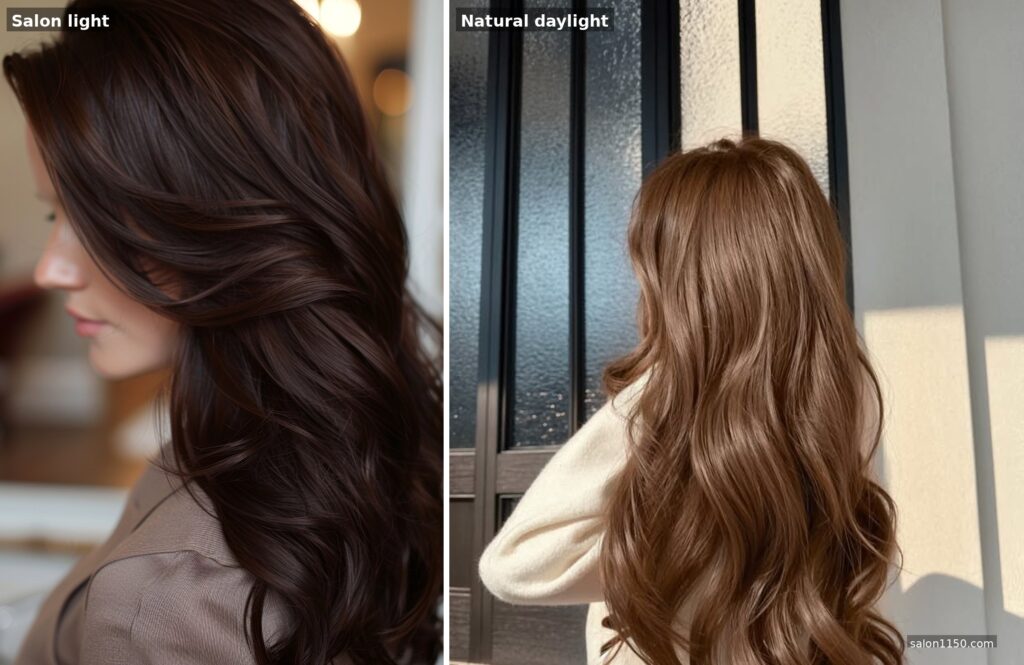
The most misleading thing social media does with chocolate brown is underplay the maintenance. Every “low maintenance brunette” caption attached to a perfectly toned, freshly glossed head of hair is leaving out the appointment schedule that keeps it looking that way. When someone tells you their chocolate brown is “so easy,” ask them how often they see their colorist. The answer usually reveals the work behind the ease.
If you’re specifically exploring shades that complement warm skin tones or brown and deeper skin tones, those guides go deeper on undertone matching than we can cover here.
Chocolate Brown Hair Color Ideas Worth Saving
The best inspo connects a shade to a technique — not just a pretty photo with no context. When saving reference images, look for photos taken in natural light (not ring-lit), on hair textures similar to yours, and ideally with a caption that mentions the technique used.
Dark chocolate with subtle face-framing highlights works particularly well on straight to wavy hair, adding movement without overwhelming the depth. Milk chocolate balayage on curly hair creates dimension that shifts as the curls move — a combination where less highlighting goes further because the texture does half the work. Mocha chocolate as a global color with a gloss finish is the closest thing to a true low-maintenance option — the neutral tone resists brassiness and the gloss extends the life of the color between appointments.
And if you’re considering a visible transformation — going from jet black or very dark hair to a noticeably lighter chocolate shade — save before-and-after references that show realistic outcomes, not just the “after.” The journey matters, and knowing what the in-between stages look like helps set expectations your stylist will thank you for.
You now know more about chocolate brown hair color than most people do when they sit down in a salon chair. The smartest move you can make with that knowledge is to bring it to a colorist who can translate it into something real — someone who’ll work with your hair, your lifestyle, and your honesty about what you’re willing to maintain. That’s where the good color starts.
Not sure which service fits? Explore our hair color services to see what’s possible.
Frequently Asked Questions
What is chocolate brown hair color? Chocolate brown is a rich, medium-to-dark brunette shade defined by deliberate undertone choices — warm, cool, or neutral. It sits between lighter caramel brunettes and deep espresso shades, with enough depth and richness to feel distinct from generic brown.
Does chocolate brown hair color require bleach? It depends on your starting point. If your natural hair is medium brown or lighter, bleach usually isn’t needed. If your hair is black or very dark brown, some level of lightening is typically required to achieve visible chocolate dimension — though a subtle warm shift is possible without bleach.
Which chocolate brown shade suits my skin tone? Warm and olive skin tones pair naturally with milk chocolate and warm chocolate browns. Fair and cool skin tones tend to look best in mocha or cool-toned chocolate. Deeper skin tones can go rich and dark or experiment with warm caramel-toned chocolates for contrast.
How long does chocolate brown hair color last? Permanent chocolate brown color lasts until it grows out, but the tone shifts over time. Expect noticeable fading at four to six weeks, with warm shades fading fastest. A gloss refresh extends vibrancy between full color appointments.
Does chocolate brown hair fade to orange? It can, especially if the hair was lightened before color was applied and the toner wasn’t strong enough to neutralize underlying warm pigments. Warm chocolate shades are most susceptible. Using sulfate-free products and scheduling gloss refreshes helps prevent brassy fading.