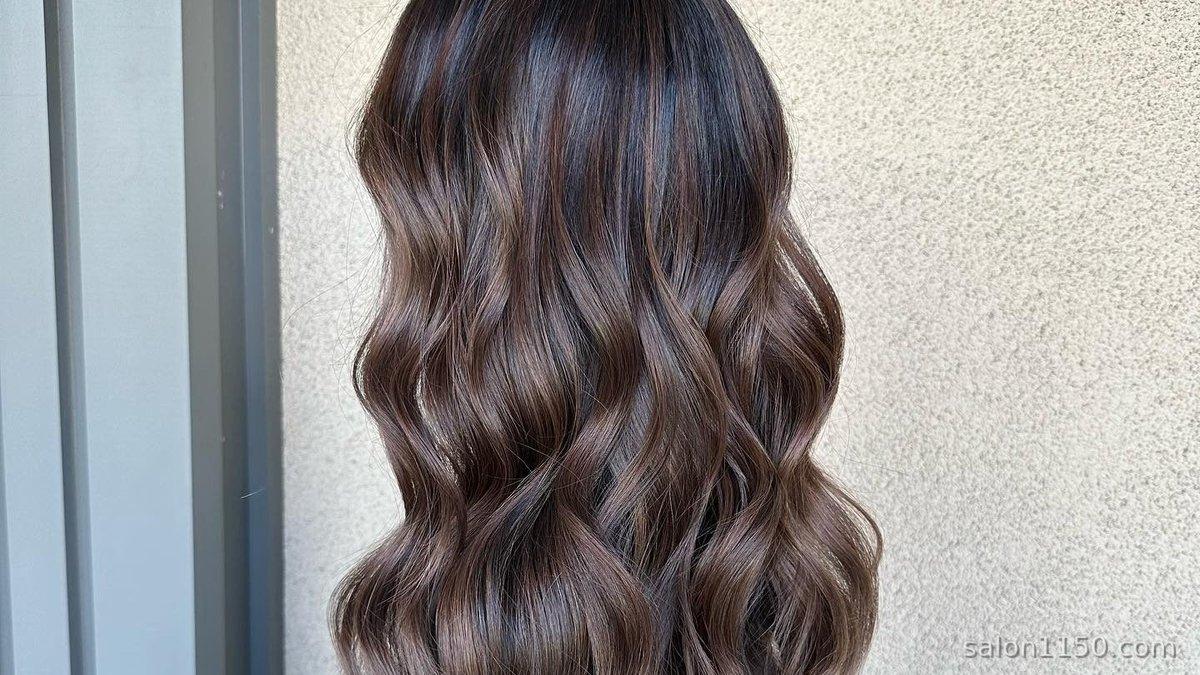
Ash brown is the cool-toned brunette everyone asks for, and the one most people misunderstand. It looks effortless in photos: smoky, muted, expensive. What the photos don’t show is that ash brown is a cool tone sitting on hair that naturally wants to go warm, which means it fades, it can turn brassy, and in the wrong hands it can even go green. None of that means you shouldn’t get it. It means the difference between gorgeous ash brown and a gray, brassy, expensive mess is the shade you pick, the words you use at the salon, and the toning schedule you keep afterward. This guide covers all three.
What Is Ash Brown Hair Color?
Ash brown is a light-to-medium brown with cool gray, silver, or beige undertones. Where warm browns lean golden, copper, or red, ash brown leans smoky and matte. The “ash” is not a single pigment but a family of cool tones, blue, green, and violet, which cancel out the red and orange undertones naturally present in brown hair.
That cool base is what sets it apart from the other brunettes. Chocolate brown is rich and warm. Mushroom brown is ash brown’s softer, warmer cousin, muted like ash, but with more beige and less gray. Ash brown sits between the two: cooler than mushroom, lighter and smokier than chocolate, with a matte finish that photographs beautifully and grows out more gracefully than most cool colors, provided you pick the right depth. One more thing worth knowing before you choose: cool ash absorbs light while warm gold reflects it, so the same level can look darker in ash than in a warm brown. If you are deciding between two depths, the lighter one is usually the safer pick.
One thing to understand first: “ash brown” is not one color. It is a tone family spanning four depths, plus two ways of wearing it, and the shade that suits you depends on which one you choose.
Ash Brown Hair Color Shades
Colorists describe hair color by level (how light or dark it is) and tone (warm, neutral, or cool). Ash brown runs from level 3 to level 8 depending on the version. Here is the whole family at a glance.
| Shade | Level | What it looks like | Best starting base | Maintenance |
|---|---|---|---|---|
| Light ash brown | 6–7 | Soft, smoky beige-gray; the palest ash brown | Light to medium brown, dark blonde | Highest: warms fastest |
| Medium ash brown | 5–6 | The classic cool brown; balanced, smoky, clearly brown | Medium brown | Medium |
| Dark ash brown | 4–5 | Deep, cool espresso-brown; near-black indoors | Dark brown to black | Low |
| Ash brown balayage | Base 4–5, ends 6–8 | Hand-painted ashy dimension through a brown base | Any brown base | Lowest: soft grow-out |
| Ash bronde | 6–8 | Brown-to-blonde crossover; lighter, more dimensional | Light brown, dark blonde | High |
| Espresso ash brown | 3–4 | Almost-black brown with a cool ash undertone | Dark brown to black | Lowest |
Light Ash Brown

Light ash brown is the palest version, a soft, smoky beige-gray that reads closer to dark blonde than to brown in bright light. It flatters fair, cool skin most, and it is the most dramatic change from dark hair. It is also the highest-maintenance: the lighter the ash, the faster the cool tone washes out, sometimes within two to four weeks, and dark hair needs lightening to get here, occasionally in two sessions. The biggest risks are going green or gray if the toner is too strong, and fading fast to a brassy blonde-brown.
Medium Ash Brown

Medium ash brown is the classic, the shade most people picture when they say “ash brown.” A true cool brown, smoky but unmistakably brown, with enough depth to look polished in any light. It is the most universally flattering version and the easiest to achieve: medium brown hair usually needs only one or two levels of lift. Its only weakness is that it can look flat or “mousy” in poor light, which is why a little dimension, a few lowlights or a root shadow, helps.
Dark Ash Brown

Dark ash brown is deep, cool, and almost matte, an espresso-brown with a gray undertone that can read as near-black indoors and shows its smokiness in sunlight. It is the best entry point into ash brown: dark brown and black hair can usually reach it with little or no lightening, making it the lowest-maintenance version and the safest choice for a subtle change. It suits olive, cool, and deep skin tones particularly well. The trade-off is contrast: go too dark and too flat, and it can look harsh rather than smoky, especially on very fair skin.
Ash Brown Balayage

Ash brown balayage is a technique, not a single shade: hand-painted cool ash-brown pieces through a darker brown base, lighter toward the ends. It is the lowest-maintenance way to wear ash brown because the roots grow out softly with no harsh line, and the most forgiving option for dark hair. You get the ash effect without lightening everything. It suits the widest range of skin tones, since the depth at the roots keeps it from washing you out. The risk is over-toning the ends, which can turn them gray or green.
Ash Bronde

Ash bronde is the brown-to-blonde crossover, an ash brown base lightening toward ash blonde at the ends, the look people mean by “expensive brunette.” It is warmer and more dimensional than classic ash browns, a good choice if you are blonde-curious but not ready for blonde. The price is maintenance: it needs the most lift and the most frequent toning of any version here, plus sun protection to keep the lighter pieces from warming up.
Espresso Ash Brown

Espresso ash brown is the deepest version, an almost-black brown with a cool ash undertone, like roasted coffee with the warmth taken out. It is sleek, dark, and refined, and the safest ash brown of all: virgin dark brown hair can often reach it without bleach, it fades slowly (from ash toward chocolate rather than toward brass), and it suits deep and olive skin beautifully. If you want the ash effect with the least commitment, this is the one.
Who Does Ash Brown Suit?

Ash brown suits more people than its reputation suggests, but in different versions. Skin tone rules are guidance, not law, and the right answer is almost always “the right shade and technique for you,” not a yes-or-no verdict.
Cool and Neutral Undertones
Cool and neutral undertones are the natural best fit. If your skin has pink or cool undertones and your veins look blue or purple at the wrist, ash brown mirrors what is already there, and the result looks polished rather than forced. Fair skin with cool undertones looks best in light to medium ash; medium skin with cool undertones can wear any depth. Blue, gray, green, and hazel eyes all pair beautifully with the cooler shades.
 See also28 Soft Caramel Balayage Styles on Brown Hair
Not sure which undertone you have? Three quick checks in natural daylight: your wrist veins look blue or purple if you are cool, green if you are warm, mixed if you are neutral; you look better in white fabric than cream if you are cool; silver jewelry brightens cool skin, gold brightens warm skin.
Warm and Olive Undertones
Warm and olive undertones can wear ash brown with an adjustment. A flat, all-over ash on warm skin can emphasize sallowness, and on olive skin it can clash with the skin’s green-yellow tone and look muddy or tired. Olive is the trickiest undertone for ash. The fix is softening, not avoiding: a darker ash or mushroom-leaning formula, balayage instead of all-over color, or a warm root with face-framing pieces to lift the face. Warm brown eyes pair especially well with dark ash brown, which keeps enough depth to flatter them. On mature skin prone to sallowness, a very flat ash can emphasize it and look ashen, a warmer ash or added dimension is the safer choice.
Your Natural Hair Color and Gray Hair
Your starting color decides how hard the change is. Medium brown is the easiest base: most ash browns sit within a level or two of it. Dark brown and black hair can go dark ash or espresso with minimal lift, but need lightening for any lighter version. Very light blonde hair takes ash easily but can grab too much of it and go gray. Gray hair is a special case: ash brown blends with gray beautifully because the smoky tones match, but it is not a permanent gray-cover solution. The color fades faster on gray, and a flat ash can look dull as it grows in. If coverage is the goal, a warm-ash or mushroom formula with lowlights holds up better, with top-ups every four to six weeks.
Do You Need Bleach to Get Ash Brown?
It depends on where you start and where you want to land. Dark hair needs lightening to reach light or medium ash. On very dark or black hair, that usually means two sessions with a bond builder, not one aggressive session. Dark ash and espresso, by contrast, are often achievable on virgin dark brown hair with little or no bleach. Light-to-medium brown hair frequently needs no bleach at all for medium or dark ash.

Two warnings matter more than the bleach question. First, porous or damaged hair absorbs ash pigment too fast, which is how hair turns green or gray. A strand test shows how your hair will behave before the whole head is committed, and if your hair is compromised, don’t lift; tone darker instead. Hair porosity decides how fast that pigment grabs, so run a quick hair porosity test before your appointment. Second, box dye and henna history make correction harder and less predictable, so tell your stylist, and run through the things to know before you color your hair before you sit in the chair.
How to Ask Your Stylist for Ash Brown
Most ash brown disappointments are communication failures, not color failures. “Ash brown” on its own is too vague: it covers four depths, two techniques, and a dozen undertones. Walk in with a level, a tone, and a photo, and the result gets dramatically more predictable.

Use these words: “I’d like a cool-toned ash brown, around a level 5 or 6. I want it to look natural and ashy, not warm or golden, but please don’t make it too gray or green. Could we start with a level 5–6 base, with a cool ash toner, and maybe some subtle lowlights or a root shadow so it looks blended and grows out softly?” For balayage: “Keep my natural base and add cool, ashy dimension through the mid-lengths and ends, no warm or brassy pieces, no harsh lines.” For light ash: “A level 6 or 7, but I still want it brown, not blonde. Keep it soft and beige. I don’t want it to look silver or green.”
Useful terms: level (the 1–10 depth scale, 4 to 7 is the ash brown range); toner versus gloss (a toner corrects or refreshes tone after lightening and lasts four to six weeks; a gloss is a semi-permanent shine and refresh); root shadow or root melt (a darker root that makes grow-out soft); money piece (lighter face-framing strands). In colorist language, ash is written as “.1” (and “.2” for violet-ash), 5.1 is a medium ash brown. Double ash, “.11,” is the strongest cool tone there is and the usual culprit when hair comes out gray or green. If you don’t want that risk, say so: “one ash only, not double ash.”
Photos: bring two or three of the same shade from different angles and in different lighting: one front, one side or back, one showing the roots and ends, ideally on hair similar to yours in length, texture, and skin tone. Show the color in daylight and indoor light, because ash looks different in each. Point to what you like and what you don’t like. Don’t bring a filtered photo, a celebrity photo with undertones you don’t want, or three different shades and expect the stylist to choose. Bring two target photos plus one photo of what you DON’T want. It tells the stylist as much as the photos you like. And disclose two to three years of chemical history: box dye, henna, bleach, glosses, perms or straightening. Ash reacts strongly to past chemicals.
What not to say: just “ash brown” with no level, tone, or photo. “Make it ashy”: it can be read as gray, green, or silver. “No warmth at all”: it can produce a flat, gray, or green result; ask to “neutralize the brass” instead. “Ash blonde” when you mean ash brown: they are different colors. And never accept a formula you don’t understand: ask what it does, how it will fade, and what the maintenance will be. Before you agree, ask: “What level is my hair now? Will I need bleach? Is this permanent or a toner? How often will I need to tone it? How many sessions will it take?”
Ash Brown vs Ash Blonde vs Warm Brown
If you are choosing between the three, the differences are depth, commitment, and what kind of brass you will fight.
| Ash brown | Ash blonde | Warm brown | |
|---|---|---|---|
| Depth | Levels 3–7, clearly brown | Levels 7–10, clearly blonde | Levels 4–7, golden or copper |
| Bleach needed | Sometimes, by shade | Almost always, significant lift | Rarely |
| Maintenance | Moderate: toner every 4–6 weeks | High: frequent toning, purple shampoo | Low: fades into itself |
| Grow-out | Soft, especially balayage | Obvious roots | Very soft |
| Brassiness | Orange and red show first | Yellow shows first | Minimal: warmth is the point |
| Best for | Cool or neutral undertones; brunettes wanting cool dimension | Fair cool skin; blondes going cooler | Warm undertones; lowest-commitment change |

Ash brown is the middle path: cooler and more modern than warm browns like caramel, far less commitment than ash blonde. If you want the cool effect without the blonde upkeep, ash brown is the right choice. If you want almost no upkeep at all, a warm brown will always beat it: warmth fades into warmth, while ash fades into warmth and needs correcting.
How to Maintain Ash Brown Hair
Ash brown fades faster than warm brown, because the cool tone sits on hair that has usually been lifted, and the blue and green pigments that make it cool are the first to wash out. Expect this timeline: weeks one and two, gorgeous, cool, and smoky; week three or four, the first warmth at the ends; weeks four to six, visibly brassy; weeks six to eight, warm brown if nothing is done. The schedule below keeps you ahead of it.

Toning schedule: a toner or gloss every four to six weeks for light and medium ash; every six to eight weeks for dark ash and espresso; roots every four to six weeks for solid color, or every eight to twelve weeks for balayage; a full color refresh every eight to twelve weeks depending on growth. A root shadow or lived-in balayage stretches every interval, the lowest-maintenance way to wear this color.
Blue shampoo, not purple: the single most-mixed-up detail in ash brown care. Blue shampoo cancels orange: the brass that shows in brown hair. Purple shampoo cancels yellow: the brass that shows in blonde hair. On ash brown, use a blue-based, color-depositing shampoo made for brunettes, once or twice a week, left on for three to five minutes. Purple shampoo does not fix orange in brown hair and can even make the color look brassier. Don’t use either one daily: overuse deposits too much pigment and can leave a dull or blue cast, especially on porous hair. If your hair starts looking dull or muddy, skip the blue shampoo for a week and let the tone settle.
Washing and daily care: how often to wash your hair matters as much as what you wash with: two to three times a week with lukewarm or cool water and a sulfate-free, color-safe shampoo; hot water strips tone faster. The best shampoos and conditioners for balayage are a good shortlist for ash tones too, since they are all color-safe. Use a heat protectant and lower heat settings, and deep-condition weekly, since lifted hair holds color worse when it is dry. A hair care routine tailored to your hair type keeps the tone even between appointments. Sun, chlorine, and salt water all fade ash faster, so use UV protection or a hat outdoors and rinse before and after swimming. A salon gloss refreshes tone and shine between appointments, if you are deciding between a gloss and a glaze, it comes down to tone versus shine.

What it costs to keep: shade choice drives cost more than the salon does. Typical US salon ranges: an initial ash brown service runs roughly $150–$300, more for light ash from dark hair (often two sessions); a toner or gloss refresh runs $50–$120; a root touch-up $80–$150. Over a year, dark ash and espresso cost the least to own, while light ash and bronde cost the most. Prices vary widely by salon and location, so treat these as planning ranges, not quotes.
Common Mistakes to Avoid
Most ash brown problems come from a small set of causes, and every one of them has a fix. These are the complaints that show up over and over in hair forums, and what actually solves them.

It turned green. The number-one complaint. Ash contains blue pigment, and blue over yellow or brassy hair makes green. It happens when ash dye goes over previously bleached or brassy hair, when a double-ash formula is used on a warm base, or when porous hair grabs too much ash. The fix is warmth, not more ash: a warm or red-toned gloss cancels green, a clarifying wash softens it, and sometimes it simply fades over one to two weeks of washing. Adding more ash makes it worse. If you did it yourself over bleach, stop and see a colorist for a fill rather than layering on another box dye.
It came out too dark. Box ash brown routinely lands darker than the box, especially on dark or porous hair, and salon color can too. If it is a toner or demi-permanent color, a clarifying shampoo and warm water over two to four weeks will usually lift it noticeably; permanent color fades less. A gloss or a few partial highlights can add lightness back professionally. Skip the color-remover, vitamin C, and dish-soap hacks people suggest online. Colorists consistently warn they are drying and unpredictable. Cool pigments absorb light, so ash often looks one to two levels darker than the box or swatch. If it came out too dark, don’t re-bleach immediately; clarifying shampoo over a few washes usually lifts it, and next time choose one level lighter. A strand test before coloring is what prevents this one.
It went brassy within weeks. This is usually expected fade, not a bad dye job: as the blue and green pigments wash out, the underlying orange and red show through, faster in sun and hard water. Blue shampoo once or twice a week and a toner every four to six weeks are the maintenance, not a one-time fix. There is no permanent way to keep ash cool. If your water is hard, a shower filter or a chelating treatment helps more than most people expect.
Damage from lifting dark hair. Light ash from black or dark brown hair needs two or more sessions with a bond builder, and chasing it in one sitting is how hair ends up straw-like. If you don’t want the lift or the damage, stay in the dark ash or espresso range, the standard colorist redirect, and it looks intentional rather than compromised. If your hair is already damaged or over-processed, don’t lift at all; tone darker instead.
DIY fails. Ash brown is one of the worst colors to do yourself, because blue and green correctors are unforgiving on an unknown base: previously colored hair, roots versus ends, and gray all take the color differently. The universal advice from colorists is the same: don’t layer another box dye on top to fix it; go to a professional for correction, and use a root shadow or gloss to blend mismatches. Box dye has a classic failure pattern: hot orange roots (scalp heat lifts roots faster) with dull gray ends (porous ends grab the ash). Professionals apply mid-lengths and ends first and roots last for exactly this reason.
FAQ: Ash Brown Hair Color Questions Answered
Does ash brown hair color cover gray hair?
It blends with gray rather than covering it permanently. The smoky tones match gray well, so regrowth looks softer than with a warm color, but the color fades faster on gray hair, and a flat ash can look dull as it grows in. Expect top-ups every four to six weeks, and consider a warm-ash or mushroom formula with lowlights if full coverage is the goal. A useful salon trick: pure ash can’t cover gray cleanly because gray hair has no underlying pigment, so colorists often mix roughly half neutral and half ash, for example 5N + 5A, to give the color something to hold onto.
Will ash brown turn my hair green?
It can, but it shouldn’t. Green happens when blue ash pigment goes over yellow or brassy hair, when a double-ash formula is used on a warm base, or when porous hair over-absorbs the ash. A good colorist avoids it with a fill or a single-ash formula, and if it happens, the fix is adding warmth, a warm gloss, not more ash.
Does ash brown need bleach?
It depends on your starting color and your target shade. Dark hair needs lightening for light or medium ash, often in two sessions. Dark ash and espresso are often possible on virgin dark hair without bleach. Light-to-medium brown hair frequently needs no bleach at all for medium or dark ash.
How long does ash brown last?
The cool tone lasts four to eight weeks before it needs a salon refresh: two to four weeks for light ash, six to eight or more for dark ash and espresso. Permanent all-over color holds its depth longer, but the ash tone itself is a demi-permanent layer that fades. Balayage lasts two to three months between full refreshes because the roots grow out softly.
Can I dye my hair ash brown at home?
Dark ash on virgin, healthy hair is the most realistic at-home version, and even then, do a strand test and a patch test first. Light ash, ash over bleach, ash over previously colored hair, and ash on dark hair are all high-risk at home: green, too dark, and patchy are the usual outcomes. If any of those apply, a salon visit costs less than a correction.
Does ash brown suit warm skin tones?
Yes, with softening. A flat, all-over ash can wash out warm skin, but a darker ash, a mushroom-leaning formula, an ash balayage, or a warm root with face-framing pieces all work well. Olive skin needs the most care: full flat ash can look muddy, so a neutral ash with warm framing is the safer choice.
Is mushroom brown the same as ash brown?
No, though they are often confused. Mushroom brown is ash brown’s warmer, softer cousin, muted and cool-leaning like ash, but with more beige and less gray. If ash brown feels too cold or too gray for you, mushroom is usually the better fit.
Conclusion
Ash brown rewards people who choose it deliberately. Pick your depth by level, not by a photo alone; tell your stylist the level, the tone, and the technique you want; and keep the toning schedule: blue shampoo for brown, a gloss every four to six weeks, and realistic expectations about fade. Do that, and ash brown is exactly what it looks like in the photos: cool, smoky, and low-drama. If you want to see the shade on yourself before committing, try it on with our hair color try-on tool.