You’ve saved it to Pinterest, screenshotted it from someone’s story, maybe even brought it up at your last appointment. But here’s the thing about sandy blonde – the phrase means something completely different depending on who’s saying it. One person’s sandy blonde is another person’s dirty blonde is another person’s beige. Walk into a salon without a plan, and you’re rolling the dice on a shade that lives in a surprisingly narrow tonal window.
This guide helps you figure out which sandy blonde you actually want, whether your hair can get there, and what keeping it will cost you in time and toner.
Sandy blonde hair is a neutral blonde shade that blends warm golden tones with cool ash undertones, landing somewhere between golden blonde and dirty blonde on the spectrum. It’s neither fully warm nor fully cool – that balanced, sun-touched middle ground is exactly what makes it so requested and so easy to get wrong. The difference between sandy blonde that looks like beach-lit hair and sandy blonde that looks like faded highlights comes down to one thing: the warm-to-ash ratio.
What Sandy Blonde Hair Color Actually Is (and What It Isn’t)
Sandy blonde sits in a tonal sweet spot that most people can picture but few can articulate. It’s the color of dry sand in late afternoon light — not white, not yellow, not brown. There’s warmth in it, but it’s tempered. There’s coolness, but it doesn’t read as gray or ashy.
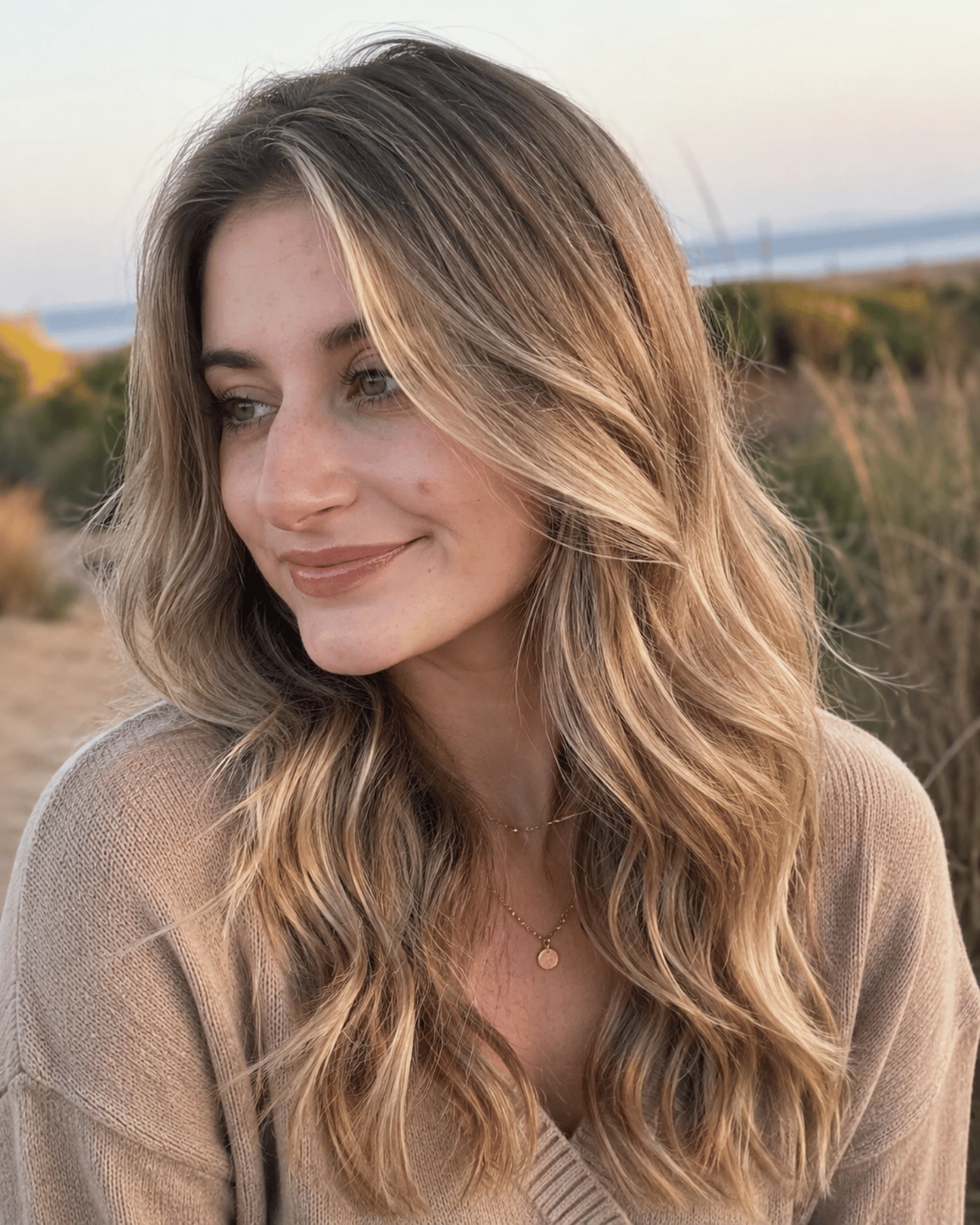
The warm-to-ash ratio is what makes or breaks it. Lean too far into gold, and you’ve got golden blonde. Pull too far toward cool, and you’re in ash blonde territory. Sandy blonde lives in that narrow middle, and staying there requires intention — from the colorist mixing the formula and the client maintaining it between appointments.
Most clients who bring in a “sandy blonde” reference photo are responding to a feeling more than a specific color. They want hair that looks like it belongs on them — like they spent a summer near the coast and their hair just shifted. That natural quality is what separates sandy blonde from more deliberate, high-contrast blonde work. But “natural-looking” and “easy to achieve” aren’t the same thing.
If you’re exploring blonde hair color options for the first time, sandy blonde is one of the most approachable entry points — but approachable and maintenance-free are two different conversations.
Sandy Blonde Shades — Light to Dark
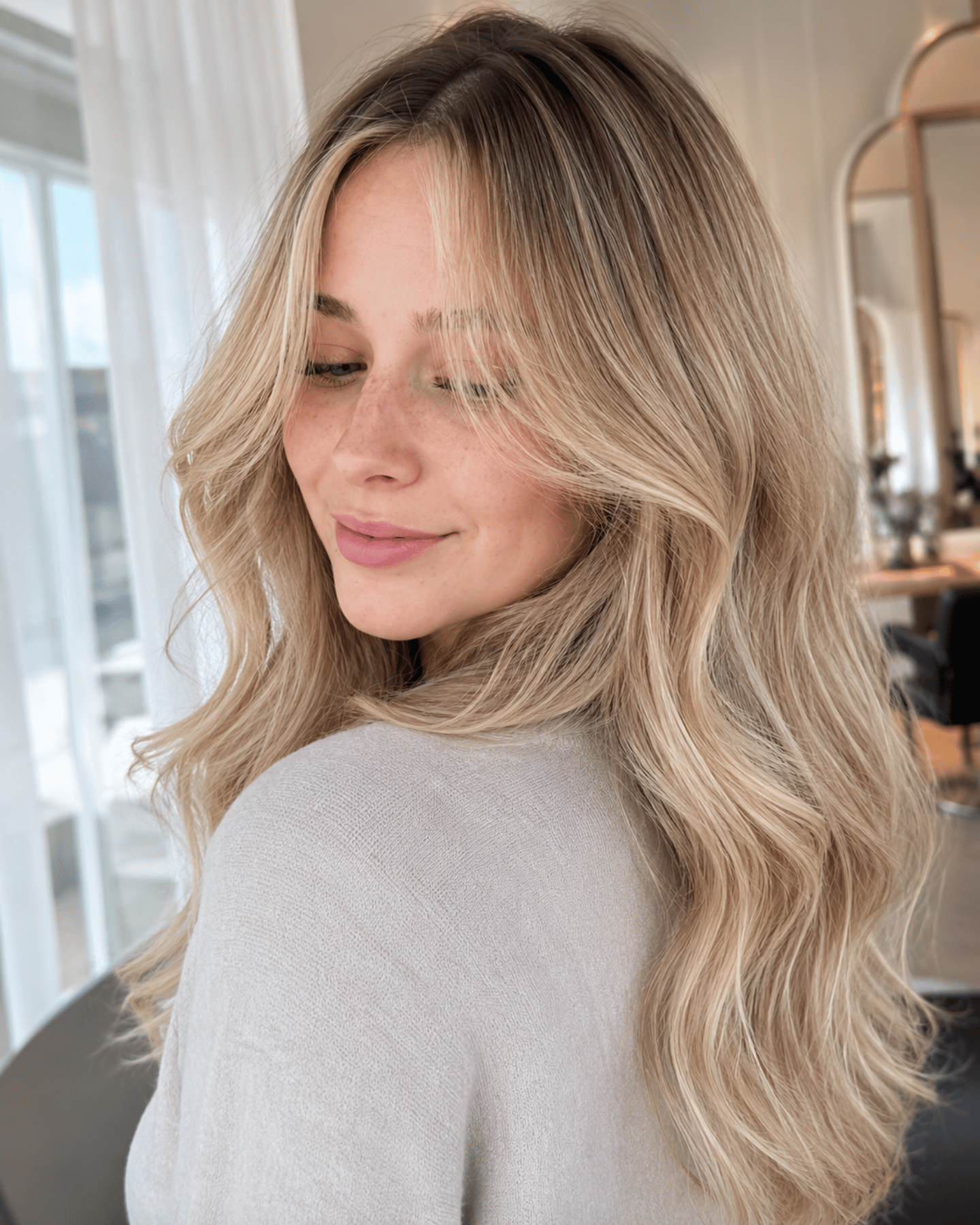
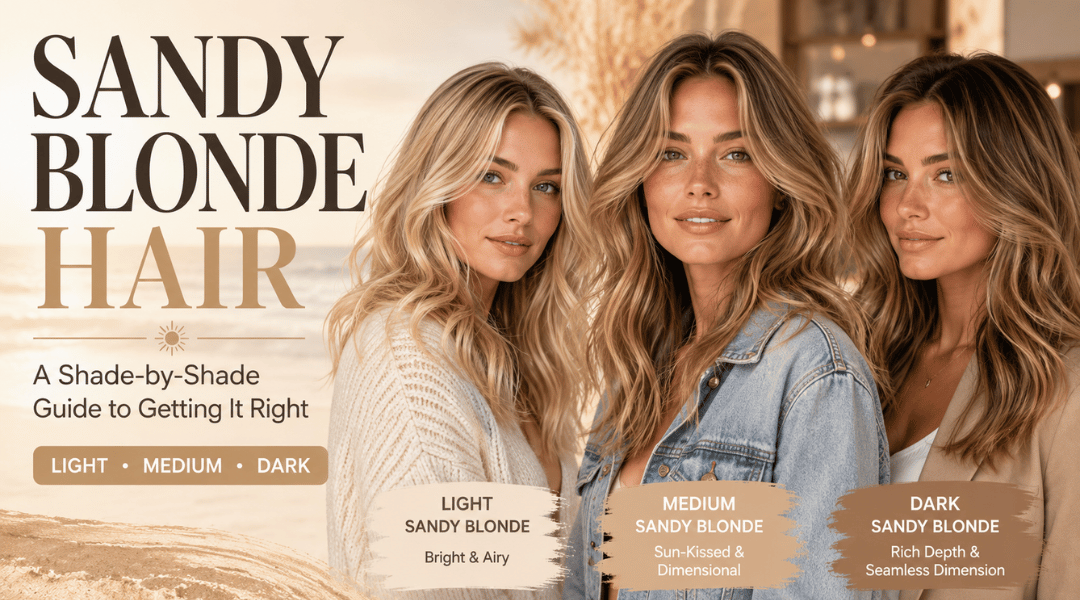
Most clients think they want “sandy blonde” — but what they actually want is a specific version of it. The shade exists on a spectrum, and where you land on that spectrum changes everything: your base color requirements, your maintenance commitment, and how the color interacts with your skin.
Light Sandy Blonde
Light sandy blonde is the closest to a true blonde while still keeping that sandy warmth. Think champagne with a whisper of beige — bright but not icy, warm but not golden.
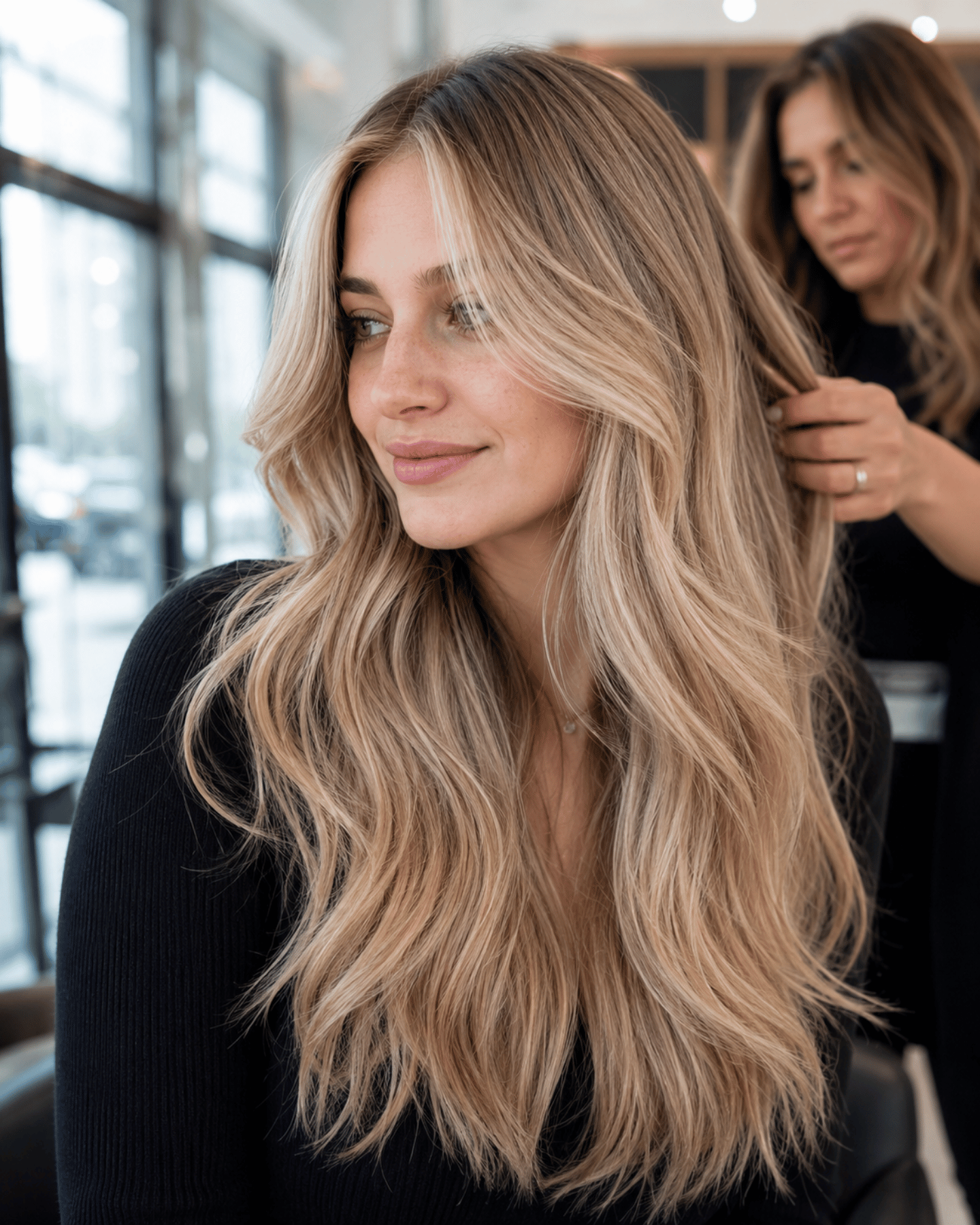
Best for: Natural blondes or light brunettes (level 7+) with cool or neutral undertones. Fair to light-medium skin.
Base color reality: Starting darker than a level 7 means significant lifting — bleach, multiple sessions, and a colorist who understands how to preserve integrity while pushing past the orange and yellow stages.
Maintenance level: High. Light sandy blonde shows brassiness faster because there’s less depth to mask the warmth that creeps in. Toner or gloss every 4–6 weeks.
Medium Sandy Blonde
This is the shade most people are actually picturing when they say “sandy blonde.” It’s the true middle — warm enough to look natural, cool enough to avoid reading as brassy.
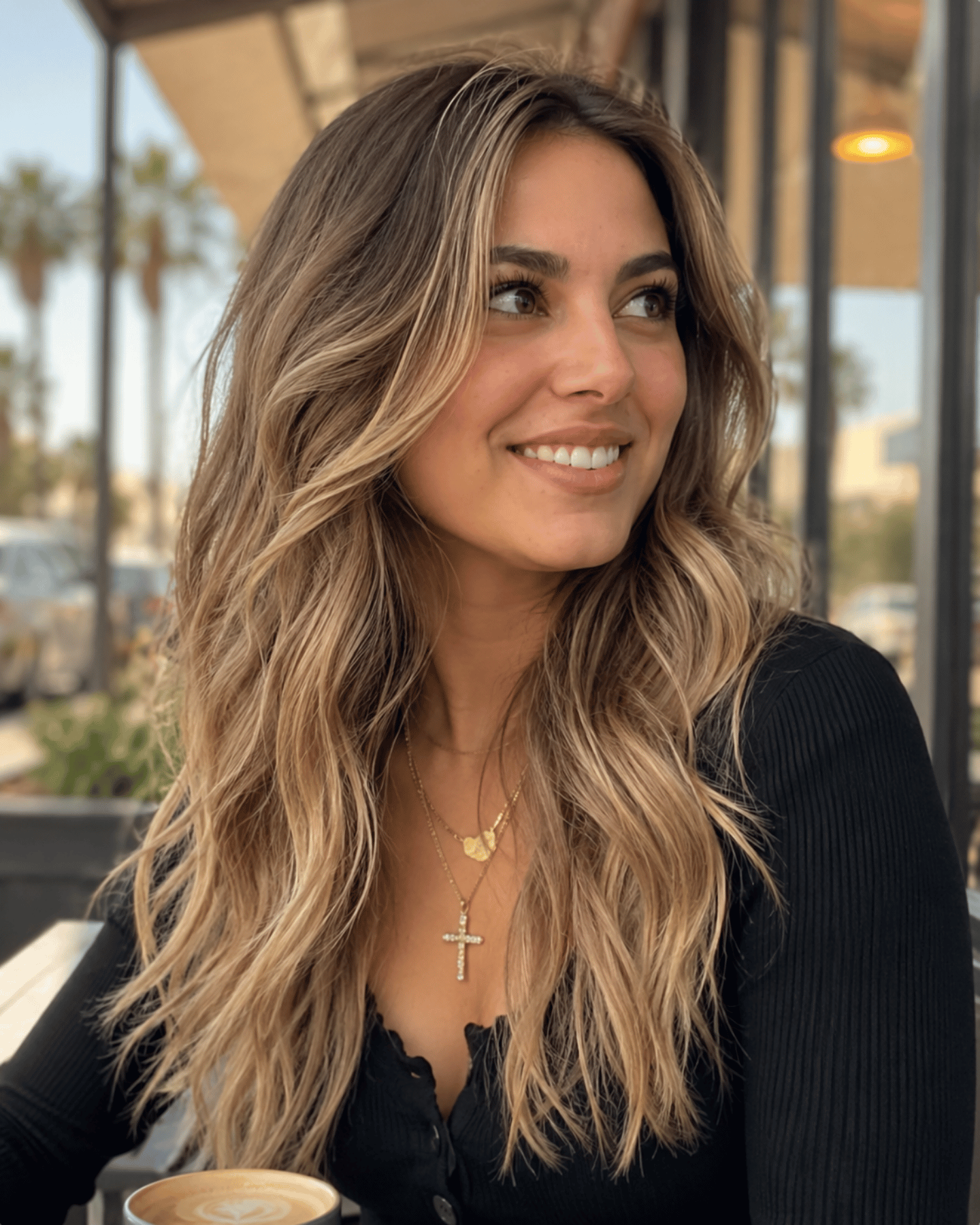
Best for: Level 6–8 natural bases. Works across warm, neutral, and cool undertones, which is rare for a blonde shade. Medium and olive skin tones wear this particularly well because it doesn’t wash out the complexion.
Base color reality: Most brunettes in the level 5–6 range can reach this with a single balayage session, depending on lifting history. Virgin hair lifts differently than previously colored hair — your colorist needs your full color history, not just your current shade.
Maintenance level: Moderate. Toner every 6–8 weeks. A good color-safe shampoo and occasional purple shampoo use (once a week, not daily) extends the life of your tone significantly.
Dark Sandy Blonde
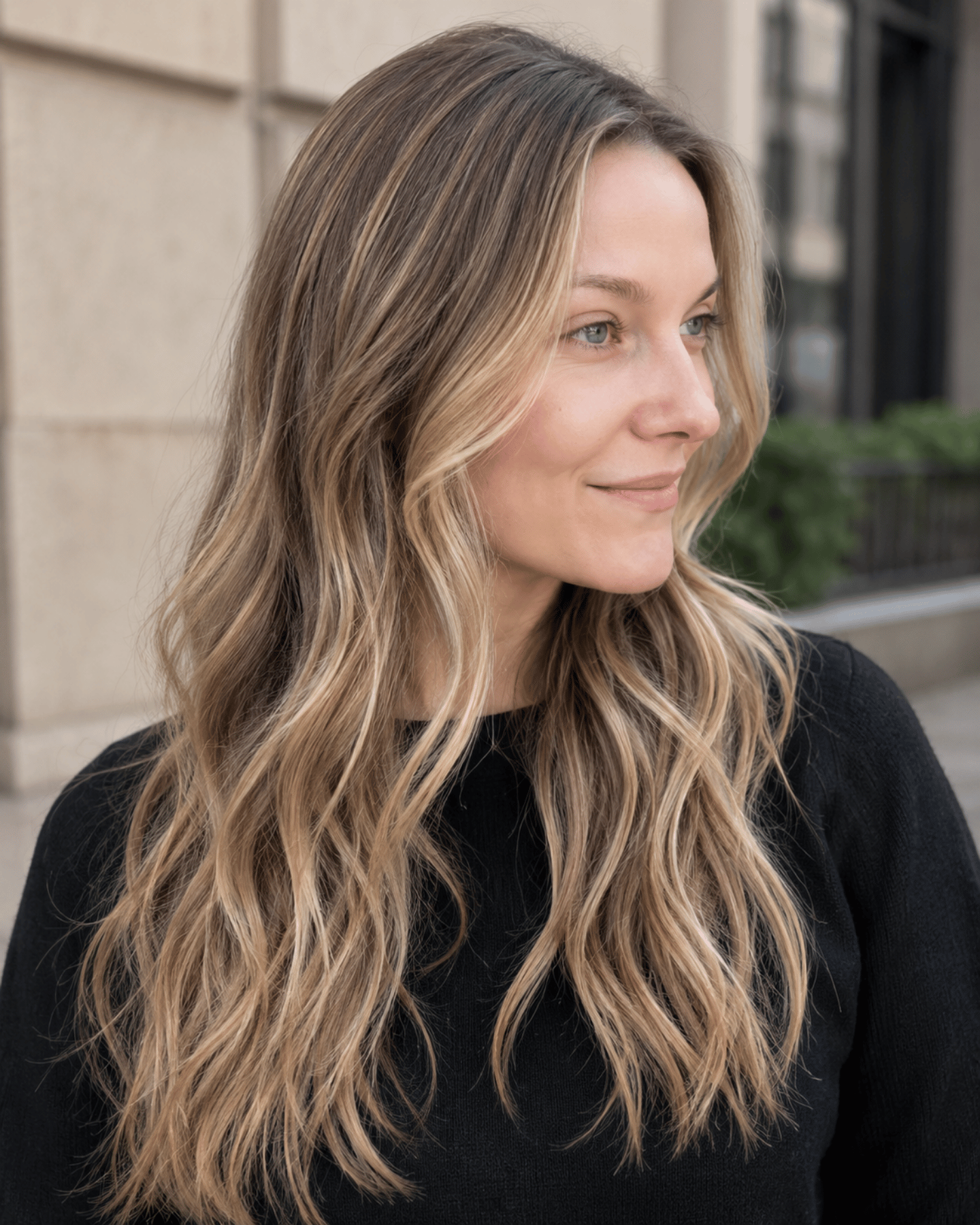
Dark sandy blonde bridges blonde and bronde — the shade for brunettes who want lighter without abandoning their depth. The grow-out is the most seamless of any sandy blonde variation.
Best for: Natural brunettes (level 4–6) with warm or neutral undertones. Works beautifully on deeper skin tones, including olive and dark complexions, because it maintains enough contrast to read as intentional rather than washed out.
 See alsoBest Hair Colors to Look Younger (2026 Guide)
Base color reality: The most achievable sandy blonde for darker starting points. A single balayage session usually gets you here, and a shadow root technique means your natural color does some of the work.
Maintenance level: Low to moderate. Brassiness is less visible in the darker depth, and the intentional root blend means no fighting a visible line of demarcation. Toner every 6–8 weeks keeps things balanced.
Shade Decision Guide
| Shade | Best Base Color | Best Undertone | Maintenance | Looks Like |
|---|---|---|---|---|
| Light Sandy Blonde | Level 7+ | Cool / Neutral | High (toner every 4–6 weeks) | Sun-bleached, champagne, airy |
| Medium Sandy Blonde | Level 6–8 | Any | Moderate (toner every 6–8 weeks) | Beach-lit, natural warmth, dimensional |
| Dark Sandy Blonde | Level 4–6 | Warm / Neutral | Low-Moderate (toner every 6–8 weeks) | Rich, bronde, lived-in depth |
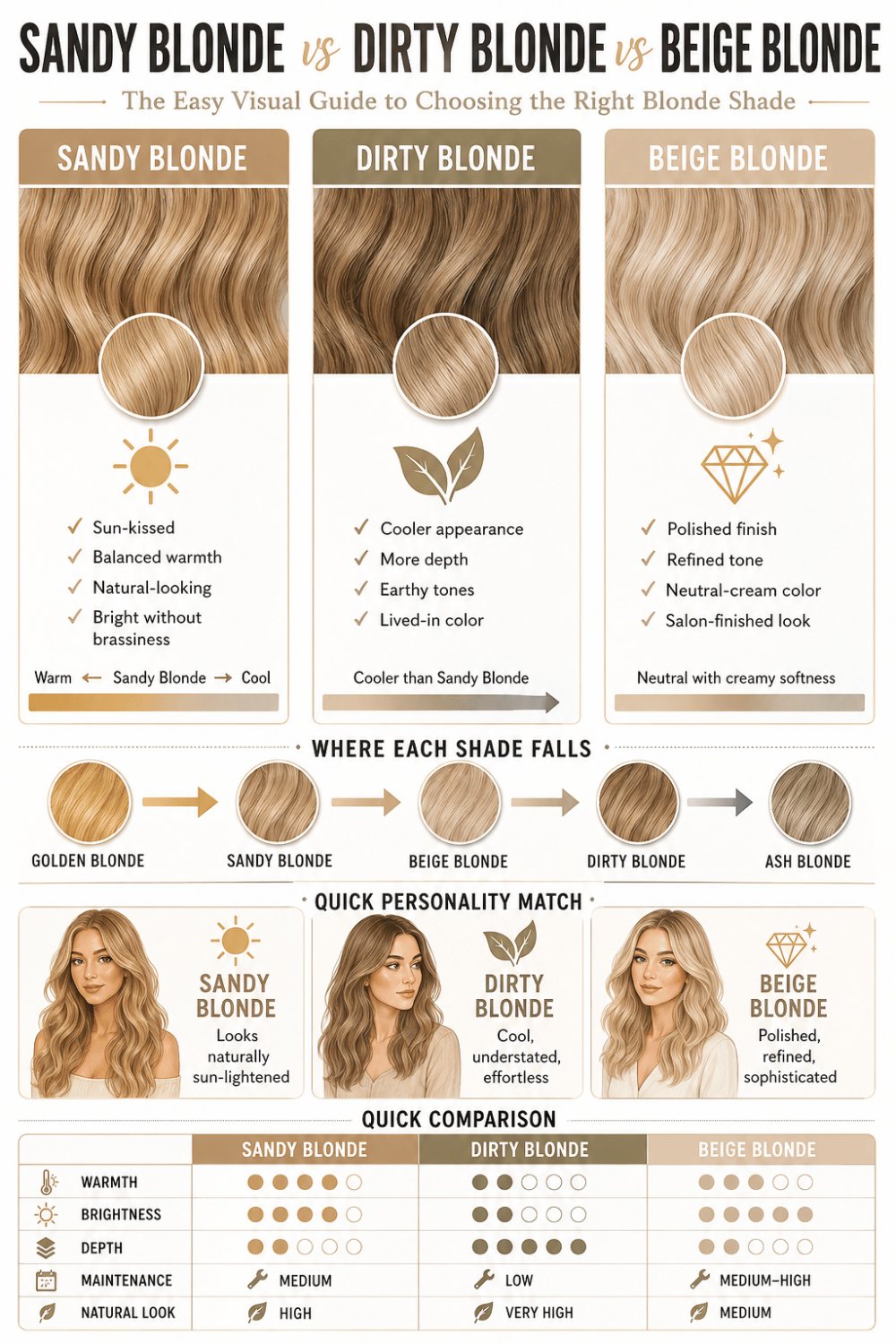
Sandy Blonde vs. Dirty Blonde vs. Beige Blonde
These three get confused constantly, and the differences are subtle enough that even reference photos don’t always clarify. Here’s the actual distinction:
Sandy blonde is neutral — a deliberate balance of warm and cool that reads as sun-kissed. It’s bright without being brassy and soft without being flat. The tone mimics natural lightening from sun exposure.
Dirty blonde sits darker and more muted. It leans toward wheat and light brown with a slight green-ash undertone that keeps it from reading as warm. It’s the “I haven’t been in the sun in months” version of blonde — lived-in, but in a cooler, earthier way.
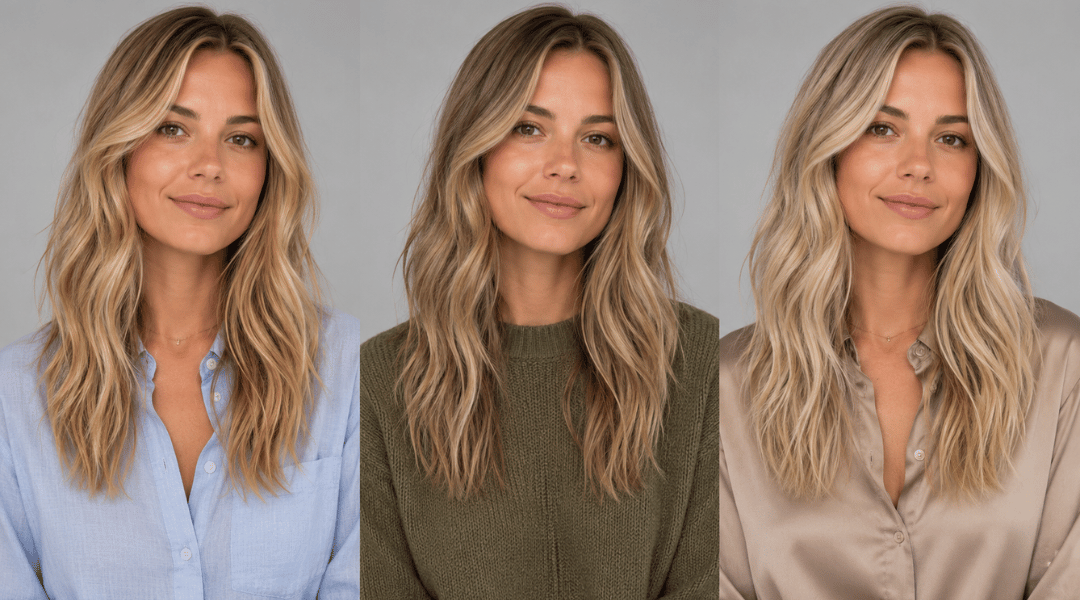
Beige blonde is the most refined of the three. It’s a softer, creamier neutral that lacks the warmth of sandy and the darkness of dirty. Beige blonde reads as polished and intentional, almost like a diluted champagne. It’s less about sun and more about sophistication.
The practical difference for your colorist: sandy blonde uses a mix of warm and cool toners in the formula. Dirty blonde pulls the formula cooler and deeper. Beige blonde keeps things neutral but lighter. If you’re unsure which you’re actually drawn to, pull up three reference photos — one for each — and let your colorist tell you which direction your undertone supports best.
How to Choose Sandy Blonde for Your Undertone
“Sandy blonde suits everyone” is something competitors write because it’s easier than being specific. The truth: sandy blonde is adaptable, but the specific variation needs to match your skin.
Warm undertones (veins appear green, gold jewelry flatters more): Lean toward the warmer side of sandy. A touch more golden warmth complements your skin. Avoid going too ashy — it’ll make your complexion look sallow.
Cool undertones (veins appear blue-purple, silver flatters more): You can handle a sandier, slightly ashier formula. The cool tones in your skin balance the warm elements in the color. Just don’t go so cool that the sandy disappears into ash.
Neutral undertones (mix of green and blue veins, both metals work): True neutral sandy blonde — right in the center of the warm-cool spectrum — will look like your hair grew that way.
Olive and deeper skin tones: Medium and dark sandy blonde create the most natural contrast. Light sandy blonde on deeper skin can look disconnected unless the colorist builds a seamless gradient from your natural root.
Can Brunettes Go Sandy Blonde? (The Reality Check)
This is where salon disappointment starts. If you’re a natural level 2 or 3, sandy blonde is absolutely possible — but it’s not a single-session shift, and anyone who says otherwise is overpromising.
Dark hair passes through orange and yellow stages before reaching blonde territory. That’s not a flaw; it’s how pigment works. Rushing through those stages with high-volume developer compromises your hair’s structural integrity, and damaged hair doesn’t hold sandy tones — it goes brassy within a week.
The smarter path: balayage in stages. A first session lifts you through the warmest phases. A second session 6–8 weeks later refines the lift and starts toning toward your target shade. By session two or three, you’re in sandy blonde territory with hair that still has bounce and shine.
Full bleach-outs are riskier for brunettes. Balayage preserves your natural root and deeper base, which means the grow-out looks intentional and maintenance stays manageable. It’s slower, but it’s also why some sandy blondes look salon-fresh for months while others look like they need an intervention by week three.
Sandy Blonde Balayage, Highlights, or Full Color — Which Technique?
The technique matters as much as the shade.
Balayage is the most requested technique for sandy blonde, and for good reason. Hand-painted sections create soft, blended dimension that mimics natural sun lightening. For sandy blonde specifically, mid-length placement with face-framing pieces produces the most natural result. Keep the root soft — sandy blonde balayage should feel blended, not stripy. Low contrast between the base and the lightened sections is the key to keeping it believably natural. Our balayage guide covers the technique in more detail.
Highlights work best for finer hair or clients who want more uniform brightness. Foils lift more evenly than balayage, which is an advantage if your goal is lighter, more consistent sandy blonde. The tradeoff: highlights grow out with a more visible line of demarcation, so maintenance appointments come closer together.
Full color (single process) creates uniform tone but minimal dimension. It can work for shifting within the blonde range — like from light blonde to a richer sandy — but it’s rarely the right choice for brunettes going lighter.
The general rule: Dimension and easy grow-out → balayage. Brightness and consistency → highlights. Adjusting within the blonde range → gloss or single process.
 See alsoWolf Cut vs. Jellyfish Cut: How They’re Different, How They Wear, and How to Choose
What to Tell Your Stylist
The consultation is where sandy blonde either gets nailed or gets lost.
Bring at least three reference photos — not just one. Show your colorist the range of what you’re drawn to so they can identify the common thread. Use photos of real people in natural lighting. Screenshots from Instagram posts shot under ring lights in warm-toned rooms are setting you up for a shade that doesn’t exist in daylight.
Mention your natural base color and full color history. Previous treatments affect how hair lifts, and your colorist needs the full picture — not just what’s visible today.
Ask about toner — specifically what formula they’d use and how long it typically lasts. This tells you immediately whether your colorist understands the warm-cool balance that defines this shade.
Discuss your maintenance tolerance honestly. If you won’t come in every 6 weeks, say so. A good colorist can adjust — a deeper root, a slightly warmer formula — to give you sandy blonde that fades more gracefully on your schedule.
Maintaining Sandy Blonde — The Honest Version
Sandy blonde is often marketed as “low-maintenance.” Compared to platinum? Sure. Compared to your natural color? Not close.
Weeks 1–2: Fresh, perfectly balanced tone. This is peak sandy blonde — enjoy it.
Weeks 3–4: Warmth starts surfacing. The ash component of your toner fades first, so underlying warm pigment begins to show, especially in sunlight and in photos. This is normal.
Weeks 5–8: Visible brassiness. Lighter sandy shades push toward yellow-gold; darker ones lean warm caramel. This is when toner is due.
Between appointments: Sulfate-free, color-safe shampoo is non-negotiable. Check our guide to the best shampoos for balayage for specific recommendations. Purple shampoo once a week — not every wash — neutralizes warmth without turning your hair lavender. Overdoing purple shampoo is a real thing.
Heat styling accelerates fading. Every pass of a flat iron opens the cuticle, releasing color molecules faster. A heat protectant is the difference between a 6-week tone and a 4-week one. Sun exposure does the same — UV rays break down dye molecules, and sandy blonde’s ash component is particularly vulnerable.
What Social Media Gets Wrong About Sandy Blonde
That sandy blonde you saved from Instagram? It probably doesn’t look like that in real life. Ring lights, warm-toned filters, and studio lighting flatten dimension and shift tone cooler or warmer depending on the setup. Sandy blonde in natural daylight looks different from sandy blonde under warm indoor lighting, which looks different again under fluorescent office lights.
The other thing social media skips: timing. That perfectly toned sandy blonde was photographed within hours of leaving the salon. What it looks like at week five doesn’t make the feed.
This isn’t meant to discourage you. Sandy blonde is one of the most wearable shades in the blonde family. It just looks like your version in your lighting — not a copy of someone else’s.
Sandy Blonde Hair FAQ
What is sandy blonde hair color?
Sandy blonde is a neutral blonde shade that blends warm golden tones with cool ash undertones, creating a balanced, sun-kissed look that resembles natural beach sand. It sits between golden blonde and dirty blonde on the color spectrum.
Is sandy blonde warm or cool?
Both. Sandy blonde occupies the neutral middle ground where warm beige meets cool ash. The ratio can be adjusted based on your undertone, but true sandy blonde is never fully warm or fully cool.
What is the difference between sandy blonde and dirty blonde?
Sandy blonde is lighter and more balanced, with a beige, sun-lit quality. Dirty blonde is darker, more muted, and leans toward earthy wheat tones with a cooler, green-ash undertone.
How do you maintain sandy blonde hair?
Toner or gloss every 4–8 weeks depending on shade depth. Between appointments, use a sulfate-free shampoo, purple shampoo once weekly, heat protectant, and UV protection. The ash component fades first, so consistent toning helps maintain balance.
Does sandy blonde hair require bleaching?
It depends on your starting color. Natural blondes and light brunettes (level 6+) may only need toner. Darker brunettes typically require lightening through balayage or highlights before toning to a sandy blonde shade.
Not sure which sandy blonde shade is right for you? A consultation takes the guesswork out of it — your colorist can assess your base color, undertone, and maintenance preferences to recommend the right approach.
Interested in seeing how we approach sandy blonde balayage and color services? Explore our hair coloring services →