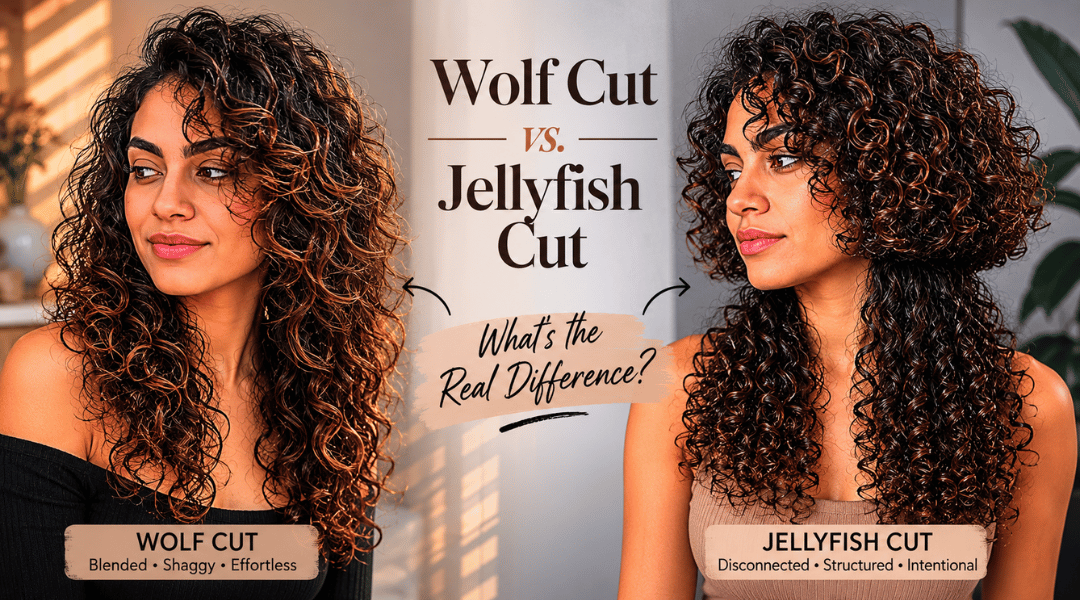
They show up on the same TikTok feeds. They both use layers aggressively. They both get filed under “edgy haircuts” by people who haven’t looked closely enough. But the wolf cut and the jellyfish cut are built on completely different structural logic — and that difference changes how they look when you wake up, how they grow out, and how much work they ask from you every morning.
This isn’t a “which one is trendier” breakdown. This is the comparison that actually helps you choose.
The Structural Difference That Changes Everything
Every other difference between these cuts flows from one mechanical distinction: blending versus disconnection.
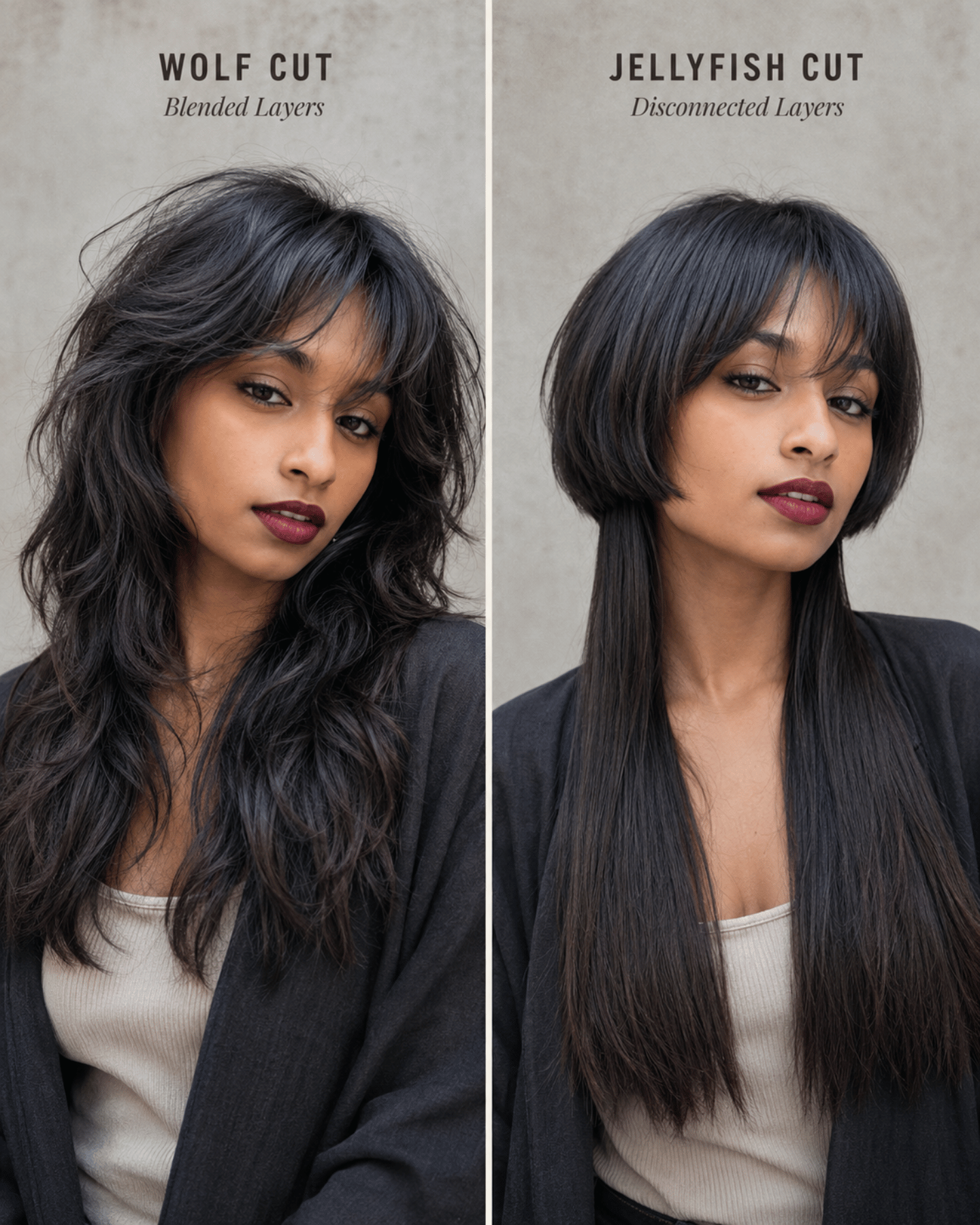
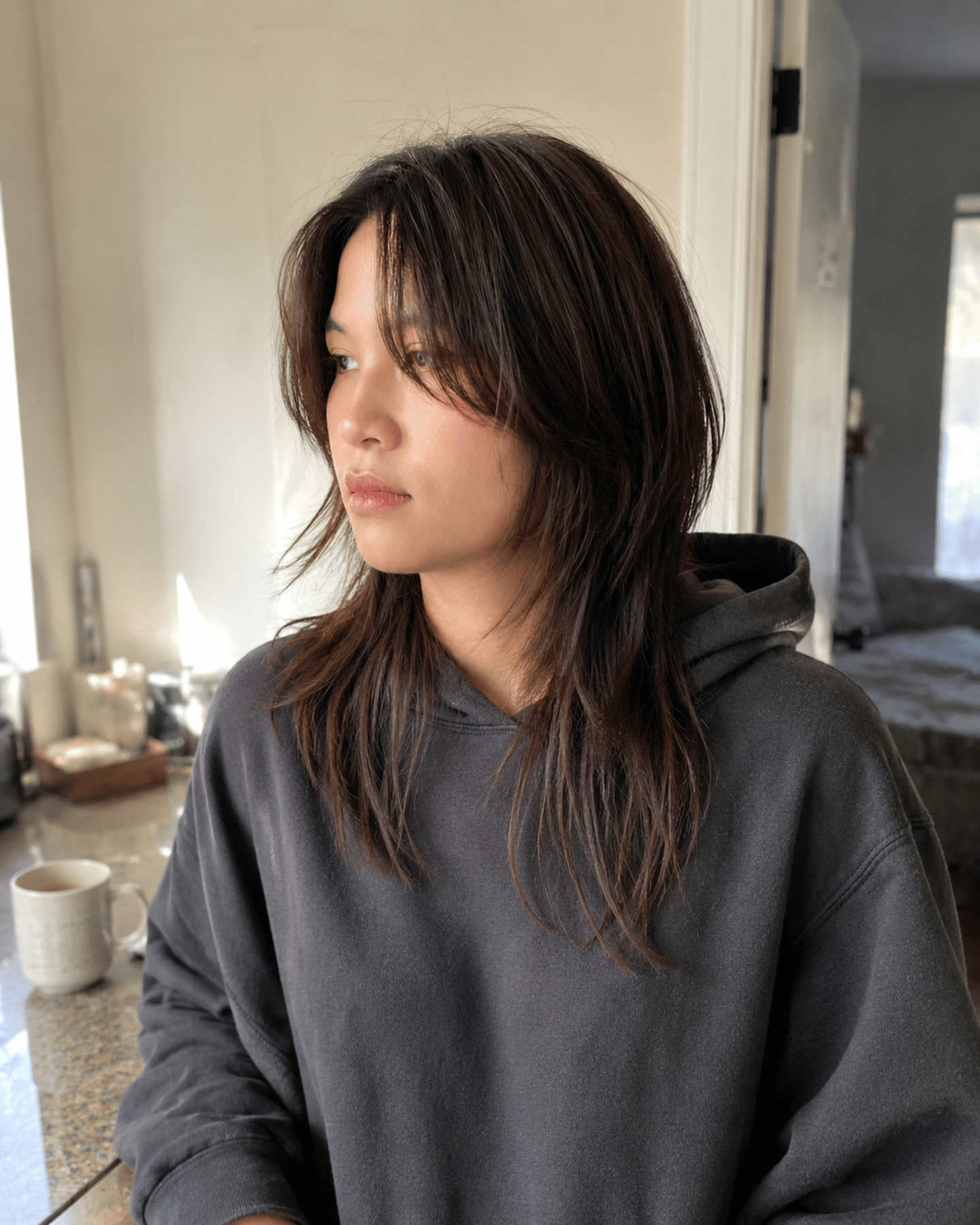
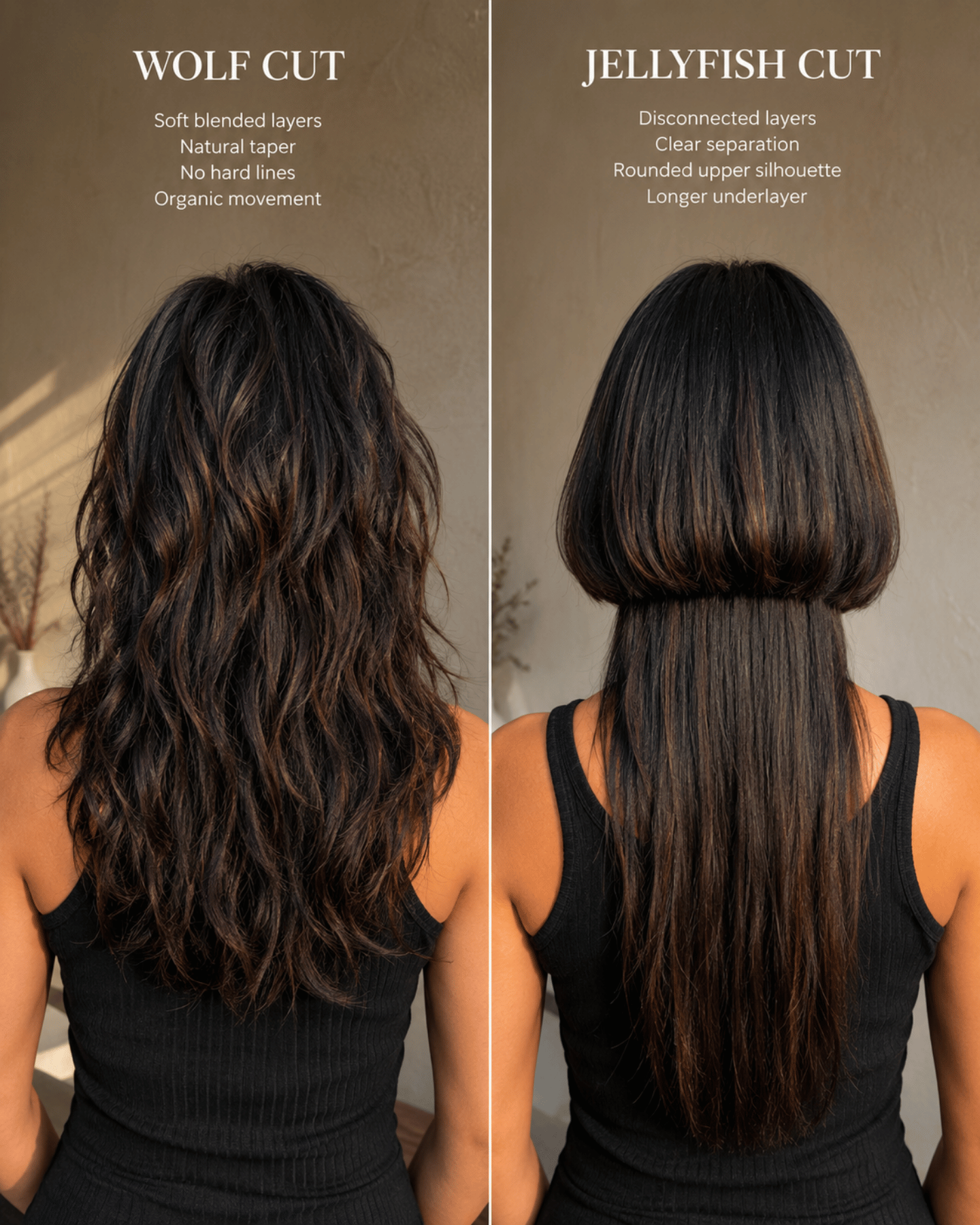
A wolf cut layers the hair throughout — shorter at the crown, gradually longer toward the ends, with everything flowing into everything else. The layers are shaggy, textured, and intentionally undone. There’s no hard line anywhere. The whole point is movement without visible architecture.
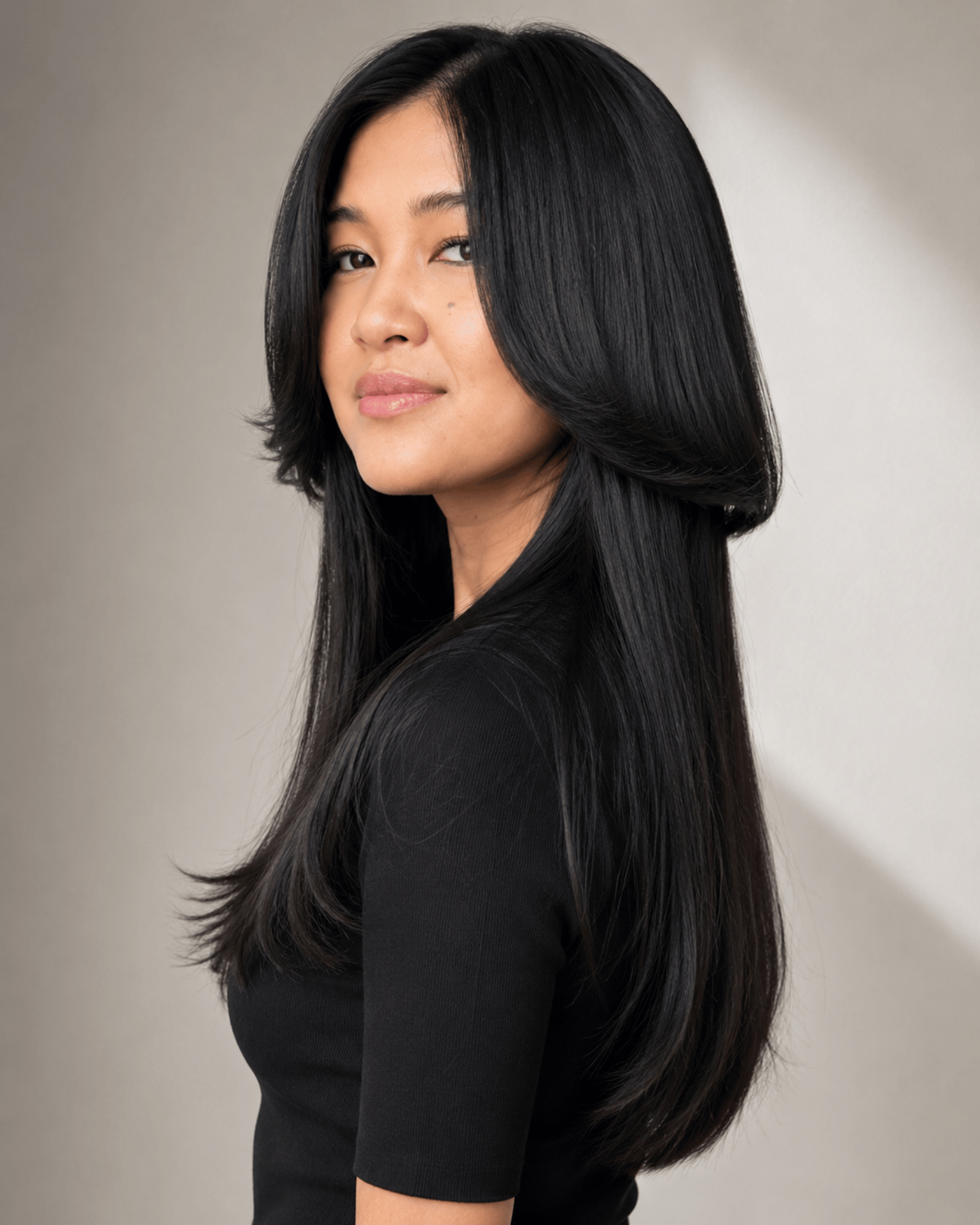
A jellyfish cut does the opposite. Two distinct lengths. A short, rounded top layer — usually a bob or bowl shape — sitting visibly above a much longer bottom layer. The gap between them is deliberate. Nothing blends. The disconnection is the design. If your stylist blends a jellyfish cut too much, it stops being a jellyfish cut and becomes an awkward layered bob that doesn’t quite land.
That single difference — blended versus separated — drives every practical distinction that follows.
How They Actually Look Day-to-Day
Here’s where the Instagram version and the Tuesday-morning version diverge.
A wolf cut is forgiving. The shaggy texture means it looks intentionally undone even when you haven’t touched it. Day-two hair often looks better than fresh hair. Air-drying works. Skipping the round brush works. The messiness is the aesthetic, not a failure of styling.
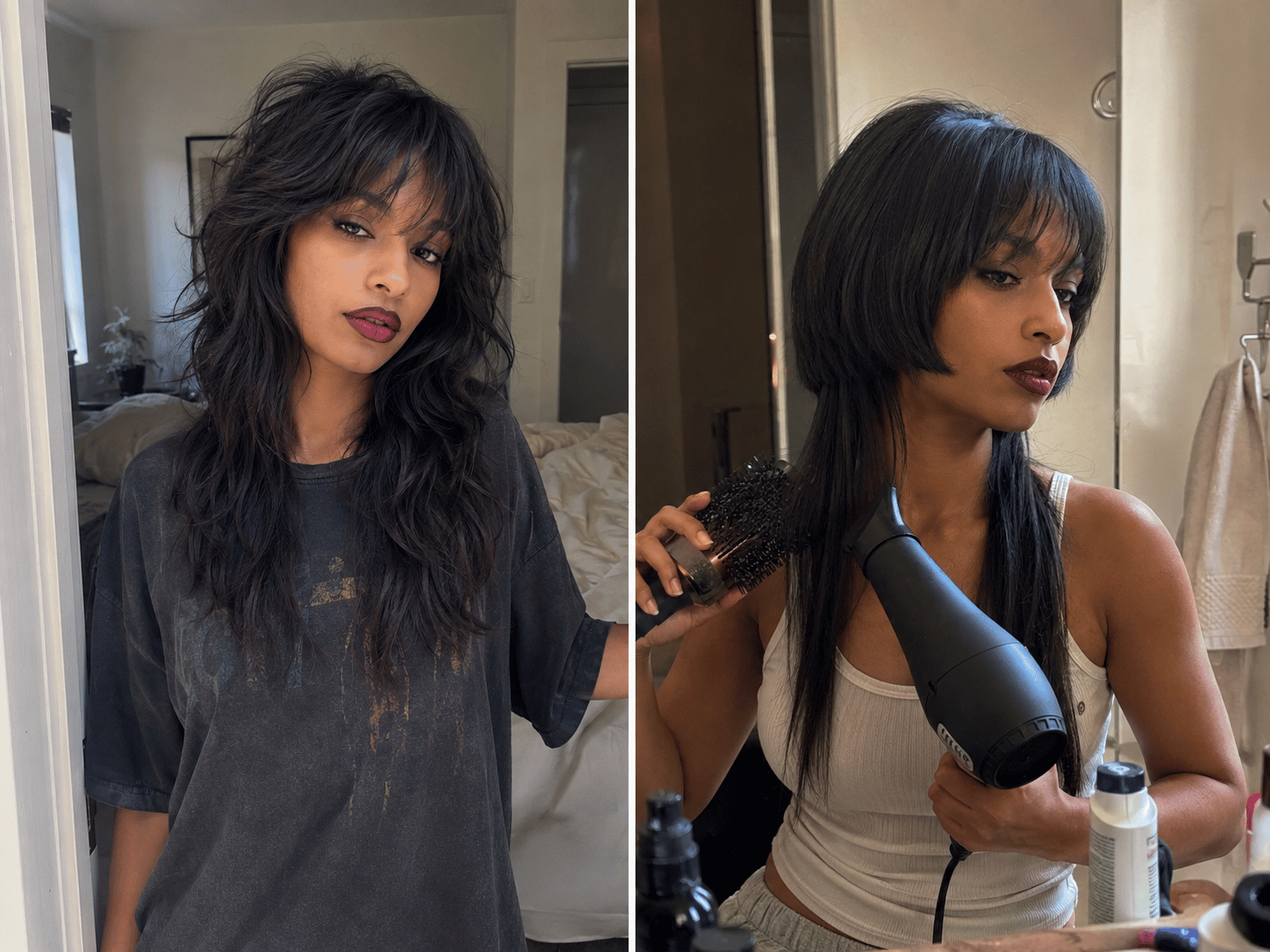
A jellyfish cut needs you to show up. The rounded top layer has to hold its shape, or the silhouette collapses. On straight hair, it flips outward overnight. On wavy hair, it puffs unpredictably. Without a round brush and 15 minutes with a blow dryer, the cut can read as “growing out badly” instead of “intentional architectural statement.”
The honest position: if your morning routine is “shower, air-dry, leave,” the wolf cut is your cut. The jellyfish cut rewards daily styling effort — and punishes skipping it.
Maintenance and Trim Schedules
Wolf cuts stretch. The shaggy layers keep their personality as they lengthen, and most people can go eight to ten weeks between trims without the cut losing its identity. It just becomes a longer, more relaxed version of itself.
Jellyfish cuts don’t stretch well. The entire look depends on the contrast between layers, and even half an inch of growth on the top layer starts blurring that contrast. Four to six weeks between trims keeps it sharp. Miss two appointments and the disconnection disappears — at which point you’re wearing a layered cut that doesn’t commit to anything.
The honest position: the wolf cut costs less time and money to maintain. That’s not subjective — it’s math.
How They Grow Out
This is the question nobody asks in the salon and everybody asks three months later.
A wolf cut grows out gracefully. The layers evolve into a long shag, then into textured long hair. There’s no awkward phase because the blended layers just become more blended. You can ride a wolf cut for months without it ever looking like a mistake.
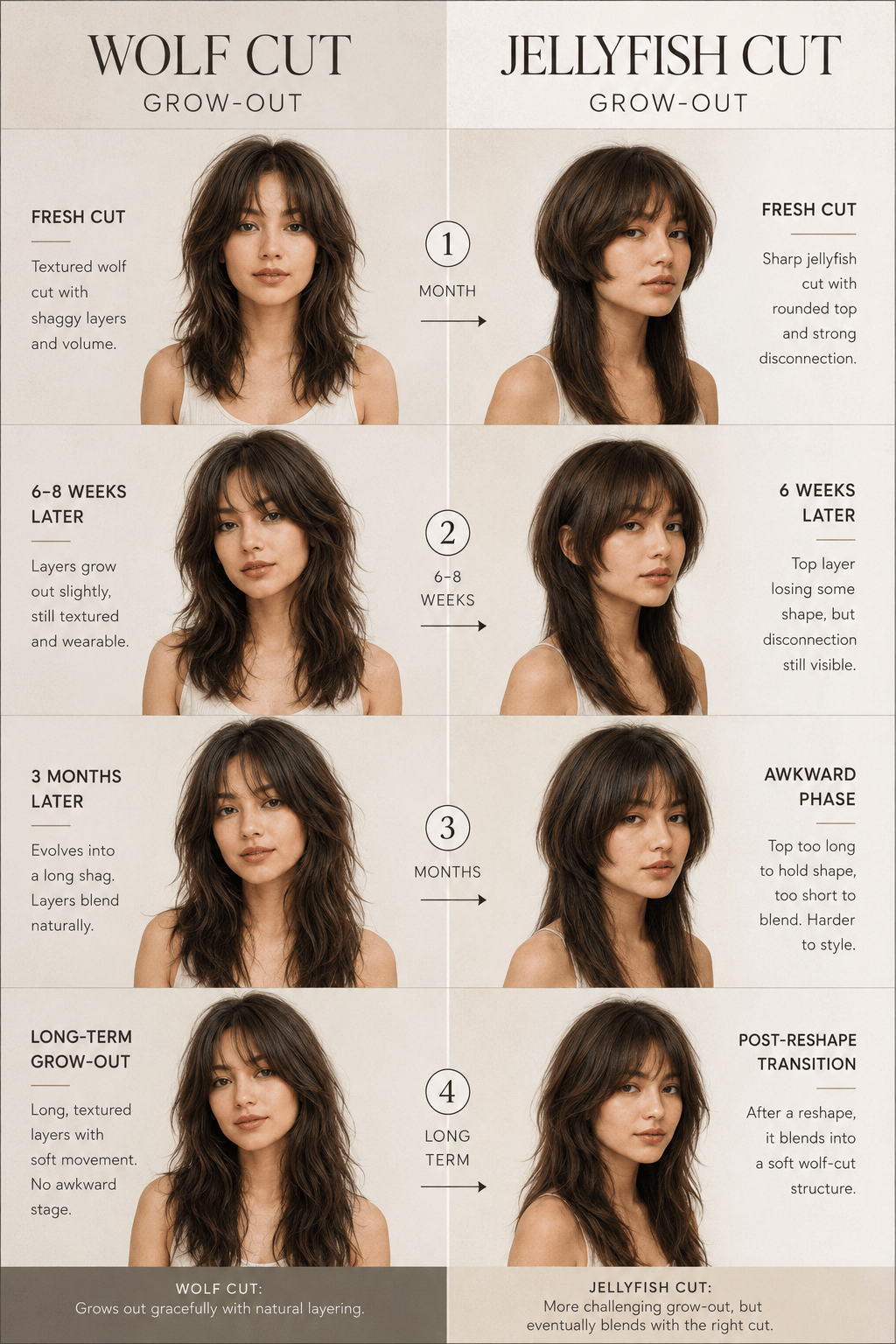
A jellyfish cut hits a wall. The top layer reaches an in-between length where it’s too long to hold its rounded shape but too short to merge with the bottom layer. That awkward phase lasts two to three months, and during that stretch, the cut looks progressively less intentional. The grow-out strategies covered in our jellyfish haircut guide — reshaping the top layer during transition, using a stylist to manage the merge — genuinely matter here.
The good news: a jellyfish cut naturally evolves into a wolf cut as it grows. The disconnection softens, the layers start blending, and with a single reshaping appointment, you can convert the grow-out into a clean wolf cut without starting over.
The honest position: wolf cut grows out better. Jellyfish cut grows out into a wolf cut — which is actually a useful exit strategy if you plan for it.
Which One Works Better for Your Hair
Fine hair: Wolf cut wins. The shaggy layers create volume throughout the head without exposing thin sections. A jellyfish cut’s long bottom layer tends to look sparse and see-through on fine, low-density hair — which undermines the entire visual. For more on how different cuts interact with fine hair and face shape, those structural considerations matter.
Thick hair: Both work, but the jellyfish cut uses thick hair’s density as an advantage. Both layers have enough body to hold their shapes independently, and the disconnection reads as dramatic rather than accidental.
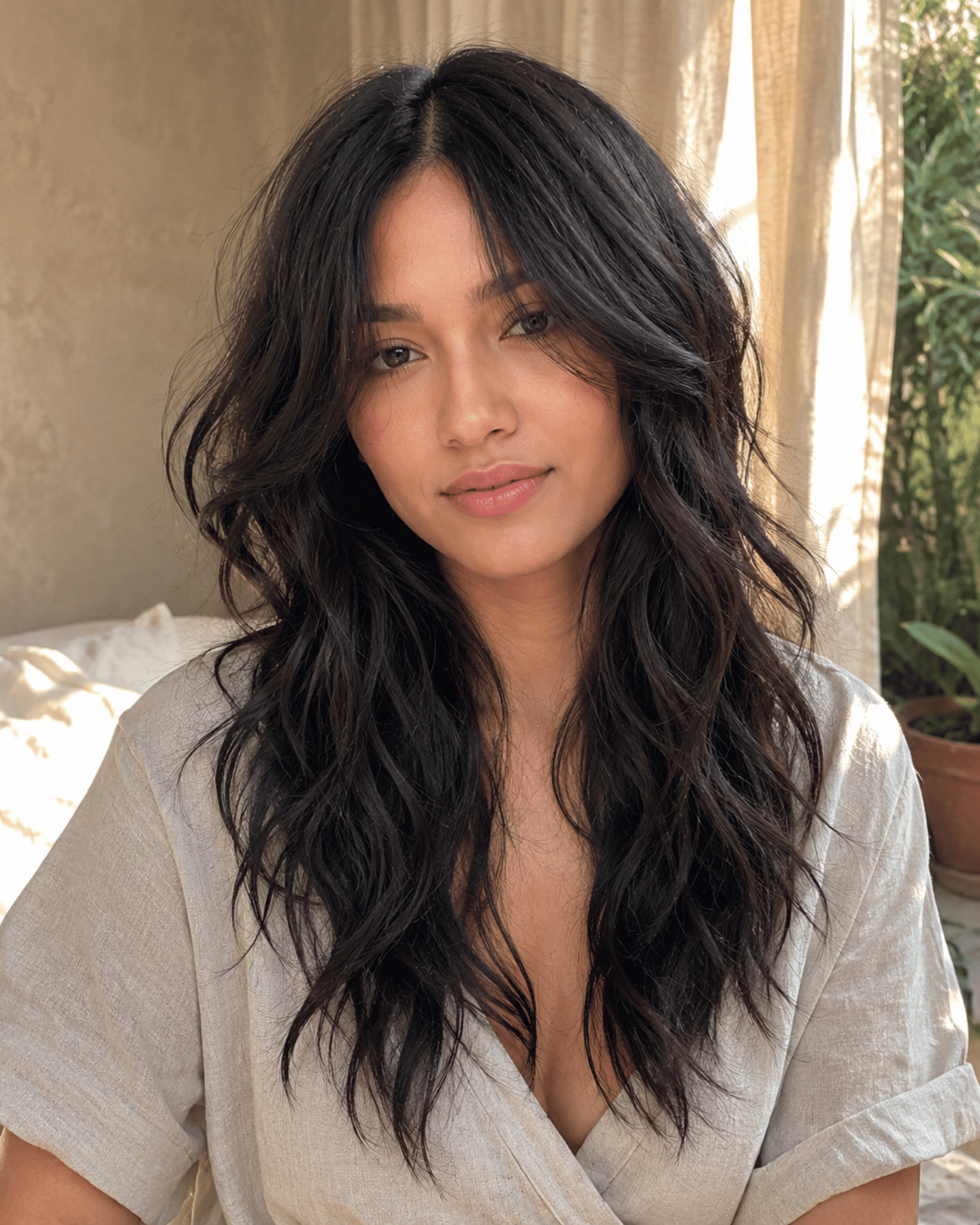
Wavy hair: The sweet spot for both cuts. Waves add texture to a wolf cut’s shaggy layers naturally. On a jellyfish cut, waves soften the hard disconnection into something more wearable — less costume, more editorial.
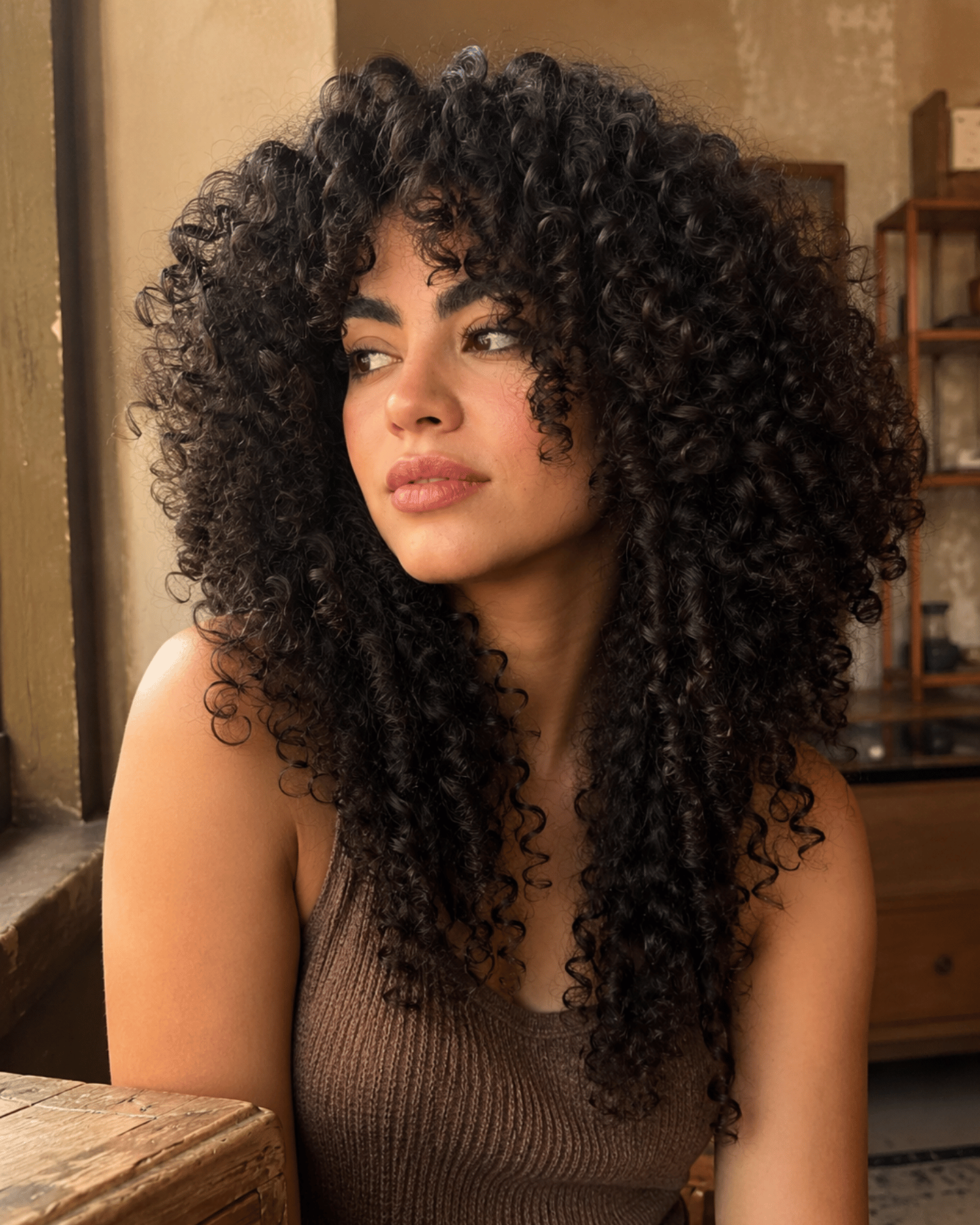
Curly hair: Wolf cut blends more naturally with curl patterns — the textured layers disappear into the curls organically. A jellyfish cut on curls creates a much more dramatic silhouette because the top layer gains significant volume from curl shrinkage. It can look incredible, but it requires a stylist who cuts curly hair dry and understands how shrinkage changes the proportions. The cut is not plug-and-play on curls.
Which One Suits Your Face
Quick breakdown — because face shape calibration is where these cuts diverge most.
Round faces: Wolf cut is the safer play. The shaggy, vertical layers create visual length without adding width. A jellyfish cut’s rounded top layer can mirror the face’s roundness and emphasize it — unless the short layer is positioned below the chin and paired with wispy bangs rather than blunt ones. Possible, but requires careful calibration. For more context, our best haircuts for round faces covers the underlying geometry.
Oval faces: Both work. Oval proportions absorb almost any layered structure without distortion.
Heart and diamond faces: The jellyfish cut has a genuine advantage here. The volume at jawline level — where the short top layer ends — fills out the narrower chin area. The wolf cut doesn’t provide that same targeted volume.
Square faces: Wolf cut’s soft, textured framing diffuses strong jawlines naturally. A jellyfish cut with a hard geometric top layer can read as heavy against a square jaw — softer texture on the top layer and curtain bangs help balance it.
What They Actually Look Like — Side by Side
Every comparison above means more when you can see it. These examples are chosen to illustrate specific structural and textural differences — not just to look good in a grid.
Wolf cut on straight hair
Jellyfish cut on straight hair
{IMAGE PLACEMENT: Jellyfish cut on straight hair — styled, architectural}
Wolf cut on wavy hair
Jellyfish cut on wavy hair

Jellyfish cut on curly hair
Back view comparison — wolf cut vs jellyfish cut silhouette from behind
The Hybrid and the Transition
Worth knowing: a wolf cut × jellyfish hybrid exists. Softened disconnection, textured top layer with some shaggy character, longer bottom section. It sits between both cuts and works well for people who want visible layering without the jellyfish cut’s full architectural commitment.
Also worth knowing: switching between these cuts isn’t dramatic. A jellyfish cut converts to a wolf cut with one reshaping session — a stylist blends the disconnection into graduated layers, and you’re there. Going from wolf cut to jellyfish requires more commitment, since you need enough length on the bottom to create the contrast gap.
If you’re unsure which direction fits your texture, face shape, and maintenance tolerance, a consultation takes the guesswork out. A stylist can assess what your hair actually does — not what it looks like in a photo — and recommend the version that survives your real routine.
FAQ
Can you turn a wolf cut into a jellyfish cut? Yes, if you have enough length at the bottom. The stylist creates the disconnection by cutting the top layer shorter and removing the blended transition between sections. You’ll need at least a few inches of difference between where you want the top layer to end and where the longest hair falls — otherwise the contrast isn’t visible enough to read as a jellyfish cut.
Which cut is better for thick hair? Both handle thick hair well, but the jellyfish cut uses density as a structural advantage. Thick hair gives the top layer enough body to hold its rounded shape and gives the bottom layer enough fullness to avoid looking sparse. The wolf cut on thick hair can occasionally need thinning at the ends to prevent heaviness.
Do wolf cuts and jellyfish cuts need the same products? Similar toolkit — texturizing spray, lightweight finishing products — but applied differently. A wolf cut leans on sea salt sprays and texture powders for that lived-in feel. A jellyfish cut relies more on round-brush technique, smoothing products for the top layer, and anti-humidity sprays to keep the two layers reading as distinct rather than merging in moisture. The jellyfish haircut maintenance section covers the product approach in detail.