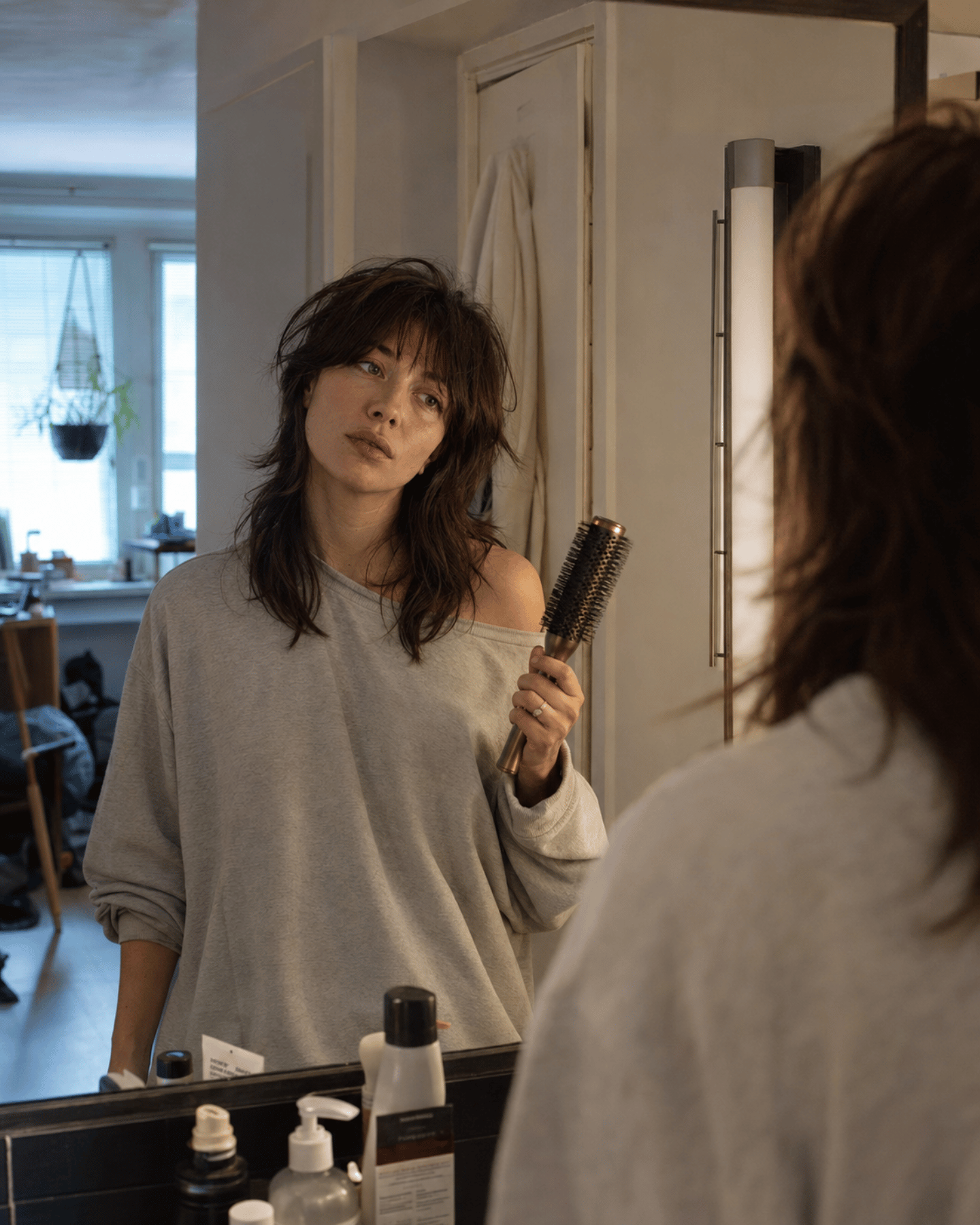
Every edgy haircut looks incredible in a Reel. Perfect lighting, fresh blowout, slow-motion hair flip, filter that makes the texture look like silk. That’s the version with 200,000 likes. That’s not the version you wake up with when your alarm goes off twenty minutes late and your round brush is in the other bathroom.
The gap between the social media version and the real version isn’t the same for every cut. Some edgy haircuts look almost as good unstyled as they do fresh from the chair. Others fall apart without daily effort. Some grow out gracefully over months. Others hit an awkward phase that makes you question every decision you’ve made since adolescence.
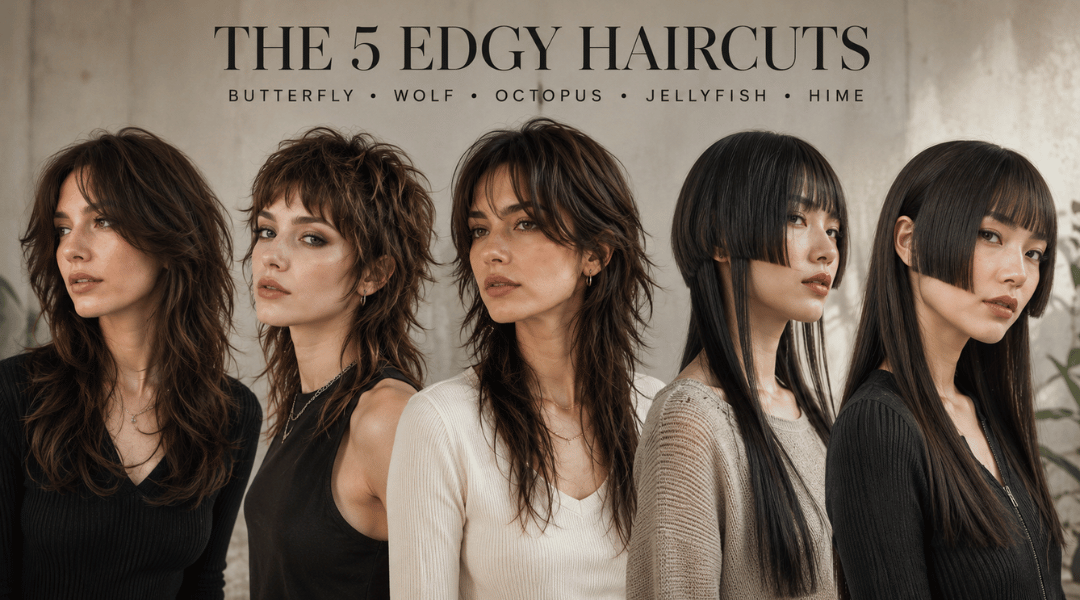
This guide covers the five edgy haircuts dominating right now — jellyfish cut, wolf cut, octopus cut, hime cut, and butterfly cut — compared on the things that actually determine whether you’ll love the cut at week eight, not just at hour one. Maintenance demands. Grow-out behavior. Texture compatibility. How much daily effort they ask from you. And who should probably pick a different one.
What Makes a Haircut “Edgy”
Not color. Not attitude. Structure.
Edgy haircuts share one trait: they break conventional proportions on purpose. Disconnected layers where you’d expect blending. Volume concentrated where traditional cuts keep things smooth. Silhouettes that reject the idea that hair should transition gradually from short to long with nothing jarring in between.
The spectrum runs from mildly unconventional — the butterfly cut, which is really a traditional layered cut with more face-framing intention — to architecturally confrontational — the jellyfish cut, where two completely separate lengths coexist with no attempt at blending.
Understanding where each cut sits on that spectrum matters more than which one looks best on your mood board. The further toward confrontational, the more styling effort, the faster the grow-out gets awkward, and the narrower the range of textures and face shapes that work without careful calibration.
The Jellyfish Cut
The most architecturally deliberate cut on this list. Two distinct lengths — a short, rounded top layer and a significantly longer bottom layer — separated by a visible, intentional gap. No blending. No gradual transition. The disconnection is the design. If a stylist softens it too much, the cut loses its identity entirely and becomes an awkward layered bob that doesn’t commit to anything.
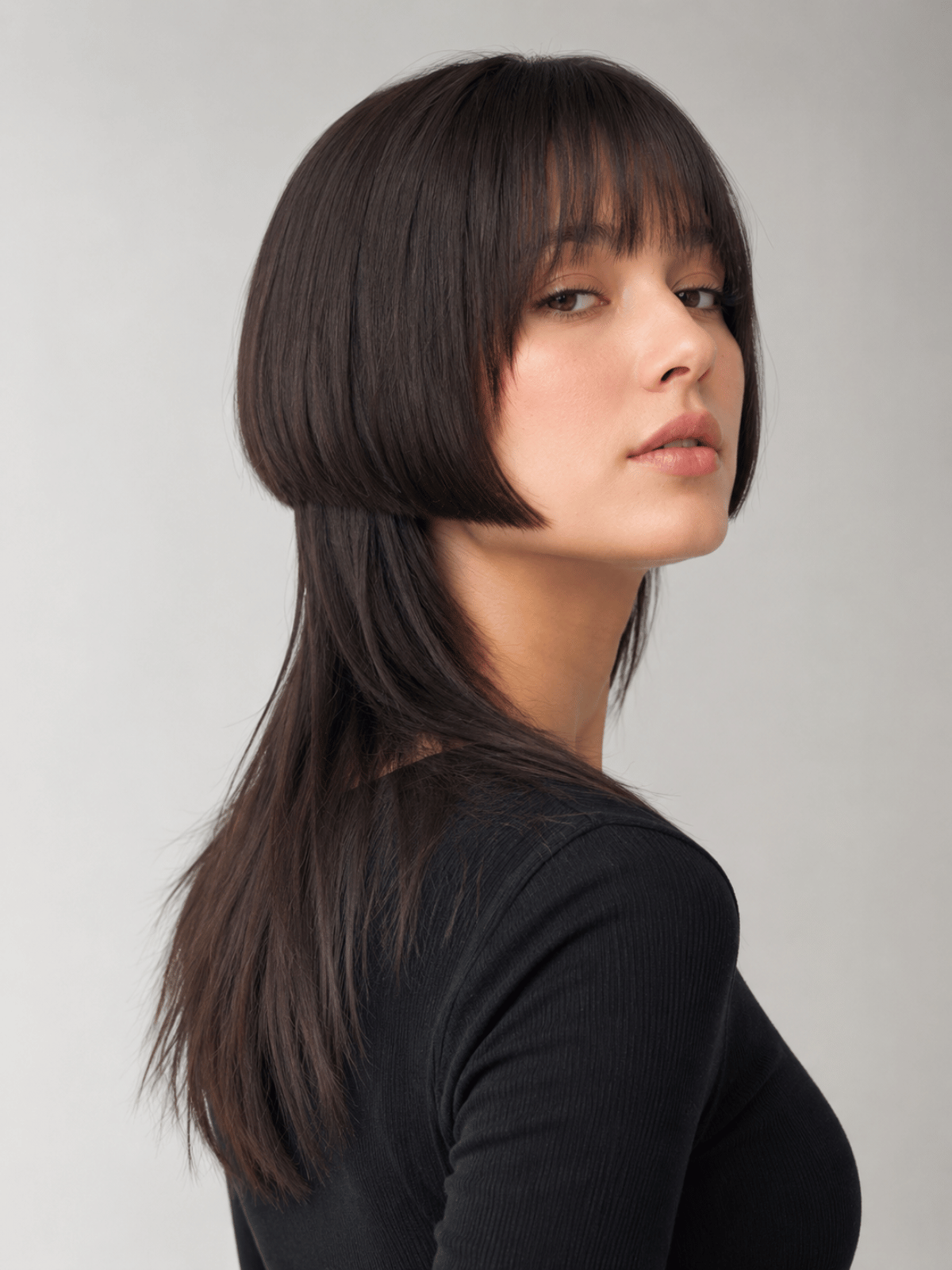
The name comes from the silhouette: the rounded top layer mimics a jellyfish’s bell, the longer strands trail beneath like tentacles. It gained traction through K-pop and Japanese street style before TikTok turned it global.
Maintenance reality: High. The top layer needs reshaping every four to six weeks. Daily round-brush styling keeps the silhouette defined. Skip it and the cut reads as “growing out” rather than “statement.” Products matter — texturizing spray defines the layer separation, and a lightweight finishing product manages flyaways at the disconnection line where stray hairs show most.
Best on: Thick hair gives both layers enough body to hold their shapes independently. Straight and wavy textures show the disconnection most cleanly. Curly hair creates a dramatically different and often bolder version — more volume, rounder bell, softer disconnection — that requires a texture specialist and dry cutting. Oval, heart, and diamond face shapes benefit most naturally. Round faces need the top layer positioned below the chin with vertical pull from the bottom layer.
Grow-out: The hardest on this list. The top layer hits an in-between length where it’s too long for its rounded shape but too short to merge with the bottom. That awkward phase lasts two to three months. The good news: a jellyfish cut naturally evolves into a wolf cut during grow-out, and a stylist can reshape the transition so you never hit the fully-awkward stage.
Real-life verdict: The cut for people who want their hair to be a deliberate statement every day and are willing to maintain it. Not for wash-and-go lifestyles. Not for people who skip salon appointments. The full jellyfish haircut guide covers every variation, face shape consideration, and styling reality.
The Wolf Cut
The most forgiving cut on this list by a significant margin. Heavily layered throughout — shorter at the crown, gradually longer toward the ends — with everything flowing into everything else. Shaggy, textured, intentionally undone. The structural love child of a ’70s shag and a soft mullet, but more wearable than either parent.

The wolf cut exploded through K-pop and TikTok and became the default “edgy but safe” choice for a reason: it works on almost everyone and demands very little in return.
Maintenance reality: Low to moderate. The shaggy layers keep their personality as they lengthen. Trims every eight to ten weeks. Air-drying works. Day-two hair often looks better than fresh because the texture settles into the lived-in quality the cut is designed around. A texturizing spray or sea salt spray enhances the shaggy character, but you can skip products entirely and the cut still reads as intentional.
Best on: Almost every texture and face shape. Fine hair gets volume from the crown layers. Thick hair gets movement and reduces bulk. Wavy and curly hair blend naturally into the shaggy layers without fighting the texture. Oval, heart, and round faces all work — the layers create vertical length that flatters most proportions. Square faces benefit from the soft, textured framing that diffuses strong jawlines.
Grow-out: The cleanest on this list. Layers just become longer, more blended layers. No awkward phase. No “I need to get to the salon immediately” moment. You can ride a wolf cut for months without it looking like anything other than an intentionally relaxed version of itself.
Real-life verdict: The cut for people who want edge without effort. If the jellyfish cut is architecture, the wolf cut is organic — and that organic quality makes it dramatically easier to live with. Our wolf cut vs. jellyfish cut comparison breaks down every practical difference between these two if you’re deciding between them.
The Octopus Cut
The jellyfish cut’s more approachable cousin. Layered and dramatic — visible volume at the crown, longer thinner pieces falling underneath — but the layers blend more gradually than a jellyfish’s hard disconnection. The name comes from the silhouette: a rounded, fuller top section with longer, tapered strands resembling tentacles, but without the abrupt line where one layer stops and another starts.

Think of it as a heavily layered cut that borrows the jellyfish concept but softens the execution. The disconnection exists, but it’s a gradient rather than a cliff.
Maintenance reality: Moderate. More forgiving than the jellyfish cut — the blended transition means small amounts of growth don’t dramatically alter the silhouette. But more demanding than the wolf cut — the interior layers need periodic reshaping to prevent the cut from collapsing into a generic long layered style. Trims every six to eight weeks keep the personality intact.
Best on: Medium-to-thick hair. Straight and wavy textures show the layered structure most clearly. Curly hair can work, but the distinction between an octopus cut and a jellyfish cut gets harder to read on curls — both become “dramatically layered with volume on top.” Oval and heart faces are the strongest match. Round faces benefit from the crown volume creating vertical lift.
Grow-out: Better than the jellyfish, not as clean as the wolf cut. The layers soften and merge gradually rather than hitting a hard awkward phase. But the cut’s personality fades faster than a wolf cut’s because the volume contrast that defines it dilutes as the layers grow. After about three months without reshaping, it reads as a standard layered cut — pleasant, but no longer an octopus cut.
Real-life verdict: The middle ground. More dramatic than a wolf cut, more wearable than a jellyfish cut. For people who want visible architectural layering without the jellyfish cut’s full maintenance commitment or grow-out risk.
The Hime Cut
The most precision-dependent cut on this list. Blunt, cheekbone-length side pieces frame the face while the back stays long. No blending at the sides — the framing pieces are cut with geometric sharpness. The name means “princess” in Japanese, originating from the Heian period as part of a coming-of-age ceremony. It re-entered modern fashion through K-pop — TWICE’s Momo is one of the most cited references — and anime-inspired styling.
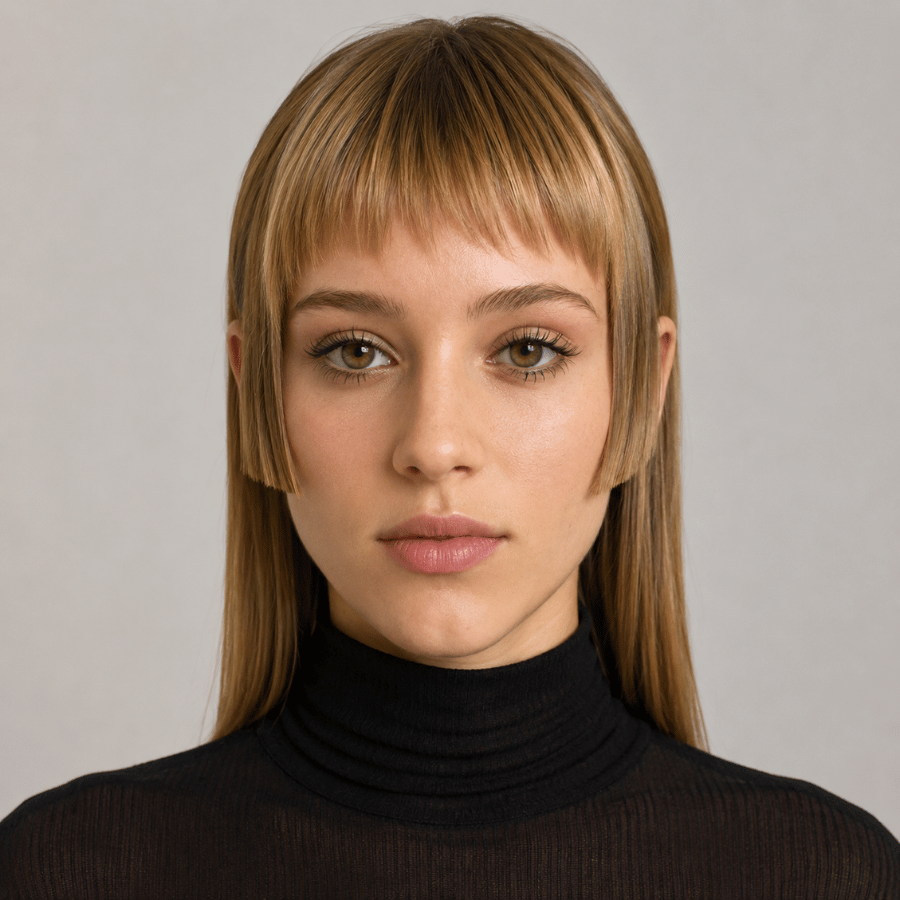
Where the jellyfish cut wraps its short layer around the entire head, the hime cut concentrates its architecture at the sides only. The front framing is everything. The back is afterthought.
Maintenance reality: Deceptively high. The blunt side pieces need precision trims every four to six weeks. Any growth changes the face-framing immediately — even a quarter inch shifts the geometry. The back is low-maintenance, but the architecture at the front is unforgiving. Flat-ironing the side pieces is often necessary on anything other than naturally pin-straight hair, adding daily styling time that isn’t obvious when you see the cut in photos.
Best on: Straight hair, almost exclusively. The blunt geometry requires smooth texture to read correctly. Wavy hair can work if you flat-iron the side pieces daily. Curly hair rarely works because the blunt framing pieces won’t hold their shape without heat styling. Oval and heart faces benefit most — the cheekbone-length pieces highlight the face’s natural narrowing. Round faces need the side pieces positioned carefully to avoid emphasizing width at the cheeks. Face shape calibration matters more here than with any other cut on this list.
Grow-out: Awkward at the front, fine at the back. The cheekbone-length side pieces hit a phase where they’re too long to frame the face crisply and too short to blend into the length. That transition is visually obvious and lasts six to eight weeks. The back grows out with no issues.
Real-life verdict: Stunning when maintained. The margin for error is the smallest of any cut here. For people who value symmetry, sharp geometry, and can keep their trim schedule without exception. Also the most texture-restrictive — if your hair isn’t naturally straight or you’re not willing to flat-iron the sides daily, this cut will fight you.
The Butterfly Cut
The most accessible entry on this list — and the one that bridges the gap between “I want something interesting” and “I’m not sure I want something edgy.” Face-framing layers start short near the chin and cascade outward, creating a silhouette that opens around the face like wings. The layers are blended, not disconnected. It’s structurally closer to a traditional layered cut than anything else here, but with more deliberate face-framing and more visible interior texture than a standard salon layer job.
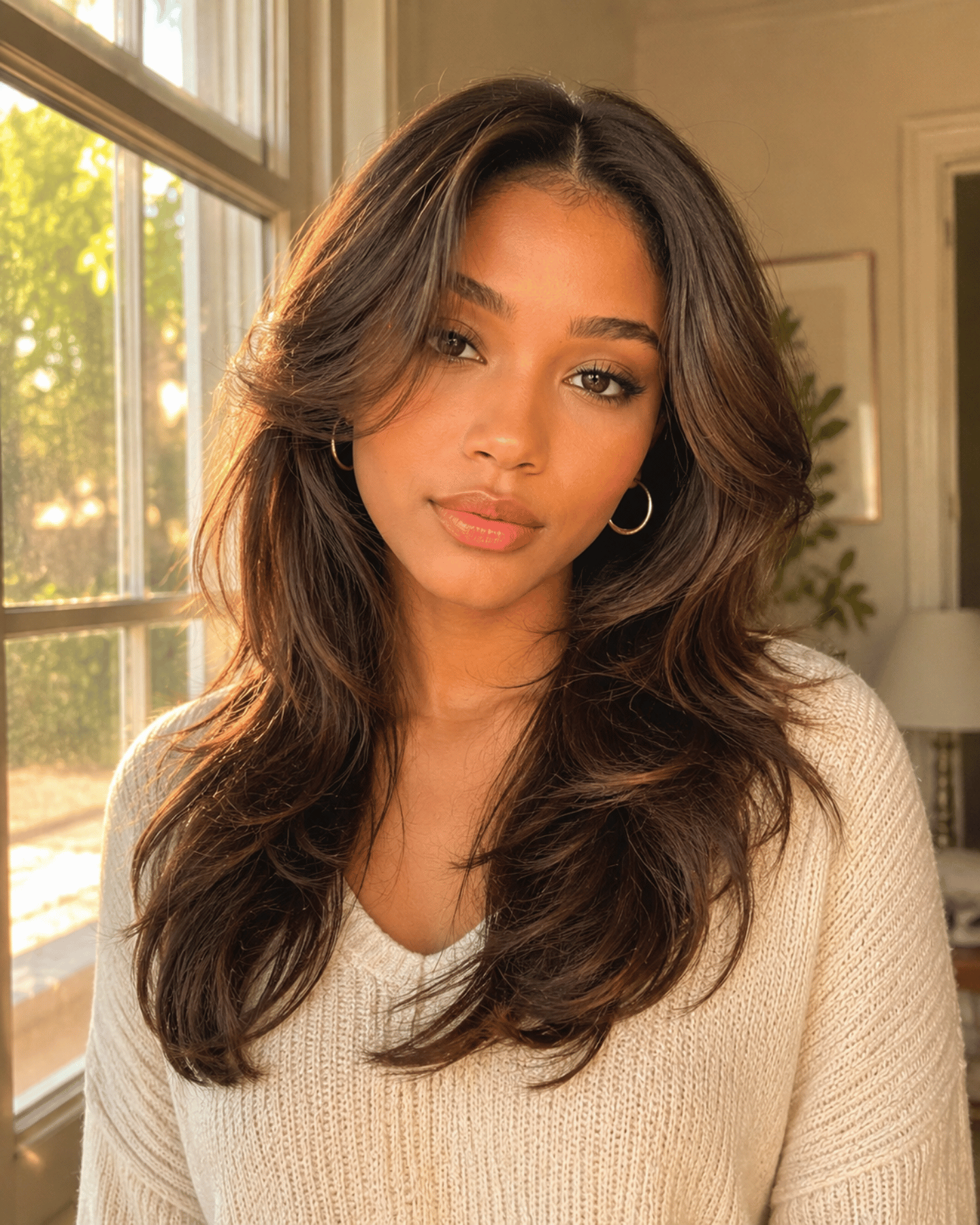
The butterfly cut became the default “I want layers but not those layers” choice — the one people get when the wolf cut feels too shaggy and the jellyfish feels too architectural.
Maintenance reality: Low. The blended layers grow out as gracefully as the wolf cut’s. Trims every eight to ten weeks. Air-drying works well, especially on wavy hair where the face-framing layers gain natural movement. Minimal daily styling required — a lightweight mousse or texturizing spray adds definition, but the cut doesn’t demand it.
Best on: Medium-to-long hair, almost any texture. The face-framing layers work on straight, wavy, and curly hair without modification. Flatters round and square faces particularly well because the layers create vertical movement around the widest points of the face. Oval faces work effortlessly. Heart faces benefit from the layers adding width at jaw level.
Grow-out: Tied with the wolf cut for easiest on this list. Layers become softer, longer, more blended. No awkward phase. No emergency salon visits. You can grow a butterfly cut for months and it evolves naturally into long layers without ever looking like a mistake.
Real-life verdict: The entry-level edgy cut. If you want more personality than a basic layered cut but aren’t ready for disconnection, hard lines, or dramatic volume contrast, the butterfly cut is where to start. It’s also the safest cut on this list for people who change their mind about their hair frequently — the grow-out is painless and the transition to other styles is simple.
Quick Mentions: The Mixie and the Shullet
Two hybrids worth knowing about if you’re deeper into the edgy spectrum.
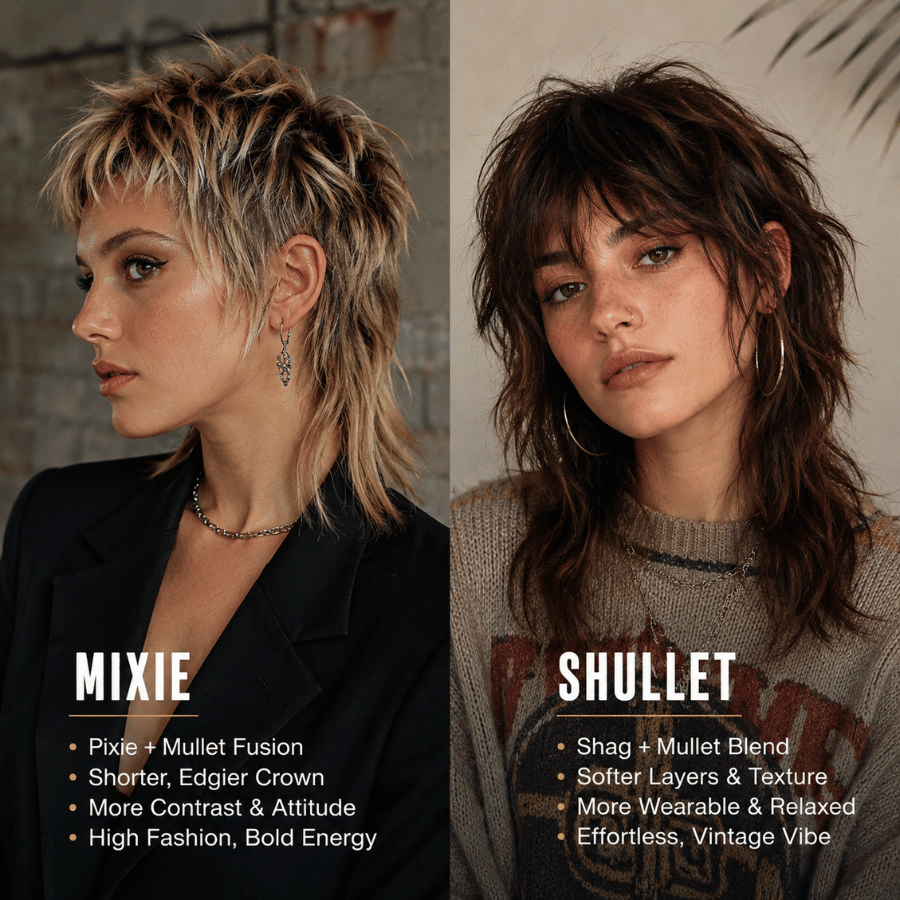
The mixie combines a mullet back with a pixie-length top — dramatically shorter and more aggressive than anything else on this list. High maintenance, hard grow-out, very specific face-shape requirements. The commitment level is extreme, but the visual impact matches.
The shullet blends a shag with a mullet — more textured and relaxed than a traditional mullet, less layered than a wolf cut. It sits in a niche between nostalgic and modern. Maintenance is moderate, and the grow-out is manageable.
Both are niche cuts with strong aesthetics and narrow audiences. If either interests you, they’re worth a dedicated conversation with a stylist who can assess whether your texture and face shape support the proportions.
How to Choose Between Them
The honest decision comes down to five variables — not which one looks best on your phone.
How much daily styling effort will you actually commit to? Be honest. The jellyfish and hime cuts need daily attention. The wolf and butterfly cuts survive neglect. The octopus sits in between. Your real morning routine — not the aspirational one — determines which cuts are viable.
How gracefully does it need to grow out? If you skip appointments or go long stretches between trims, the wolf cut and butterfly cut forgive that. The jellyfish and hime cuts do not. The octopus cut is manageable but loses its personality faster than you’d expect.
What does your hair actually do? Straight hair works with every cut here. Wavy hair works with everything except the hime cut (unless you flat-iron). Curly hair works naturally with the wolf cut and butterfly cut, requires specialist calibration for the jellyfish and octopus, and rarely works with the hime cut.
How precise does the face framing need to be? The hime cut and jellyfish cut interact directly with your face shape — wrong calibration is visible. The wolf cut and butterfly cut are far more flexible. The octopus cut sits in between. If you’re uncertain about face shape considerations, our face shape rules and exceptions guide and bangs by face shape breakdown cover the structural reasoning.
How bold do you actually want to go? Be honest about this too. The butterfly cut is interesting but safe. The wolf cut has personality without confrontation. The octopus cut is dramatic but blended. The jellyfish cut is architectural and deliberate. The hime cut is geometric and uncompromising. If you’re oscillating between two levels, start with the less dramatic option — you can always go bolder at your next appointment.
If you’re still deciding, booking a consultation takes the guesswork out. A stylist can assess your texture, density, face shape, and actual lifestyle — not the lifestyle you’re planning to have — and recommend the cut that survives your real routine.
What These Cuts Actually Look Like — Side by Side
The gallery below is built to show real structural differences — not just flattering angles.
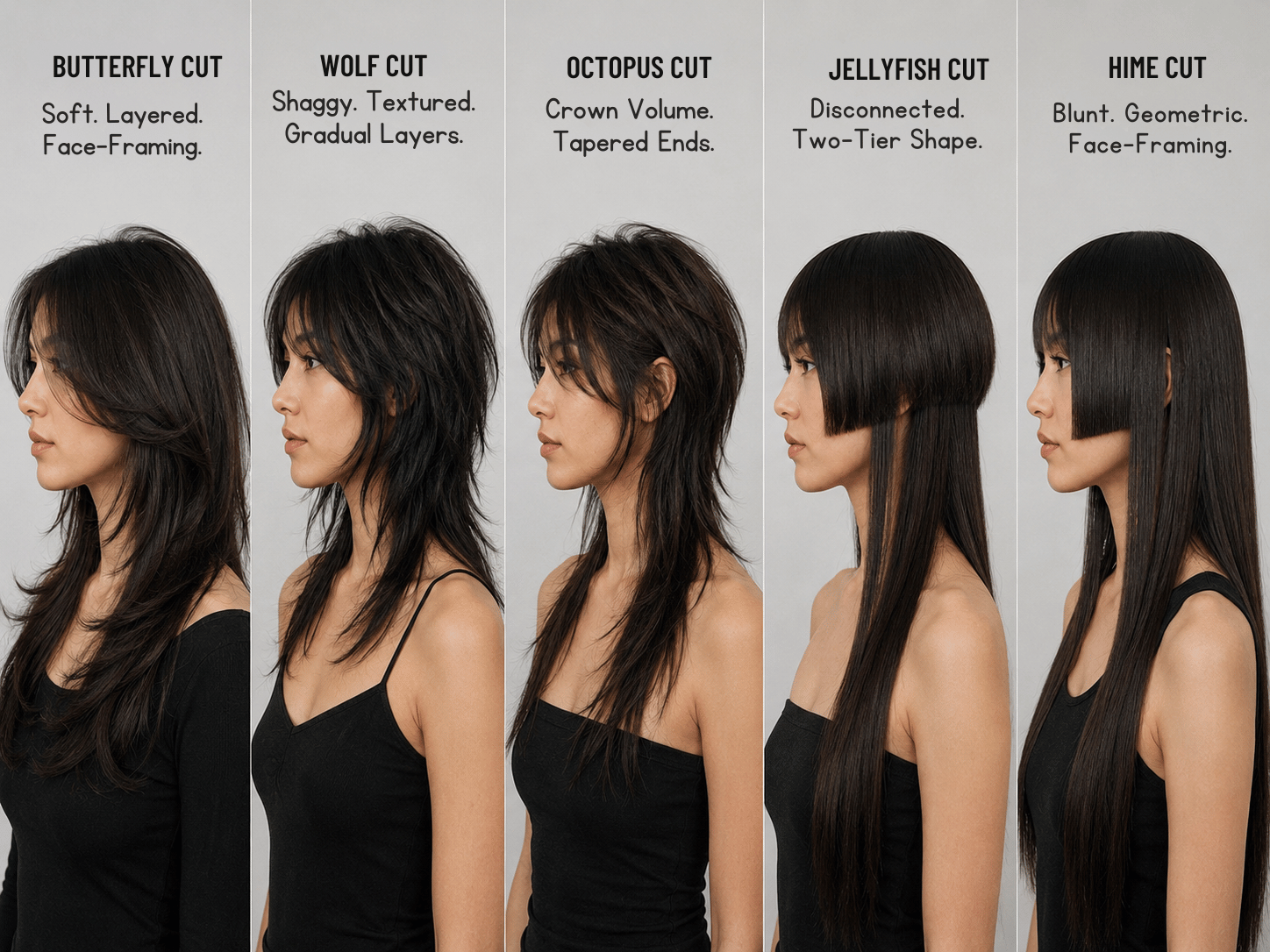
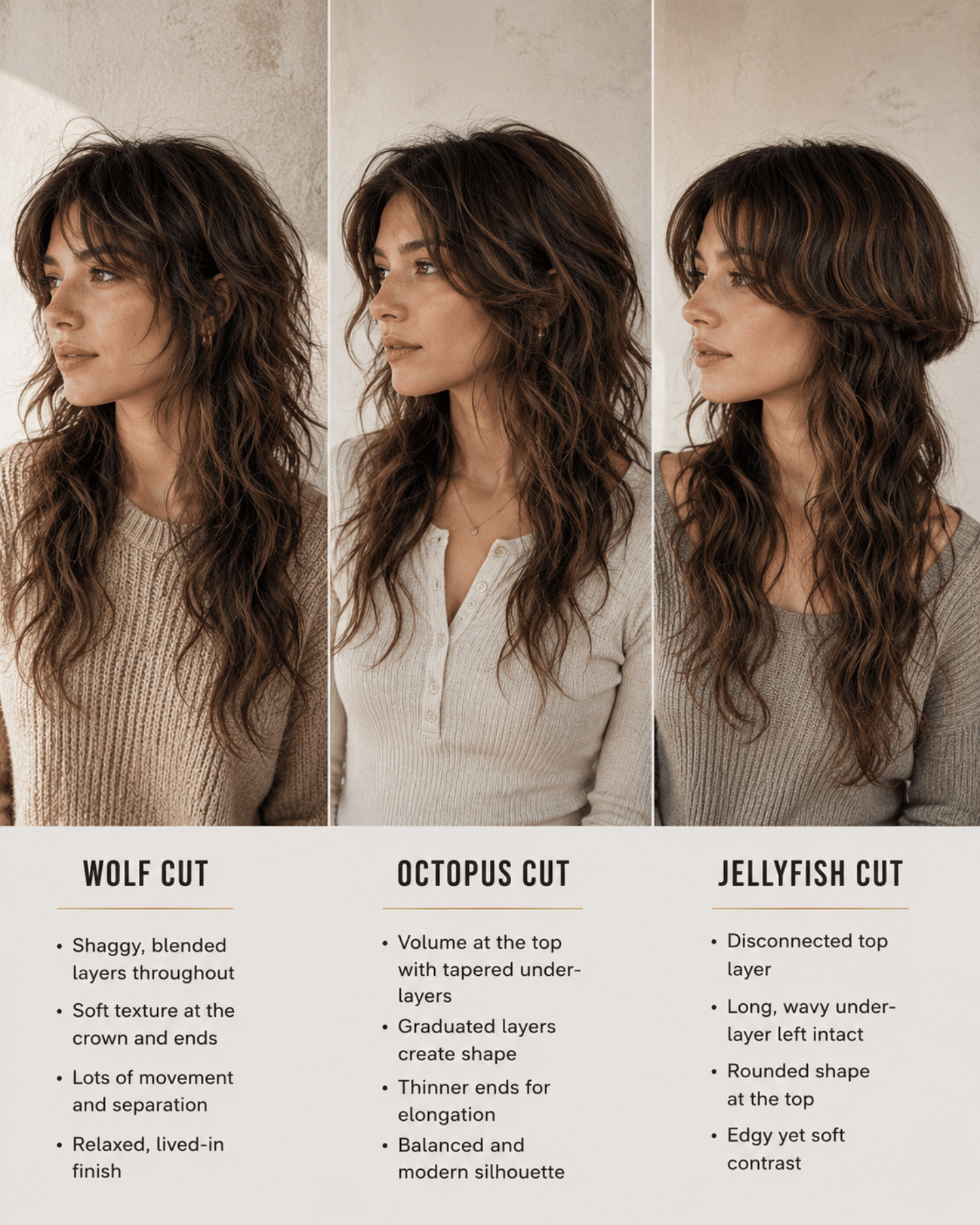
The right edgy cut isn’t the one that looks best in a screenshot. It’s the one that still looks intentional when you’re running late, when you skipped your trim, when the humidity hit, and when you couldn’t find your texturizing spray. Every cut on this list can be that cut for the right person — but “right person” means right texture, right face shape, right maintenance tolerance, and right honesty about how much effort you’ll actually put in.
If you want to figure out which one that is before picking up the shears, a consultation gets you there faster than another hour on TikTok.
FAQ
Which edgy haircut is the lowest maintenance? The wolf cut and the butterfly cut are tied. Both grow out gracefully, both work air-dried, and both stretch eight to ten weeks between trims without losing their shape. The wolf cut has more visible personality; the butterfly cut is more polished. Neither demands much from you.
Can curly hair pull off edgy layered cuts? Yes — but not all of them equally. The wolf cut and butterfly cut work naturally with curl patterns because the blended layers integrate with the texture organically. The jellyfish cut on curly hair creates a dramatically different and often bolder silhouette that requires a texture-specialist stylist and dry cutting. The octopus cut can work on curls but the graduated layering becomes harder to distinguish from a jellyfish cut on textured hair. The hime cut rarely works on curly hair — the blunt geometric side pieces won’t hold their shape without daily flat-ironing.
Which edgy haircut grows out the best? The wolf cut. No awkward phase, no emergency trims, no moment where the cut stops looking intentional. It just becomes a longer, softer version of itself. The butterfly cut is equally forgiving. The octopus cut holds for a while but loses its personality after about three months. The jellyfish cut and hime cut grow out the hardest — both hit visible awkward phases that require either reshaping or patience.
How do I know if I should get a wolf cut or jellyfish cut? It comes down to maintenance tolerance and how architecturally defined you want the cut to be. The wolf cut vs. jellyfish cut comparison covers every practical difference — daily styling, grow-out behavior, texture compatibility, face shape considerations. The short version: if you want something that survives benign neglect, wolf cut. If you want something that makes a visible structural statement and you’re willing to maintain it, jellyfish cut.